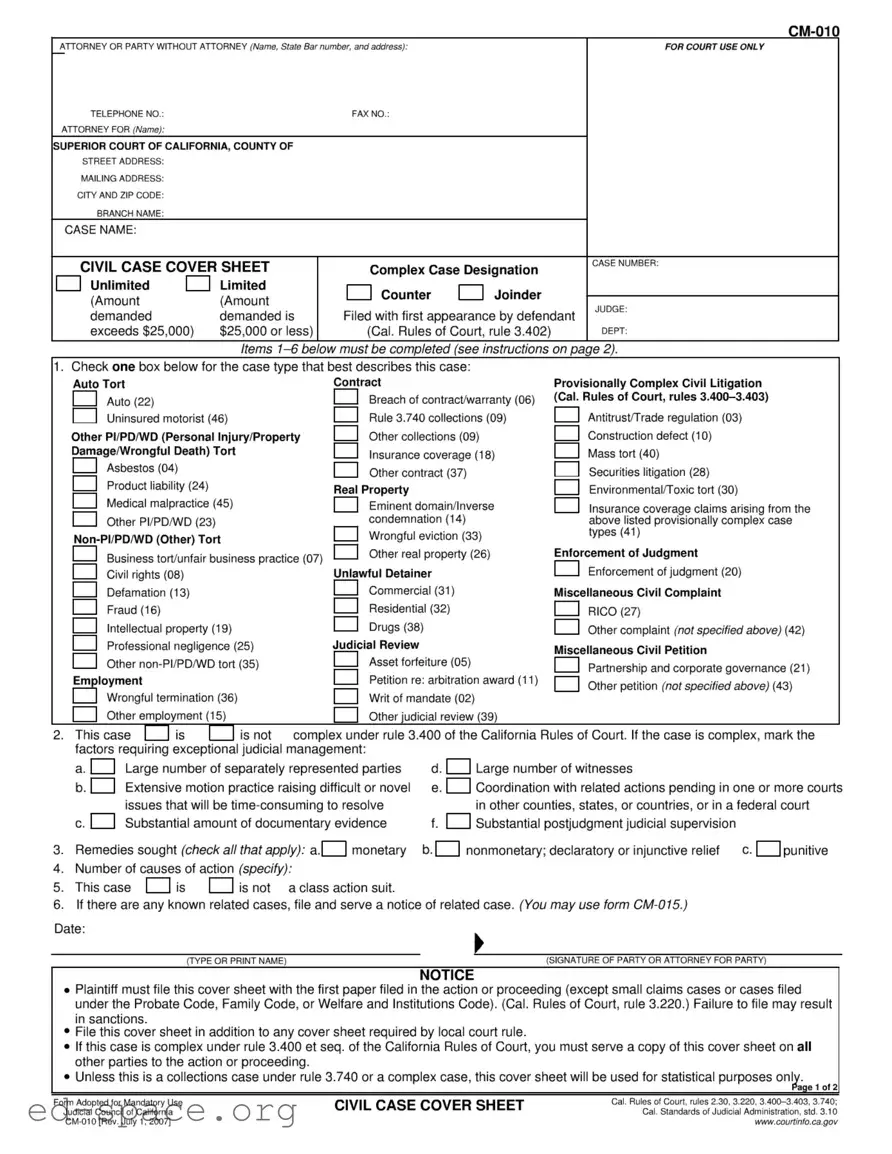
The California Civil Case Cover Sheet, known as form CM-010, is an essential document that must accompany the initial filing of a civil case in the state. This form helps the court categorize the case and ensures that it is processed efficiently. It requires basic information such as the names and addresses of the parties involved, the type of case being filed, and the remedies sought. The form also includes a section to indicate whether the case is complex, which can affect how the court manages it. Different categories are available for various types of cases, including auto torts, contract disputes, and employment issues. Additionally, it prompts the filer to disclose if the case involves multiple causes of action or if it is a class action suit. Completing this form accurately is critical, as failure to do so may lead to sanctions. This cover sheet not only aids in the organization of cases but also helps in the collection of statistical data for the court system.
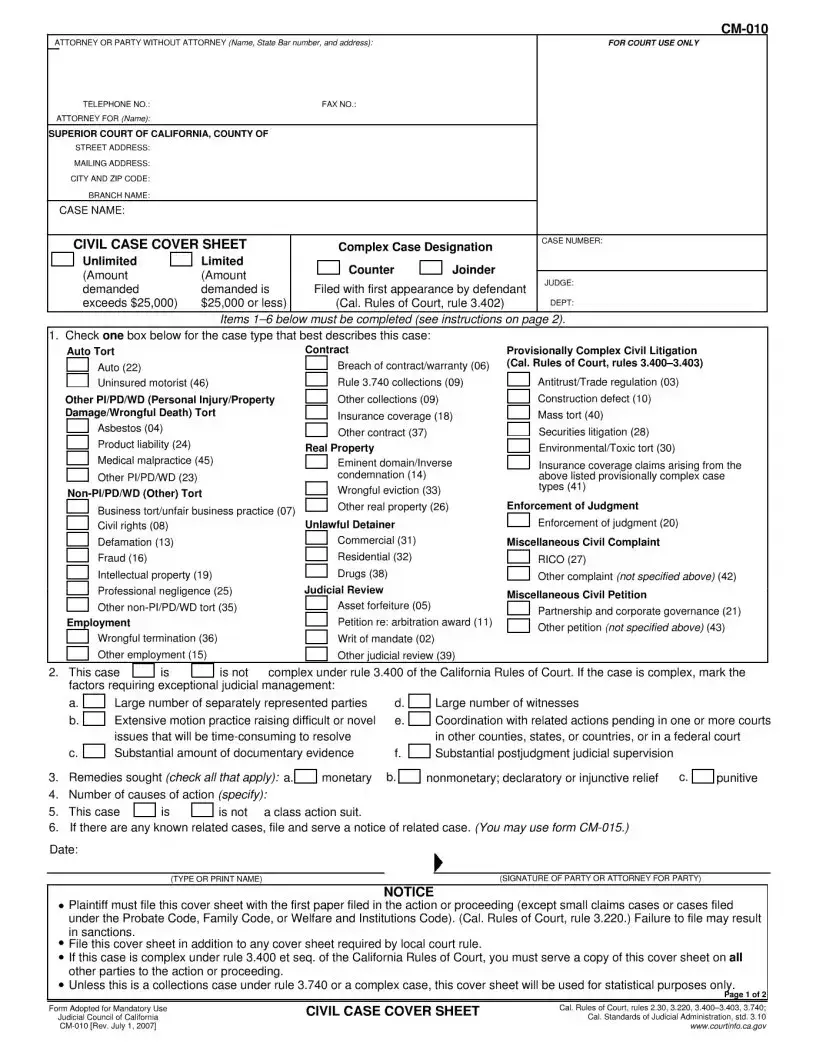
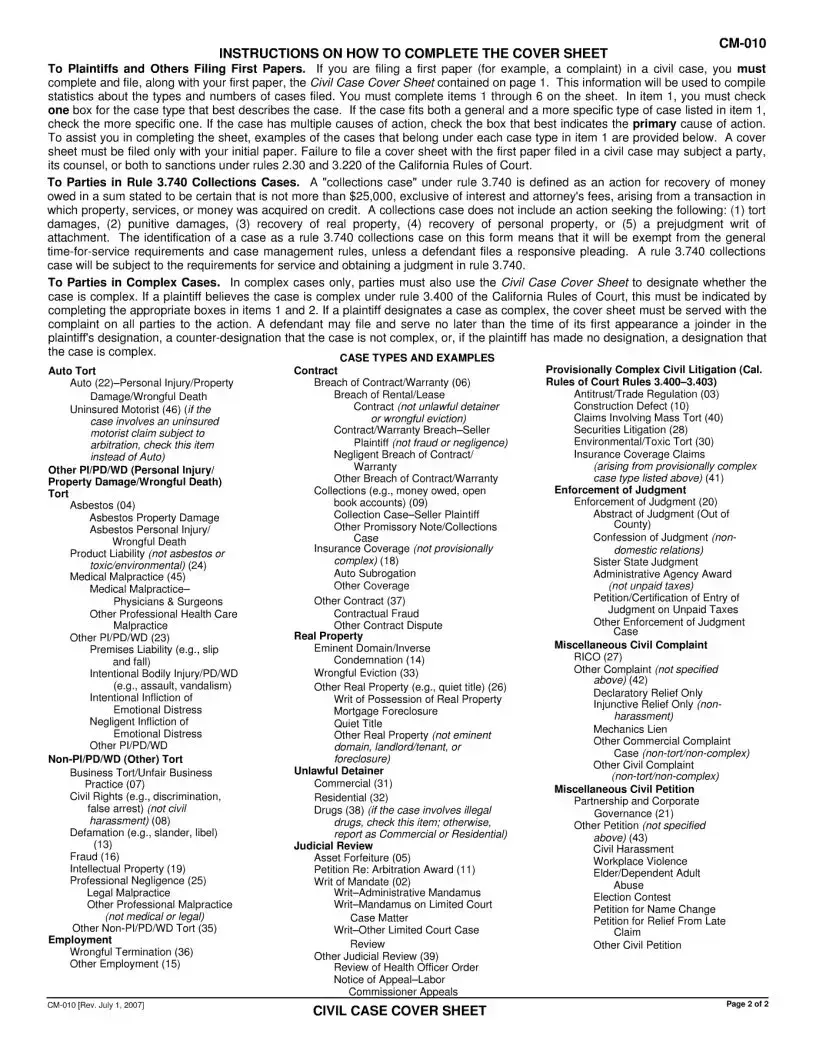
| Fact Name | Details |
|---|---|
| Form Title | California Civil Case Cover Sheet (CM-010) |
| Purpose | This form is required for initiating civil cases in California, providing essential information for case management and statistical purposes. |
| Governing Law | The form is governed by the California Rules of Court, specifically rules 2.30, 3.220, and 3.400-3.403. |
| Complex Case Designation | Parties must indicate if the case is complex under rule 3.400, which involves factors requiring exceptional judicial management. |
| Mandatory Filing | The cover sheet must be filed with the first paper in the action, except in specific cases like small claims or family law matters. |
| Consequences of Non-Filing | Failure to file the cover sheet can result in sanctions against the party or their attorney under California Rules of Court. |
| Statistical Use | Unless the case is a collections case under rule 3.740 or a complex case, the cover sheet is used solely for statistical purposes. |
| Related Cases | If there are known related cases, a notice of related case must be filed and served, using form CM-015. |
Completing the California Civil form is an essential step when initiating a civil case. This form gathers important information about your case and helps the court categorize it appropriately. Follow these steps to ensure you fill it out correctly.
What is the purpose of the California Civil Case Cover Sheet?
The California Civil Case Cover Sheet serves as a critical document that must accompany the first paper filed in a civil case. Its primary purpose is to provide the court with essential information about the nature of the case. This helps in categorizing and managing cases effectively. By completing this form, parties can ensure that their case is processed efficiently and that the court has the necessary data for statistical purposes. Missing this form can lead to sanctions, so it’s important to include it with your initial filing.
What types of cases require a Civil Case Cover Sheet?
The Civil Case Cover Sheet is required for a variety of civil cases, except for small claims cases or those filed under specific codes like the Probate Code, Family Code, or Welfare and Institutions Code. It is particularly important for cases involving personal injury, contract disputes, and employment issues. The form helps to identify the type of case, whether it’s complex, and the remedies sought. This information aids the court in managing the case appropriately and efficiently.
How do I determine if my case is complex under California rules?
A case is considered complex if it meets certain criteria outlined in the California Rules of Court. Factors include a large number of separately represented parties, extensive motion practice, substantial documentary evidence, or a large number of witnesses. If your case involves coordination with related actions in other jurisdictions or requires significant post-judgment judicial supervision, it may also be classified as complex. Indicating complexity on the Civil Case Cover Sheet is crucial as it affects how the case is managed by the court.
What happens if I fail to file the Civil Case Cover Sheet?
If a party fails to file the Civil Case Cover Sheet with their initial paper, they may face sanctions. The court may impose penalties on the party or their attorney for not complying with this requirement. Additionally, the lack of this document can delay the processing of the case, potentially affecting timelines and court schedules. Therefore, it is essential to ensure that this cover sheet is completed accurately and filed on time to avoid complications.
Incomplete Information: Failing to fill out all required fields can lead to delays. Ensure that every section, especially items 1-6, is completed fully.
Incorrect Case Type: Selecting the wrong case type can complicate proceedings. Carefully review the options in item 1 and choose the one that best fits your case.
Not Indicating Complexity: If your case is complex, it is important to mark the appropriate boxes. This helps the court manage your case effectively.
Missing Signatures: Forgetting to sign the form can result in rejection. Always ensure that the signature is present before submission.
Ignoring Related Cases: If there are known related cases, failing to file a notice of related case can lead to confusion. Be sure to include this information if applicable.
Submitting Late: Not filing the cover sheet with the first paper can result in sanctions. Timeliness is crucial in legal processes.
Overlooking Local Rules: Each court may have specific requirements. Always check local court rules to ensure compliance with additional cover sheet requirements.
When navigating the California civil legal process, several forms and documents are frequently used alongside the Civil Case Cover Sheet (Form CM-010). Each of these documents serves a specific purpose and helps to ensure that the case is managed effectively. Below are five common forms that you may encounter.
Understanding these documents can significantly streamline the legal process. Each plays a vital role in ensuring that cases are handled properly and efficiently, allowing all parties involved to navigate the legal system with greater ease. Familiarity with these forms can empower individuals to take proactive steps in their legal matters.
Federal Civil Cover Sheet (Form JS-44): Similar to the California Civil form, this federal document serves as a summary of the case being filed in federal court. It collects essential information about the parties involved, the nature of the suit, and the basis for jurisdiction, helping the court to manage the case efficiently.
California Family Law Case Cover Sheet (Form FL-105): This form is used in family law cases in California. Like the Civil form, it provides the court with necessary information about the parties and the type of case, ensuring that the court understands the nature of the proceedings right from the start.
California Probate Case Cover Sheet (Form DE-120): This document is filed in probate cases. It shares similarities with the Civil form in that it outlines the case type and provides pertinent details about the involved parties, helping the court to navigate probate matters effectively.
Small Claims Case Cover Sheet (Form SC-100): Used in small claims court, this cover sheet is comparable to the California Civil form as it collects basic information about the claim and the parties involved. It streamlines the process for small claims cases, similar to how the Civil form does for larger civil cases.
California Unlawful Detainer Complaint (Form UD-100): This form is specifically for eviction cases. It shares a similar purpose with the Civil form by providing the court with essential details about the case type and parties, allowing for efficient processing of unlawful detainer actions.
California Limited Civil Case Cover Sheet (Form CM-010): A variant of the Civil form, this document is tailored for cases where the amount in controversy is $25,000 or less. It serves the same function of summarizing the case details for the court but is specifically designed for limited civil cases.
California General Civil Case Management Statement (Form CM-110): This form is used to provide the court with an overview of the case management status. Like the Civil form, it helps in organizing the court’s calendar and ensuring that all parties are aware of the proceedings.
California Notice of Related Case (Form CM-015): This document is filed when there are related cases. Similar to the Civil form, it alerts the court to the existence of other cases that may impact the current proceedings, facilitating better case management.
California Statement of Damages (Form PLD-PI-001): Used in personal injury cases, this form outlines the damages being sought. It complements the Civil form by providing specific information about the claims, much like how the Civil form categorizes the type of case being filed.
California Civil Case Information Statement (Form CM-020): This document provides detailed information about the case and is often filed alongside the Civil form. It serves a similar purpose by ensuring the court has all necessary information to manage the case effectively.
When filling out the California Civil form, it is crucial to follow certain guidelines to ensure accuracy and compliance. Below is a list of essential dos and don'ts that can help you navigate this process effectively.
By adhering to these guidelines, you can help ensure that your filing is processed smoothly and efficiently. Take the time to review your form before submission to avoid unnecessary complications.
Misconceptions about the California Civil form can lead to confusion and potential delays in legal proceedings. Here are ten common misconceptions along with clarifications:
Understanding these misconceptions can help parties navigate the legal process more effectively and avoid unnecessary complications.
Key Takeaways for Filling Out the California Civil Form