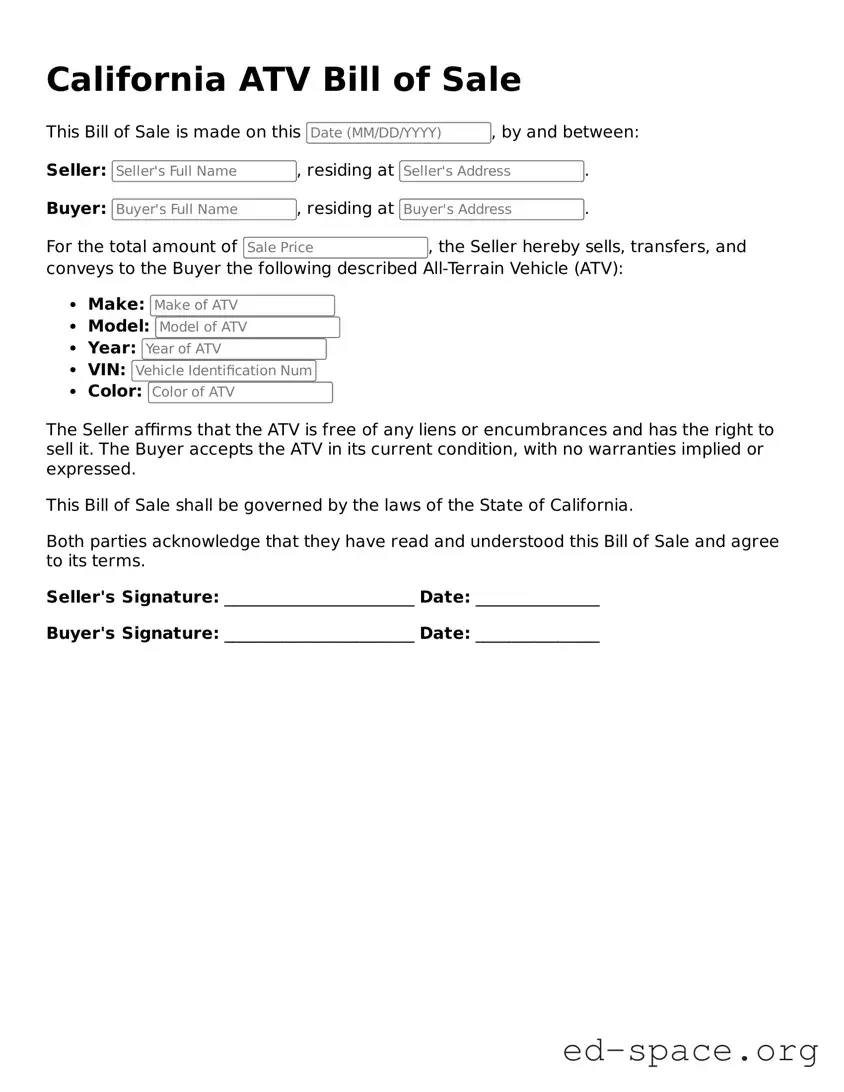
When buying or selling an all-terrain vehicle (ATV) in California, a Bill of Sale serves as a crucial document that protects both parties involved in the transaction. This form captures essential details about the ATV, including its make, model, year, and Vehicle Identification Number (VIN), ensuring that the vehicle's identity is clear and verifiable. Additionally, it outlines the sale price and the date of the transaction, which can be important for tax purposes and future ownership disputes. Both the seller and buyer must provide their names and signatures, signifying mutual agreement to the terms of the sale. Furthermore, the Bill of Sale can serve as a receipt, offering proof of ownership transfer. Understanding the importance of this document can help facilitate a smooth transaction while ensuring compliance with California’s regulations regarding vehicle sales.
California ATV Bill of Sale
This Bill of Sale is made on this , by and between:
Seller: , residing at .
Buyer: , residing at .
For the total amount of , the Seller hereby sells, transfers, and conveys to the Buyer the following described All-Terrain Vehicle (ATV):
The Seller affirms that the ATV is free of any liens or encumbrances and has the right to sell it. The Buyer accepts the ATV in its current condition, with no warranties implied or expressed.
This Bill of Sale shall be governed by the laws of the State of California.
Both parties acknowledge that they have read and understood this Bill of Sale and agree to its terms.
Seller's Signature: _______________________ Date: _______________
Buyer's Signature: _______________________ Date: _______________
| Fact Name | Details |
|---|---|
| Purpose | The California ATV Bill of Sale form is used to document the sale or transfer of an all-terrain vehicle (ATV). |
| Governing Law | The form is governed by California Vehicle Code Section 5901. |
| Parties Involved | The form includes information about the seller and the buyer, ensuring both parties are clearly identified. |
| Vehicle Information | Details about the ATV, including make, model, year, and Vehicle Identification Number (VIN), must be included. |
| Purchase Price | The agreed-upon purchase price for the ATV must be specified in the document. |
| Signatures | Both the seller and buyer must sign the form to validate the transaction. |
| Notarization | While notarization is not required, it can provide additional legal protection for both parties. |
| Record Keeping | Both parties should keep a copy of the completed bill of sale for their records. |
| Transfer of Ownership | The bill of sale serves as proof of ownership transfer, which may be required for registration with the DMV. |
Once you have the California ATV Bill of Sale form in hand, you can begin the process of completing it. This document will require specific details about the transaction and the involved parties. After filling out the form, you will be ready to finalize the sale and ensure that both the buyer and seller have a clear record of the transaction.
After completing these steps, keep copies of the signed form for your records. This will serve as proof of the sale and can be useful for future reference.
What is a California ATV Bill of Sale?
A California ATV Bill of Sale is a legal document that serves as proof of the sale or transfer of an all-terrain vehicle (ATV) from one party to another. This form includes essential details about the transaction, such as the names and addresses of the buyer and seller, the vehicle's identification number (VIN), make, model, year, and the sale price. Having a Bill of Sale is important for both parties, as it provides a record of the transaction and can help resolve any disputes that may arise later.
Is a Bill of Sale required for selling an ATV in California?
While a Bill of Sale is not legally required in California, it is highly recommended. This document protects both the seller and the buyer by providing a written record of the transaction. It can be particularly useful for the buyer when registering the ATV with the Department of Motor Vehicles (DMV) or for the seller to prove they no longer own the vehicle. Without this document, complications may arise, especially if there are any disputes about ownership or the terms of the sale.
What information should be included in the ATV Bill of Sale?
When creating a Bill of Sale for an ATV, it is crucial to include specific information to ensure clarity and legality. The document should contain the full names and addresses of both the buyer and seller. Additionally, it should list the ATV's make, model, year, VIN, and any other identifying details. The sale price must also be clearly stated, along with the date of the transaction. Including any warranties or conditions of the sale can further protect both parties.
How does the Bill of Sale affect the registration process?
The Bill of Sale plays a significant role in the registration process for an ATV in California. After purchasing an ATV, the buyer must present the Bill of Sale to the DMV to complete the registration. This document serves as proof of ownership and is often required to obtain a new title. Without it, the buyer may face challenges when trying to register the vehicle or prove ownership in the future. Therefore, keeping a copy of the Bill of Sale is essential for both parties involved.
Can I create my own ATV Bill of Sale?
Yes, you can create your own ATV Bill of Sale. There are many templates available online that can guide you in drafting this document. However, it is important to ensure that all necessary information is included and that the form complies with California state laws. Alternatively, you may choose to consult with a legal professional or use a service that specializes in legal documents to ensure that your Bill of Sale is valid and meets all requirements.
Not including the date of sale: It's crucial to specify when the transaction took place. Without this information, the document may lack validity.
Failing to provide the correct vehicle identification number (VIN): Double-check the VIN on the ATV. An incorrect number can lead to confusion or legal issues later.
Leaving out the buyer and seller information: Ensure that both parties' names and addresses are clearly stated. This helps establish ownership and accountability.
Not indicating the purchase price: Clearly state how much the ATV was sold for. This is important for tax purposes and future transactions.
Using vague language in the description of the ATV: Provide detailed information about the ATV, including make, model, year, and condition. This clarity protects both parties.
Forgetting to sign the form: Both the buyer and seller must sign the Bill of Sale. Without signatures, the document may not be enforceable.
Not keeping a copy of the Bill of Sale: Always retain a copy for your records. This can be crucial if any disputes arise in the future.
Ignoring local regulations: Some areas may have specific requirements for ATV sales. Research local laws to ensure compliance.
Not considering sales tax obligations: Understand your responsibilities regarding sales tax. The buyer may need to pay this when registering the ATV.
Neglecting to disclose any existing liens: If there’s a loan on the ATV, disclose it in the Bill of Sale. This transparency is vital for the buyer’s protection.
When purchasing or selling an ATV in California, several important documents often accompany the ATV Bill of Sale form. These documents help ensure a smooth transaction and provide necessary information for both parties involved. Below is a list of commonly used forms and documents that you may encounter in this process.
Having these documents ready can streamline the buying or selling process, ensuring that all legal requirements are met. It is always advisable to double-check with local regulations or consult a professional if you have any questions about the necessary paperwork.
When filling out the California ATV Bill of Sale form, it’s crucial to ensure accuracy and completeness. Here’s a list of things you should and shouldn’t do:
By following these guidelines, you can help ensure that your ATV sale goes smoothly and is legally recognized. Attention to detail is essential, so take the necessary steps to protect both parties involved in the transaction.
When it comes to the California ATV Bill of Sale form, several misconceptions often arise. Understanding the truth behind these myths can help individuals navigate the buying and selling process more smoothly.
Many people believe that a Bill of Sale is optional when buying or selling an ATV. In reality, this document serves as proof of the transaction. It protects both the buyer and the seller by providing a record of the sale, including details about the vehicle and the parties involved.
Some individuals think that a verbal agreement is enough to finalize an ATV sale. However, relying solely on spoken promises can lead to disputes. A written Bill of Sale clearly outlines the terms of the sale, which can be crucial if any issues arise later.
There is a common belief that notarization is required for the Bill of Sale to be valid. In California, notarization is not a requirement. While having a notary can add an extra layer of verification, it is not necessary for the document to be legally binding.
Some people assume that a single Bill of Sale form can be used for all vehicle types. However, the California ATV Bill of Sale is specifically designed for all-terrain vehicles. Using the correct form ensures that all necessary information is included, which is important for registration and legal purposes.
When filling out and using the California ATV Bill of Sale form, consider the following key takeaways: