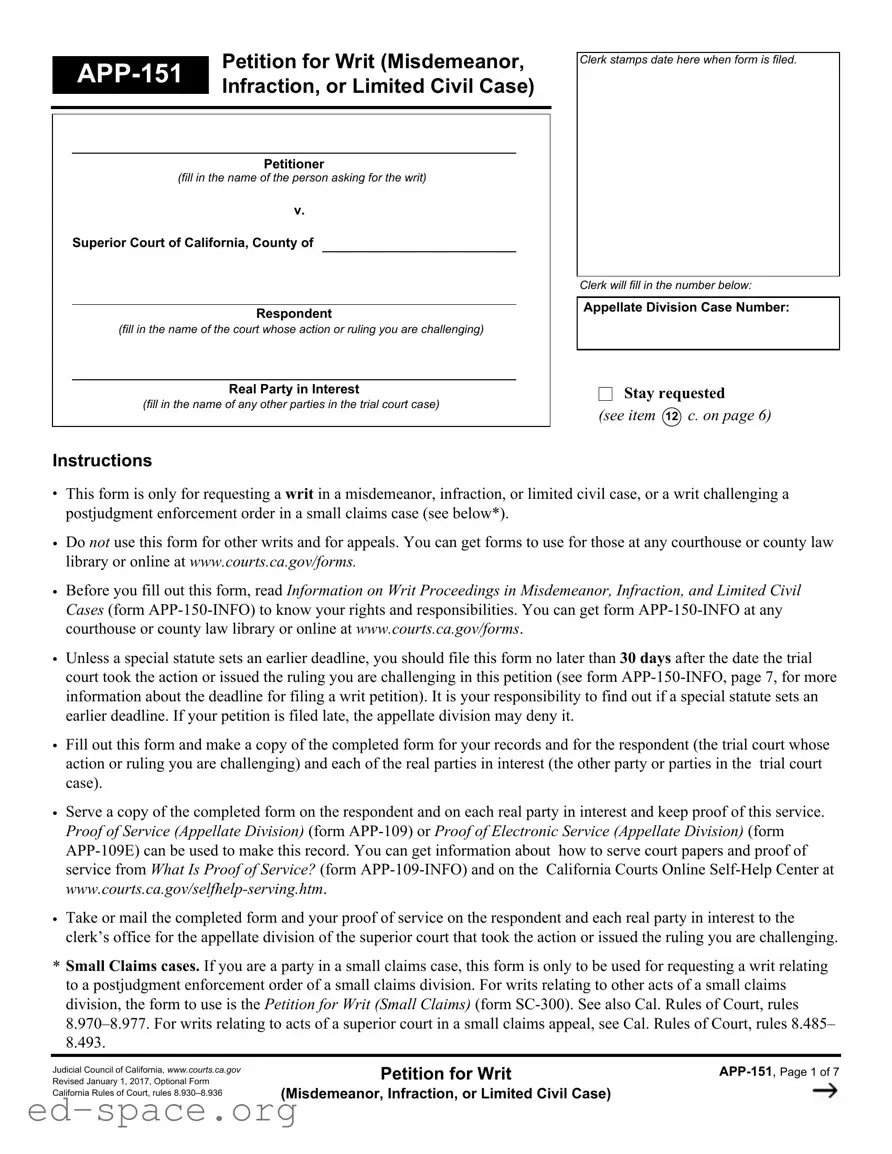
The California App 151 form, officially known as the Petition for Writ, serves as a vital tool for individuals seeking to challenge specific actions or rulings made by the trial court in misdemeanor, infraction, or limited civil cases. This form allows petitioners to formally present their grievances to the appellate division, which can include contesting post-judgment enforcement orders in small claims cases. When filling out the App 151, petitioners must provide their personal information, details about the trial court case they are contesting, and a clear description of the ruling or action they believe to be erroneous. Additionally, the form requires the identification of all parties involved in the original case, ensuring that everyone affected by the ruling is accounted for. It's crucial to note that this petition must be filed within 30 days of the trial court's action unless a special statute specifies an earlier deadline. Furthermore, petitioners are responsible for serving copies of the completed form to all relevant parties and maintaining proof of this service. This process, while potentially daunting, is essential for those seeking justice and clarity in the legal system.

|
Petition for Writ (Misdemeanor, |
|
Infraction, or Limited Civil Case) |
||
|
||
|
|
Petitioner
(fill in the name of the person asking for the writ)
v.
Superior Court of California, County of
Respondent
(fill in the name of the court whose action or ruling you are challenging)
Real Party in Interest
(fill in the name of any other parties in the trial court case)
Clerk stamps date here when form is filed.
Clerk will fill in the number below:
Appellate Division Case Number:
Stay requested
(see item 12 c. on page 6)
Instructions
•This form is only for requesting a writ in a misdemeanor, infraction, or limited civil case, or a writ challenging a postjudgment enforcement order in a small claims case (see below*).
•Do not use this form for other writs and for appeals. You can get forms to use for those at any courthouse or county law library or online at www.courts.ca.gov/forms.
•Before you fill out this form, read Information on Writ Proceedings in Misdemeanor, Infraction, and Limited Civil Cases (form
•Unless a special statute sets an earlier deadline, you should file this form no later than 30 days after the date the trial court took the action or issued the ruling you are challenging in this petition (see form
•Fill out this form and make a copy of the completed form for your records and for the respondent (the trial court whose action or ruling you are challenging) and each of the real parties in interest (the other party or parties in the trial court case).
•Serve a copy of the completed form on the respondent and on each real party in interest and keep proof of this service. Proof of Service (Appellate Division) (form
•Take or mail the completed form and your proof of service on the respondent and each real party in interest to the clerk’s office for the appellate division of the superior court that took the action or issued the ruling you are challenging.
* Small Claims cases. If you are a party in a small claims case, this form is only to be used for requesting a writ relating to a postjudgment enforcement order of a small claims division. For writs relating to other acts of a small claims division, the form to use is the Petition for Writ (Small Claims) (form
Judicial Council of California, www.courts.ca.gov Revised January 1, 2017, Optional Form California Rules of Court, rules
Petition for Writ |
(Misdemeanor, Infraction, or Limited Civil Case)
Appellate Division
Case Name:
Appellate Division Case Number:
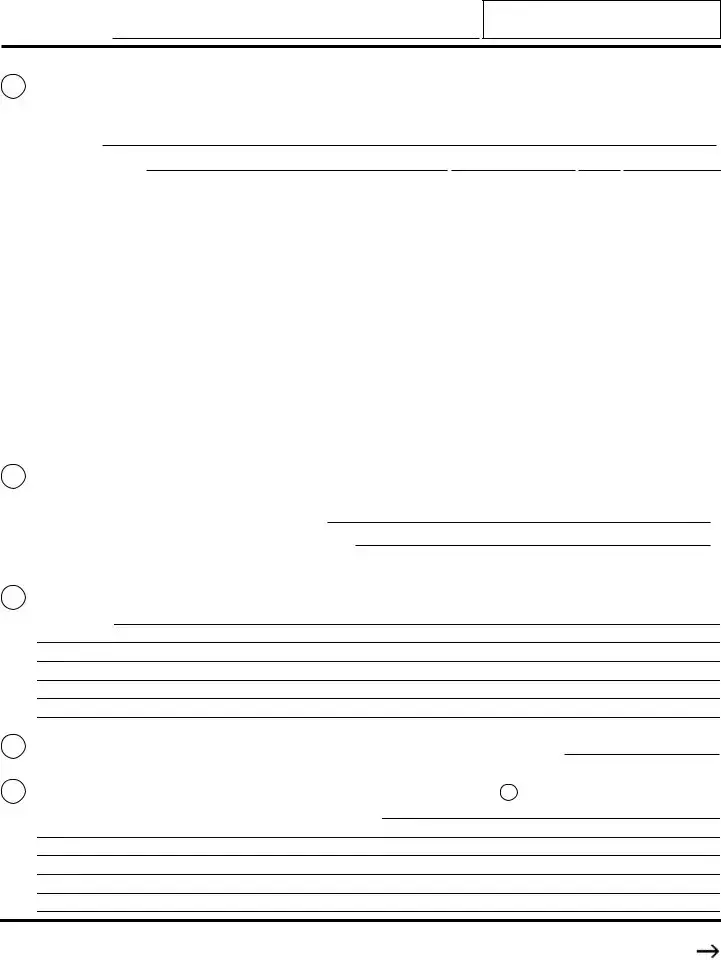
1Your Information
a.Petitioner (the party who is asking for the writ): Name:
Street address:
|
Street |
|
|
|
City |
|
State |
|
Zip |
|
Mailing address (if different): |
|
|
|
|
|
|
|
|
||
|
|
Street |
|
|
|
City |
|
State |
|
Zip |
Phone: |
|
|
|
|
|
|
||||
b.Petitioner’s lawyer (skip this if the petitioner does not have a lawyer for this petition):
Name: |
|
|
|
|
|
|
State Bar number: |
|
|
|
||||||
Street address: |
|
|
|
|
|
|
|
|
|
|
|
|||||
|
|
|
|
Street |
|
|
|
City |
|
|
State |
|
Zip |
|||
Mailing address (if different): |
|
|
|
|
|
|
|
|
|
|
|
|||||
|
|
|
|
|
Street |
|
|
|
City |
|
|
State |
|
Zip |
||
Phone: |
|
|
|
|
|
|
|
|
||||||||
Fax: |
|
|
|
|
|
|
|
|
|
|
|
|
||||
The Trial Court Action or Ruling You Are Challenging
2I am/My client is filing this petition to challenge an action taken or ruling made by the trial court in the following case:
a.Case name (fill in the trial court case name):
b.Case number (fill in the trial court case number):
3The trial court action or ruling I am/my client is challenging is (describe the action taken or ruling made by the trial court):
4The trial court took this action or made this ruling on the following date (fill in the date):
5If you are filing this petition more than 30 days after the date that you listed in 4 , explain the extraordinary circumstances that caused the delay in filing this petition:
Revised January 1, 2017
Petition for Writ |
(Misdemeanor, Infraction, or Limited Civil Case)
Appellate Division
Case Name:
Appellate Division Case Number:
The Parties in the Trial Court Case
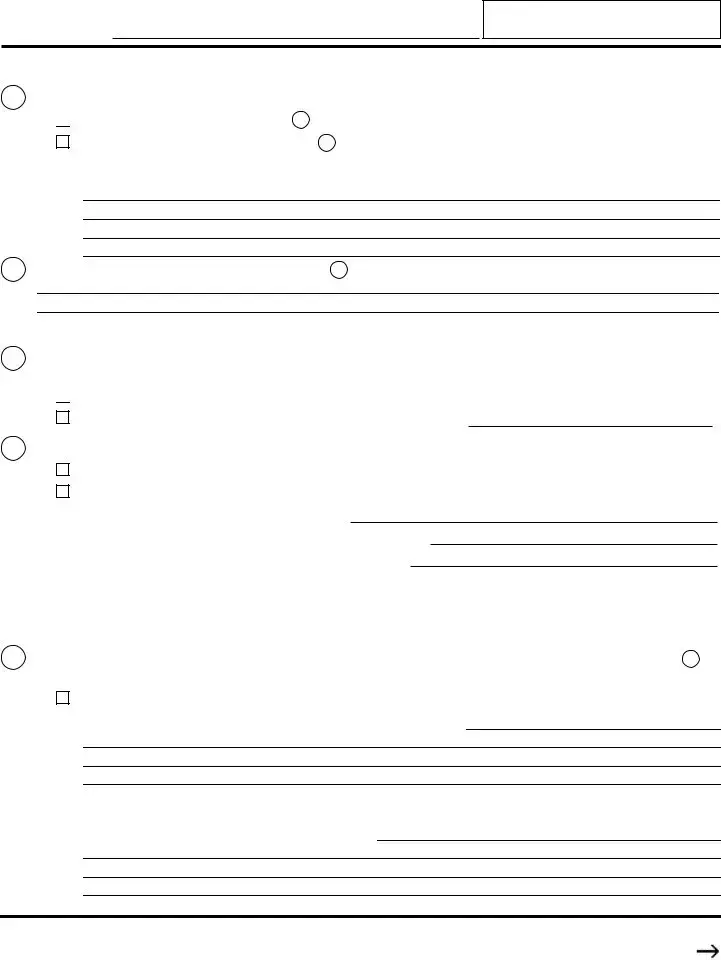
6I/My client (check and fill in a or b):
a. b.
was a party in the case identified in 2 .
was not a party in the case identified in 2 but will be directly and negatively affected in the following way by the action taken or ruling made by the trial court (describe how you/your client will be directly and negatively affected by the trial court’s action or ruling):
7The other party or parties in the case identified in 2 was/were (fill in the names of the parties):
Appeals or Other Petitions for Writs in This Case
8Did you or anyone else file an appeal about the same trial court action or ruling you are challenging in this petition? (Check and fill in a or b):
a. b.
No
Yes (fill in the appellate division case number of the appeal):
9Have you filed a previous petition for a writ challenging this trial court action or ruling? (Check and fill in a or b):
a.
b.
No
Yes (Please provide the following information about this previous petition).
(1)Petition title (fill in the title of the petition):
(2)Date petition filed (fill in the date you filed this petition):
(3)Case number (fill in the case number of the petition):
If you/your client filed more than one previous petition, attach another page providing this information for each additional petition. At the top of each page, write
Reasons for This Petition
10The trial court made the following legal error or errors when it took the action or made the ruling described in 3 (check and fill in at least one):
a. |
The trial court has not done or has refused to do something that the law says it must do. |
(1)Describe what you believe the law says the trial court must do:
(2)Identify the law (the section of the Constitution or statute, published court decision, or other legal authority) that says the trial court must do this:
Revised January 1, 2017
Petition for Writ |
(Misdemeanor, Infraction, or Limited Civil Case)
Appellate Division
Case Name:
Appellate Division Case Number:
10(continued)
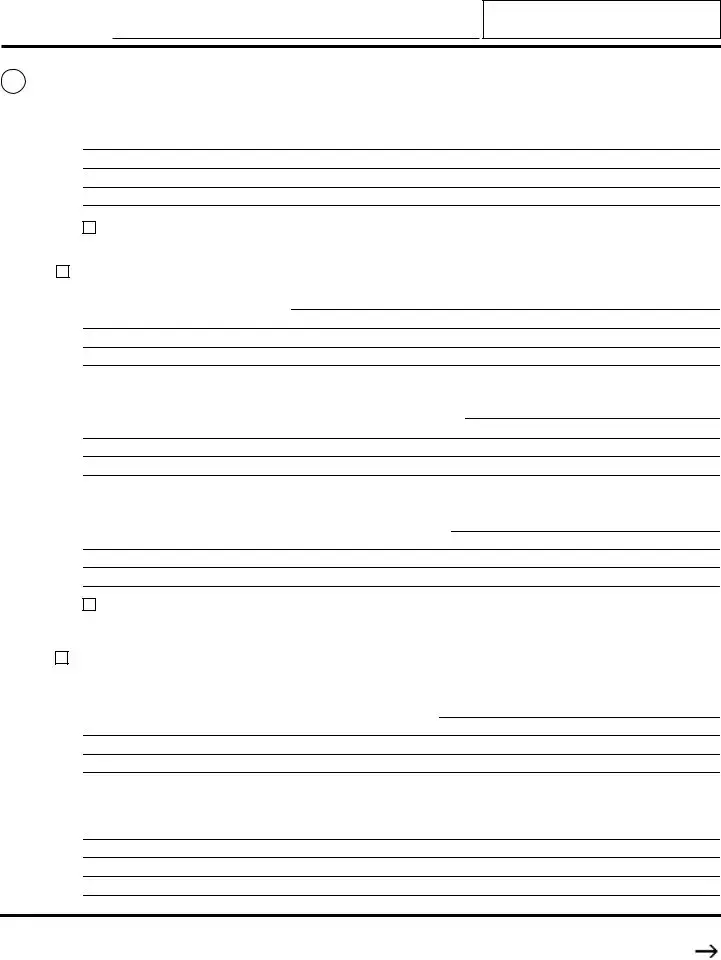
(3)Identify where in the supporting documents (the record of what was said in the trial court and the documents from the trial court) it shows that the court did not do or refused to do this:
b.
Check here if you need more space to describe the reason for your petition and attach a separate page or pages describing it. At the top of each page, write
The trial court has done something that the law says the court cannot or must not do.
(1)Describe what the trial court did:
(2)Identify where in the supporting documents (the record of what was said in the trial court and the documents from the trial court) it shows that the court did this:
(3)Identify the law (the section of the Constitution or statute, published court decision, or other legal authority) that says the trial court cannot or must not do this:
Check here if you need more space to describe the reason for your petition and attach a separate page or pages describing it. At the top of each page, write
c.
The trial court has performed or said it is going to perform a judicial function (like deciding a person’s rights under law in a particular situation) in a way the court does not have the legal power to do.
(1)Describe what the trial court did or said it is going to do:
(2)Identify where in the supporting documents (the record of what was said in the trial court and the documents from the trial court) it shows that the court did or said it was going to do this:
Revised January 1, 2017
Petition for Writ |
(Misdemeanor, Infraction, or Limited Civil Case)
Appellate Division
Case Name:
10(continued)
Appellate Division Case Number:
(3)Identify the law (the section of the Constitution or statute, published court decision, or other legal authority) that says the trial court does not have the power to do this:
Check here if you need more space to describe this reason for your petition and attach a separate page or pages describing it. At the top of each page, write
Check here if there are more reasons for this petition and attach an additional page or pages describing these reasons. At the top of each page, write
11This petition will be granted only if there is no other adequate way to address the trial court’s action or ruling other than by issuing the requested writ.
a.Explain why there is no way other than through this petition for a
b.Explain how you/your client will be irreparably harmed if the appellate division does not issue the writ you are requesting:
Order You Are Asking the Appellate Division to Make
12I request that this court (check and fill in all that apply):
a.
order the trial court to do the following (describe what, if anything, you want the trial court to be ordered to do):
b.
order the trial court not to do the following (describe what, if anything, you want the trial court to be ordered NOT to do):
Revised January 1, 2017
Petition for Writ
(Misdemeanor, Infraction, or Limited Civil Case)
Appellate Division
Case Name:
Appellate Division Case Number:
12(continued)
c.
issue a stay ordering the trial court not to take any further action in this case until this court decides whether to grant or deny this petition (describe below why it is urgent that the trial court not take any further action and check the Stay requested box on page 1 of this form):
I/My client:
(1) asked the trial court to stay these proceedings, but the trial court denied this request (include in your supporting documents a copy of the trial court’s order denying your request for a stay).
(2) did not ask the trial court to stay these proceedings for the following reasons (describe below why you did not ask the trial court to stay these proceedings):
d. |
|
take other action (describe): |
|
|
|
|
|
|
|
|
|
|
|
|
|
|
|
|
|
|
|
|
|
|
|
|
|
|
|
|
|
|
|
|
e. |
grant any additional relief that the appellate division decides is fair and appropriate. |
Supporting Documents
13Is a record of what was said in the trial court about the action or ruling you are challenging attached as required by rule 8.931(b)(1)(D) of the California Rules of Court?
a.
b.
(1)
Yes, a transcript or an official electronic recording of what was said in the trial court is attached.
No, a transcript or official electronic recording is not attached, but I have attached a declaration (a statement signed under penalty of perjury) (Check (1) or (2):
stating the transcript or electronic recording has been ordered, the date it was ordered, and the date it is expected to be filed.
(2)
explaining why the transcript or official electronic recording is not available and providing a fair summary of what was said in the trial court, including the petitioner’s arguments and any statement by the trial court supporting its ruling.
Revised January 1, 2017
Petition for Writ |
(Misdemeanor, Infraction, or Limited Civil Case)
Appellate Division
Case Name:
Appellate Division Case Number:
14Are the following documents attached as required by rule
•The trial court ruling being challenged in this petition
•All documents and exhibits submitted to the trial court supporting and opposing the petitioner’s position
•Any other documents or portions of documents submitted to the trial court that are necessary for a complete understanding of the case and the ruling being challenged? (Check a or b):
a.
b.
Yes, these documents are attached.
No, these documents are not attached for the following reasons (explain why these documents are not attached and give a fair summary of the substance of these documents. Note that rule 8.931 provides that, in extraordinary circumstances, the petition may be filed without these documents, but the petitioner must explain the urgency and the circumstances making the documents unavailable):
Verification
I declare under penalty of perjury under the laws of the State of California that the foregoing is true and correct.
Date:
Type or print your name |
Signature of petitioner or attorney |
|
Revised January 1, 2017
Petition for Writ
(Misdemeanor, Infraction, or Limited Civil Case)
| Fact Name | Details |
|---|---|
| Purpose of Form | This form is used to request a writ in misdemeanor, infraction, or limited civil cases. |
| Governing Law | California Rules of Court, rules 8.930–8.936 govern the use of this form. |
| Filing Deadline | The petition must be filed within 30 days of the trial court's action or ruling. |
| Service Requirement | A copy of the completed form must be served on the respondent and all real parties in interest. |
| Proof of Service | Proof of service must be kept and can be documented using forms APP-109 or APP-109E. |
| Extraordinary Circumstances | If filing later than 30 days, the petitioner must explain the extraordinary circumstances for the delay. |
| Small Claims Cases | This form is only applicable for postjudgment enforcement orders in small claims cases. |
| Legal Errors | The petition must specify any legal errors made by the trial court that justify the writ request. |
Filling out the California App 151 form involves providing specific information about the petitioner, the trial court action being challenged, and the reasons for the writ request. After completing the form, it must be filed with the appropriate court along with proof of service to the involved parties.
What is the purpose of the California App 151 form?
The California App 151 form is used to petition for a writ in cases involving misdemeanors, infractions, or limited civil matters. It allows a petitioner to challenge a specific action or ruling made by a trial court. This form can also be utilized for postjudgment enforcement orders in small claims cases.
Who can file the California App 151 form?
The form can be filed by any individual or entity that is a party in the trial court case or who will be directly and negatively affected by the trial court's action or ruling. It is essential that the petitioner provides accurate information regarding their involvement in the case.
What is the deadline for filing the App 151 form?
The petition must be filed no later than 30 days after the trial court took the action or issued the ruling being challenged. If there is a special statute that sets an earlier deadline, it is the petitioner's responsibility to be aware of and adhere to that timeline. Late filings may result in denial by the appellate division.
How should I serve the completed form?
After completing the form, it is necessary to make copies for your records and for the respondent, as well as any real parties in interest. The completed form must be served on these parties, and proof of service should be maintained. Forms APP-109 or APP-109E can be used for this purpose. Details about serving court papers can be found in the California Courts Online Self-Help Center.
What information is required in the App 151 form?
The form requires the petitioner to provide their name and contact information, details about the trial court case being challenged, and a description of the ruling or action in question. Additionally, the petitioner must explain the legal errors they believe occurred and why the writ is necessary.
What should I do if I miss the filing deadline?
If the petition is filed more than 30 days after the trial court's action or ruling, the petitioner must explain the extraordinary circumstances that caused the delay. However, it is crucial to note that late petitions may still be denied by the appellate division, regardless of the explanation provided.
What happens after I submit the App 151 form?
Once the form is filed with the clerk's office for the appellate division, the court will review the petition. The appellate division may then decide to grant or deny the writ based on the information provided. The petitioner will be notified of the court's decision, and further steps may be required based on that outcome.
Incomplete Petitioner Information: Failing to provide all required details about the petitioner, such as the full name, address, and contact information, can lead to delays or rejection of the petition.
Missing Case Details: Not filling in the trial court case name and case number accurately can create confusion. Ensure these details are correct to avoid complications.
Ignoring the 30-Day Deadline: Submitting the petition after the 30-day limit without explaining extraordinary circumstances can result in denial. Always check the timeline carefully.
Failure to Serve Copies: Not serving copies of the completed form to the respondent and all real parties in interest can lead to procedural issues. Proof of service is essential.
Inadequate Explanation of Legal Errors: Providing vague or incomplete descriptions of the legal errors made by the trial court can weaken the petition. Be specific and thorough in your explanations.
The California App 151 form, formally known as the Petition for Writ, is a crucial document used in the appellate process for challenging certain actions or rulings made by trial courts. In addition to this form, several other documents are often utilized to support or complement the petition. Below is a list of these related forms, each accompanied by a brief description.
Each of these forms plays a significant role in the writ petition process, ensuring that the petition is properly filed, served, and supported by necessary documentation. Understanding these documents is essential for navigating the complexities of appellate law in California.
When filling out the California App 151 form, it's crucial to approach the task with care and attention to detail. Here’s a list of essential dos and don’ts to guide you through the process:
By following these guidelines, you can help ensure that your petition is processed smoothly and effectively. Take the time to double-check your work; every detail matters in legal proceedings.
This is incorrect. The APP-151 form is specifically designed for requesting a writ in misdemeanor, infraction, or limited civil cases. Using it for other appeals could lead to complications or rejections.
In fact, if you believe the trial court made a mistake, filing the APP-151 is a necessary step to challenge that decision. It is your opportunity to seek correction from the appellate division.
This is misleading. You must file the form within 30 days of the trial court's action or ruling, unless a specific statute dictates an earlier deadline.
Actually, it is essential to serve a copy of the completed form to the respondent and each real party in interest. Failing to do so can jeopardize your petition.
Completing the form does not guarantee approval. The appellate division will only grant the writ if there is no other adequate remedy available for addressing the trial court's action.
This is not true. You must provide adequate details about the trial court's actions and any legal errors that occurred. Supporting documents help substantiate your claims.
The form must be filed in the appellate division of the superior court that issued the ruling you are challenging. Choosing the wrong court could lead to delays or dismissals.
Even if you file electronically, you still need to keep proof of service for all parties involved. This is crucial for maintaining the integrity of the filing process.
This is incorrect. Even if you are represented, the form still requires the petitioner’s information to be filled out completely. This ensures clarity about who is filing the petition.
In reality, the APP-151 is tailored for specific situations involving writs in misdemeanor, infraction, or limited civil cases. Using it interchangeably with general appeal forms can lead to confusion and errors.
When filling out and using the California App 151 form, here are some key takeaways to keep in mind:
Understanding these key points can help ensure that your use of the California App 151 form is effective and compliant with the necessary legal standards.