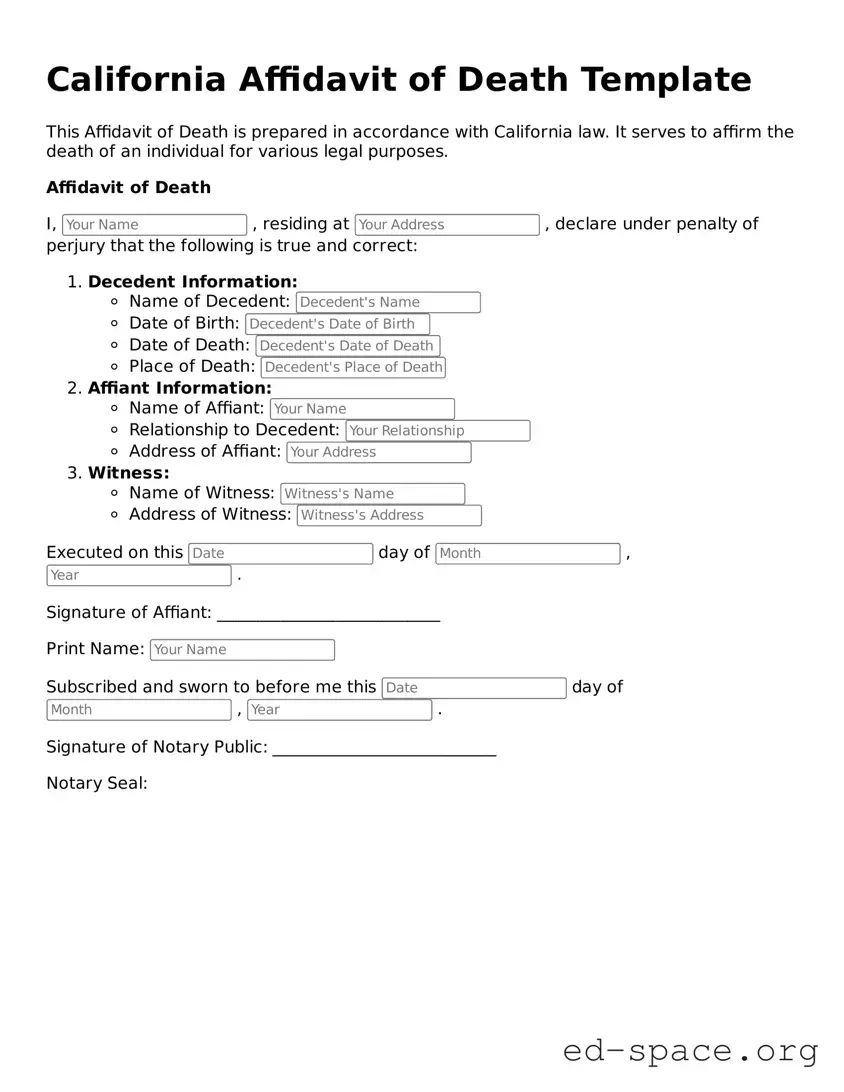
When a loved one passes away, handling their affairs can feel overwhelming. One important step in this process is completing the California Affidavit of Death form. This document serves as a legal declaration that confirms the death of an individual, which is crucial for settling estates, transferring property, and managing financial accounts. It typically requires basic information such as the deceased’s name, date of birth, date of death, and the details of the person making the affidavit. The form must be signed under penalty of perjury, emphasizing the importance of accuracy and honesty in the information provided. Understanding how to properly fill out and file this affidavit can help streamline the often complicated process of estate administration, allowing families to focus on what truly matters during a difficult time.
California Affidavit of Death Template
This Affidavit of Death is prepared in accordance with California law. It serves to affirm the death of an individual for various legal purposes.
Affidavit of Death
I, , residing at , declare under penalty of perjury that the following is true and correct:
Executed on this day of , .
Signature of Affiant: ___________________________
Print Name:
Subscribed and sworn to before me this day of , .
Signature of Notary Public: ___________________________
Notary Seal:
| Fact Name | Description |
|---|---|
| Purpose | The California Affidavit of Death form is used to provide legal evidence of a person's death. |
| Governing Law | The form is governed by California Probate Code Section 13100. |
| Who Can File | Any interested party, such as a family member or executor, can file the affidavit. |
| Required Information | The form requires details such as the deceased's name, date of death, and place of death. |
| Notarization | The affidavit must be signed in front of a notary public to be valid. |
| Use in Property Transfer | This form can be used to facilitate the transfer of property without going through probate. |
| Filing Location | The completed form is typically filed with the county recorder's office where the deceased owned property. |
| Additional Documentation | A certified copy of the death certificate is usually required to accompany the affidavit. |
| Effectiveness | The affidavit serves as a legal declaration of death and can affect various legal and financial matters. |
After gathering the necessary information, you will be ready to complete the California Affidavit of Death form. This document is vital for addressing the legal status of a deceased individual and may be required for various administrative purposes.
What is the California Affidavit of Death form?
The California Affidavit of Death form is a legal document used to formally declare the death of an individual. This affidavit serves as proof of death and is often required to transfer property ownership, settle estates, or access financial accounts in the name of the deceased. It is typically filed with the county recorder's office or other relevant institutions to update records accordingly.
Who can complete the California Affidavit of Death form?
The form can be completed by an individual who is knowledgeable about the deceased's passing. This may include a family member, a close friend, or an executor of the estate. It is essential that the person filling out the form has accurate information regarding the deceased, including their full name, date of birth, and date of death.
What information is required on the form?
The California Affidavit of Death form requires several key pieces of information. This includes the deceased's full name, the date of death, and the place of death. Additionally, the affiant— the person completing the form— must provide their own details, including their name, address, and relationship to the deceased. Signatures of witnesses may also be required, depending on the specific circumstances.
Is the California Affidavit of Death form a public document?
Yes, once filed, the California Affidavit of Death becomes a public record. This means that anyone can access the information contained within the document. However, sensitive details, such as the cause of death, are typically not included in the affidavit and remain confidential.
Where do I file the California Affidavit of Death form?
The completed form should be filed with the county recorder's office in the county where the deceased resided at the time of death. In some cases, it may also need to be submitted to financial institutions, insurance companies, or other entities that require proof of death for their records.
Are there any fees associated with filing the form?
Yes, there may be fees involved when filing the California Affidavit of Death. These fees can vary by county and may include a recording fee or additional costs for certified copies of the document. It is advisable to check with the local county recorder's office for specific fee information.
Can the form be amended after it has been filed?
Once the California Affidavit of Death has been filed, it generally cannot be amended. If an error is discovered, it may be necessary to file a new affidavit or take additional steps to correct the record. It is crucial to ensure that all information is accurate before submitting the form to avoid complications.
Do I need a lawyer to complete the California Affidavit of Death form?
While it is not mandatory to have a lawyer assist with the completion of the California Affidavit of Death form, seeking legal advice may be beneficial, especially if the deceased had a complex estate or if there are disputes among heirs. A lawyer can provide guidance on the process and help ensure that all legal requirements are met.
What happens after the form is filed?
After filing the California Affidavit of Death, the county recorder's office will process the document and update their records accordingly. The affiant may receive a certified copy of the affidavit, which can be used to settle the deceased's estate, transfer property, or close accounts. It is essential to keep this document in a safe place, as it may be needed for future reference.
Incorrect Personal Information: Failing to provide accurate details about the deceased, such as their full name, date of birth, or social security number, can lead to complications.
Missing Signature: Not signing the affidavit can invalidate the document. Ensure that the signature is present and matches the name provided.
Wrong Date of Death: Entering an incorrect date can create legal issues. Double-check the date against official documents.
Inaccurate Executor Information: Providing incorrect details about the executor or administrator can lead to delays in processing the affidavit.
Not Including Supporting Documents: Failing to attach necessary documents, such as a death certificate, may result in rejection of the affidavit.
Using Outdated Forms: Always ensure you are using the most current version of the Affidavit of Death form. Using an outdated version can lead to acceptance issues.
Neglecting to Notarize: Some affidavits require notarization. Forgetting this step can make the affidavit invalid.
Omitting Witness Information: If required, failing to include witness signatures or information can render the affidavit incomplete.
Incorrectly Filling Out Sections: Misunderstanding or misinterpreting sections of the form can lead to errors. Read each section carefully before filling it out.
Not Keeping Copies: Failing to make copies of the completed affidavit for personal records can cause issues if the document is lost or misplaced.
The California Affidavit of Death form is a crucial document for settling the affairs of a deceased individual. However, it is often accompanied by several other forms and documents to ensure a smooth process in handling the estate and related matters. Below is a list of commonly used documents that may be necessary alongside the Affidavit of Death.
Understanding these documents and their purposes is vital for anyone navigating the complexities of estate management after a loved one has passed away. Each document plays a specific role in ensuring that the deceased's wishes are honored and that the legal process is followed correctly.
The Affidavit of Death form is an important legal document used to declare that an individual has passed away. It serves various purposes, particularly in settling estates and transferring property. There are several other documents that share similarities with the Affidavit of Death. Here’s a list of eight such documents:
Understanding these documents can help navigate the complexities of managing affairs after a loved one has passed away. Each serves a unique purpose but often works in conjunction with the Affidavit of Death to ensure a smooth transition of assets and responsibilities.
When filling out the California Affidavit of Death form, it's important to follow certain guidelines to ensure accuracy and compliance. Here’s a list of things you should and shouldn’t do:
The California Affidavit of Death form is an important legal document, but there are several misconceptions surrounding it. Understanding these misconceptions can help clarify its purpose and use.
Many people believe that the Affidavit of Death is only used for real estate transactions. In reality, this form can be used for various purposes, including settling bank accounts, transferring personal property, and addressing other assets of the deceased.
While it may seem straightforward, the Affidavit of Death requires specific information and must be completed correctly. Seeking assistance from a legal professional can ensure that all details are accurate and compliant with state laws.
This form can be completed by any person who has knowledge of the death and the deceased’s affairs. It is not limited to immediate family members, allowing others who are involved in the estate to utilize it as well.
Unlike some legal documents, the Affidavit of Death does not need to be filed with the court. Instead, it is typically presented to financial institutions or other entities that hold the deceased’s assets.
When dealing with the California Affidavit of Death form, there are several important points to keep in mind. This form is often used to settle matters related to the deceased's estate and can help clarify ownership of assets. Here are some key takeaways:
By keeping these points in mind, you can navigate the process of filling out and using the California Affidavit of Death form more effectively.