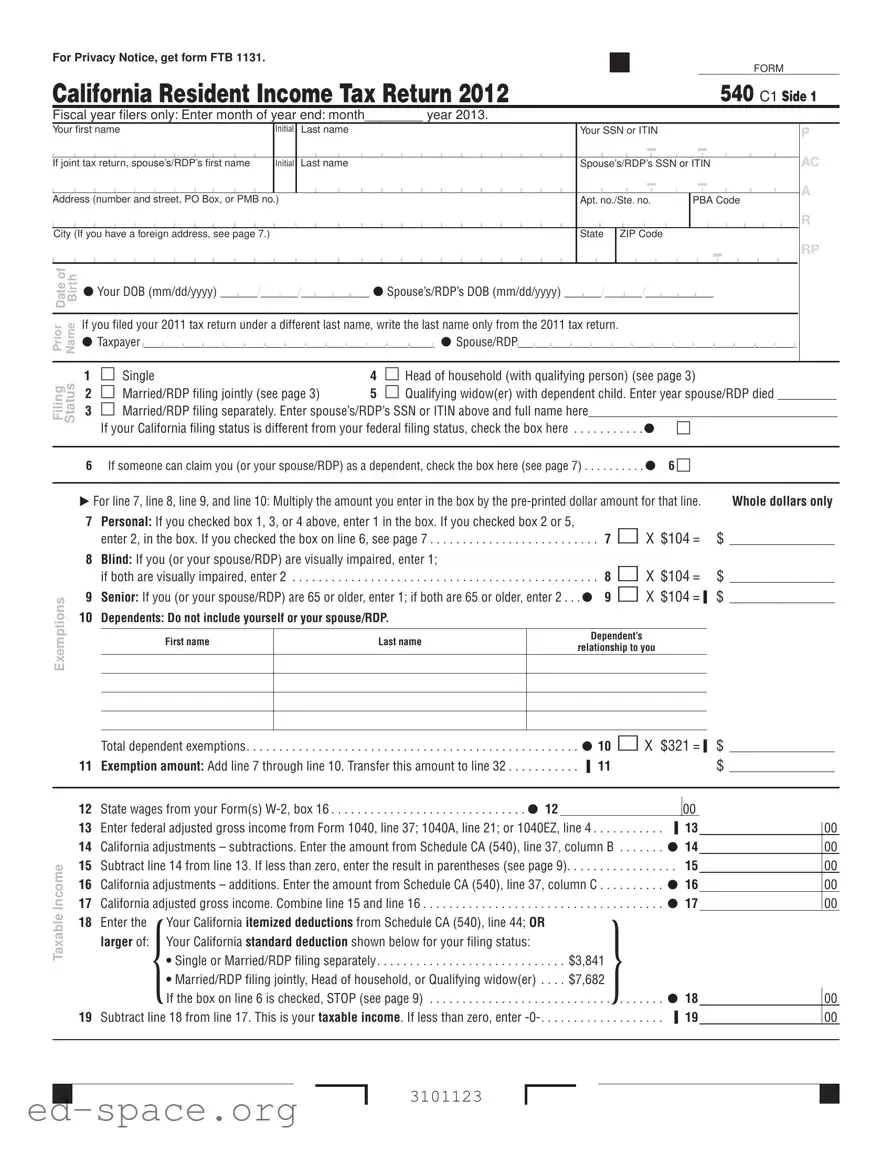
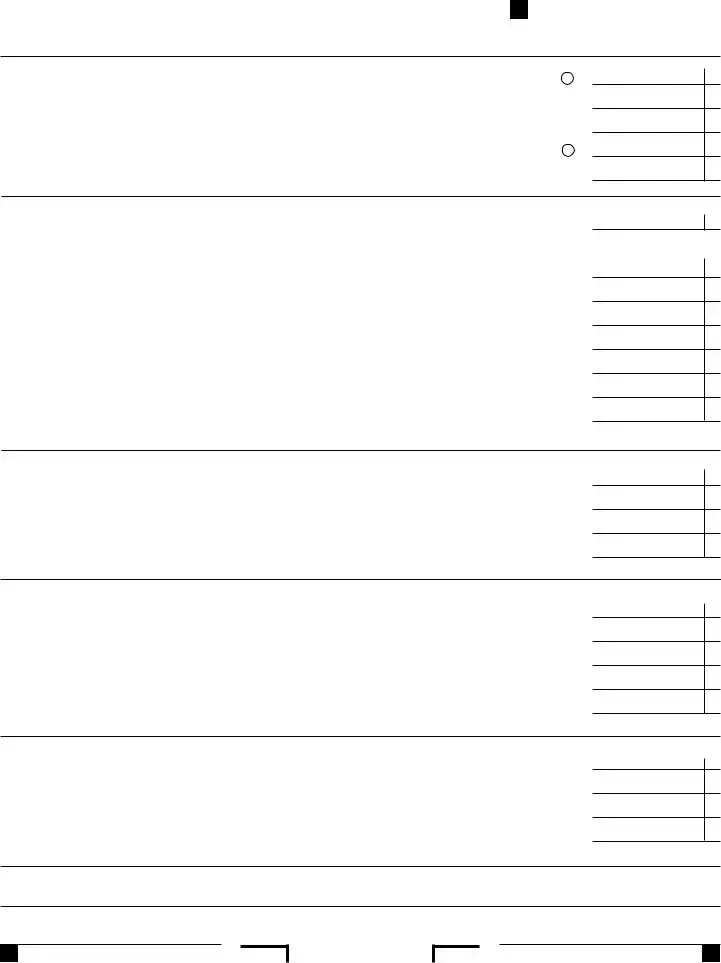
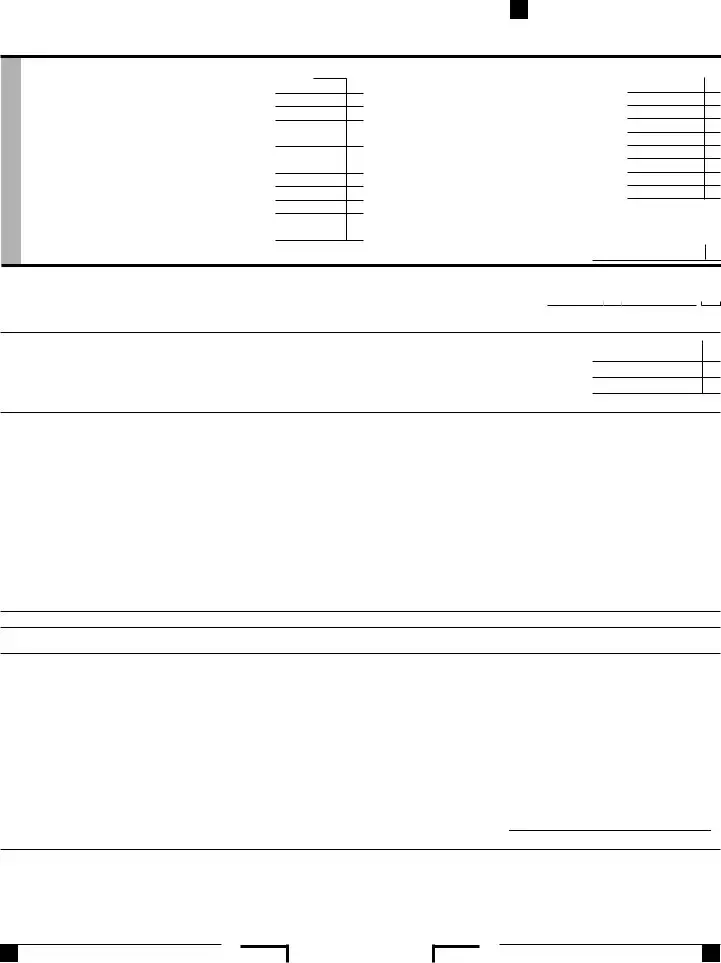
The California 540 C1 form is an essential document for residents filing their state income tax returns, particularly for those who operate on a fiscal year. This form captures key personal information, including names, Social Security Numbers (SSNs), and addresses of the taxpayer and their spouse or registered domestic partner (RDP). It outlines the taxpayer's filing status, which can significantly affect tax calculations, and provides space for exemptions based on personal circumstances, such as age or blindness. Additionally, the form requires details about income sources, including wages and federal adjusted gross income, while also allowing for various deductions and credits. Taxpayers must carefully calculate their taxable income and determine any tax owed or refunds due. The form also includes sections for contributions to specific funds, reflecting the taxpayer's interests in charitable causes. Completing the California 540 C1 accurately is vital for compliance and to ensure taxpayers receive any eligible refunds or credits.

For Privacy Notice, get form FTB 1131.
FORM
California Resident Income Tax Return 2012
540 C1 Side 1
Fiscal year filers only: Enter month of year end: month________ year 2013.
Your first name |
Initial |
Last name |
Your SSN or ITIN |
|
|
|
|
|
|
|
|
|
|
|
|
|
|
|
|
|
|
|
|
|
||||||||||||||||||||||||||||||||||||||
|
|
|
|
|
|
|
|
|
|
|
|
|
|
|
|
|
|
|
|
|
|
|
|
|
|
|
|
|
|
|
|
|
|
|
|
|
|
|
|
|
|
|
|
|
|
|
|
|
|
|
|
|
|
|
|
|
|
|
|
|
|
|
|
|
|
|
|
|
|
|
|
|
|
|
|
|
|
|
|
|
|
|
|
|
|
|
|
|
|
|
|
|
|
|
|
|
|
|
|
|
|
|
|
|
|
|
|
|
|
|
|
|
|
|
|
|
|
|
|
|
|
|
|
|
|
If joint tax return, spouse’s/RDP’s first name |
Initial |
Last name |
Spouse’s/RDP’s SSN or ITIN |
|
||||||||||||||||||||||||||||||||||||||||||||||||||||||||||
|
|
|
|
|
|
|
|
|
|
|
|
|
|
|
|
|
|
|
|
|
|
|
|
|
|
|
|
|
|
|
|
|
|
|
|
|
|
|
|
|
|
|
|
|
|
|
|
|
|
|
|
|
|
|
|
|
|
|
|
|
|
|
|
|
|
|
|
|
|
|
|
|
|
|
|
|
|
|
|
|
|
|
|
|
|
|
|
|
|
|
|
|
|
|
|
|
|
|
|
|
|
|
|
|
|
|
|
|
|
|
|
|
|
|
|
|
|
|
|
|
|
|
|
|
|
|
|
|
|
|
|
|
|
|
|
|
|
|
|
|
|
|
|
|
|
|
|
|
|
|
|
|
|
|
|
|
|
|
|
|
|
|
|
|
|
|
|
|
|
|
|
|
|
|
|
|
|
|
|
|
|
|
|
|
|
|
|
|
Address (number and street, PO Box, or PMB no.) |
|
|
|
|
|
|
|
|
|
|
|
|
|
|
Apt. no./Ste. no. |
|
PBA Code |
|
||||||||||||||||||||||||||||||||||||||||||||
|
|
|
|
|
|
|
|
|
|
|
|
|
|
|
|
|
|
|
|
|
|
|
|
|
|
|
|
|
|
|
|
|
|
|
|
|
|
|
|
|
|
|
|
|
|
|
|
|
|
|
|
|
|
|
|
|
|
|
|
|
|
|
City (If you have a foreign address, see page 7.) |
|
|
|
|
|
|
|
|
|
|
|
|
|
|
|
State |
ZIP Code |
|
|
|
|
|
|
|
|
|
|
|
|
|
|
|
|
|
|
|
|
|
||||||||||||||||||||||||
|
|
|
|
|
|
|
|
|
|
|
|
|
|
|
|
|
|
|
|
|
|
|
|
|
|
|
|
|
|
|
|
|
|
|
|
|
|
|
|
|
|
|
|
|
|
|
|
|
|
|
|
|
|
|
|
|
|
|
|
|
|
|
|
|
|
|
|
|
|
|
|
|
|
|
|
|
|
|
|
|
|
|
|
|
|
|
|
|
|
|
|
|
|
|
|
|
|
|
|
|
|
|
|
|
|
|
|
|
|
|
|
|
|
|
|
|
|
|
|
|
|
|
|
|
|
Dateof Birth |
Your DOB (mm/dd/yyyy) ______/______/ |
|
___________ Spouse’s/RDP’s DOB (mm/dd/yyyy) ______/______/ |
|
___________ |
||||||||||||||||
|
|
|
|
|
|
|
|
|
|
|
|
|
|
|
|
|
|
|
|
|
|
Prior Name |
If you filed your 2011 tax return under a different last name, write the last name only from the 2011 tax return. |
||||||||||||||||||||
Taxpayer |
|
|
|
_______________________________________________ |
|
|
|
Spouse/RDP |
|
|
|
_____________________________________________ |
|
|
|
|
|||||
|
|
|
|
|
|
|
|
|
|
|
|
|
|
||||||||
P
AC
A
R
RP
Filing Status
1 |
Single |
4 |
Head of household (with qualifying person) (see page 3) |
2 |
Married/RDP filing jointly (see page 3) |
5 |
Qualifying widow(er) with dependent child. Enter year spouse/RDP died _________ |
3 Married/RDP filing separately. Enter spouse’s/RDP’s SSN or ITIN above and full name here______________________________________
If your California filing status is different from your federal filing status, check the box here |
|
|
6 If someone can claim you (or your spouse/RDP) as a dependent, check the box here (see page 7) |
6 |
|
|
Exemptions
For line 7, line 8, line 9, and line 10: Multiply the amount you enter in the box by the |
Whole dollars only |
|
7 Personal: If you checked box 1, 3, or 4 above, enter 1 in the box. If you checked box 2 or 5, |
7 X $104 = |
|
enter 2, in the box. If you checked the box on line 6, see page 7 |
$ _________________ |
|
8Blind: If you (or your spouse/RDP) are visually impaired, enter 1;
|
if both are visually impaired, enter 2 |
. . . . . . . . . . . . . . . . . . . . . . . |
. . . . . . . . |
. . . 8 |
X $104 |
= |
|
$ _________________ |
|
9 |
Senior: If you (or your spouse/RDP) are 65 or older, enter 1; if both are 65 or older, enter 2 . . . |
9 |
X $104 |
=▐ |
$ _________________ |
||||
10 |
Dependents: Do not include yourself or your spouse/RDP. |
|
|
|
|
|
|||
|
|
|
|
|
|
|
|
|
|
|
First name |
|
Last name |
|
Dependent’s |
|
|
|
|
|
|
|
relationship to you |
|
|
|
|||
|
|
|
|
|
|
|
|
||
|
|
|
|
|
|
|
|
|
|
|
|
|
|
|
|
|
|
|
|
|
|
|
|
|
|
|
|
|
|
|
|
|
|
|
|
|
|
|
|
Taxable Income
|
Total dependent exemptions |
. . . . . |
. . . 10 X $321 =▐ |
$ _________________ |
|||||
11 |
Exemption amount: Add line 7 through line 10. Transfer this amount to line 32 . . . |
. . . . . |
. . . ▐ 11 |
|
|
|
$ _________________ |
||
12 |
State wages from your Form(s) |
12 |
|
|
|
|
|||
|
00 |
|
|
|
|||||
13 |
Enter federal adjusted gross income from Form 1040, line 37; 1040A, line 21; or 1040EZ, line 4 |
▐ 13 |
|
|
00 |
||||
|
|||||||||
14 |
California adjustments – subtractions. Enter the amount from Schedule CA (540), line 37, column B |
14 |
|
00 |
|||||
15 |
Subtract line 14 from line 13. If less than zero, enter the result in parentheses (see page 9) |
. . 15 |
|
|
00 |
||||
16 |
California adjustments – additions. Enter the amount from Schedule CA (540), line 37, column C |
16 |
|
|
00 |
||||
17 |
California adjusted gross income. Combine line 15 and line 16 |
. . . . . |
. . . . . . . . . . . . . . . . |
17 |
|
00 |
|||
18 |
Enter the |
Your California itemized deductions from Schedule CA (540), line 44; OR |
|
|
|
|
|
||
|
larger of: |
Your California standard deduction shown below for your filing status: |
|
|
|
|
|
||
•Single or Married/RDP filing separately |
$3,841 |
{ |
|
|
|
•Married/RDP filing jointly, Head of household, or Qualifying widow(er) . . . . |
$7,682 |
|
|
|
|
{If the box on line 6 is checked, STOP (see page 9) |
|
18 |
|
||
. . . . . . . |
|
00 |
|||
19 Subtract line 18 from line 17. This is your taxable income. If less than zero, enter |
. . . . . . . |
. . . . . . . . |
▐ 19 |
|
00 |
3101123
Your name: __________________________________ Your SSN or ITIN: ____________________________
|
|
31 |
Tax. Check the box if from: Tax Table |
Tax Rate Schedule |
FTB 3800 FTB 3803 |
|
. . |
31 |
|||
|
|
32 |
Exemption credits. Enter the amount from line 11. If your federal AGI is more than $169,730 (see page 10) . . |
▐ |
32 |
||||||
Tax |
|
33 |
Subtract line 32 from line 31. If less than zero, enter |
. . . . . . . . . . . |
. . . . . . . . . . . . . . . . . . . |
|
. . |
▐ |
33 |
||
|
|
34 |
Tax (see page 11). Check the box if from: |
Schedule |
|
. . |
34 |
||||
|
|
35 |
Add line 33 and line 34 |
. . . . . . . . . . . . . . . . . . . . |
. . . . . . . . . . . |
. . . . . . . . . . . . . . . . . . . |
|
. . |
▐ |
35 |
|
|
|
40 |
Nonrefundable Child and Dependent Care Expenses Credit (see page 11). Attach form FTB 3506 |
|
. . |
40 |
|||||
|
|
41 |
New jobs credit, amount generated (see page 11) |
41 |
|
|
|
|
|||
|
|
|
00 |
|
|
||||||
Credits |
|
42 |
. . . . . . . . . . . . . . . . .New jobs credit, amount claimed (see page 11) |
. . . . . . . . . . . |
. . . . . . . . . . . . . . . . . . . |
|
. . |
42 |
|||
|
43 |
Enter credit name▐_______________________________code number________ and amount |
|
|
43 |
||||||
|
|
|
. . |
||||||||
Special |
|
44 |
Enter credit name▐_______________________________code number________ and amount |
|
. . |
44 |
|||||
|
45 |
To claim more than two credits (see page 12). Attach Schedule P (540) |
|
|
45 |
||||||
|
|
|
. . |
||||||||
|
|
46 |
Nonrefundable renter’s credit (see page 12) |
. . . . . . . . . . . . . . . . . . . . |
. . . . . . . . . . . |
. . . . . . . . . . . . . . . . . . . |
|
. . |
46 |
||
|
|
47 |
Add line 40 and line 42 through line 46. These are your total credits . |
. . . . . . . . . . . |
. . . . . . . . . . . . . . . . . . . |
|
. . |
▐ |
47 |
||
|
|
48 |
Subtract line 47 from line 35. If less than zero, enter |
. . . . . . . . . . . |
. . . . . . . . . . . . . . . . . . . |
|
. . |
▐ |
48 |
||
Taxes |
|
61 |
Alternative minimum tax. Attach Schedule P (540) |
. . . . . . . . . . . |
. . . . . . . . . . . . . . . . . . . |
|
. . |
61 |
|||
|
62 |
Mental Health Services Tax (see page 13) . |
|
|
|
|
|
|
62 |
||
Other |
|
. . . . . . . . . . . . . . . . . . . . |
. . . . . . . . . . . |
. . . . . . . . . . . . . . . . . . . |
|
. . |
|||||
|
63 |
Other taxes and credit recapture (see page 13) |
|
|
|
|
|
63 |
|||
|
|
. . . . . . . . . . . |
. . . . . . . . . . . . . . . . . . . |
|
. . |
||||||
|
|
64 |
Add line 48, line 61, line 62, and line 63. This is your total tax |
. . . . . . . . . . . |
. . . . . . . . . . . . . . . . . . . |
|
. . |
64 |
|||
|
|
71 |
California income tax withheld (see page 13) |
. . . . . . . . . . . |
. . . . . . . . . . . . . . . . . . . |
|
. . |
71 |
|||
Payments |
|
72 |
2012 CA estimated tax and other payments (see page 13) |
. . . . . . . . . . . |
. . . . . . . . . . . . . . . . . . . |
|
. . |
72 |
|||
|
73 |
Real estate and other withholding (see page 13) |
|
|
|
|
|
73 |
|||
|
|
. . . . . . . . . . . |
. . . . . . . . . . . . . . . . . . . |
|
. . |
||||||
|
|
74 |
Excess SDI (or VPDI) withheld (see page 13) |
. . . . . . . . . . . |
. . . . . . . . . . . . . . . . . . . |
|
. . |
74 |
|||
|
|
75 |
Add line 71, line 72, line 73, and line 74. These are your total payments (see page 14) |
|
. . |
▐ |
75 |
||||
OverpaidTax/ |
TaxDue |
91 |
Overpaid tax. If line 75 is more than line 64, subtract line 64 from line 75 |
|
. . |
▐ |
91 |
||||
94 |
Tax due. If line 75 is less than line 64, subtract line 75 from line 64. . |
. . . . . . . . . . . |
. . . . . . . . . . . . . . . . . . . |
|
. . |
▐ |
94 |
||||
|
|
92 |
Amount of line 91 you want applied to your |
2013 estimated tax . . . . |
. . . . . . . . . . . |
. . . . . . . . . . . . . . . . . . . |
|
. . |
|
92 |
|
|
|
93 |
Overpaid tax available this year. Subtract line 92 from line 91 |
. . . . . . . . . . . |
. . . . . . . . . . . . . . . . . . . |
|
. . |
93 |
|||
Use |
Tax |
95 |
Use Tax. This is not a total line (see page 14) |
. . . . . . 95 |
|
|
00 |
|
|
||
|
|
|
|||||||||
00
00
00
00
00
00
00
00
00
00
00
00
00
00
00
00
00
00
00
00
00
00
00
00
00
00
Side 2 Form 540 C1 2012
3102123
Your name: __________________________________ Your SSN or ITIN: ____________________________
Contributions
|
Code |
Amount |
California Seniors Special Fund (see page 23) . . . |
. 400 |
00 |
Alzheimer’s Disease/Related Disorders Fund . . . . |
. 401 |
00 |
California Fund for Senior Citizens |
. 402 |
00 |
Rare and Endangered Species |
|
|
Preservation Program |
. 403 |
00 |
State Children’s Trust Fund for the Prevention |
|
|
of Child Abuse |
. 404 |
00 |
California Breast Cancer Research Fund |
. 405 |
00 |
California Firefighters’ Memorial Fund |
. 406 |
00 |
Emergency Food for Families Fund |
. 407 |
00 |
California Peace Officer Memorial |
|
|
Foundation Fund |
. 408 |
00 |
Code
California Sea Otter Fund . . . . . . . . . . . . . . . . . . . . 410 Municipal Shelter
Amount
00
00
00
00
00
00
00
00
00
110 Add code 400 through code 423. This is your total contribution . . . . . . . . . . . . . . . . . . . . . . . . . . . . . . . . . . . 110
00
Amount |
YouOwe |
|
Pay online – Go to ftb.ca.gov for more information. |
|
|
|
|
|
|
|
111 |
AMOUNT YOU OWE. Add line 94, line 95, and line 110 (see page 15). Do not send cash. |
111 |
|
|
|
|
andInterest |
Penalties |
. . . . . . . . . .Mail to: FRANCHISE TAX BOARD, PO BOX 942867, SACRAMENTO CA |
|
|
|
, |
||
Interest, late return penalties, and late payment penalties |
|
|
|
|
|
|||
|
|
112 |
112. . . . |
|||||
|
|
113 |
Underpayment of estimated tax. Check the box: FTB 5805 attached FTB 5805F attached |
. . . . . |
|
. . 113 |
||
|
|
114 |
Total amount due (see page 17). Enclose, but do not staple, any payment |
114. . . . |
||||
,. 00
00
00
00
Refund and Direct Deposit
115REFUND OR NO AMOUNT DUE. Subtract line 95 and line 110 from line 93 (see page 17).
Mail to: FRANCHISE TAX BOARD, PO BOX 942840, SACRAMENTO CA |
115 |
|
|
|
|
, |
|
|
|
, |
|
|
|
|
|
|
. |
|
00 |
|
|
|
|
|
|
|
|
|
|
|
|
|
|
|
|
|
|
|
Fill in the information to authorize direct deposit of your refund into one or two accounts. Do not attach a voided check or a deposit slip (see page 17). Have you verified the routing and account numbers? Use whole dollars only.
All or the following amount of my refund (line 115) is authorized for direct deposit into the account shown below:
Checking
|
|
|
|
|
|
|
|
|
|
|
|
|
|
|
|
|
|
|
|
Savings |
|
|
|
|
|
|
|
|
|
|
|
|
|
|
|
|
|
|
|
|
|
|
|
|
|
|
|
|
|
|
|
|
|
|
|
|
|
|
|
|
|
, |
|
|
|
, |
|
|
|
|
|
. |
|
00 |
|
|
|
|
|
Routing number |
|
|
|
|
|
|
|
Type |
|
Account number |
|
|
116 Direct deposit amount |
|
|
|
|
|
|||||||||||||||||||||||||||||||||||||||||||||||||||||
The remaining amount of my refund (line 115) is authorized for direct deposit into the account shown below:
Checking
|
|
|
|
|
|
|
|
|
|
|
|
|
|
|
|
|
|
|
Savings |
|
|
|
|
|
|
|
|
|
|
|
|
|
|
|
|
|
|
|
|
|
|
|
|
|
|
|
|
|
|
|
|
|
|
|
|
|
|
|
|
|
, |
|
|
|
, |
|
|
|
|
|
. |
|
00 |
|
|
|
|
Routing number |
|
|
|
|
|
|
|
Type |
|
Account number |
|
|
117 Direct deposit amount |
|
|
|
|
|
|||||||||||||||||||||||||||||||||||||||||||||||||||||
IMPORTANT: See the instructions to find out if you should attach a copy of your complete federal tax return.
Under penalties of perjury, I declare that I have examined this tax return, including accompanying schedules and statements, and to the best of my knowledge and belief, it is true, correct, and complete.
Sign Here
Your signature |
Spouse’s/RDP’s signature |
Daytime phone number (optional) |
||||||||||||||||||||||||||||||||||||||
|
(if a joint tax return, both must sign) |
( |
|
|
|
|
|
|
|
|
|
|
|
|
|
) |
|
|
|
|
|
|
|
|
|
|
|
|
|
|
|
|
|
|
|
|
|
|
|
|
X |
X |
|
|
|
|
|
|
|
|
|
|
|
|
|
|
|
|
|
|
|
|
|
|
|
|
|
|
|
|
|
|
|
|
|
||||||
Date |
|
|
|
|
|
|
|
|
|
|
|
|
|
|
|
|
|
|
|
|
|
|
|
|
|
|
|
|
|
|
|
|||||||||
|
|
|
|
|
|
|
|
|
|
|
|
|
|
|
|
|
|
|
|
|
|
|
|
|
|
|
|
|
|
|
|
|
|
|
|
|
|
|
|
|
Your email address (optional). Enter only one email address. |
|
|
|
|
|
|
|
|
|
|
|
|
|
|
|
|
|
|
|
|
|
|
|
|
|
|
|
|
|
|
|
|
|
|
|
|
|
|
|
|
It is unlawful to forge a spouse’s/RDP’s signature.
Joint tax return? (see page 17)
|
|
|
|||||||||||||||||||
Paid preparer’s signature (declaration of preparer is based on all information of which preparer has any knowledge) |
PTIN |
|
|||||||||||||||||||
|
|
|
|
|
|
|
|
|
|
|
|
|
|
|
|
|
|
|
|
|
|
Firm’s name (or yours, if |
Firm’s address |
FEIN |
|
||||||||||||||||||
|
|
|
|
|
|
|
|
|
|
|
|
|
|
|
|
|
|
|
|
|
|
|
|
|
|
|
|
|
|
|
|
|
|
|
|
|
|
|
|
|
|
|
|
|
|
|
|
|
|
|
|
|
|
|
|
|
|
|
|
|
|
|
|
|
|
Do you want to allow another person to discuss this tax return with us? (see page 17) . . . . . . . . . Yes No
__________________________________________________________________ |
( |
) |
Print Third Party Designee’s Name |
Telephone Number |
|
3103123
Form 540 C1 2012 Side 3
| Fact Name | Description |
|---|---|
| Form Title | The California 540 C1 form is used for filing the California Resident Income Tax Return for the year 2012. |
| Eligibility | This form is specifically for individuals who are filing as fiscal year filers. |
| Filing Status Options | Taxpayers can select from various filing statuses, including Single, Married/RDP filing jointly, and Head of household. |
| Exemptions | Taxpayers can claim exemptions for themselves, their spouse/RDP, and dependents, affecting their taxable income. |
| Income Reporting | Taxpayers must report state wages from Form W-2 and federal adjusted gross income from Form 1040. |
| Tax Calculation | The form includes a section for calculating tax based on income and applicable credits. |
| Credits | Various credits can be claimed, including the Nonrefundable Child and Dependent Care Expenses Credit. |
| Payment Instructions | Taxpayers should mail payments to the Franchise Tax Board in Sacramento, CA, and avoid sending cash. |
| Governing Law | The California 540 C1 form is governed by California Revenue and Taxation Code. |
Completing the California 540 C1 form requires careful attention to detail. Follow these steps to ensure accurate submission.
After completing the form, review it for accuracy. Ensure all required fields are filled out correctly before submitting it to the Franchise Tax Board. Keep a copy for your records.
What is the California 540 C1 form?
The California 540 C1 form is a tax return specifically designed for California residents. It is used to report income, claim deductions, and determine the amount of tax owed or refund due for the tax year. This form is particularly relevant for individuals or couples who are filing their taxes for the state of California.
Who should use the California 540 C1 form?
Individuals who are residents of California and are required to file a state income tax return should use the California 540 C1 form. This includes those who earn income from various sources within the state. If you are filing as a fiscal year filer, this form is also applicable.
What information is needed to complete the form?
To fill out the California 540 C1 form, you will need personal information such as your name, Social Security Number (SSN) or Individual Taxpayer Identification Number (ITIN), and your address. Additionally, you will need details about your income, exemptions, and any deductions or credits you plan to claim. This includes information from your federal tax return and any relevant schedules.
What are exemptions, and how do they work on this form?
Exemptions reduce your taxable income and can lower your overall tax liability. On the California 540 C1 form, you can claim personal exemptions for yourself, your spouse, and dependents. Each exemption has a specified dollar amount, which you multiply by the number of exemptions you are eligible to claim. This total is then used to reduce your taxable income.
How do I determine my filing status?
Your filing status is based on your marital status and family situation as of the end of the tax year. The California 540 C1 form provides options for different filing statuses, including Single, Married/RDP filing jointly, Married/RDP filing separately, Head of Household, and Qualifying Widow(er). Selecting the correct status is important, as it affects your tax rates and available deductions.
What should I do if I made a mistake on the form?
If you realize that you made a mistake on your California 540 C1 form after submitting it, you can file an amended return. To do this, you will need to use Form 540X, which is specifically designed for correcting errors on previously filed tax returns. Be sure to provide accurate information and any supporting documentation required.
Can I e-file the California 540 C1 form?
Yes, you can e-file the California 540 C1 form. Many tax preparation software programs and online services allow you to file your California state taxes electronically. E-filing can be faster and may result in quicker processing of your return and any refund due.
What if I owe taxes?
If you find that you owe taxes after completing the California 540 C1 form, you will need to pay the amount due by the tax deadline to avoid penalties and interest. The form provides instructions on how to make your payment, which can be done online, by mail, or through other accepted methods. It is important to keep track of any payments made to ensure they are correctly applied to your tax account.
Where can I find more information about the California 540 C1 form?
Additional information about the California 540 C1 form can be found on the California Franchise Tax Board (FTB) website. The site offers resources such as instructions, FAQs, and contact information for assistance. It is advisable to review the guidelines thoroughly to ensure proper completion of the form.
Incorrect Personal Information: Many individuals fail to provide accurate personal details, such as their full name, Social Security Number (SSN), or Individual Taxpayer Identification Number (ITIN). This can lead to processing delays or rejections.
Filing Status Errors: Selecting the wrong filing status is a common mistake. Taxpayers must carefully review their eligibility for options like "Married/RDP filing jointly" or "Head of household" to ensure they choose correctly.
Exemption Miscalculations: Mistakes often occur when calculating exemptions. Taxpayers must accurately multiply the number of exemptions by the pre-printed dollar amounts. Failing to do so can result in incorrect tax calculations.
Income Reporting Issues: Some filers neglect to report all sources of income, including state wages from W-2 forms or federal adjusted gross income. This oversight can lead to underreporting and potential penalties.
Omitting Required Attachments: Taxpayers sometimes forget to attach necessary schedules or forms, such as Schedule CA (540) for adjustments. This can hinder the processing of the return.
Signature and Date Errors: Failing to sign and date the form is a frequent error. Both taxpayers must sign if filing jointly, and the absence of a signature can result in the return being considered invalid.
The California 540 C1 form is an essential document for residents filing their state income tax returns. However, several other forms and documents often accompany this form to ensure accurate reporting and compliance with tax regulations. Below is a list of commonly used forms that may be required in conjunction with the California 540 C1.
Understanding these additional forms can facilitate a smoother tax filing process. Ensuring all relevant documents are completed and submitted can help avoid delays and potential penalties from the California Franchise Tax Board.
When filling out the California 540 C1 form, it’s essential to ensure accuracy and completeness. Here’s a list of things you should and shouldn’t do:
Understanding tax forms can be a daunting task, especially when it comes to the California 540 C1 form. Here are nine common misconceptions about this form, along with clarifications to help you navigate it more easily.
This form is designed for California residents, regardless of income level. It applies to anyone who needs to file a state income tax return.
Both employees and self-employed individuals can use the 540 C1 form. It is not limited to any specific type of employment.
While the 540 C1 form is related to your overall tax situation, it is specifically for California state taxes and differs from federal tax forms.
If you earned income in other states, you must report it on the 540 C1 form, as California taxes all income earned by its residents.
Your filing status is crucial, as it determines your tax rate and the deductions you can claim. Be sure to select the correct status based on your situation.
Even if you have no dependents, you may still qualify for personal exemptions. It’s important to complete this section accurately.
Amendments are possible. If you discover an error after filing, you can submit a corrected form to the Franchise Tax Board.
California has a progressive tax system, meaning that different income levels are taxed at varying rates. This affects how much you owe.
While it’s advisable to pay any taxes owed as soon as possible, California allows for payment plans and extensions under certain circumstances.
By dispelling these misconceptions, taxpayers can better prepare for their filing obligations and ensure compliance with California tax laws. Understanding the details of the 540 C1 form is a vital step in managing your financial responsibilities effectively.
When filling out the California 540 C1 form, keep these key takeaways in mind:
Following these guidelines will help streamline the process and ensure that your tax return is completed correctly.