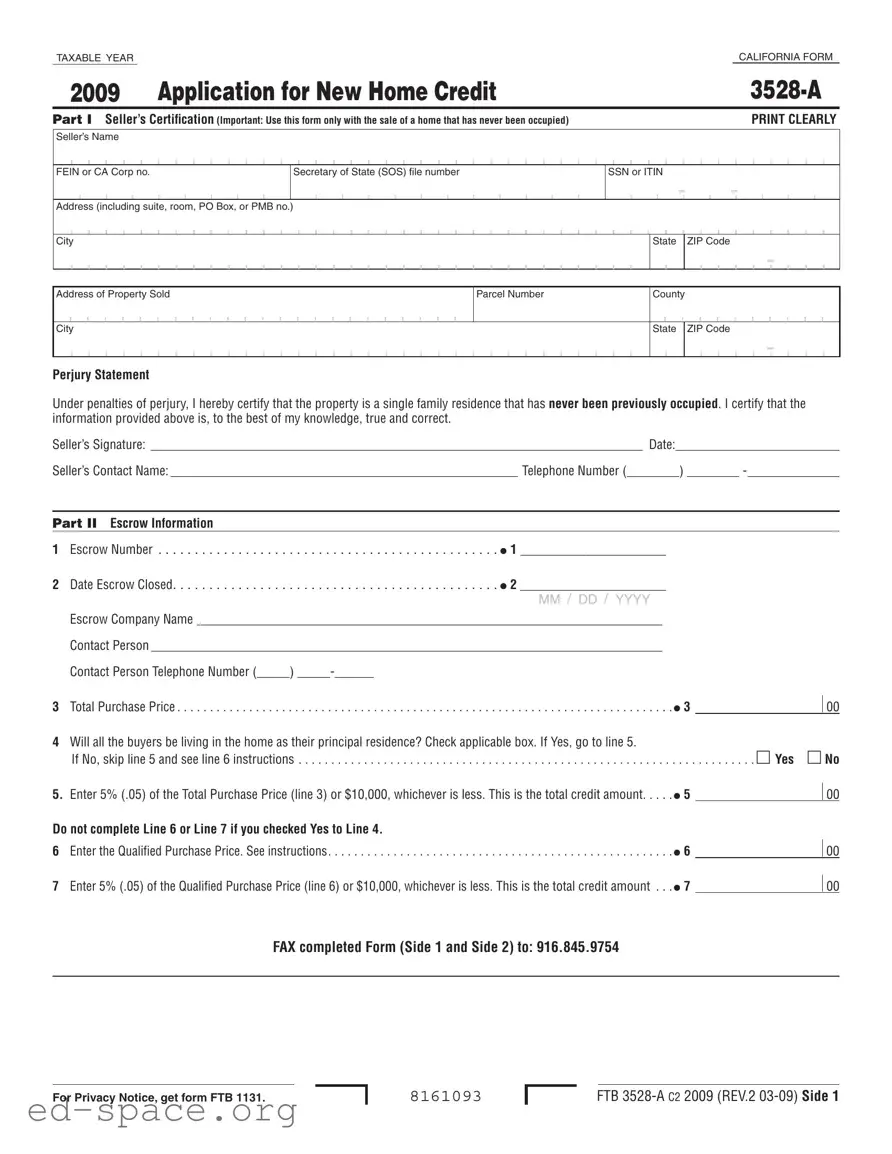
The California Form 3528-A, officially known as the Application for New Home Credit, serves as a crucial document for sellers of newly constructed homes that have never been occupied. This form is specifically designed for transactions occurring between March 1, 2009, and March 1, 2010, and plays a pivotal role in facilitating tax credits for eligible buyers. The form consists of several key sections, starting with Part I, where the seller certifies that the property in question qualifies as a single-family residence that has not been previously occupied. This certification is critical, as it establishes the foundation for the buyer's eligibility for the tax credit. Part II focuses on escrow information, requiring details such as the escrow number, closing date, and total purchase price, while also determining whether all buyers intend to use the home as their principal residence. If they do, the seller can claim a credit amount equal to 5% of the total purchase price or a maximum of $10,000, whichever is lower. In cases where not all buyers will reside in the home, further calculations are necessary to ascertain the qualified purchase price and the corresponding credit amount. Part III captures essential information about the qualified buyers, including their ownership percentages and individual credits, ensuring that the allocation of the tax credit is accurately reflected. This form, therefore, not only streamlines the process of claiming tax benefits but also ensures compliance with California's tax regulations.
TAXABLE YEARCALIFORNIA FORM
2009 |
|
|
|
Application for New Home Credit |
|
|
|
|
|
|
|
|
|
|
|
|
|
|
|
|
|
|||||||||||||||||||||||||||||||||||||||||||||||
Part I Seller’s Certiication (Important: Use this form only with the sale of a home that has never been occupied) |
|
|
|
|
|
|
|
|
|
|
|
|
|
|
|
|
|
PRINT CLEARLY |
||||||||||||||||||||||||||||||||||||||||||||||||||
|
|
|
|
|
|
|
|
|
|
|
|
|
|
|
|
|
|
|
|
|
|
|
|
|
|
|
|
|
|
|
|
|
|
|
|
|
|
|
|
|
|
|
|
|
|
|
|
|
|
|
|
|
|
|
|
|
|
|
|
|
|
|
|
|
|
|
|
|
Seller’s Name |
|
|
|
|
|
|
|
|
|
|
|
|
|
|
|
|
|
|
|
|
|
|
|
|
|
|
|
|
|
|
|
|
|
|
|
|
|
|
|
|
|
|
|
|
|
|
|
|
|
|
|
|
|
|
|
|
|
|
|
|
|
|||||||
|
|
|
|
|
|
|
|
|
|
|
|
|
|
|
|
|
|
|
|
|
|
|
|
|
|
|
|
|
|
|
|
|
|
|
|
|
|
|
|
|
|
|
|
|
|
|
|
|
|
|
|
|
|
|
|
|
|
|
|
|
|
|
|
|
|
|
|
|
|
|
|
|
|
|
|
|
|
|
|
|
|
|
|
|
|
|
|
|
|
|
|
|
|
|
|
|
|
|
|
|
|
|
|
|
|
|
|
|
|
|
|
|
|
|
|
|
|
|
|
|
|
|
|
|
|
|
|
|
|
|
|
|
|
|
|
|
|
FEIN or CA Corp no. |
|
|
|
|
|
|
|
|
|
|
Secretary of State (SOS) ile number |
SSN or ITIN |
|
|
|
|
|
|
|
|
|
|
|
|
|
|
|
|
|
|
||||||||||||||||||||||||||||||||||||||
|
|
|
|
|
|
|
|
|
|
|
|
|
|
|
|
|
|
|
|
|
|
|
|
|
|
|
|
|
|
|
|
|
|
|
|
|
|
|
|
|
|
|
|
|
|
- |
|
|
|
- |
|
|
|
|
|
|
|
|
|
|
||||||||
|
|
|
|
|
|
|
|
|
|
|
|
|
|
|
|
|
|
|
|
|
|
|
|
|
|
|
|
|
|
|
|
|
|
|
|
|
|
|
|
|
|
|
|
|
|
|
|
|
|
|
|
|
|
|||||||||||||||
Address (including suite, room, PO Box, or PMB no.) |
|
|
|
|
|
|
|
|
|
|
|
|
|
|
|
|
|
|
|
|
|
|
|
|
|
|
|
|||||||||||||||||||||||||||||||||||||||||
|
|
|
|
|
|
|
|
|
|
|
|
|
|
|
|
|
|
|
|
|
|
|
|
|
|
|
|
|
|
|
|
|
|
|
|
|
|
|
|
|
|
|
|
|
|
|
|
|
|
|
|
|
|
|
|
|
|
|
|
|
|
|
|
|
|
|
|
|
City |
|
|
|
|
|
|
|
|
|
|
|
|
|
|
|
|
|
|
|
|
|
|
|
|
|
|
|
|
|
|
|
|
|
|
|
|
|
|
State |
|
ZIP Code |
|||||||||||||||||||||||||||
|
|
|
|
|
|
|
|
|
|
|
|
|
|
|
|
|
|
|
|
|
|
|
|
|
|
|
|
|
|
|
|
|
|
|
|
|
|
|
|
|
|
|
|
|
|
|
|
|
|
|
|
|
|
|
|
|
|
|
|
|
- |
|
|
|
|
|
||
|
|
|
|
|
|
|
|
|
|
|
|
|
|
|
|
|
|
|
|
|
|
|
|
|
|
|
|
|
|
|
|
|
|
|
|
|
|
|
|
|
|
|
|
|
|
|
|
|
|
|
|
|
|
|
|
|
|
|
|
|
|
|
|
|
|
|
|
|
Address of Property Sold
City
Perjury Statement
Parcel Number |
County |
||||||||
|
|
|
|
|
|
|
|
|
|
|
State ZIP Code |
||||||||
-
Under penalties of perjury, I hereby certify that the property is a single family residence that has never been previously occupied. I certify that the information provided above is, to the best of my knowledge, true and correct.
Seller’s Signature: ___________________________________________________________________________ Date:_________________________
Seller’s Contact Name: _____________________________________________________ Telephone Number (________) ________
Part II Escrow Information
1 |
Escrow Number |
I1 ____________________ |
2 |
Date Escrow Closed |
I2 ____________________ |
|
|
MM / DD / YYYY |
|
Escrow Company Name _______________________________________________________________________ |
|
|
Contact Person ______________________________________________________________________________ |
|
|
Contact Person Telephone Number (_____) |
|
3 |
Total Purchase Price |
. . . . . . . . . . . . . . . . . . . . . . . . . . . I3 |
00
4Will all the buyers be living in the home as their principal residence? Check applicable box. If Yes, go to line 5.
|
If No, skip line 5 and see line 6 instructions |
. . . . . . . . . . . . . |
mYes m No |
5. |
Enter 5% (.05) of the Total Purchase Price (line 3) or $10,000, whichever is less. This is the total credit amount |
I5 |
00 |
Do not complete Line 6 or Line 7 if you checked Yes to Line 4. |
|
|
|
6 |
Enter the Qualified Purchase Price. See instructions |
I6 |
00 |
7 |
Enter 5% (.05) of the Qualified Purchase Price (line 6) or $10,000, whichever is less. This is the total credit amount . . . |
I7 |
00 |
FAX completed Form (Side 1 and Side 2) to: 916.845.9754
For Privacy Notice, get form FTB 1131.
8161093
FTB
Part III Qualiied Buyer’s Information |
Escrow Number: __________________________ |
|
|
Perjury Statement |
|
By completing and signing, the Buyer is acknowledging that he/she is purchasing a single family residence in which he/she intends to live for a minimum of two years as his/her principal residence and which is eligible for the homeowner’s exemption under R&TC Section 218.
Buyer 1. |
|
|
|
|
|
|
|
|
|
|
|
|
|
|
|
|
|
|
|
|
|
|
|
|
|
|
|
|
|
|
|
|
|
|
|
|
|
|
|
|
|
|
|
|
PRINT CLEARLY |
|||||||||||||||||||||||||||
|
|
|
|
|
|
|
|
|
|
|
|
|
|
|
|
|
|
|
|
|
|
|
|
|
|
|
|
|
|
|
|
|
|
|
|
|
|
|
|
|
|
|
|
|
|
|
||||||||||||||||||||||||||
Buyer’s First Name |
|
|
|
|
|
|
|
|
|
|
|
|
|
|
Initial |
Buyer’s Last Name |
|
|
|
|
|
|
|
|
|
|
|
|
|
|
|
|
|
|
|
|
|
|
|
|
|
|
|
|
|
|
|
|||||||||||||||||||||||||
|
|
|
|
|
|
|
|
|
|
|
|
|
|
|
|
|
|
|
|
|
|
|
|
|
|
|
|
|
|
|
|
|
|
|
|
|
|
|
|
|
|
|
|
|
|
|
|
|
|
|
|
|
|
|
|
|
|
|
|
|
|
|
|
|
|
|
|
|
|
|
|
|
Buyer’s SSN or ITIN |
|
|
|
|
|
|
|
|
|
|
|
|
|
|
* Buyer’s Ownership Percent |
|
Buyer’s Individual Credit |
|||||||||||||||||||||||||||||||||||||||||||||||||||||||
|
|
|
|
|
|
|
- |
|
|
|
|
|
- |
|
|
|
|
|
|
|
|
|
|
|
|
______ _____ _____ • _____ _____% |
|
$ |
|
|
|
|
|
|
|
|
|
|
|
|
|
|
|
|
|
|
|
|
|
.00 |
||||||||||||||||||||||
Spouse’s/RDP’s First Name (if applicable) |
|
|
|
|
|
|
|
|
|
|
|
|
|
|
Initial |
Spouse’s/RDP’s Last Name |
|
|
|
|
|
|
|
|
|
|
|
|
|
|
|
|
|
|
|
|
|
|
|
|
|
|
|
|
|
|
|
|||||||||||||||||||||||||
|
|
|
|
|
|
|
|
|
|
|
|
|
|
|
|
|
|
|
|
|
|
|
|
|
|
|
|
|
|
|
|
|
|
|
|
|
|
|
|
|
|
|
|
|
|
|
|
|
|
|
|
|
|
|
|
|
|
|
|
|
|
|
|
|
|
|
|
|
|
|
||
Spouse’s/RDP’s SSN or ITIN |
- |
|
|
|
|
|
|
|
|
|
|
|
|
Buyer’s Telephone Number |
|
|
|
|
|
|
|
|
|
|
|
|
|
|
|
|
|
|
|
|
|
|
|
|
|
|
|
|
|
|
|
|||||||||||||||||||||||||||
|
|
- |
|
|
|
|
|
|
|
|
|
|
|
|
|
|
|
|
|
( __________ ) __________ – _______________________ |
||||||||||||||||||||||||||||||||||||||||||||||||||||
|
|
|
|
|
|
|
|
|
|
|
|
|
|
|
|
|
|
|
|
|
|
|
|
|
|
|
|
|
|
|
|
|
|
|
|
|
|
|
|
|
|
|
|
|
|
|
|
|
|
|
|
|
|
|
|
|
|
|
|
|
|
|||||||||||
Mailing Address |
|
|
|
|
|
|
|
|
|
|
|
|
|
|
|
|
|
|
|
|
|
|
|
|
|
|
|
|
|
|
|
|
|
|
|
|
|
|
|
|
|
|
|
|
|
|
|
|
|
|
|
|
|
|
|
|
|
|||||||||||||||
|
|
|
|
|
|
|
|
|
|
|
|
|
|
|
|
|
|
|
|
|
|
|
|
|
|
|
|
|
|
|
|
|
|
|
|
|
|
|
|
|
|
|
|
|
|
|
|
|
|
|
|
|
|
|
|
|
|
|
|
|
|
|
|
|
|
|
|
|
||||
City |
|
|
|
|
|
|
|
|
|
|
|
|
|
|
|
|
|
|
|
|
|
|
|
|
|
|
|
State |
Zip Code |
|||||||||||||||||||||||||||||||||||||||||||
|
|
|
|
|
|
|
|
|
|
|
|
|
|
|
|
|
|
|
|
|
|
|
|
|
|
|
|
|
|
|
|
|
|
|
|
|
|
|
|
|
|
|
|
|
|
|
|
|
|
|
|
|
|
|
|
|
|
|
|
- |
|
|
|
|
|
|
|
|
|
|
|
|
Buyer’s Signature |
|
|
|
|
|
|
|
|
|
|
|
|
|
|
|
|
|
|
|
|
|
|
|
|
|
|
|
Date |
|
|
|
|
|
|
|
|
|
|
|
|
|
|
|
|
|
|
|
|
|
|
|
|
|
|
|
|||||||||||||||||
|
|
|
|
|
|
|
|
|
|
|
|
|
|
|
|
|
|
|
|
|
|
|
|
|
|
|
|
|
|
|
|
|
|
|
|
|
|
|
|
|
|
|
|
|
|
|
|
|
|
|
|
|
|
|
|
|||||||||||||||||
Spouse/s/RDP’s Signature (if applicable) |
|
|
|
|
|
|
|
|
|
|
|
|
|
|
|
|
|
|
|
|
|
|
|
|
|
|
|
Date |
|
|
|
|
|
|
|
|
|
|
|
|
|
|
|
|
|
|
|
|
|
|
|
|
|
|
|
|||||||||||||||||
|
|
|
|
|
|
|
|
|
|
|
|
|
|
|
|
|
|
|
|
|
|
|
|
|
|
|
|
|
|
|
|
|
|
|
|
|
|
|
|
|
|
|
|
|
|
|
|
|
|
|
|
|
|
|
|
|
|
|||||||||||||||
Buyer 2. |
|
|
|
|
|
|
|
|
|
|
|
|
|
|
|
|
|
|
|
|
|
|
|
|
|
|
|
|
|
|
|
|
|
|
|
|
|
|
|
|
|
|
|
|
|
|
|
|
|
|
|
|
|
|
|
|
|
|||||||||||||||
|
|
|
|
|
|
|
|
|
|
|
|
|
|
|
|
|
|
|
|
|
|
|
|
|
|
|
|
|
|
|
|
|
|
|
|
|
|
|
|
|
|
|
|
|
|
|
||||||||||||||||||||||||||
Buyer’s First Name |
|
|
|
|
|
|
|
|
|
|
|
|
|
|
Initial |
Buyer’s Last Name |
|
|
|
|
|
|
|
|
|
|
|
|
|
|
|
|
|
|
|
|
|
|
|
|
|
|
|
|
|
|
|
|||||||||||||||||||||||||
|
|
|
|
|
|
|
|
|
|
|
|
|
|
|
|
|
|
|
|
|
|
|
|
|
|
|
|
|||||||||||||||||||||||||||||||||||||||||||||
|
|
|
|
|
|
|
|
|
|
|
|
|
|
|
|
|
|
|
|
|
|
|
|
|
|
|
|
|
|
|
|
|
|
|
|
|
|
|
|
|
|
|
|
|
|
|
|
|
|
|
|
|
|
|
|
|
|
|
|
|
|
|
|
|
|
|
|
|
|
|
|
|
Buyer’s SSN or ITIN |
|
|
|
|
|
|
|
|
|
|
|
|
|
|
* Buyer’s Ownership Percent |
|
Buyer’s Individual Credit |
|||||||||||||||||||||||||||||||||||||||||||||||||||||||
|
|
- |
|
|
|
|
|
- |
|
|
|
|
|
|
|
|
|
|
|
|
______ _____ _____ • _____ _____% |
|
$ |
|
|
|
|
|
|
|
|
|
|
|
|
.00 |
||||||||||||||||||||||||||||||||||||
Spouse’s/RDP’s First Name (if applicable) |
|
|
|
|
|
|
|
|
|
|
|
|
|
|
Initial |
Spouse’s/RDP’s Last Name |
|
|
|
|
|
|
|
|
|
|
|
|
|
|
|
|
|
|
|
|
|
|
|
|
|
|
|
|
|
|
|
|||||||||||||||||||||||||
|
|
|
|
|
|
|
|
|
|
|
|
|
|
|
|
|
|
|
|
|
|
|
|
|
|
|
|
|
|
|
|
|
|
|
|
|
|
|
|
|
|
|
|
|
|
|
|
|||||||||||||||||||||||||
|
|
|
|
|
|
|
|
|
|
|
|
|
|
|
|
|
|
|
|
|
|
|
|
|
|
|
|
|
|
|
|
|
|
|
|
|
|
|
|
|
|
|
|
|
|
|
|
|
|
|
|
|
|
|
|
|
|
|
|
|
|
|
|
|
|
|
|
|
|
|
|
|
Spouse’s/RDP’s SSN or ITIN |
- |
|
|
|
|
|
|
|
|
|
|
|
|
Buyer’s Telephone Number |
|
|
|
|
|
|
|
|
|
|
|
|
|
|
|
|
|
|
|
|
|
|
|
|
|
|
|
|
|
|
|
|||||||||||||||||||||||||||
- |
|
|
|
|
|
|
|
|
|
|
|
|
|
|
|
|
|
( __________ ) __________ – _______________________ |
||||||||||||||||||||||||||||||||||||||||||||||||||||||
|
|
|
|
|
|
|
|
|
|
|
|
|
|
|
|
|
|
|
|
|
|
|
|
|
|
|
|
|
|
|
|
|
|
|
|
|
|
|
|
|
|
|
|
|
|
|
|
|
|
|
|
|
|
|
|
|
|
|
|
|
|
|
|
|
|
|
|
|
|
|
|
|
Mailing Address
City
Buyer’s Signature
Spouse/s/RDP’s Signature (if applicable)
State Zip Code
-
Date
Date
Buyer 3.
Buyer’s First Name |
|
Initial |
Buyer’s Last Name |
|
|
|
|
|
|
|
|
|
|
|
|
|
|
|
|
|
|
|
|
|
|
|
|
|
|
Buyer’s SSN or ITIN |
|
* Buyer’s Ownership Percent |
Buyer’s Individual Credit |
|
|
|||||||||
- |
- |
______ _____ _____ • _____ _____% |
$ |
|
|
|
|
|
|
|
|
|
.00 |
|
Spouse’s/RDP’s First Name (if applicable) |
|
Initial |
Spouse’s/RDP’s Last Name |
|
|
|
|
|
|
|
|
|
|
|
|
|
|
|
|
|
|
|
|
|
|
|
|
|
|
Spouse’s/RDP’s SSN or ITIN |
- |
Buyer’s Telephone Number |
|
|
|
|
|
|
|
|
|
|
|
|
- |
( __________ ) __________ – _______________________ |
|||||||||||||
|
|
|||||||||||||
|
|
|
|
|
|
|
|
|
|
|
|
|
|
|
Mailing Address
City
Buyer’s Signature
Spouse/s/RDP’s Signature (if applicable)
State Zip Code
Date
Date
-
* Married/RDP couples are considered to be one buyer. If married/RDP, enter the combined percentage in the Buyer’s Ownership Percent field.
Side 2 FTB
8162093
| Fact Name | Fact Details |
|---|---|
| Purpose | The California Form 3528-A is used to apply for the New Home Credit for sellers of newly constructed homes that have never been occupied. |
| Eligibility | The form is applicable only for homes sold after March 1, 2009, and before March 1, 2010, that are intended for use as a principal residence. |
| Governing Law | The form is governed by the Revenue and Taxation Code (R&TC) Section 17059, which outlines the requirements for the New Home Credit. |
| Credit Amount | The credit amount is calculated as the lesser of 5% of the total purchase price or $10,000, and it cannot be carried over to future years. |
| Submission Process | The completed form must be faxed to the Franchise Tax Board (FTB) at 916.845.9754 within one week of the close of escrow. |
| Limitations | The credit cannot be claimed if the property has been previously occupied or if the buyer does not intend to occupy the residence for at least two years. |
To complete the California 3528 A form, follow these steps carefully. Ensure all information is accurate and complete before submitting. The form must be sent via fax to the Franchise Tax Board (FTB) after the close of escrow.
Once the form is completed, fax it to the FTB at 916.845.9754. A copy should also be provided to the buyer within one week after the close of escrow. Ensure all sections are filled out accurately to avoid delays in processing.
What is the California 3528 A form used for?
The California 3528 A form is an application for the New Home Credit. This credit is available for individuals who purchase a new home that has never been occupied. The form is used by sellers to certify the home’s eligibility and by buyers to claim the credit on their tax returns.
Who is eligible to use the California 3528 A form?
Eligibility for the form is limited to sellers of new homes that have never been occupied. Buyers must intend to use the home as their principal residence for at least two years. Both individuals and married couples can apply, but the credit can only be claimed for one principal residence per taxpayer.
How do I complete the California 3528 A form?
The form has three parts. In Part I, the seller certifies that the home has never been occupied. Part II requires escrow information, including the total purchase price and escrow number. In Part III, the buyers provide their information, including ownership percentages and signatures. Each section must be filled out clearly and accurately.
What happens after I submit the form?
Once the form is completed, the escrow company must fax it to the Franchise Tax Board (FTB) within one week after the close of escrow. A copy should also be provided to the buyer. The FTB will then allocate the credit on a first-come, first-served basis and confirm the allocation with the buyer.
What is the maximum credit amount I can receive?
The maximum credit amount is $10,000 or 5% of the purchase price, whichever is less. This credit is spread out over three years, meaning you can claim a portion each year on your tax return.
Can the credit be carried over to future years?
No, the credit cannot be carried over to future years. If the credit exceeds your net tax for the current year, the unused portion will not be available in subsequent years. It is important to ensure that you claim the full amount within the allowed timeframe.
What if I have more than one buyer?
If there are multiple buyers, each buyer's ownership percentage must be calculated. The total credit amount will be divided among the buyers based on their ownership percentages. However, only buyers who will occupy the home as their principal residence for at least two years should be included in the calculations.
Inaccurate Information: Providing incorrect personal details, such as names or identification numbers, can lead to delays or rejections of the application. Ensure that all information is accurate and matches official documents.
Failure to Sign: Neglecting to sign the form is a common mistake. Both the seller and the buyer must provide their signatures to validate the application.
Missing Dates: Omitting important dates, such as the date escrow closed, can create confusion and may hinder the processing of the application. Always double-check that all dates are filled in.
Incorrect Purchase Price Calculation: Miscalculating the total purchase price or failing to round amounts correctly can affect the credit amount. Ensure that calculations are accurate and follow the rounding rules.
Not Checking Eligibility: Failing to confirm whether the property qualifies as a new home that has never been occupied can lead to wasted effort. Review the eligibility criteria carefully before submitting the form.
Inadequate Buyer Information: Providing incomplete or unclear information about the buyers can result in processing delays. Each buyer's details must be clearly stated, including ownership percentages.
Submitting Incorrectly: Some individuals mistakenly mail the form instead of faxing it to the correct number. Adhere strictly to the submission guidelines to avoid complications.
Ignoring Deadlines: Failing to submit the application within the required timeframe can disqualify the credit. Be mindful of all deadlines related to the application process.
The California 3528 A form is essential for those involved in the sale of a new home that has never been occupied. However, several other documents often accompany this form to ensure a smooth transaction. Here’s a brief overview of those documents.
Having these documents ready can streamline the process and help ensure that all parties are informed and protected throughout the transaction. Each plays a crucial role in navigating the complexities of real estate sales in California.
The California Form 3528-A is an important document for those involved in the sale of a new home that has never been occupied. Several other documents share similarities with it, often serving related purposes in real estate transactions. Here’s a list of eight documents that are similar to the California 3528-A Form:
When filling out the California 3528 A form, it's important to follow certain guidelines to ensure your application is processed smoothly. Here’s a list of things you should and shouldn’t do:
This form is specifically for the sale of a new home that has never been occupied. Using it for previously occupied homes is incorrect.
Individuals, including single buyers and unmarried couples, can qualify for the credit as long as they meet the requirements of the form.
The credit is capped at $10,000 or 5% of the total purchase price, whichever is less. Therefore, the actual credit amount may be lower.
Instead of mailing, the completed form must be faxed to the FTB at the specified number within one week after the close of escrow.
The credit is only applicable to one qualified principal residence per taxpayer. Multiple claims for different homes are not allowed.
Buyers must receive a certification from the seller that the home has never been occupied before they can claim the credit.
This credit is nonrefundable and cannot be carried over. It must be used in the year of the purchase.
Filling out the California 3528 A form can seem daunting, but understanding its key components can simplify the process. Here are four essential takeaways: