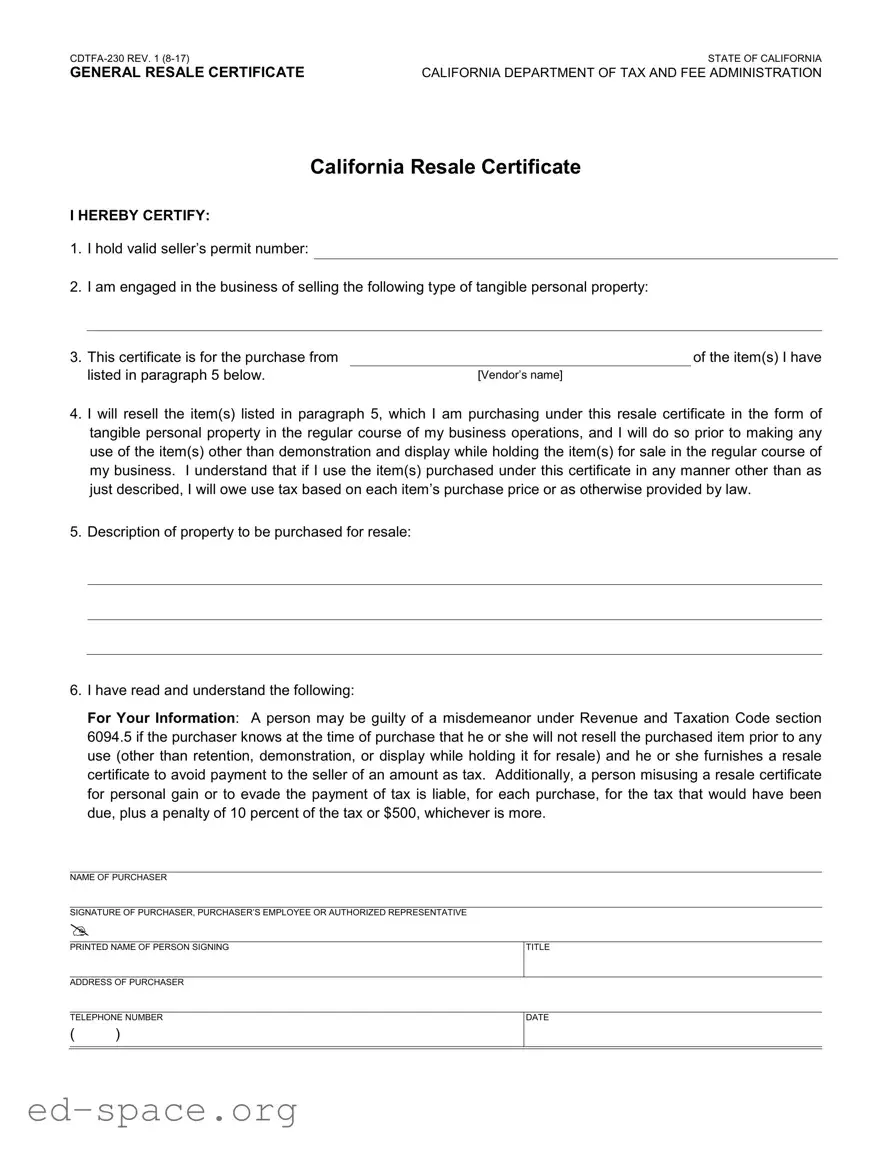
The California Resale Certificate, officially known as CDTFA-230, serves a crucial role for businesses engaged in the sale of tangible personal property. This form allows sellers to purchase items without paying sales tax, provided they intend to resell those items in the normal course of business. To utilize this certificate, a seller must hold a valid seller’s permit number and clearly identify the type of property being purchased for resale. The form requires the vendor's name and a detailed description of the items intended for resale. It also emphasizes the importance of adhering to specific conditions, such as not using the items for purposes other than demonstration or display while holding them for sale. Misuse of the resale certificate can lead to significant penalties, including liability for unpaid taxes and additional fines. Understanding the responsibilities associated with this certificate is essential for any business owner looking to navigate California's tax regulations effectively.
CDTFA230 REV. 1 (817) |
STATE OF CALIFORNIA |
GENERAL RESALE CERTIFICATE |
CALIFORNIA DEPARTMENT OF TAX AND FEE ADMINISTRATION |
CALIFORNIA RESALE CERTIFICATE
I HEREBY CERTIFY:
1.I hold valid seller’s permit number:
2.I am engaged in the business of selling the following type of tangible personal property:
3. This certificate is for the purchase from |
|
of the item(s) I have |
listed in paragraph 5 below. |
[Vendor’s name] |
|
4.I will resell the item(s) listed in paragraph 5, which I am purchasing under this resale certificate in the form of tangible personal property in the regular course of my business operations, and I will do so prior to making any use of the item(s) other than demonstration and display while holding the item(s) for sale in the regular course of my business. I understand that if I use the item(s) purchased under this certificate in any manner other than as just described, I will owe use tax based on each item’s purchase price or as otherwise provided by law.
5.Description of property to be purchased for resale:
6.I have read and understand the following:
FOR YOUR INFORMATION: A person may be guilty of a misdemeanor under Revenue and Taxation Code section 6094.5 if the purchaser knows at the time of purchase that he or she will not resell the purchased item prior to any use (other than retention, demonstration, or display while holding it for resale) and he or she furnishes a resale certificate to avoid payment to the seller of an amount as tax. Additionally, a person misusing a resale certificate for personal gain or to evade the payment of tax is liable, for each purchase, for the tax that would have been due, plus a penalty of 10 percent of the tax or $500, whichever is more.
NAME OF PURCHASER
SIGNATURE OF PURCHASER, PURCHASER’S EMPLOYEE OR AUTHORIZED REPRESENTATIVE
PRINTED NAME OF PERSON SIGNING
TITLE
ADDRESS OF PURCHASER
TELEPHONE NUMBER
()
DATE
| Fact Name | Details |
|---|---|
| Purpose | The California Resale Certificate allows businesses to purchase goods without paying sales tax, provided they intend to resell those goods in the regular course of business. |
| Seller’s Permit | To use the resale certificate, the purchaser must hold a valid seller’s permit number, which identifies them as a legitimate seller in California. |
| Usage Restrictions | Items purchased under this certificate must be resold without any use other than demonstration or display. Using the items for personal purposes can result in tax liabilities. |
| Legal Consequences | Misuse of the resale certificate can lead to misdemeanor charges under California Revenue and Taxation Code section 6094.5, along with penalties including back taxes and fines. |
| Form Details | The form requires the purchaser to provide their name, signature, and contact information, as well as a description of the property being purchased for resale. |
Filling out the California Resale Certificate is a straightforward process. This form allows you to purchase items for resale without paying sales tax upfront. It’s important to complete it accurately to ensure compliance with tax regulations. Below are the steps to guide you through the process of filling out the form.
Once you have completed the form, ensure that you keep a copy for your records. Submit the original to the vendor when making your purchase. This will help you avoid paying sales tax on items you intend to resell, as long as you adhere to the conditions outlined in the certificate.
What is the California Resale Certificate?
The California Resale Certificate is a document that allows a business to purchase items without paying sales tax, provided those items are intended for resale. This certificate is issued by the California Department of Tax and Fee Administration (CDTFA) and is used to certify that the purchaser holds a valid seller's permit and is engaged in selling tangible personal property.
Who needs to use the California Resale Certificate?
Any business that sells tangible personal property and holds a valid seller's permit should use the California Resale Certificate when purchasing items for resale. This includes retailers, wholesalers, and other entities involved in the sale of goods.
How do I fill out the California Resale Certificate?
To complete the certificate, you must provide your valid seller’s permit number, describe the type of tangible personal property you sell, and list the vendor's name from whom you are purchasing the items. You also need to specify the items you intend to resell. Make sure to sign and date the certificate before submitting it to the vendor.
What happens if I use the items purchased under the resale certificate?
If you use the items for any purpose other than resale, such as personal use, you will be liable for use tax. This tax is calculated based on the purchase price of the items. The law requires that you pay this tax if you do not resell the items as intended.
What are the penalties for misusing the resale certificate?
Misusing the resale certificate can lead to serious consequences. If you knowingly provide the certificate while intending to use the items for personal gain, you could face a misdemeanor charge. Additionally, you may owe the tax that would have been due, along with a penalty of 10% of the tax or $500, whichever is greater.
Can I use the resale certificate for all types of purchases?
No, the resale certificate is specifically for tangible personal property that you intend to resell. It cannot be used for items that you plan to use in your business operations or for personal use. Always ensure that the items purchased are strictly for resale.
How long is the resale certificate valid?
The California Resale Certificate does not have an expiration date. However, it is essential to keep your seller’s permit active and up-to-date. If your business status changes or if you cease operations, you should no longer use the resale certificate.
Do I need to provide a copy of the resale certificate to the vendor?
Yes, you must provide a copy of the completed resale certificate to the vendor from whom you are purchasing the items. The vendor will keep this certificate on file to document the tax-exempt sale.
What if I am a new business without a seller's permit?
If you do not have a seller's permit, you cannot use the California Resale Certificate. You must first apply for and obtain a seller's permit from the CDTFA before making tax-exempt purchases for resale.
Where can I find the California Resale Certificate form?
The California Resale Certificate form, known as CDTFA-230, can be obtained from the California Department of Tax and Fee Administration's website. It is available for download and can be printed for use.
Missing Seller's Permit Number: Failing to include a valid seller’s permit number can invalidate the entire resale certificate. Ensure this number is accurate and current.
Incorrect Type of Tangible Personal Property: Not specifying the correct type of property being sold can lead to confusion and potential legal issues. Clearly state the type of goods you sell.
Vendor’s Name Omission: Leaving out the vendor's name from whom the items are being purchased is a common mistake. Always include this information to avoid complications.
Improper Use of Items: Misunderstanding the terms of resale can result in unintended use tax. Remember, items must be resold in their original form, except for display purposes.
Incomplete Description of Property: Not providing a detailed description of the items for resale can create ambiguity. Be specific about what you are purchasing.
Ignoring Legal Consequences: Underestimating the seriousness of misusing a resale certificate can lead to legal trouble. Be aware of the penalties associated with misuse.
Signature Issues: Forgetting to sign the certificate or having an unauthorized person sign can render the form invalid. Ensure the correct individual signs and dates the form.
The California Resale Certificate is a vital document for businesses engaged in the resale of tangible personal property. It allows sellers to purchase items without paying sales tax, provided they intend to resell those items in their regular business operations. Alongside the California Resale Certificate, several other forms and documents are commonly used in conjunction with it. Understanding these documents can help streamline business transactions and ensure compliance with state regulations.
Utilizing these documents correctly can facilitate smoother business operations and ensure adherence to California tax laws. Familiarity with each form enhances a business's ability to manage transactions effectively while minimizing potential legal complications.
The California Resale Certificate is an important document for businesses engaged in selling tangible personal property. It shares similarities with several other documents. Here is a list of ten documents that are comparable to the California Resale Certificate:
Each of these documents serves to confirm the buyer's intent to resell items, helping to streamline the purchasing process while ensuring compliance with tax regulations.
When filling out the California Resale Certificate (CDTFA-230), it is essential to follow specific guidelines to ensure compliance and avoid penalties. Below are four key actions to take and avoid:
Adhering to these guidelines will help ensure a smooth process when utilizing the California Resale Certificate.
Misconceptions about the California Resale Certificate can lead to confusion and potential legal issues. Here are eight common misconceptions clarified:
Filling out and using the California Resale Certificate (CDTFA-230) is an important process for businesses engaged in the resale of tangible personal property. Here are key takeaways to consider:
Being aware of these key points can help ensure compliance with California tax regulations and facilitate smoother transactions in your business operations.