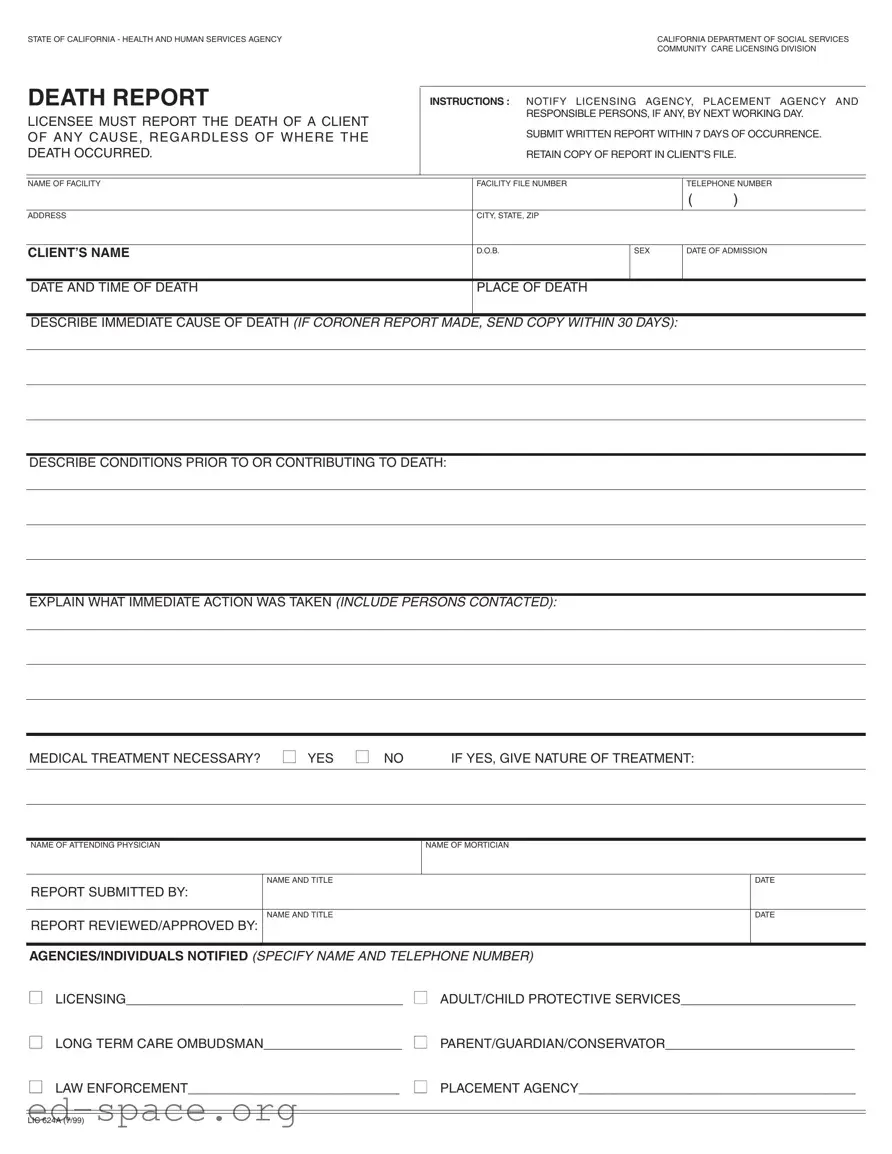
The California Death Report form is a critical document designed to ensure that the passing of clients in care facilities is handled with the utmost diligence and transparency. When a client dies, the responsible parties, including the facility and placement agency, must act quickly. They are required to notify the licensing agency by the next working day. This form captures essential information, including the client’s name, date of birth, and the circumstances surrounding their death. It prompts the facility to describe the immediate cause of death and any contributing conditions, which is vital for understanding the context of the incident. Additionally, it asks for details about any medical treatment provided and the actions taken immediately following the death. This ensures that all necessary protocols are followed and that the appropriate agencies, such as law enforcement and protective services, are informed. By retaining a copy of this report in the client’s file, facilities maintain a record that supports accountability and compliance with state regulations. Ultimately, the completion of this form not only fulfills legal obligations but also reflects a commitment to the care and respect owed to clients and their families during a profoundly sensitive time.

STATE OF CALIFORNIA - HEALTH AND HUMAN SERVICES AGENCY |
CALIFORNIA DEPARTMENT OF SOCIAL SERVICES |
|
COMMUNITY CARE LICENSING DIVISION |
DEATH REPORT |
INSTRUCTIONS : NOTIFY LICENSING AGENCY, PLACEMENT AGENCY AND |
||||||
LICENSEE MUST REPORT THE DEATH OF A CLIENT |
|
RESPONSIBLE PERSONS, IF ANY, BY NEXT WORKING DAY. |
|||||
|
|
|
|
|
|
||
OF ANY CAUSE, REGARDLESS OF WHERE THE |
|
SUBMIT WRITTEN REPORT WITHIN 7 DAYS OF OCCURRENCE. |
|||||
DEATH OCCURRED. |
|
RETAIN COPY OF REPORT IN CLIENT’S FILE. |
|||||
|
|
|
|
|
|
|
|
|
|
|
|
|
|
|
|
NAME OF FACILITY |
|
FACILITY FILE NUMBER |
|
TELEPHONE NUMBER |
|||
|
|
|
|
|
( |
) |
|
|
|
|
|
|
|
|
|
ADDRESS |
|
CITY, STATE, ZIP |
|
|
|
|
|
|
|
|
|
|
|
|
|
CLIENT’S NAME |
|
D.O.B. |
SEX |
DATE OF ADMISSION |
|||
|
|
|
|
|
|
|
|
DATE AND TIME OF DEATH |
|
PLACE OF DEATH |
|
|
|
|
|
|
|
|
|
|
|
|
|
DESCRIBE IMMEDIATE CAUSE OF DEATH (IF CORONER REPORT MADE, SEND COPY WITHIN 30 DAYS): |
|
|
|
||||
|
|
|
|
|
|
|
|
|
|
|
|
|
|
|
|
|
|
|
|
|
|
|
|
|
|
|
|
|
|
|
|
DESCRIBE CONDITIONS PRIOR TO OR CONTRIBUTING TO DEATH: |
|
|
|
|
|||
|
|
|
|
|
|
|
|
|
|
|
|
|
|
|
|
|
|
|
|
|
|
|
|
|
|
|
|
|
|
|
|
EXPLAIN WHAT IMMEDIATE ACTION WAS TAKEN (INCLUDE PERSONS CONTACTED): |
|
|
|
|
|||
|
|
|
|
|
|
|
|
|
|
|
|
|
|
|
|
|
|
|
|
|
|
|
|
|
|
|
|
|
|
|
|
MEDICAL TREATMENT NECESSARY? ■ YES ■ NO |
IF YES, GIVE NATURE OF TREATMENT: |
|
|
||||
|
|
|
|
|
|
|
|
|
|
|
|
|
|
|
|
|
|
|
|
|
|
|
|
NAME OF ATTENDING PHYSICIAN |
NAME OF MORTICIAN |
|
|
|
|
||
|
|
|
|
|
|
|
|
|
NAME AND TITLE |
|
|
|
|
|
DATE |
REPORT SUBMITTED BY: |
|
|
|
|
|
|
|
|
|
|
|
|
|
|
|
|
NAME AND TITLE |
|
|
|
|
|
DATE |
REPORT REVIEWED/APPROVED BY: |
|
|
|
|
|
|
|
|
|
|
|
|
|
|
|
AGENCIES/INDIVIDUALS NOTIFIED (SPECIFY NAME AND TELEPHONE NUMBER)
■LICENSING______________________________________ ■ ADULT/CHILD PROTECTIVE SERVICES________________________
■LONG TERM CARE OMBUDSMAN___________________ ■ PARENT/GUARDIAN/CONSERVATOR__________________________
■LAW ENFORCEMENT_____________________________ ■ PLACEMENT AGENCY______________________________________
LIC 624A (7/99)
| Fact Name | Description |
|---|---|
| Mandatory Reporting | The death of a client must be reported by the licensee, responsible persons, and the placement agency by the next working day. |
| Written Report Deadline | A written report must be submitted within 7 days of the death occurrence. |
| Retention Requirement | Facilities are required to retain a copy of the death report in the client’s file for record-keeping purposes. |
| Immediate Cause of Death | The report must describe the immediate cause of death. If a coroner's report is available, a copy must be sent within 30 days. |
| Conditions Contributing to Death | Details about any conditions prior to or contributing to the client's death must be included in the report. |
| Medical Treatment Inquiry | The report must indicate whether medical treatment was necessary and provide details if applicable. |
| Governing Laws | The California Death Report form is governed by California Health and Safety Code Section 1569.158 and California Code of Regulations, Title 22. |
Once the Ca Death Report form is completed, it must be submitted to the appropriate licensing agency, placement agency, and licensee. It is crucial to ensure that all required information is accurately filled out to facilitate the review process. Retaining a copy of the report in the client’s file is also necessary for record-keeping purposes.
What is the purpose of the California Death Report form?
The California Death Report form is used to notify the appropriate authorities about the death of a client in a care facility. It ensures that the licensing agency, placement agency, and other responsible parties are informed promptly. The form must be submitted within seven days of the occurrence of the death, regardless of the cause or location of the event.
Who is responsible for submitting the California Death Report?
The licensee of the facility is responsible for submitting the California Death Report. Additionally, any responsible persons, if applicable, must ensure that the report is filed by the next working day following the death. This requirement emphasizes the importance of timely communication regarding client deaths.
What information is required on the form?
The form requires detailed information, including the name of the facility, facility file number, client’s name, date of birth, sex, date of admission, date and time of death, and place of death. It also asks for a description of the immediate cause of death, any contributing conditions, actions taken immediately after the death, and whether medical treatment was necessary.
What should be done if a coroner's report is available?
If a coroner's report is made, a copy must be submitted along with the California Death Report within 30 days of the occurrence. This ensures that all relevant information regarding the cause of death is available for review by the licensing agency and other involved parties.
How should the report be submitted?
What happens if the report is not submitted on time?
Failure to submit the California Death Report within the specified time frames may result in penalties for the facility. It is crucial to adhere to the reporting requirements to avoid potential legal issues and ensure compliance with state regulations.
Failing to notify the necessary agencies in a timely manner. The instructions clearly state that the licensing agency, placement agency, and licensee must be informed of the death by the next working day. Delays can lead to complications in processing the report.
Not providing complete and accurate information about the client. Details such as the client's name, date of birth, and place of death are crucial. Incomplete information can hinder the investigation and documentation process.
Neglecting to describe the immediate cause of death adequately. If a coroner's report exists, it should be attached within 30 days. A vague description can lead to misunderstandings regarding the circumstances surrounding the death.
Overlooking the section on conditions contributing to death. This part is essential for understanding the context of the death. Providing insufficient detail here can result in a lack of clarity for those reviewing the report.
Failing to document immediate actions taken after the death. It's important to include who was contacted and what steps were taken. This information is vital for accountability and transparency.
Not retaining a copy of the report in the client's file. Keeping a record is essential for future reference and compliance. Without it, there may be challenges in addressing any follow-up questions or concerns.
When a death occurs, especially in a care facility, several documents may be required in addition to the California Death Report form. These documents help ensure that all legal and procedural obligations are met. Below is a list of forms that are often used in conjunction with the Death Report.
Each of these documents plays a vital role in addressing the legal, medical, and emotional aspects of a death in a care setting. Properly managing these forms can provide clarity and support for all parties involved during a difficult time.
When filling out the California Death Report form, it is essential to follow specific guidelines to ensure accuracy and compliance. Below is a list of important actions to take and avoid during this process.
Adhering to these guidelines is crucial for compliance with state regulations and for ensuring that all necessary parties are informed promptly.
Misconceptions about the California Death Report form can lead to confusion and errors in reporting. Here are seven common misconceptions:
Filling out the California Death Report form is a critical responsibility for those involved in the care of clients. Here are some key takeaways to ensure proper completion and use of the form: