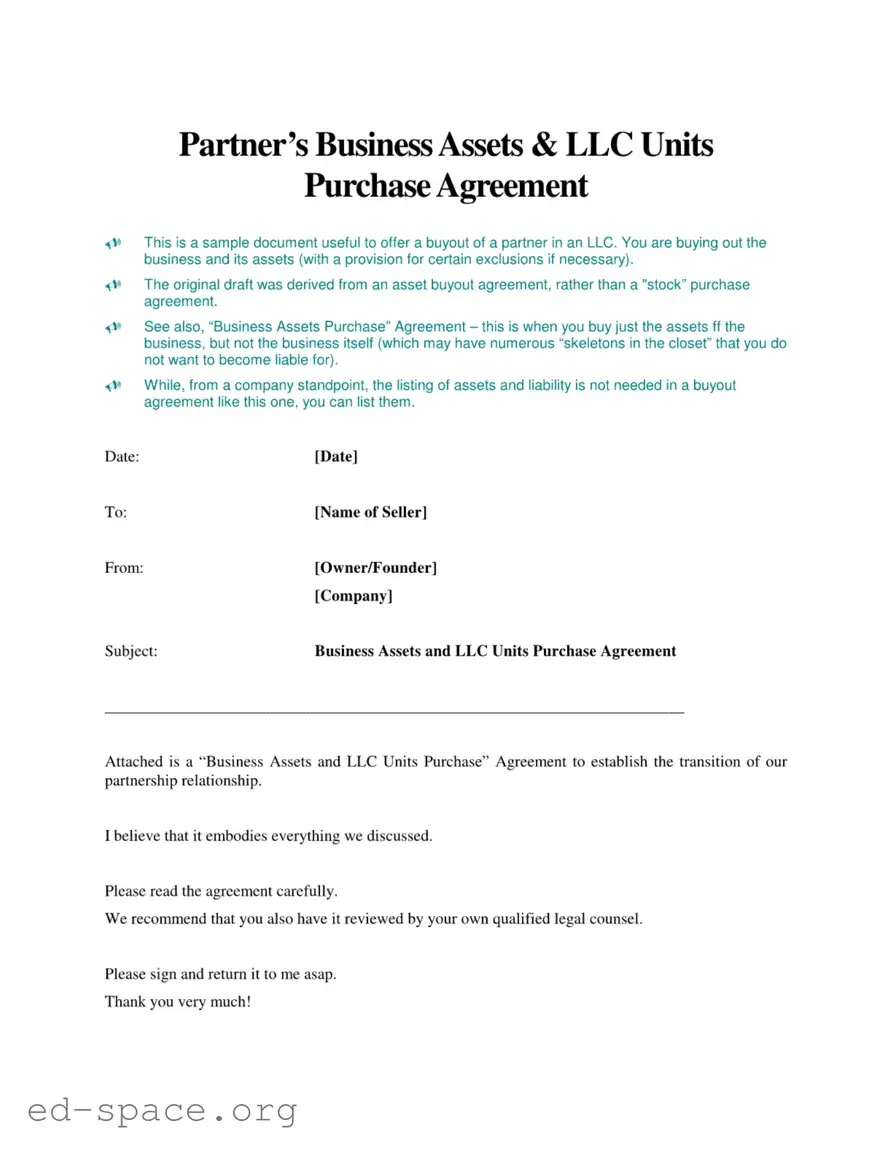
The Buyout Agreement form serves as a vital tool for partners in a limited liability company (LLC) looking to facilitate the transition of ownership and assets. This document outlines the terms under which one partner can buy out another, ensuring clarity and legal protection for all parties involved. Key elements of the form include the identification of the partners, the effective date of the agreement, and a detailed description of the business assets being transferred. The agreement emphasizes the acquisition of both the tangible and intangible assets of the business, including intellectual property rights, inventory, and customer lists. Additionally, it provides for the assumption of liabilities and outlines the compensation to be paid to the seller. By structuring the agreement in a straightforward manner, it aims to prevent misunderstandings and disputes, while also allowing for the inclusion of specific exclusions if necessary. The form not only serves as a record of the transaction but also as a guide for the parties to navigate the complexities of a buyout, making it an essential document for any LLC partnership considering such a significant change.
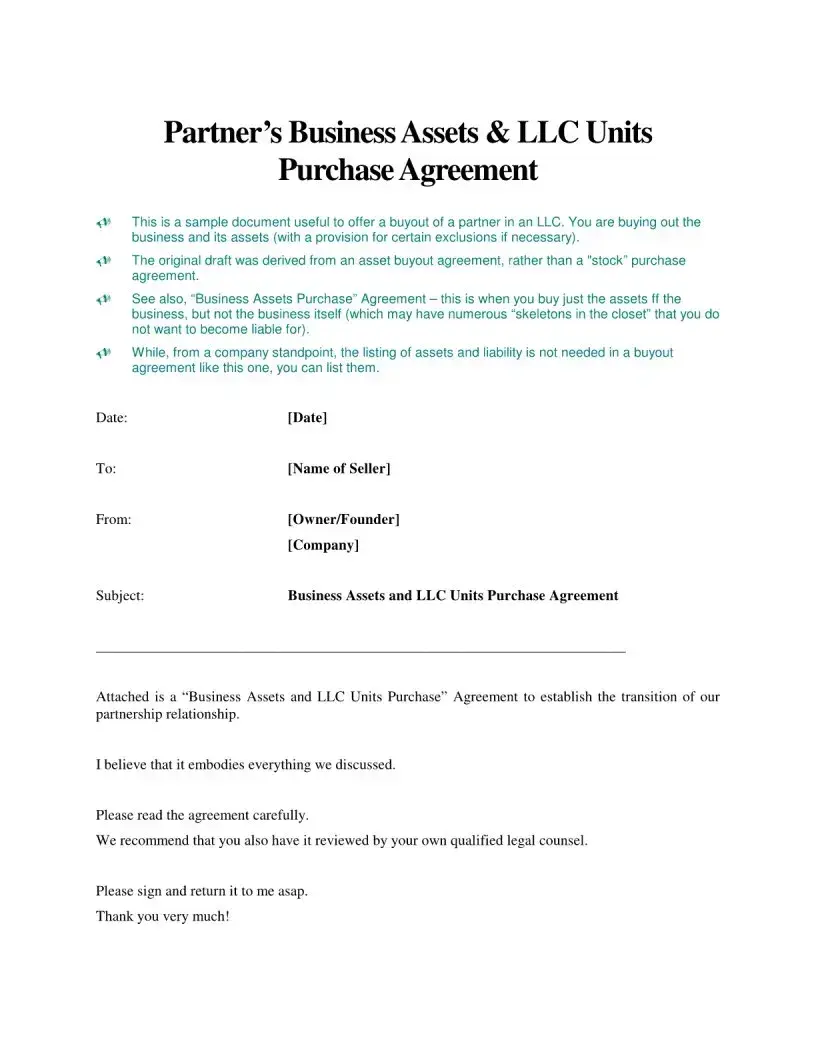
| Fact Name | Description |
|---|---|
| Purpose | The Buyout Agreement form is designed to facilitate the buyout of a partner in an LLC, detailing the purchase of business assets and LLC units. |
| Derived Document | This agreement is based on an asset buyout agreement rather than a stock purchase agreement, focusing on the business's assets. |
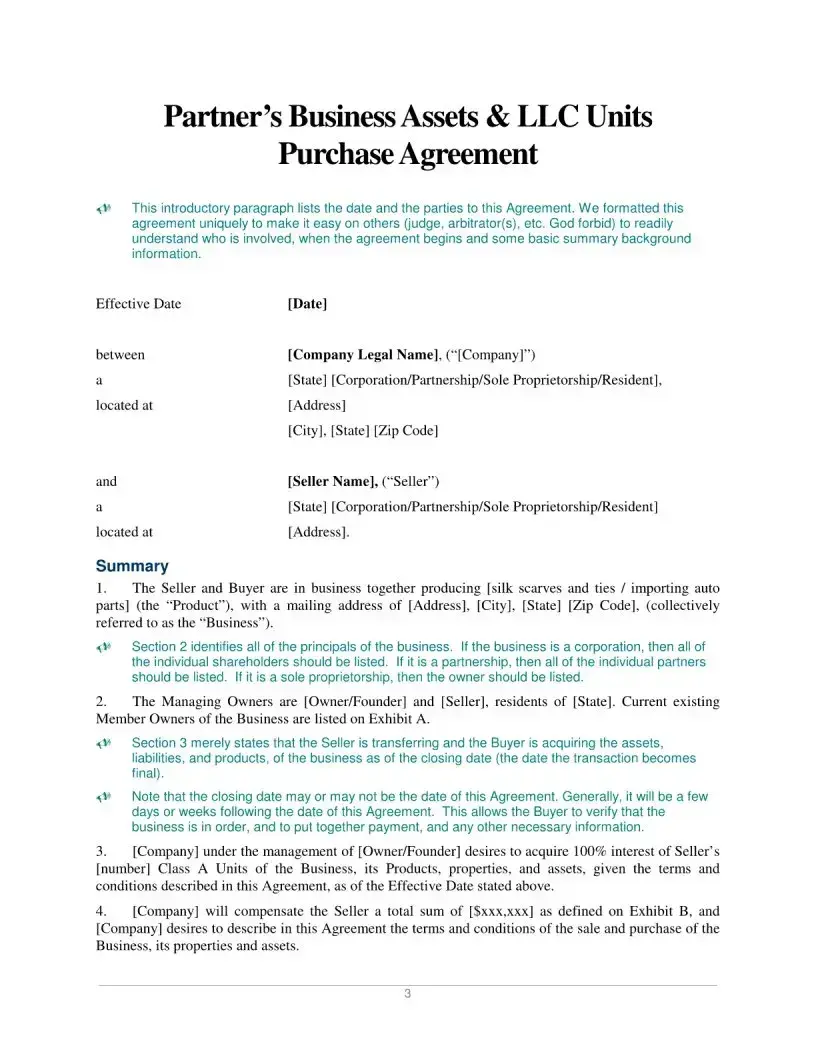
| Effective Date | The effective date of the agreement marks when the transaction becomes final, which may differ from the date the agreement is signed. |
| Compensation | The Buyer compensates the Seller a specified sum, which is outlined in Exhibit B of the agreement. |
| Intellectual Property | All intellectual property rights related to the business are included in the transfer, ensuring comprehensive ownership for the Buyer. |
| Exhibits | Exhibits A through F detail the specific assets, inventory, accounts receivable, machinery, and other important components being transferred. |
| Governing Law | The agreement is subject to the laws of the state where the LLC is formed, which governs the terms and conditions outlined in the document. |
Completing the Buyout Agreement form requires attention to detail and accuracy. This form serves as a crucial document in the process of transferring ownership and assets from one partner to another. It is important to ensure all sections are filled out correctly to avoid any potential disputes in the future.
What is a Buyout Agreement form?
A Buyout Agreement form is a document that outlines the terms and conditions under which one partner in an LLC agrees to sell their ownership interest and business assets to another partner. This agreement details the transfer of assets, liabilities, and any intellectual property associated with the business. It serves to formalize the exit of one partner and the acquisition of their share by another, ensuring clarity and legal protection for both parties involved.
Who should use a Buyout Agreement form?
This form is primarily intended for partners in a Limited Liability Company (LLC) who wish to buy out another partner's interest in the business. It is particularly useful in scenarios where partners decide to part ways, whether due to personal reasons, business disagreements, or other factors. The agreement helps ensure that the transition is smooth and that all parties understand their rights and responsibilities.
What are the key components of a Buyout Agreement?
A typical Buyout Agreement includes several essential components: the effective date of the agreement, the identities of the parties involved, a description of the business and its assets, the purchase price, and the terms of the sale. Additionally, it may outline any exclusions from the sale, such as certain liabilities or assets that are not included. Exhibits may be attached to provide detailed lists of assets, accounts receivable, and other relevant information.
How is the purchase price determined in a Buyout Agreement?
The purchase price in a Buyout Agreement is typically negotiated between the buying and selling partners. It may be based on the fair market value of the business and its assets, or it could involve a predetermined formula. Factors such as the business's current financial performance, potential for growth, and any outstanding liabilities can all influence the final price. It is advisable for both parties to conduct a thorough valuation to ensure a fair transaction.
What happens if there are disputes during the buyout process?
In the event of disputes during the buyout process, the Buyout Agreement may specify mechanisms for resolution. This could include mediation or arbitration, which are often preferred over litigation for their efficiency and confidentiality. Having clear terms in the agreement can help prevent misunderstandings and provide a structured approach to resolving conflicts should they arise.
Can the Buyout Agreement be modified after it is signed?
Yes, a Buyout Agreement can be modified after it is signed, but such changes must be agreed upon by all parties involved. Any modifications should be documented in writing and signed by both parties to ensure that they are legally binding. This is particularly important to maintain clarity and prevent future disputes regarding the terms of the agreement.
Is it necessary to have legal counsel when drafting a Buyout Agreement?
While it is not legally required to have legal counsel when drafting a Buyout Agreement, it is highly recommended. Legal counsel can provide valuable insights into the implications of the agreement, help identify potential issues, and ensure that the document complies with relevant laws. Having a qualified attorney review the agreement can protect the interests of both parties and facilitate a smoother transaction.
Failing to include the effective date of the agreement. This date is crucial for establishing when the buyout takes effect.
Not listing all relevant principals involved in the business. Ensure that all owners, partners, or shareholders are clearly identified to avoid future disputes.
Omitting specific assets from the agreement. Clearly identify all assets being transferred to prevent misunderstandings later.
Neglecting to include any liabilities associated with the business. It is important to clarify which liabilities, if any, are being assumed by the buyer.
Not having the agreement reviewed by qualified legal counsel. Legal advice can help identify potential issues before they arise.
Failing to sign and date the agreement. Both parties should ensure that the document is properly executed to make it legally binding.
When entering into a Buyout Agreement, several other documents may be useful to ensure a smooth transition and protect the interests of all parties involved. Here are some common forms and documents that often accompany a Buyout Agreement:
Having these documents in place can help facilitate a successful buyout process. Each serves a specific purpose and contributes to a clearer understanding between the parties involved. It's advisable to consult with a legal professional to ensure that all necessary documents are prepared correctly.
When filling out the Buyout Agreement form, there are several important considerations to keep in mind. Here is a list of things you should and shouldn't do:
Following these guidelines can help ensure a smoother transaction and reduce potential misunderstandings in the future.
Misconceptions about the Buyout Agreement form can lead to confusion and potential legal issues. Here are ten common misconceptions along with explanations to clarify them.
When filling out and using the Buyout Agreement form, there are several important points to keep in mind. Understanding these key takeaways can help ensure a smoother transaction.
By keeping these points in mind, both buyers and sellers can navigate the buyout process with greater confidence and understanding.