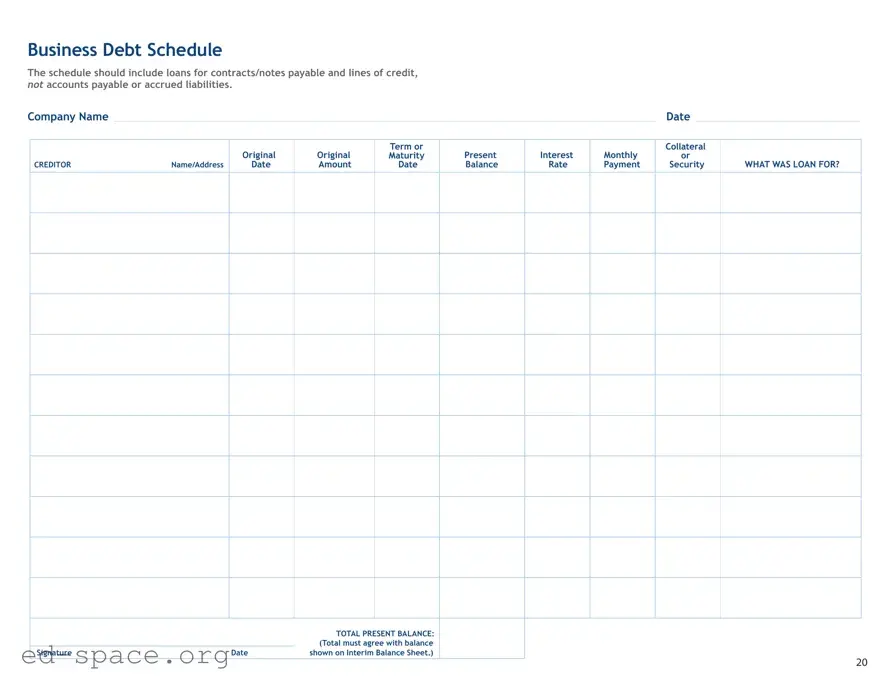
The Business Debt Schedule form is an essential tool for companies to outline their financial obligations clearly and concisely. It serves as a comprehensive record of various loans, including contracts, notes payable, and lines of credit, while explicitly excluding accounts payable and accrued liabilities. This form requires specific details, such as the creditor's name and address, the original date and amount of the loan, the term or maturity date, and the current balance. Additionally, it captures the interest rate and monthly payment amounts, providing a complete picture of the company’s debt situation. Each entry must also specify the collateral or security associated with the loan, as well as the purpose of the loan itself. At the bottom of the form, the total present balance must match the figure shown on the interim balance sheet, ensuring accuracy and accountability. This structured approach not only aids in financial planning but also enhances transparency for stakeholders.

Business Debt Schedule
The schedule should include loans for contracts/notes payable and lines of credit, not accounts payable or accrued liabilities.
Company Name |
|
Date |
CREDITOR |
Name/Address |
Original
Date
Original Amount
Term or Maturity Date
Present Balance
Interest
Rate
Monthly Payment
Collateral
or
Security
WHAT WAS LOAN FOR?
|
|
TOTAL PRESENT BALANCE: |
|
|
(Total must agree with balance |
Signature |
Date |
shown on Interim Balance Sheet.) |
20
| Fact Name | Description |
|---|---|
| Purpose | The Business Debt Schedule form is designed to list loans, contracts, notes payable, and lines of credit. |
| Exclusions | Accounts payable and accrued liabilities are not included in this schedule. |
| Required Information | Information such as creditor name, original amount, present balance, interest rate, and collateral must be provided. |
| Total Balance | The total present balance must match the balance shown on the Interim Balance Sheet. |
| Governing Law | The form is subject to state-specific regulations; check local laws for compliance. |
Filling out the Business Debt Schedule form requires careful attention to detail. This form will help you organize your business's debts, providing a clear picture of your financial obligations. Follow these steps to complete the form accurately.
What is the purpose of the Business Debt Schedule form?
The Business Debt Schedule form is designed to provide a clear overview of a company's outstanding debts. It helps in tracking loans, contracts, notes payable, and lines of credit, excluding accounts payable or accrued liabilities. This schedule is essential for financial analysis and decision-making.
What information should be included in the Business Debt Schedule?
The schedule should include the company name, date, creditor name and address, original date of the loan, original amount, term or maturity date, present balance, interest rate, monthly payment, collateral or security, and the purpose of the loan. The total present balance should match the amount shown on the interim balance sheet.
Why is it important to exclude accounts payable from this schedule?
Accounts payable and accrued liabilities represent short-term obligations that are typically settled within a year. The Business Debt Schedule focuses on longer-term debts, providing a clearer picture of the company’s financial commitments over time. This distinction helps in assessing the overall financial health of the business.
How do I determine the present balance for each loan listed?
The present balance is the amount currently owed on each loan. It can be obtained from the latest statements provided by creditors or lenders. Ensure that this figure reflects any recent payments made and any interest accrued since the last payment.
What is the significance of the interest rate in the Business Debt Schedule?
The interest rate indicates the cost of borrowing and affects the overall expense of the debt. A higher interest rate can lead to larger monthly payments and increased total repayment amounts over the life of the loan. Understanding this rate is crucial for financial planning and budgeting.
What does the 'Collateral or Security' section refer to?
This section identifies any assets pledged as security for the loan. Collateral can include property, equipment, or other valuable items that the lender can claim if the borrower defaults. Listing this information helps clarify the risk associated with each debt.
How should I handle loans that have already been paid off?
Loans that have been fully paid off should not be included in the Business Debt Schedule. Only outstanding debts should be listed. If any loans are paid off after the schedule is created, it’s essential to update the document to reflect the current financial situation accurately.
Is there a specific format I need to follow for the Business Debt Schedule?
While there is no strict format, it’s important to present the information clearly and consistently. Use a table or a structured list to organize the data effectively. Ensure that all required fields are filled out to provide a comprehensive view of the business's debts.
How often should I update the Business Debt Schedule?
The Business Debt Schedule should be updated regularly, ideally after any significant financial transaction or at least quarterly. Regular updates ensure that the information remains accurate and reflective of the company’s current financial obligations.
What should I do if I have questions about completing the form?
If you have questions about filling out the Business Debt Schedule, consider consulting with a financial advisor or accountant. They can provide guidance and ensure that the information is accurate and complete, helping you make informed financial decisions.
Failing to include all relevant loans: Many individuals overlook loans that should be reported, such as contracts, notes payable, and lines of credit. It's crucial to ensure that all debts are accurately reflected.
Incorrectly categorizing liabilities: Some people mistakenly include accounts payable or accrued liabilities in the Business Debt Schedule. Remember, only loans and lines of credit should be listed, not operational expenses.
Omitting essential details: Leaving out important information, such as the creditor's name and address or the original amount, can lead to inaccuracies. Each entry must be complete to avoid confusion.
Not verifying the total present balance: It's a common mistake to submit the schedule without ensuring that the total present balance matches the figure shown on the interim balance sheet. Discrepancies can raise red flags.
Ignoring the interest rate and payment details: Some individuals forget to include the interest rate and monthly payment information. These details are vital for understanding the debt's impact on cash flow.
When managing business finances, it's crucial to maintain accurate records of your debts. The Business Debt Schedule form is an essential tool for tracking loans and credit lines. However, several other documents complement this form, providing a more comprehensive view of your financial obligations. Here’s a list of documents you may need to consider.
Each of these documents plays a vital role in managing business debts. Keeping them organized and accessible can help ensure that your financial records are accurate and up-to-date. This diligence is not just about compliance; it’s about making informed decisions that can impact your business's future.
The Business Debt Schedule form serves a specific purpose in financial documentation, particularly for businesses managing their debts. Several other documents share similarities with this form, each serving to outline financial obligations and provide a clear picture of a company's liabilities. Here are six documents that are similar to the Business Debt Schedule:
Each of these documents plays a crucial role in financial planning and analysis, offering insights into a business's debt situation and overall financial health.
When filling out the Business Debt Schedule form, it is essential to follow certain guidelines to ensure accuracy and compliance. Here are nine things you should and shouldn't do:
Here are some common misconceptions about the Business Debt Schedule form:
When filling out the Business Debt Schedule form, consider the following key points: