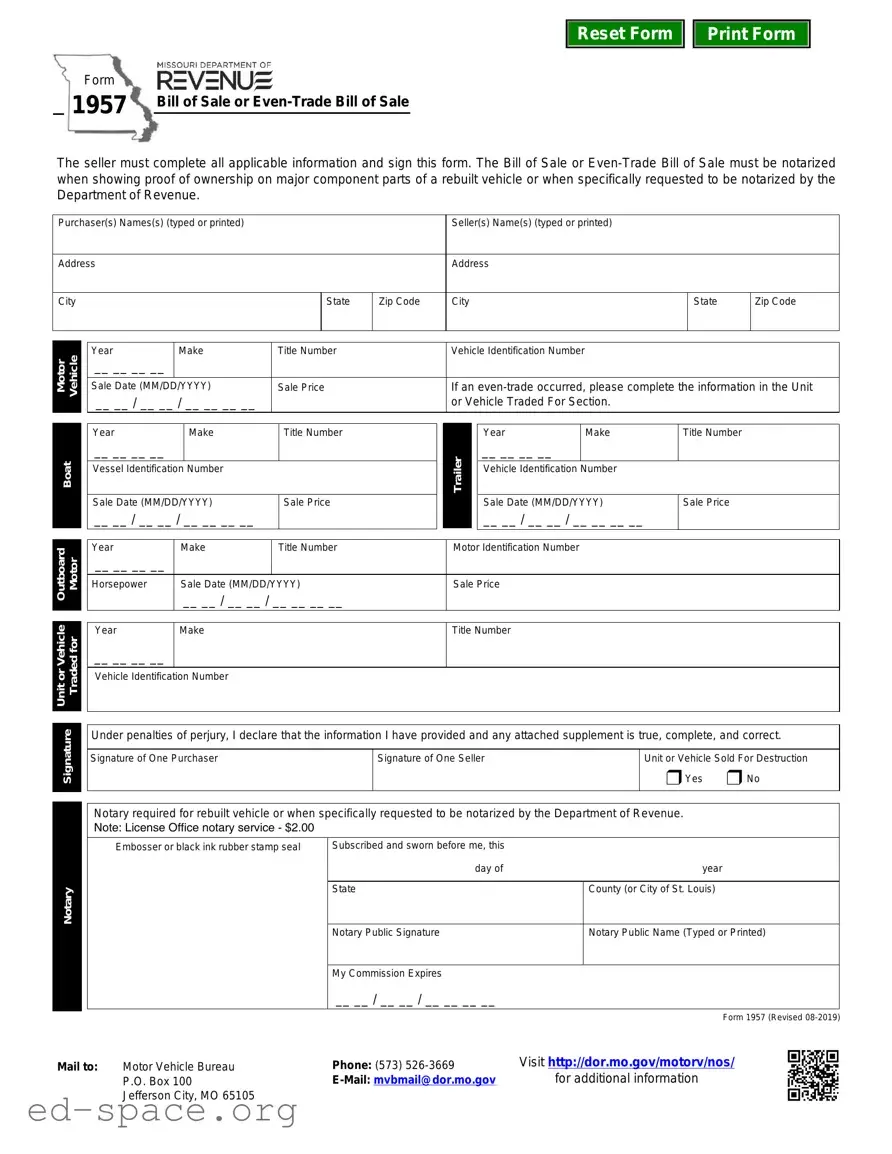
The BOS form, or Business Operating Statement, serves as a critical tool for businesses, providing a comprehensive overview of their operational performance over a specified period. This form captures essential financial data, including revenues, expenses, and net income, allowing business owners and stakeholders to assess the company's profitability and operational efficiency. By detailing the sources of income and the various costs incurred during operations, the BOS form enables a clearer understanding of cash flow dynamics. Additionally, it often includes projections for future performance, helping businesses plan strategically for growth or adjustments in their operational approach. The clarity and structure of the BOS form not only facilitate internal decision-making but also enhance transparency for external parties, such as investors or financial institutions, who may seek insight into the business's financial health. Understanding the components and significance of the BOS form is essential for anyone involved in managing or investing in a business, as it lays the groundwork for informed financial analysis and strategic planning.
Reset Form
Form |
|
1957 |
Bill of Sale or |
|
Print Form
The seller must complete all applicable information and sign this form. The Bill of Sale or
Purchaser(s) Names(s) (typed or printed) |
|
|
|
Seller(s) Name(s) (typed or printed) |
|
|
|||
|
|
|
|
|
|
|
|
|
|
Address |
|
|
|
|
Address |
|
|
||
|
|
|
|
|
|
|
|
|
|
City |
|
|
|
State |
Zip Code |
City |
State |
Zip Code |
|
|
|
|
|
|
|
|
|
|
|
|
|
|
|
|
|
|
|
|
|
Motor Vehicle |
|
Year |
Make |
Title Number |
|
Vehicle Identification Number |
|
|
|
|
__ __ __ __ |
|
|
|
|
|
|
|
|
|
|
|
|
|
|
|
|
|
|
|
|
|
|
|
|
|
|||
|
|
Sale Date (MM/DD/YYYY) |
Sale Price |
|
If an |
||||
|
|
__ __ / __ __ / __ __ __ __ |
|
|
|
or Vehicle Traded For Section. |
|
|
|
Boat
Year |
Make |
Title Number |
|
|
__ __ __ __ |
|
|
|
Trailer |
Vessel Identification Number |
|
|
||
|
|
|
||
|
|
|
|
|
Sale Date (MM/DD/YYYY) |
Sale Price |
|
|
|
__ __ / __ __ / __ __ __ __ |
|
|
|
|
Year |
Make |
Title Number |
__ __ __ __ |
|
|
Vehicle Identification Number |
|
|
|
|
|
Sale Date (MM/DD/YYYY) |
Sale Price |
|
__ __ / __ __ / __ __ __ __ |
|
|
Outboard |
Motor |
|
Year |
Make |
Title Number |
|
Motor Identification Number |
|
|
|
__ __ __ __ |
|
|
|
|
|
|
||
|
|
|
|
|
|
|
|
|
|
|
|
|
Horsepower |
Sale Date (MM/DD/YYYY) |
|
Sale Price |
|
|
|
|
|
|
|
__ __ / __ __ / __ __ __ __ |
|
|
|
|
|
|
|
|
|
|
|
|
|
|
|
VehicleorUnit Tradedfor |
|
Year |
Make |
|
|
Title Number |
|
|
|
|
__ __ __ __ |
|
|
|
|
|
|
||
|
|
|
|
|
|
|
|
|
|
|
|
|
Vehicle Identification Number |
|
|
|
|
|
|
|
|
|
|
|
|
|
|
|
|
|
|
|
|
|
|
|
|||
Signature |
|
Under penalties of perjury, I declare that the information I have provided and any attached supplement is true, complete, and correct. |
|||||||
|
|
|
|
|
|
|
|
||
|
Signature of One Purchaser |
|
Signature of One Seller |
r Yes |
r No |
||||
|
|
|
|
Unit or Vehicle Sold For Destruction |
|||||
|
|
|
|
|
|
|
|
|
|
Notary required for rebuilt vehicle or when specifically requested to be notarized by the Department of Revenue.
Note: License Office notary service - $2.00
Notary
Embosser or black ink rubber stamp seal
Subscribed and sworn before me, this |
|
day of |
year |
|
|
State |
County (or City of St. Louis) |
|
|
Notary Public Signature |
Notary Public Name (Typed or Printed) |
|
|
My Commission Expires |
|
__ __ / __ __ / __ __ __ __ |
|
|
|
|
|
|
Form 1957 (Revised |
Mail to: |
Motor Vehicle Bureau |
Phone: (573) |
Visit http://dor.mo.gov/motorv/nos/ |
|
P.O. Box 100 |
for additional information |
|
|
Jefferson City, MO 65105 |
|
|
| Fact Name | Description |
|---|---|
| Purpose | The BOS form is used to document the transfer of ownership for certain assets. |
| Governing Law | Each state has its own governing laws for the BOS form, such as the Uniform Commercial Code (UCC). |
| Signatures Required | Typically, both the transferor and transferee must sign the BOS form for it to be valid. |
| Notarization | Some states require notarization of the BOS form to ensure authenticity. |
| Record Keeping | It is essential to keep a copy of the BOS form for personal records and future reference. |
| State-Specific Variations | Different states may have specific requirements or variations in the BOS form format. |
Completing the BOS form is an important step in your process. After filling it out, you will need to submit it to the appropriate authority. Ensure all information is accurate to avoid delays.
What is the BOS form?
The BOS form, or Business Operating Statement, is a document used by businesses to summarize their financial performance over a specific period. It includes details about income, expenses, and overall profitability. This form helps business owners track their financial health and make informed decisions for future growth.
Who needs to fill out the BOS form?
Any business, regardless of size, can benefit from filling out the BOS form. This includes sole proprietors, partnerships, and corporations. If you want to understand your financial situation better or need to present your finances to investors or lenders, completing the BOS form is a good idea.
How often should the BOS form be completed?
It’s advisable to complete the BOS form regularly, such as monthly or quarterly. This frequency allows you to monitor your financial performance closely and make timely adjustments if needed. Annual reviews are also important, especially for tax purposes and long-term planning.
What information do I need to provide on the BOS form?
You will need to include details about your business income, such as sales revenue and any other earnings. Additionally, you should list all expenses, including operating costs, salaries, and any other financial outflows. Summarizing this information accurately is crucial for a clear picture of your business’s financial health.
Can I use the BOS form for tax purposes?
Yes, the BOS form can be useful for tax purposes. It provides a clear overview of your income and expenses, which can help when preparing your tax returns. However, it’s important to keep in mind that the BOS form is not a substitute for official tax documents. Always consult with a tax professional to ensure compliance with tax regulations.
Inaccurate Information: Many individuals provide incorrect personal details, such as names, addresses, or Social Security numbers. This can lead to processing delays or even rejection of the application.
Missing Signatures: Failing to sign the BOS form is a common oversight. Without a signature, the form is considered incomplete and cannot be processed.
Omitting Required Documents: Some people forget to include necessary attachments, such as identification or proof of residency. This can result in additional requests for information and prolong the process.
Not Following Instructions: Each BOS form comes with specific guidelines. Ignoring these can lead to mistakes in filling out the form, causing complications.
Rushing the Process: Taking the time to carefully review the form is essential. Many applicants rush through, leading to careless errors that could have been easily avoided.
The Bill of Sale (BOS) form is an important document used in various transactions, particularly when buying or selling personal property. Along with the BOS form, several other documents may be required to ensure a smooth transaction. Below is a list of other common forms and documents that are often used alongside the BOS form.
Using these documents in conjunction with the BOS form can help clarify the transaction and protect both parties involved. Always ensure that all necessary paperwork is completed accurately to avoid any potential disputes in the future.
The BOS form shares similarities with several other documents used in various contexts. Below are four documents that are comparable to the BOS form, along with explanations of their similarities:
When filling out the BOS form, it is important to follow certain guidelines to ensure accuracy and compliance. Here are seven things you should and shouldn't do:
Understanding the BOS form is crucial for many individuals and businesses. However, several misconceptions often cloud its purpose and function. Here are eight common misconceptions about the BOS form, along with clarifications to help demystify its usage.
Clearing up these misconceptions can help individuals and businesses navigate the complexities of the BOS form more effectively. Understanding its true purpose and requirements is essential for compliance and overall business success.
Here are some key takeaways about filling out and using the BOS form: