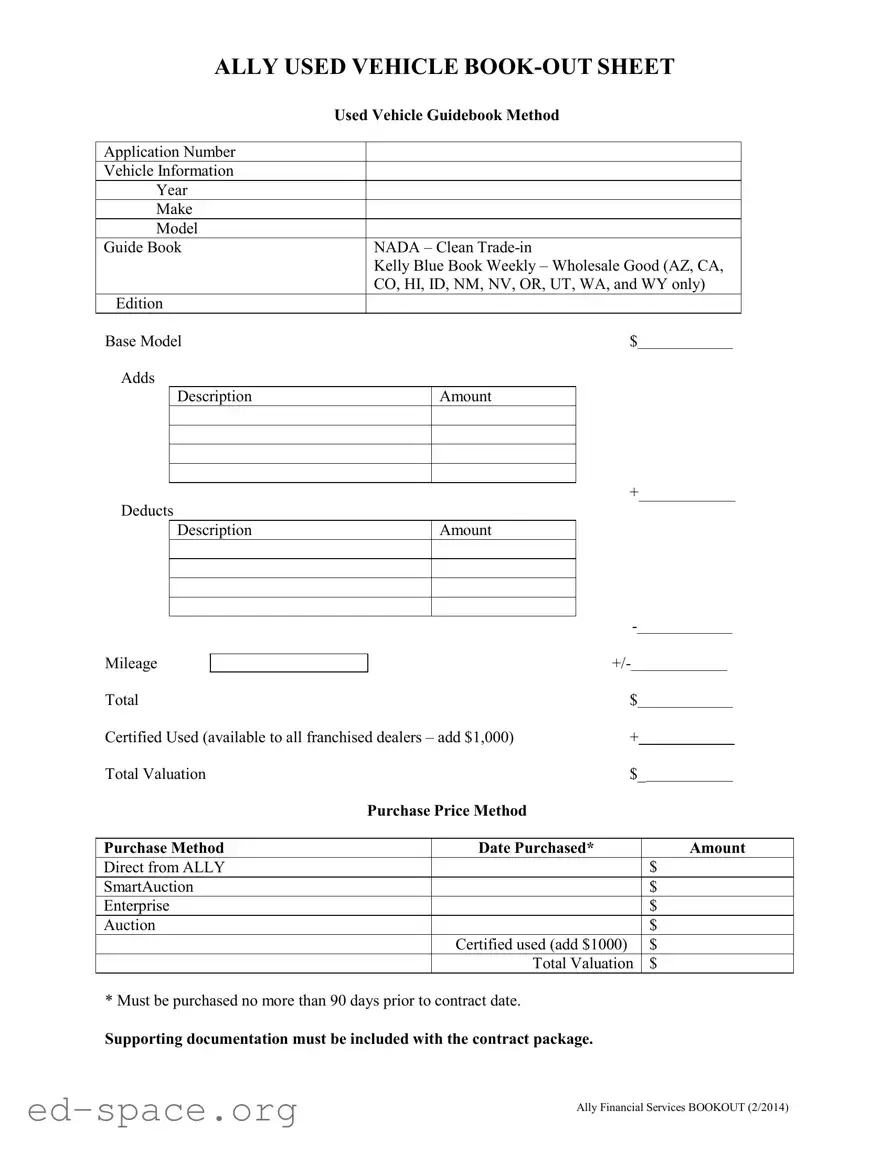
The Book Out Sheet form is an essential tool for dealerships and financial institutions involved in the used vehicle market. This form serves as a comprehensive guide for valuing used vehicles, incorporating various valuation methods such as the NADA Clean Trade-in and Kelly Blue Book. It provides critical vehicle information, including the year, make, and model, which helps in accurately determining the vehicle’s worth. Additionally, the form outlines specific adjustments for mileage and other factors that can affect the final valuation. For certified used vehicles, an additional valuation increase is available, further incentivizing dealers to participate in certified programs. The purchase price method section allows for multiple options, including direct purchases from Ally, SmartAuction, and other sources, ensuring flexibility in how vehicles are acquired. Proper completion of this form not only streamlines the buying process but also ensures compliance with necessary documentation requirements, as supporting documents must accompany the contract package. Understanding and utilizing the Book Out Sheet effectively can lead to more informed decisions and better financial outcomes in the used vehicle market.
ALLY USED VEHICLE
Used Vehicle Guidebook Method
Application Number |
|
Vehicle Information |
|
Year |
|
Make |
|
Model |
|
Guide Book |
NADA – Clean |
|
Kelly Blue Book Weekly – Wholesale Good (AZ, CA, |
|
CO, HI, ID, NM, NV, OR, UT, WA, and WY only) |
Edition |
|
Base Model
Adds
Description
$
Amount
+
Deducts
Description
Amount
-
Mileage
+/-
Total |
$ |
|
|
|
|
Certified Used (available to all franchised dealers – add $1,000) |
+ |
|
|
|
|
Total Valuation |
$_ |
|
|
||
Purchase Price Method
Purchase Method |
Date Purchased* |
Amount |
Direct from ALLY |
|
$ |
SmartAuction |
|
$ |
Enterprise |
|
$ |
Auction |
|
$ |
|
Certified used (add $1000) |
$ |
|
Total Valuation |
$ |
* Must be purchased no more than 90 days prior to contract date.
Supporting documentation must be included with the contract package.
Ally Financial Services BOOKOUT (2/2014)
| Fact Name | Description |
|---|---|
| Form Purpose | The Book Out Sheet is used to determine the value of used vehicles for financing purposes. |
| Governing Law | In states like Arizona, California, and Colorado, the form is governed by local vehicle financing regulations. |
| Vehicle Information | Essential details such as year, make, and model must be included to assess the vehicle's value accurately. |
| Valuation Methods | Two main methods for valuation are the Used Vehicle Guidebook and Purchase Price Method. |
| Supporting Documentation | Documentation supporting the vehicle's purchase must accompany the contract package. |
| Certified Used Vehicles | Franchised dealers can add $1,000 for certified used vehicles to the total valuation. |
| Time Limit for Purchase | The vehicle must be purchased no more than 90 days before the contract date. |
| Deduction and Addition | Both deductions and additions can be made to the vehicle's base value, impacting the final valuation. |
| Edition Variability | Valuations may differ based on the edition of the guidebook used, such as NADA or Kelly Blue Book. |
After gathering all necessary information, you are ready to fill out the Book Out Sheet form. This process involves providing specific details about the vehicle and its valuation. Make sure to have all relevant documentation on hand to ensure accuracy.
What is a Book Out Sheet?
A Book Out Sheet is a form used primarily by dealerships to evaluate the value of used vehicles. It helps dealers determine the trade-in value based on various guides, such as NADA and Kelley Blue Book. This sheet simplifies the process of calculating a vehicle's worth by providing a structured format to input essential information.
What information do I need to complete the Book Out Sheet?
To fill out the Book Out Sheet, you will need the vehicle's year, make, and model. Additionally, you will reference valuation guides like NADA and Kelley Blue Book to determine the vehicle's worth. You will also need to note any additional features or deductions that may affect the vehicle's value, as well as the purchase method and date.
How do I calculate the total valuation of a vehicle?
The total valuation is calculated by starting with the vehicle's base value from the valuation guides. You will then add or deduct amounts based on specific features or conditions of the vehicle. For instance, if the vehicle is certified used, you would add $1,000 to the total valuation. Be sure to include any supporting documentation to justify your calculations.
What is the significance of the purchase method on the Book Out Sheet?
The purchase method indicates how the dealership acquired the vehicle. Options include direct purchase from Ally, SmartAuction, Enterprise, or through an auction. This information is important for record-keeping and can impact the valuation based on the source of acquisition.
Is there a time limit for purchasing the vehicle before using the Book Out Sheet?
Yes, the vehicle must be purchased no more than 90 days prior to the contract date. This time frame ensures that the valuation reflects the most current market conditions. If the vehicle was purchased outside this window, it may not be eligible for certain calculations or certifications.
What supporting documentation is required when submitting the Book Out Sheet?
When submitting the Book Out Sheet, you must include supporting documentation that verifies the vehicle's purchase and condition. This could include receipts, auction documents, or any other paperwork that substantiates the information provided on the form. Proper documentation helps ensure compliance and accuracy in the valuation process.
Can I use the Book Out Sheet for vehicles that are not certified used?
Absolutely. The Book Out Sheet can be used for all used vehicles, regardless of certification status. However, if a vehicle is certified used, you should add the additional valuation amount specified on the form. This flexibility allows dealers to assess a wide range of vehicles effectively.
Failing to include the application number. This number is crucial for tracking and processing your submission.
Not providing complete vehicle information. Ensure that the year, make, and model are accurately filled out to avoid delays.
Using outdated or incorrect valuation methods. Always refer to the latest editions of NADA and Kelley Blue Book to ensure accurate pricing.
Neglecting to include mileage. This detail can significantly impact the vehicle's value, so make sure it is recorded correctly.
Forgetting to indicate whether the vehicle is certified used. This designation can add value, so be sure to check the appropriate box.
Not documenting the purchase method properly. Whether the vehicle was bought from Ally, SmartAuction, or another source, this information is essential.
Overlooking the purchase date. Remember, the vehicle must be purchased no more than 90 days prior to the contract date.
Failing to attach supporting documentation. All necessary documents should accompany the contract package to ensure a smooth process.
Miscalculating the total valuation. Double-check your math to avoid discrepancies that could complicate the approval process.
Not reviewing the form for accuracy before submission. A final check can help catch any errors that might have been overlooked.
The Book Out Sheet form is a critical document used in the automotive industry to assess the value of used vehicles. Alongside this form, several other documents are often required to ensure a comprehensive evaluation and smooth transaction process. Below is a list of these documents, each with a brief description.
Each of these documents plays a vital role in the vehicle transaction process. Ensuring that all necessary forms are completed accurately and submitted promptly can prevent delays and complications down the line. It is essential to be diligent in gathering and reviewing these documents to facilitate a smooth sale.
The Book Out Sheet form serves as a crucial document in the vehicle sales process. Several other documents share similarities with it, often used for valuation, purchase, or documentation purposes. Here’s a list of seven such documents:
When filling out the Book Out Sheet form, attention to detail is crucial. Following these guidelines can help ensure accuracy and compliance.
By adhering to these practices, you can facilitate a smoother process and reduce the risk of complications.
Here are four common misconceptions about the Book Out Sheet form:
Here are some key takeaways about filling out and using the Book Out Sheet form: