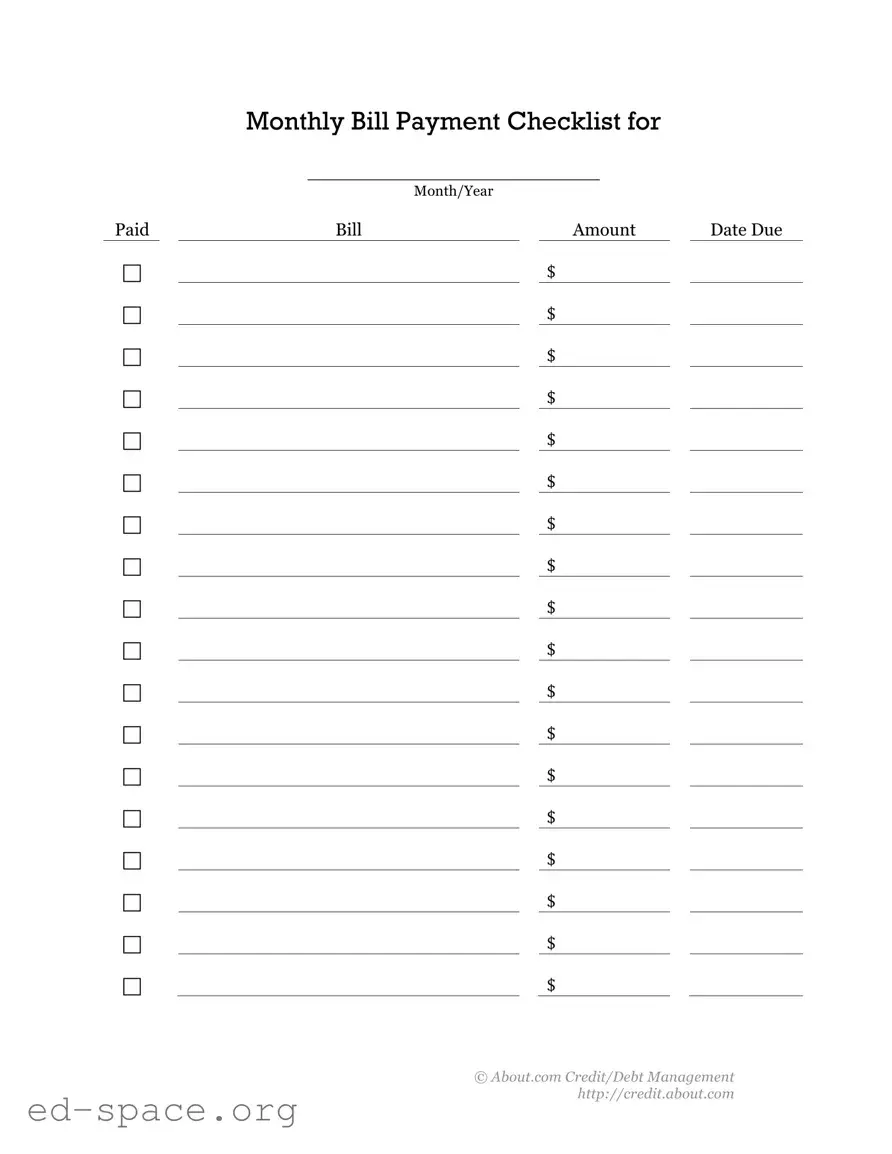
Managing monthly bills can often feel overwhelming, but staying organized is key to avoiding late fees and maintaining good financial health. The Bill Payment Checklist form is a practical tool designed to help you track your bills efficiently. This form allows you to list each bill you need to pay, along with the corresponding amount and due date. By checking off each bill as you pay it, you can ensure that nothing slips through the cracks. It provides a clear overview of your financial obligations for a specific month, making it easier to plan your budget. With spaces for multiple bills, you can customize the checklist to fit your unique situation. Whether you're juggling utilities, credit cards, or other expenses, this checklist helps you stay on top of your payments and promotes better financial habits.

PAID
Monthly Bill Payment Checklist for
__________________________
MONTH/YEAR
|
BILL |
|
AMOUNT |
|
DATE DUE |
|
|
|
|
||
|
|
|
$ |
|
|
|
|
|
|
|
|
|
|
|
|
||
|
|
|
$ |
|
|
|
|
|
|
|
|
|
|
|
|
||
|
|
|
$ |
|
|
|
|
|
|
|
|
|
|
|
|
||
|
|
|
$ |
|
|
|
|
|
|
|
|
|
|
|
|
||
|
|
|
$ |
|
|
|
|
|
|
|
|
|
|
|
|
||
|
|
|
$ |
|
|
|
|
|
|
|
|
|
|
|
|
||
|
|
|
$ |
|
|
|
|
|
|
|
|
|
|
|
|
||
|
|
|
$ |
|
|
|
|
|
|
|
|
|
|
|
|
||
|
|
|
$ |
|
|
|
|
|
|
|
|
|
|
|
|
||
|
|
|
$ |
|
|
|
|
|
|
|
|
|
|
|
|
||
|
|
|
$ |
|
|
|
|
|
|
|
|
|
|
|
|
||
|
|
|
$ |
|
|
|
|
|
|
|
|
|
|
|
|
||
|
|
|
$ |
|
|
|
|
|
|
|
|
|
|
|
|
||
|
|
|
$ |
|
|
|
|
|
|
|
|
|
|
|
|
||
|
|
|
$ |
|
|
|
|
|
|
|
|
|
|
|
|
||
|
|
|
$ |
|
|
|
|
|
|
|
|
|
|
|
|
||
|
|
|
$ |
|
|
|
|
|
|
|
|
|
|
|
|
||
|
|
|
$ |
|
|
|
|
|
|
|
|
©About.com Credit/Debt Management http://credit.about.com
| Fact Name | Details |
|---|---|
| Purpose | The Bill Payment Checklist helps individuals track their monthly bill payments efficiently. |
| Structure | The form includes spaces for the bill amount, due date, and a checkbox to mark when a bill is paid. |
| Customization | Users can personalize the checklist by filling in the month and year at the top of the form. |
| State-Specific Laws | In Pennsylvania, the governing law for bill payment practices is found in the Pennsylvania Unfair Trade Practices and Consumer Protection Law. |
| Source | This checklist is provided by About.com Credit/Debt Management, a resource for managing personal finances. |
Once you have the Bill Payment Checklist form ready, you can begin filling it out to keep track of your monthly bills. This form will help you organize your payments and ensure that you don’t miss any due dates. Follow these steps to complete the form accurately.
What is the purpose of the Bill Payment Checklist form?
The Bill Payment Checklist form is designed to help individuals manage their monthly bills effectively. It serves as a visual reminder of all bills due within a specific month, allowing users to track amounts, due dates, and payment statuses. By organizing this information, users can avoid late fees and ensure timely payments.
How should I fill out the Bill Payment Checklist form?
To fill out the form, start by entering the month and year at the top. List each bill you need to pay in the designated spaces, including the bill amount and the date it is due. As you make payments, check the corresponding box next to each bill. This will help you keep track of which bills have been paid and which are still outstanding.
Can I customize the Bill Payment Checklist form for my needs?
Yes, you can customize the form to suit your specific needs. Feel free to add additional lines for any extra bills you may have. You can also adjust the layout if you prefer a different format. The goal is to create a tool that works best for you in managing your finances.
Where can I access the Bill Payment Checklist form?
The Bill Payment Checklist form can typically be found online through various financial management resources. Websites focused on credit and debt management often provide downloadable versions. Make sure to check reputable sites to ensure you are using a reliable template.
When filling out the Bill Payment Checklist form, individuals often encounter common mistakes that can lead to confusion or errors in their financial management. Here are four mistakes to avoid:
Neglecting to specify the month and year: Failing to fill in the month and year at the top of the form can create ambiguity. This omission makes it difficult to track payments accurately over time.
Forgetting to enter bill amounts: Some people skip writing down the bill amounts next to each entry. This oversight can lead to unintentional underpayment or overpayment of bills.
Missing the due date: It is crucial to include the due date for each bill. Omitting this information may result in late payments, which can incur additional fees or penalties.
Not checking off paid bills: After making a payment, individuals often forget to check off the corresponding box. This can lead to confusion about which bills have been settled and which are still outstanding.
By being mindful of these common mistakes, you can ensure that your Bill Payment Checklist is filled out accurately and effectively.
The Bill Payment Checklist form is an essential tool for managing monthly expenses. It helps individuals keep track of their bills, ensuring that payments are made on time. Along with this checklist, several other forms and documents can enhance financial organization and accountability. Below are some commonly used documents that complement the Bill Payment Checklist.
Using these forms and documents in conjunction with the Bill Payment Checklist can lead to improved financial management. Together, they provide a comprehensive approach to budgeting, tracking expenses, and achieving financial goals.
The Bill Payment Checklist form serves as a practical tool for managing monthly expenses. It shares similarities with several other financial documents. Here are four examples:
When filling out the Bill Payment Checklist form, it’s essential to be organized and thorough. Here are some helpful tips on what to do and what to avoid.
Following these guidelines can help you manage your bills more effectively and reduce the risk of errors.
Here are six misconceptions about the Bill Payment Checklist form:
Using the Bill Payment Checklist form can streamline your monthly budgeting process. Here are some key takeaways to consider: