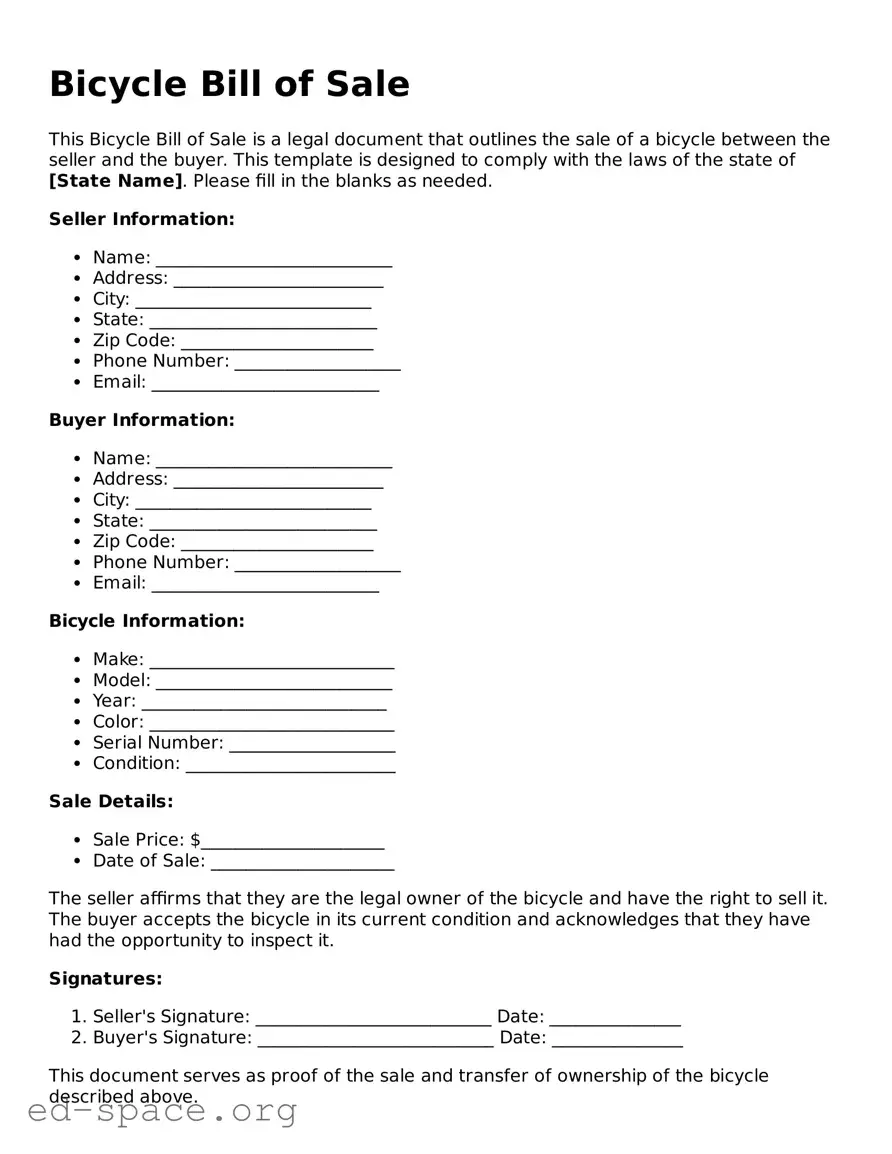
When buying or selling a bicycle, having a Bicycle Bill of Sale form is essential for both parties involved in the transaction. This document serves as proof of the transfer of ownership, ensuring that the seller can confirm they are no longer responsible for the bike, while the buyer gains legal ownership. The form typically includes important details such as the names and addresses of both the buyer and seller, a description of the bicycle—including its make, model, and serial number—and the sale price. Additionally, the date of the transaction is recorded to establish a timeline. By completing this form, both parties can protect their interests and provide clarity in the event of any future disputes. Whether you're a seasoned cyclist or a first-time buyer, understanding the significance of the Bicycle Bill of Sale form can help facilitate a smooth and transparent exchange.
Bicycle Bill of Sale
This Bicycle Bill of Sale is a legal document that outlines the sale of a bicycle between the seller and the buyer. This template is designed to comply with the laws of the state of [State Name]. Please fill in the blanks as needed.
Seller Information:
Buyer Information:
Bicycle Information:
Sale Details:
The seller affirms that they are the legal owner of the bicycle and have the right to sell it. The buyer accepts the bicycle in its current condition and acknowledges that they have had the opportunity to inspect it.
Signatures:
This document serves as proof of the sale and transfer of ownership of the bicycle described above.
| Fact Name | Description |
|---|---|
| Purpose | The Bicycle Bill of Sale form serves as a legal document that records the sale and transfer of ownership of a bicycle. |
| Seller and Buyer Information | The form requires the names and contact information of both the seller and the buyer to establish clear ownership. |
| Governing Laws | Each state may have specific laws regarding the sale of bicycles. For example, in California, the governing law is found in the California Civil Code. |
| Condition of the Bicycle | The form typically includes a section for the seller to describe the condition of the bicycle, which protects both parties. |
| Sale Price | The agreed-upon sale price must be documented on the form to ensure clarity in the transaction. |
| Signatures | Both the seller and buyer must sign the document, making it a binding agreement once completed. |
Filling out a Bicycle Bill of Sale form is an important step in documenting the transfer of ownership from the seller to the buyer. Once you have completed the form, you can proceed with the exchange of payment and the bike itself, ensuring both parties have a clear record of the transaction.
What is a Bicycle Bill of Sale?
A Bicycle Bill of Sale is a legal document that records the transfer of ownership of a bicycle from one person to another. This form serves as proof of the transaction and includes important details about the bicycle, the buyer, and the seller. It can be beneficial for both parties in case of disputes or for future reference.
Why should I use a Bicycle Bill of Sale?
Using a Bicycle Bill of Sale provides clarity and protection for both the buyer and the seller. It helps establish the terms of the sale, including the sale price and condition of the bicycle. This document can also help prevent misunderstandings and disputes over ownership in the future.
What information is typically included in a Bicycle Bill of Sale?
A Bicycle Bill of Sale usually includes the following information: the names and addresses of both the buyer and seller, a description of the bicycle (including make, model, color, and serial number), the sale price, and the date of the transaction. Both parties may also sign the document to acknowledge the agreement.
Is a Bicycle Bill of Sale required by law?
In most cases, a Bicycle Bill of Sale is not legally required. However, having one can be very helpful in establishing ownership and providing proof of purchase. Some states or local jurisdictions may have specific requirements, so it’s a good idea to check local laws if you have concerns.
Can I create my own Bicycle Bill of Sale?
Yes, you can create your own Bicycle Bill of Sale. It is important to include all necessary information to ensure it is clear and complete. Templates are also available online, which can make the process easier. Just ensure that the document meets your specific needs and complies with any local regulations.
What if the bicycle has a lien or is stolen?
If a bicycle has a lien, it means that someone else has a legal claim to it, often due to unpaid debts. It is crucial to resolve any liens before selling the bicycle. If the bicycle is stolen, it is illegal to sell it, and the rightful owner should report it to the authorities. Buyers should verify the bicycle's status before completing the sale.
How can I ensure the Bicycle Bill of Sale is valid?
To ensure the Bicycle Bill of Sale is valid, both the buyer and seller should sign and date the document. It is also advisable to keep copies for both parties. If possible, consider having a witness sign the document as well, which can further validate the transaction.
What should I do after completing the Bicycle Bill of Sale?
After completing the Bicycle Bill of Sale, both parties should retain a copy for their records. The buyer may want to register the bicycle with local authorities or a bicycle registry service, if applicable. This can help in recovering the bicycle if it is lost or stolen in the future.
Failing to include complete contact information for both the buyer and seller. This includes names, addresses, and phone numbers. Incomplete information can lead to difficulties in future communications.
Not specifying the make, model, and year of the bicycle. Without these details, it becomes challenging to identify the exact bicycle being sold, which can cause disputes later.
Omitting the serial number of the bicycle. The serial number is crucial for identification and can help in recovering a stolen bike.
Neglecting to indicate the sale price. A clear sale price is important for both parties and may be required for tax purposes.
Not including the date of sale. This is essential for establishing the timeline of ownership and can affect warranty claims.
Using vague or unclear language when describing the condition of the bicycle. Specific details about any damages or repairs can prevent misunderstandings.
Failing to have both parties sign the document. Signatures are necessary to validate the agreement and protect both parties' interests.
Not keeping a copy of the completed bill of sale. Both the buyer and seller should retain a copy for their records in case of future disputes.
Forgetting to verify the payment method. Clearly stating how the payment was made helps avoid confusion and can serve as proof of transaction.
The Bicycle Bill of Sale form is an essential document for anyone buying or selling a bicycle. However, several other forms and documents can complement this transaction to ensure clarity and legal protection for both parties involved. Below is a list of commonly used documents that often accompany the Bicycle Bill of Sale.
Incorporating these documents into the sale process can help ensure a smooth transaction and protect the interests of both the buyer and the seller. Having the right paperwork in place fosters trust and clarity, making the experience more positive for everyone involved.
The Bicycle Bill of Sale form serves as a crucial document for transferring ownership of a bicycle. However, it shares similarities with several other documents used in various transactions. Here’s a list of ten documents that are akin to the Bicycle Bill of Sale:
Each of these documents plays a vital role in ensuring that transactions are clear and legally recognized, much like the Bicycle Bill of Sale.
When filling out a Bicycle Bill of Sale form, it's important to ensure that all information is accurate and complete. Here are some key dos and don'ts to keep in mind:
Many people have misunderstandings about the Bicycle Bill of Sale form. Here are six common misconceptions:
When filling out and using the Bicycle Bill of Sale form, it's essential to keep a few key points in mind. These takeaways can help ensure that the transaction goes smoothly and protects both the buyer and seller.