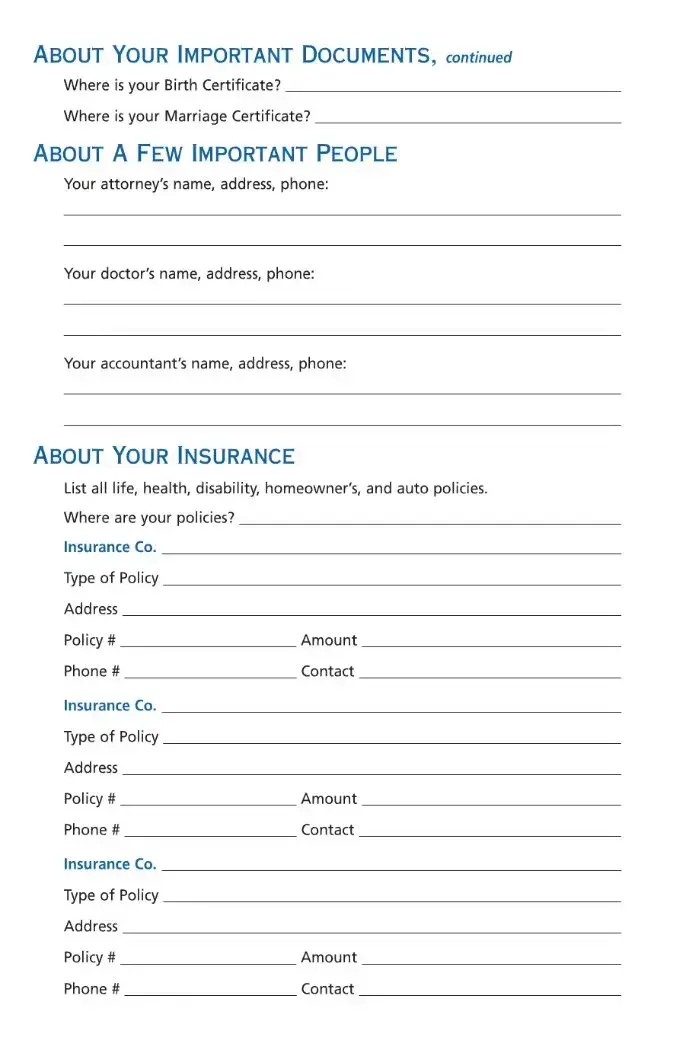
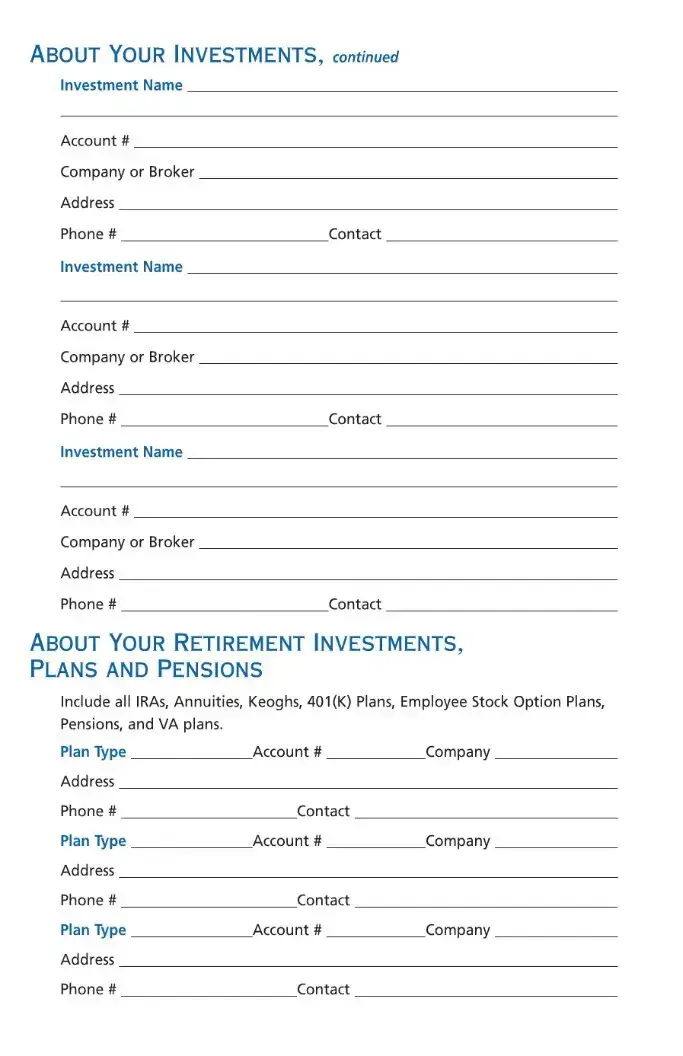
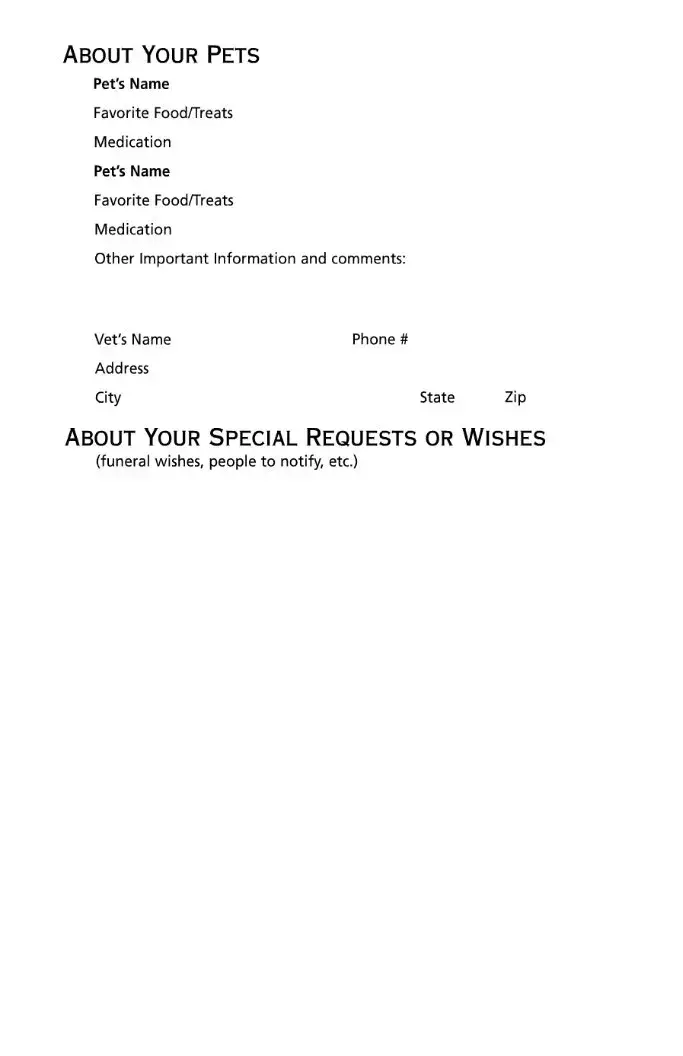
The Beneficiary Planner form, provided by Colonial Penn Life Insurance Company, serves as an essential tool for policyholders looking to streamline their end-of-life planning. This form is designed to assist individuals in communicating their wishes and vital information to family members or friends after their passing. It offers designated spaces for documenting critical details such as the location of important papers, necessary tasks that need attention, and a list of bills that require payment or accounts that should be canceled. By filling out this form, users can ensure that their loved ones are not left in the dark during a challenging time. It is encouraged to take the time to complete this valuable resource, and should additional space be needed, users can easily attach extra sheets. Once completed, discussing the contents with a trusted family member or friend is crucial, as is storing the form in a safe place and informing that person of its location. Regular reviews and updates of the information can further enhance its effectiveness, making the Beneficiary Planner a helpful resource not only for the individual but also for their family, friends, and even pets.
How to Use Your
Beneficiary Planner
This unique Beneficiary Planner has been prepared for
you by Colonial Penn Life Insurance Company, as a special service to our policyholders. It has been designed to make it
very easy for you to tell a family member or friend where things are...
and what your wishes may be after you pass away. This helpful planning guide provides room for you to fill in such vital information as...
♦Where your important papers are;
♦What needs to be taken care of;
♦What bills need to be paid or accounts cancelled;
♦And much more.
Please take some time to complete the information in this valuable resource guide. (If you need additional room in specific areas, you can add a sheet of paper.) Then, be sure to go over the information with a trusted family member or friend, put this guide in a safe place, and tell that person where the safe place is for their future reference. We also recommend that you review the information periodically and keep it
Preparing this information is a helpful way for you to get organized. Plus, it will be a great help to your family, your friends, and even your pets.
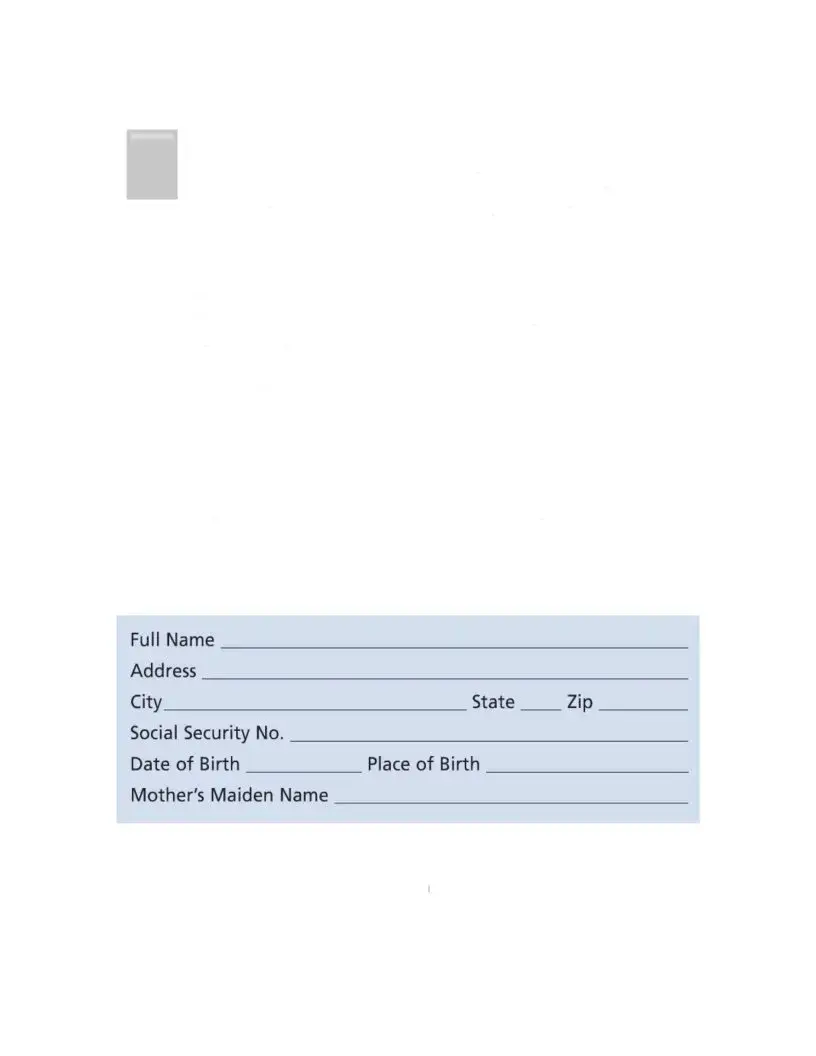
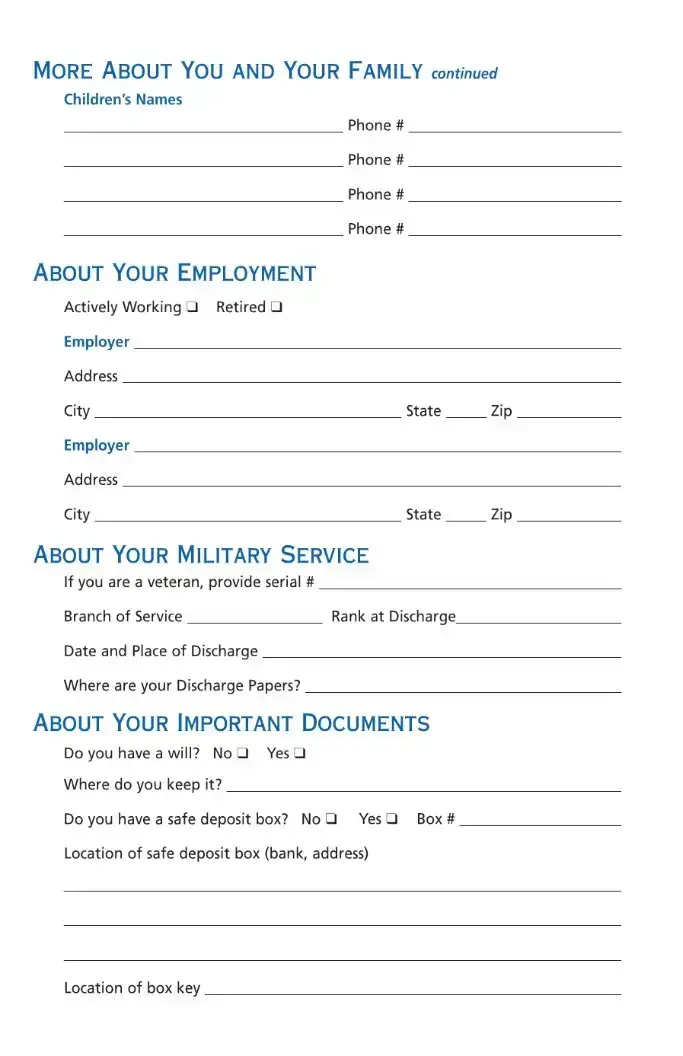
More About You and Your Family
Single Married Widow/Widower Divorced
Name of Spouse
Maiden Name
Number of Children



| Fact Name | Description |
|---|---|
| Purpose | The Beneficiary Planner is designed to help individuals communicate their wishes and important information to loved ones after their passing. |
| Provider | This form is provided by Colonial Penn Life Insurance Company as a service to its policyholders. |
| Key Information | It allows users to document vital details such as the location of important papers and what needs to be taken care of after death. |
| Additional Room | If more space is needed, users can attach additional sheets of paper to provide comprehensive information. |
| Review Process | It is recommended to periodically review and update the information to ensure it remains accurate and relevant. |
| Safe Storage | Once completed, the planner should be stored in a safe place, with a trusted family member or friend informed of its location. |
| Family Involvement | Discussing the contents of the planner with family members can facilitate understanding and reduce confusion during difficult times. |
| Marital Status | The form includes sections for users to indicate their marital status, which can affect beneficiary designations. |
| Legal Considerations | While this planner is a helpful tool, it does not replace legal documents like wills or trusts, which are governed by state laws. |
| State-Specific Laws | Users should consult their state laws regarding beneficiary designations to ensure compliance and proper execution. |
Filling out the Beneficiary Planner form is an important step in organizing your affairs and ensuring your wishes are known. After completing the form, it is essential to discuss the information with a trusted family member or friend. This will help them understand your plans and ensure they know where to find your important documents.
What is the purpose of the Beneficiary Planner form?
The Beneficiary Planner form is designed to help you organize important information for your loved ones. It allows you to document where your vital papers are located, what needs to be done after your passing, and any bills that must be paid or accounts that should be canceled. This guide serves as a valuable resource for your family and friends during a difficult time, ensuring they have the information they need to honor your wishes.
How should I fill out the Beneficiary Planner?
To fill out the Beneficiary Planner, take your time to provide as much detail as possible. Include information such as the location of important documents, your financial obligations, and any specific wishes you have. If you run out of space in certain sections, feel free to add additional sheets of paper. Once completed, review the information with a trusted family member or friend to ensure they understand your wishes and know where to find this important guide.
How often should I update the Beneficiary Planner?
It is advisable to review and update your Beneficiary Planner periodically. Life changes, such as marriage, divorce, or the birth of a child, may require you to adjust the information you have provided. Keeping this document current ensures that your loved ones have the most accurate and relevant information when they need it.
Where should I keep my completed Beneficiary Planner?
Your completed Beneficiary Planner should be stored in a safe place, such as a locked drawer or a safe. It is crucial to inform a trusted family member or friend about the location of this document. This way, they can easily access it when necessary. By taking these steps, you provide peace of mind for both yourself and your loved ones.
Not providing complete personal information. Make sure to include your full name, address, and contact details.
Forgetting to list all beneficiaries. It’s important to include everyone you want to designate, such as family members and friends.
Neglecting to update the form. Life changes, like marriage or divorce, may require you to revise your beneficiaries.
Overlooking important documents. Ensure you indicate where vital papers are stored, such as wills and insurance policies.
Not discussing your plans with loved ones. It’s helpful to talk to your beneficiaries about your wishes.
Failing to specify what needs to be done. Clearly outline what you want handled after your passing, including bill payments.
Putting the form in an unsafe place. Store your Beneficiary Planner in a secure location and inform someone you trust where it is.
Using vague language. Be clear and specific about your wishes to avoid confusion later.
Not reviewing the form regularly. Check the information periodically to ensure it reflects your current situation.
Ignoring the option to add extra information. If you need more space, don’t hesitate to attach additional sheets.
The Beneficiary Planner form serves as an essential tool for individuals looking to organize their important information and communicate their wishes to loved ones. However, it is often accompanied by several other documents that can further assist in estate planning and management. Below is a list of commonly used forms and documents that complement the Beneficiary Planner.
Utilizing these documents in conjunction with the Beneficiary Planner can provide a comprehensive approach to estate planning. This not only helps ensure that an individual's wishes are honored but also eases the burden on family members during a difficult time.
The Beneficiary Planner form shares similarities with several other important documents that assist individuals in organizing their affairs and communicating their wishes. Here are nine documents that align closely with the Beneficiary Planner:
Each of these documents plays a crucial role in ensuring that your wishes are honored and that your loved ones are informed during difficult times. Taking the time to prepare and maintain these documents can provide peace of mind for you and your family.
When filling out the Beneficiary Planner form, it is essential to approach the task with care and attention. Here’s a list of what you should and shouldn’t do:
Misconceptions about the Beneficiary Planner form can lead to confusion and missed opportunities for effective estate planning. Here are nine common misunderstandings:
Understanding these misconceptions can help individuals make the most of their Beneficiary Planner, ensuring their wishes are clearly communicated and their affairs are organized.
Filling out the Beneficiary Planner form is an essential step in ensuring your wishes are clearly communicated to your loved ones. Here are some key takeaways to consider:
By taking these steps, you can provide peace of mind to yourself and your loved ones, knowing that your wishes are documented and accessible.