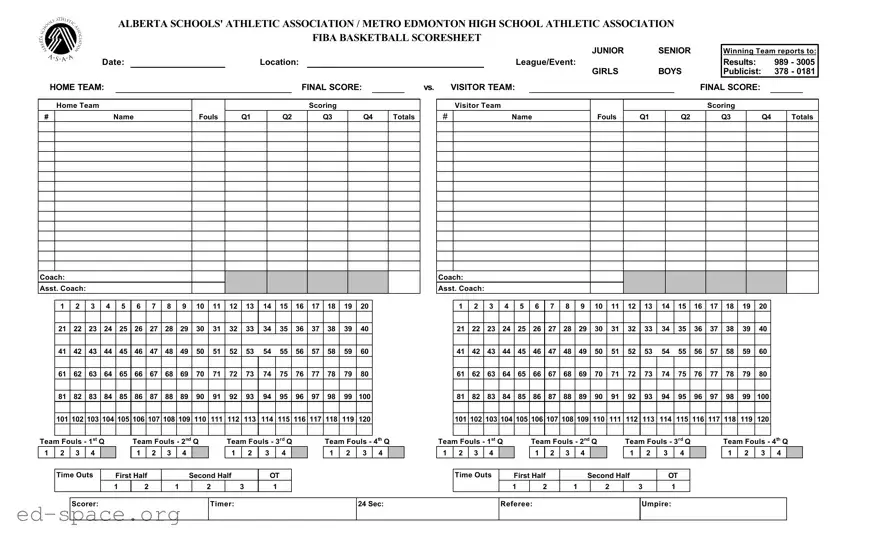
The Basketball Scoresheet form serves as a crucial tool for tracking the progress and outcomes of basketball games at various levels, including junior and senior competitions. This form is designed to capture essential game details, such as the date, location, and participating teams, which include both the home and visitor teams. Each team's scoring performance is meticulously documented across four quarters, allowing coaches and players to analyze their performance throughout the game. Additionally, the form includes sections for recording fouls, timeouts, and the names of coaches and key officials, such as the scorer and referees. By providing a structured way to log these statistics, the Basketball Scoresheet form not only helps in maintaining accurate records but also enhances the overall experience of the game for players, coaches, and fans alike. Its comprehensive nature ensures that every significant aspect of the game is accounted for, making it an indispensable resource for high school athletic associations and leagues.
ALBERTA SCHOOLS' ATHLETIC ASSOCIATION / METRO EDMONTON HIGH SCHOOL ATHLETIC ASSOCIATION
FIBA BASKETBALL SCORESHEET
|
|
|
|
|
|
|
|
|
|
JUNIOR |
SENIOR |
|
Winning Team reports to: |
|||
Date: |
|
Location: |
|
|
|
League/Event: |
|
|
|
Results: |
989 - 3005 |
|||||
|
|
|
|
|
|
|
|
|
|
GIRLS |
BOYS |
|
Publicist: |
378 - 0181 |
||
HOME TEAM: |
|
|
|
FINAL SCORE: |
|
vs. |
VISITOR TEAM: |
|
|
|
FINAL SCORE: |
|
|
|||
|
Home Team |
|
|
|
Scoring |
|
|
# |
Name |
Fouls |
Q1 |
Q2 |
Q3 |
Q4 |
Totals |
|
|
|
|
|
|
|
|
|
|
|
|
|
|
|
|
|
|
|
|
|
|
|
|
|
|
|
|
|
|
|
|
|
|
|
|
|
|
|
|
|
|
|
|
|
|
|
|
|
|
|
|
|
|
|
|
|
|
|
|
|
|
|
|
|
|
|
|
|
|
|
|
|
|
|
|
|
|
|
|
|
|
|
|
|
|
|
|
|
|
|
|
|
|
|
|
|
|
|
|
|
|
|
|
|
|
|
|
|
|
|
|
|
|
|
|
|
|
|
|
Coach:
Asst. Coach:
|
1 |
2 |
3 |
4 |
5 |
6 |
7 |
8 |
9 |
10 |
11 |
12 |
13 |
14 |
15 |
16 |
17 |
18 |
19 |
20 |
|
|
|
|
|
|
|
|
|
|
|
|
|
|
|
|
|
|
|
|
|
|
|
|
|
|
21 |
22 |
23 |
24 |
25 |
26 |
27 |
28 |
29 |
30 |
31 |
32 |
33 |
34 |
35 |
36 |
37 |
38 |
39 |
40 |
|
|
|
|
|
|
|
|
|
|
|
|
|
|
|
|
|
|
|
|
|
|
|
|
|
|
41 |
42 |
43 |
44 |
45 |
46 |
47 |
48 |
49 |
50 |
51 |
52 |
53 |
54 |
55 |
56 |
57 |
58 |
59 |
60 |
|
|
|
|
|
|
|
|
|
|
|
|
|
|
|
|
|
|
|
|
|
|
|
|
|
|
61 |
62 |
63 |
64 |
65 |
66 |
67 |
68 |
69 |
70 |
71 |
72 |
73 |
74 |
75 |
76 |
77 |
78 |
79 |
80 |
|
|
|
|
|
|
|
|
|
|
|
|
|
|
|
|
|
|
|
|
|
|
|
|
|
|
81 |
82 |
83 |
84 |
85 |
86 |
87 |
88 |
89 |
90 |
91 |
92 |
93 |
94 |
95 |
96 |
97 |
98 |
99 |
100 |
|
|
|
|
|
|
|
|
|
|
|
|
|
|
|
|
|
|
|
|
|
|
|
|
|
|
101 |
102 |
103 |
104 |
105 |
106 |
107 |
108 |
109 |
110 |
111 |
112 |
113 |
114 |
115 |
116 |
117 |
118 |
119 |
120 |
|
|
|
|
|
|
|
|
|
|
|
|
|
|
|
|
|
|
|
|
|
|
|
|
|
Team Fouls - 1st Q |
|
Team Fouls - 2nd Q |
|
Team Fouls - 3rd Q |
|
|
Team Fouls - 4th Q |
|||||||||||||||
1 |
2 |
3 |
4 |
|
|
1 |
2 |
3 |
4 |
|
|
1 |
2 |
3 |
4 |
|
|
1 |
2 |
3 |
4 |
|
|
Visitor Team |
|
|
|
Scoring |
|
|
# |
Name |
Fouls |
Q1 |
Q2 |
Q3 |
Q4 |
Totals |
|
|
|
|
|
|
|
|
|
|
|
|
|
|
|
|
|
|
|
|
|
|
|
|
|
|
|
|
|
|
|
|
|
|
|
|
|
|
|
|
|
|
|
|
|
|
|
|
|
|
|
|
|
|
|
|
|
|
|
|
|
|
|
|
|
|
|
|
|
|
|
|
|
|
|
|
|
|
|
|
|
|
|
|
|
|
|
|
|
|
|
|
|
|
|
|
|
|
|
|
|
|
|
|
|
|
|
|
|
|
|
|
|
|
|
|
|
|
|
|
Coach:
Asst. Coach:
|
1 |
2 |
3 |
4 |
5 |
6 |
7 |
8 |
9 |
10 |
11 |
12 |
13 |
14 |
15 |
16 |
17 |
18 |
19 |
20 |
|
|
|
|
|
|
|
|
|
|
|
|
|
|
|
|
|
|
|
|
|
|
|
|
|
|
21 |
22 |
23 |
24 |
25 |
26 |
27 |
28 |
29 |
30 |
31 |
32 |
33 |
34 |
35 |
36 |
37 |
38 |
39 |
40 |
|
|
|
|
|
|
|
|
|
|
|
|
|
|
|
|
|
|
|
|
|
|
|
|
|
|
41 |
42 |
43 |
44 |
45 |
46 |
47 |
48 |
49 |
50 |
51 |
52 |
53 |
54 |
55 |
56 |
57 |
58 |
59 |
60 |
|
|
|
|
|
|
|
|
|
|
|
|
|
|
|
|
|
|
|
|
|
|
|
|
|
|
61 |
62 |
63 |
64 |
65 |
66 |
67 |
68 |
69 |
70 |
71 |
72 |
73 |
74 |
75 |
76 |
77 |
78 |
79 |
80 |
|
|
|
|
|
|
|
|
|
|
|
|
|
|
|
|
|
|
|
|
|
|
|
|
|
|
81 |
82 |
83 |
84 |
85 |
86 |
87 |
88 |
89 |
90 |
91 |
92 |
93 |
94 |
95 |
96 |
97 |
98 |
99 |
100 |
|
|
|
|
|
|
|
|
|
|
|
|
|
|
|
|
|
|
|
|
|
|
|
|
|
|
101 |
102 |
103 |
104 |
105 |
106 |
107 |
108 |
109 |
110 |
111 |
112 |
113 |
114 |
115 |
116 |
117 |
118 |
119 |
120 |
|
|
|
|
|
|
|
|
|
|
|
|
|
|
|
|
|
|
|
|
|
|
|
|
|
Team Fouls - 1st Q |
|
Team Fouls - 2nd Q |
|
Team Fouls - 3rd Q |
|
|
Team Fouls - 4th Q |
|||||||||||||||
1 |
2 |
3 |
4 |
|
|
1 |
2 |
3 |
4 |
|
|
1 |
2 |
3 |
4 |
|
|
1 |
2 |
3 |
4 |
|
Time Outs |
First Half |
|
Second Half |
|
OT |
|
|
Time Outs |
First Half |
|
Second Half |
|
|
OT |
|
|||||||||
|
|
1 |
2 |
1 |
|
2 |
|
3 |
1 |
|
|
|
1 |
|
2 |
1 |
|
2 |
|
3 |
1 |
|
||
|
|
|
|
|
|
|
|
|
|
|
|
|
|
|
|
|
|
|
|
|
|
|
||
|
Scorer: |
|
|
|
|
|
Timer: |
|
|
|
24 Sec: |
Referee: |
|
|
|
|
|
|
Umpire: |
|
||||
|
|
|
|
|
|
|
|
|
|
|
|
|
|
|
|
|
|
|
|
|
|
|
|
|
| Fact Name | Details |
|---|---|
| Governing Associations | This scoresheet is used by the Alberta Schools' Athletic Association and the Metro Edmonton High School Athletic Association. |
| Purpose | The scoresheet is designed to record the details of a basketball game, including scores, fouls, and player statistics. |
| Sections | It includes sections for both home and visitor teams, allowing for comprehensive tracking of each team's performance. |
| Fouls Tracking | Fouls for each player are recorded by quarter, helping coaches monitor player discipline throughout the game. |
| Time Outs | Time outs are tracked separately for the first half, second half, and any overtime, ensuring accurate game management. |
| Coaching Staff | Spaces are provided to list the head coach and assistant coach for both teams, recognizing their roles in the game. |
| Contact Information | Contact details for the publicist are included, facilitating communication regarding the event. |
To complete the Basketball Scoresheet form, gather the necessary information about the game, including team names, scores, and player statistics. Follow these steps to ensure accurate and thorough documentation.
What is the purpose of the Basketball Scoresheet form?
The Basketball Scoresheet form serves as a comprehensive record of the game. It tracks important details such as team names, final scores, player statistics, fouls, and timeouts. This form is essential for coaches, referees, and statisticians to analyze performance and maintain an official record of the game.
How should I fill out the scoresheet for each team?
To fill out the scoresheet, start by entering the home and visitor team names at the top of the form. Next, list the players for each team along with their jersey numbers. As the game progresses, record points scored by each player in the corresponding quarter columns. Additionally, keep track of fouls committed by each player throughout the game. At the end, calculate and enter the total points for each player and the overall team score.
What information is required in the "Winning Team reports to" section?
This section typically includes the name of the winning team, the date of the game, and the location where it was held. This information is crucial for record-keeping and helps ensure accurate reporting to league officials or governing bodies.
How are team fouls recorded on the scoresheet?
Team fouls are recorded in the designated sections for each quarter. After each quarter, tally the total number of fouls committed by each team and enter these totals in the appropriate boxes. This helps coaches and referees monitor foul counts throughout the game.
What do I need to know about timeouts on the scoresheet?
The scoresheet includes sections for recording timeouts taken by each team during the first half, second half, and any overtime periods. Each team has a limited number of timeouts, so it’s important to track how many have been used. This information can affect game strategy and decisions made by coaches.
Who is responsible for filling out the scoresheet during the game?
What happens if there is a mistake on the scoresheet?
If a mistake is identified, it should be corrected as soon as possible. Strikethroughs or erasers are generally not recommended. Instead, draw a line through the incorrect entry and write the correct information next to it. Ensure that all involved parties, including coaches and referees, are aware of the correction to maintain transparency.
Can I use the scoresheet for both junior and senior games?
Yes, the scoresheet is designed to be versatile and can be used for both junior and senior games. However, ensure that you indicate the correct category at the top of the form to avoid any confusion. This distinction helps in organizing records and statistics for different age groups.
Failing to complete the date and location: Not providing this information can lead to confusion about when and where the game took place.
Incorrectly recording team names: Using nicknames or abbreviations instead of official team names can create discrepancies in records.
Omitting player numbers: Each player must have a unique number. Leaving this blank can complicate tracking player performance.
Not updating fouls accurately: Failing to track fouls during each quarter can result in incorrect player eligibility and game outcomes.
Neglecting to record scores for each quarter: Only entering final scores without detailing quarter-by-quarter performance can lead to misunderstandings of the game's progression.
Forgetting to note timeouts: Not recording timeouts taken can affect game strategy and player management.
Leaving out coach and assistant coach names: This information is essential for accountability and communication.
Failing to sign the scoresheet: Without signatures from the scorer and referee, the scoresheet may not be considered official.
Using unclear handwriting: Illegible writing can lead to errors in data entry and record-keeping.
The Basketball Scoresheet form is an essential tool used during games to track scores, fouls, and player performance. Several other forms and documents complement the scoresheet, providing additional information necessary for managing games effectively. Below is a list of these documents, each serving a specific purpose in the context of basketball events.
Each of these documents plays a vital role in the overall management of basketball games. Together, they contribute to a well-organized and enjoyable experience for players, coaches, and fans alike.
When filling out the Basketball Scoresheet form, it's important to follow certain guidelines to ensure accuracy and clarity. Here’s a list of things you should and shouldn’t do:
Understanding the Basketball Scoresheet form can be challenging. Here are seven common misconceptions that may lead to confusion.
By addressing these misconceptions, individuals involved in basketball can better utilize the scoresheet for accurate game tracking and analysis.
When filling out and using the Basketball Scoresheet form, keep these key takeaways in mind: