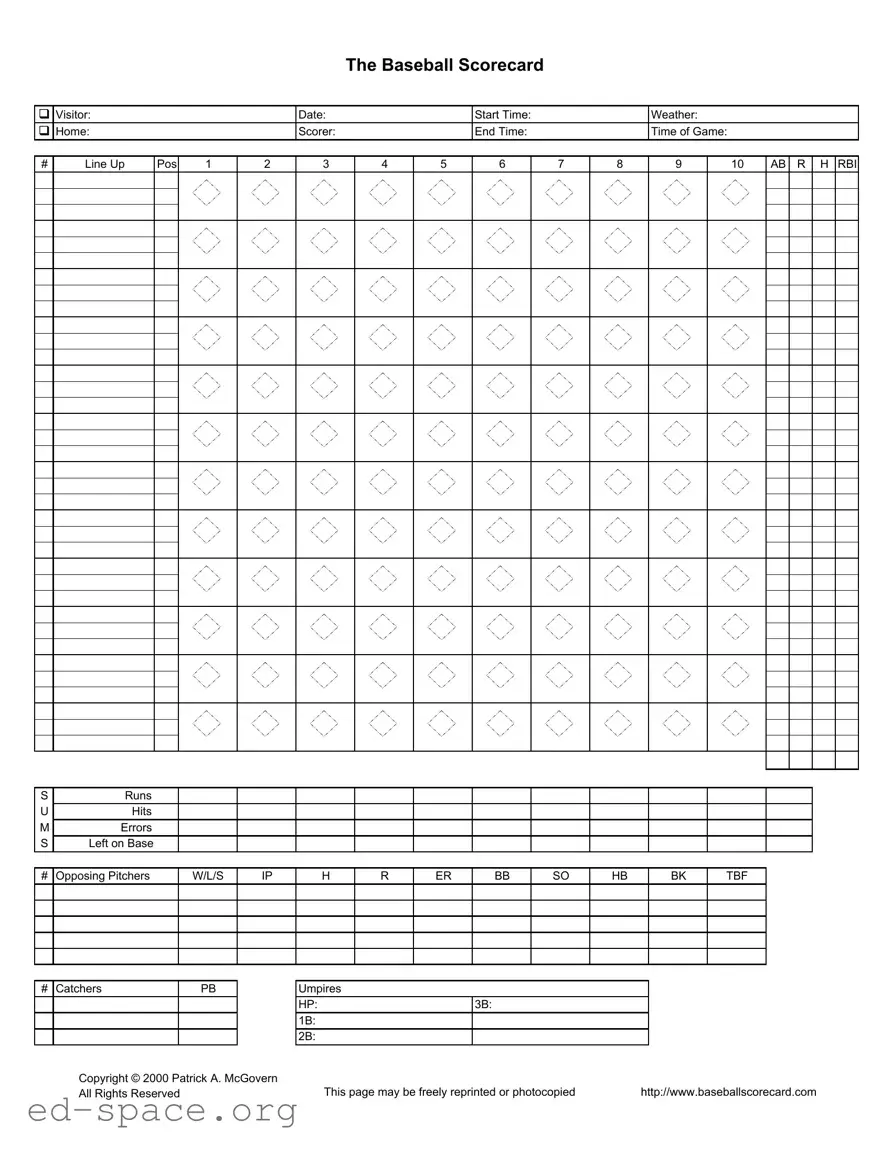
The Baseball Scorecard form is an essential tool for tracking the details of a game, providing a comprehensive overview that enhances the viewing experience. It captures critical information such as the teams playing, the date, and the start time, ensuring that every game is documented accurately. Weather conditions are noted, allowing for context about the game's atmosphere. The form includes sections for the scorer's name and the end time, giving a complete picture of the event's duration. Players' lineups are organized by position, with spaces to record their at-bats, runs, hits, and runs batted in (RBI). Additionally, it tracks the opposing pitchers' performance, including their innings pitched and strikeouts, which are vital for analyzing the game. Umpires are also listed, providing insight into the officiating. This scorecard not only serves as a record of the game but also as a valuable resource for fans and analysts alike.
THE BASEBALL SCORECARD
GVisitor:
GHome:
Date: |
Start Time: |
Weather: |
Scorer: |
End Time: |
Time of Game: |
|
|
|
#
Line Up
Pos
1
2
3
4
5 |
6 |
7 |
|
|
|
8
9
10
AB R
H RBI
S U M S
Runs
Hits
Errors
Left on Base
# Opposing Pitchers
W/L/S
IP
H
R
ER
BB
SO
HB
BK
TBF
# Catchers
PB
Umpires
HP:
1B:
2B:
3B:
Copyright © 2000 Patrick A. McGovern |
|
|
All Rights Reserved |
This page may be freely reprinted or photocopied |
http://www.baseballscorecard.com |
| Fact Name | Description |
|---|---|
| Purpose | The Baseball Scorecard is used to track the progress and statistics of a baseball game in real-time. |
| Visitor and Home Teams | It includes sections to record the names of the visiting and home teams, ensuring clarity throughout the game. |
| Date and Time | The scorecard captures the date and start time of the game, which is essential for record-keeping. |
| Weather Conditions | There is a space to note the weather, as it can impact game conditions and player performance. |
| Scorer Identification | The scorer’s name is recorded, providing accountability for the statistics documented. |
| Lineup and Positions | The scorecard allows for the entry of player lineups and their respective positions, facilitating easy tracking of player actions. |
| Statistical Tracking | It includes fields for tracking at-bats, runs, hits, RBIs, and errors, which are crucial for analyzing player performance. |
| Opposing Pitchers | Information about opposing pitchers, including their win/loss/saves records and innings pitched, is also documented. |
| Umpires | The scorecard provides sections to note the umpires for each base and home plate, ensuring all officiating is accounted for. |
| Copyright Information | The scorecard is copyrighted, indicating that it is a proprietary form and should be used with permission. |
Filling out the Baseball Scorecard form allows you to keep track of the game details and player statistics. Follow these steps to ensure you capture all the necessary information accurately.
What is the purpose of the Baseball Scorecard form?
The Baseball Scorecard form serves as a tool for fans, coaches, and players to track the progress of a baseball game. It allows users to record important details such as the teams playing, the date and time of the game, and the weather conditions. Additionally, it provides sections for documenting player statistics, including at-bats, runs, hits, and errors. By using this scorecard, individuals can keep a detailed account of the game, which can be helpful for analysis, enjoyment, and memory keeping.
How do I fill out the player statistics on the scorecard?
Filling out player statistics on the scorecard involves recording various metrics during the game. For each player in the lineup, you will note their position and track their performance in each at-bat. You can mark whether they got a hit, made an out, or achieved other outcomes like walks or strikeouts. Each column under the player’s name corresponds to their performance in each inning. Additionally, you will want to tally the total runs, hits, and errors for the team, providing a comprehensive overview of the game’s progress.
What information do I need to provide at the start of the game?
At the beginning of the game, you should fill out several key pieces of information on the scorecard. This includes the names of the visiting and home teams, the date of the game, and the start time. It’s also useful to note the weather conditions, as they can impact gameplay. Finally, designate the scorer’s name, who will be responsible for tracking the game’s events. This initial information sets the stage for a well-organized scorekeeping experience.
Can I use the Baseball Scorecard form for any level of play?
Yes, the Baseball Scorecard form is versatile and can be used for any level of play, from youth leagues to professional games. It is designed to accommodate various baseball formats, allowing users to adapt it based on their specific needs. Whether you are a parent watching your child’s little league game or a fan attending a major league match, this scorecard can help you keep track of the action and enhance your overall experience.
Neglecting to fill in the basic information: Many scorekeepers forget to include essential details such as the visitor and home team names, date, and start time. This information is crucial for record-keeping and for anyone reviewing the scorecard later.
Incorrectly recording player positions: When entering players in the lineup, it's important to accurately note their positions. Mislabeling a player’s position can lead to confusion during the game and when analyzing performance afterward.
Failing to track runs and hits: Some individuals overlook the importance of consistently updating runs and hits throughout the game. This can result in an incomplete or inaccurate scorecard, making it difficult to assess the game's outcome.
Omitting opposing pitchers’ details: Not recording information about the opposing pitchers, such as innings pitched and earned runs, can lead to an incomplete understanding of the game dynamics. This data is vital for evaluating pitching performance.
Not marking errors: Errors can significantly impact the game's outcome. Failing to note errors on the scorecard means missing out on important statistical information that reflects the team's defensive performance.
Ignoring the left on base statistic: Forgetting to track how many runners are left on base can skew the analysis of a team’s offensive efficiency. This statistic provides insight into scoring opportunities that were not capitalized on.
Leaving out umpire information: It's common to overlook recording the names of the umpires. This information can be useful for future reference, especially if there are any disputes regarding calls made during the game.
The Baseball Scorecard form is an essential tool for tracking the details of a game. However, several other forms and documents can complement it, helping to provide a more comprehensive overview of the game. Below is a list of related documents often used in conjunction with the scorecard.
Using these documents alongside the Baseball Scorecard can enhance the overall understanding of the game. Each form serves a specific purpose, contributing to a richer experience for players, coaches, and fans alike.
The Baseball Scorecard form serves as a detailed record of a baseball game, capturing key statistics and game events. Several other documents share similarities with the scorecard, each providing a structured way to record information related to sports or events. Here are eight documents that are comparable to the Baseball Scorecard form:
Each of these documents provides a structured way to record and analyze performance in various sports, similar to how the Baseball Scorecard form functions in baseball.
When filling out the Baseball Scorecard form, it's important to follow some basic guidelines. Here’s a list of things you should and shouldn't do:
By following these tips, you'll ensure that your scorecard is both accurate and easy to read. Enjoy the game!
When it comes to using a Baseball Scorecard, several misconceptions can lead to confusion. Here are six common misunderstandings:
Understanding these misconceptions can help enhance your enjoyment of baseball, whether you are a seasoned fan or new to the sport.
Using a Baseball Scorecard can enhance your game-watching experience. Here are some key takeaways to keep in mind:
Filling out the scorecard accurately will help you enjoy the game more and understand its nuances better.