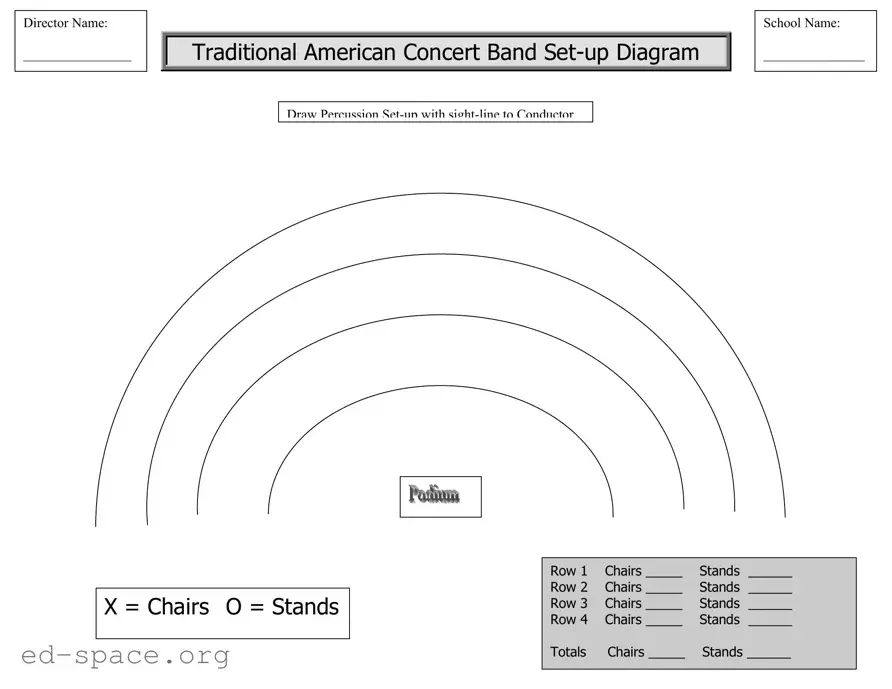
The Band Seating Chart form is an essential tool for music directors as they prepare for performances. This form facilitates the organization of musicians in a way that maximizes both sightlines and sound quality. At the top of the form, directors fill in their name, school, and performance details, ensuring that all necessary information is readily available. Below this, a traditional American concert band setup diagram allows for a visual representation of the stage layout. Each row is designated for specific instruments, with spaces allocated for chairs and music stands. The form requires careful consideration of the number of musicians in each section, helping to create a balanced sound. Additionally, there are specific instructions regarding the placement of percussion instruments, which must adhere to a basic setup for optimal performance. Completing this form accurately is crucial, as it guides the stage crew in arranging the setup according to the director's specifications. The deadline for submission emphasizes the importance of planning ahead, ensuring a smooth and successful concert experience.
Director Name:
________________
Traditional American Concert Band
Draw Percussion
School Name:
_______________
X = Chairs O = Stands
Row 1 |
Chairs _____ |
Stands |
______ |
Row 2 |
Chairs _____ |
Stands |
______ |
Row 3 |
Chairs _____ |
Stands |
______ |
Row 4 |
Chairs _____ |
Stands |
______ |
Totals |
Chairs _____ |
Stands ______ |
|
|
|
|
|
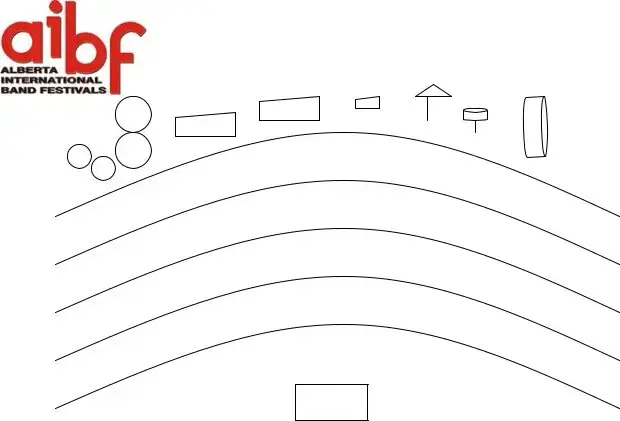
Concert Band
ROW 5
ROW 4
ROW 3
ROW 2
ROW 1
PODIUM
School: _______________________________________
Director: ______________________________________
Performance Date: _____________ Time: __________
ROW 1 ______ CHAIRS & _______ MUSIC STANDS
ROW 2 |
______ CHAIRS & _______ MUSIC STANDS |
ROW 3 |
______ CHAIRS & _______ MUSIC STANDS |
ROW 4 |
______ CHAIRS & _______ MUSIC STANDS |
ROW 5 |
______ CHAIRS & _______ MUSIC STANDS |
The AIBF stage crew will do their best to set the stage for your requirements.
Please note that percussion MUST stay in the basic
PLEASE FAX THIS FORM TO
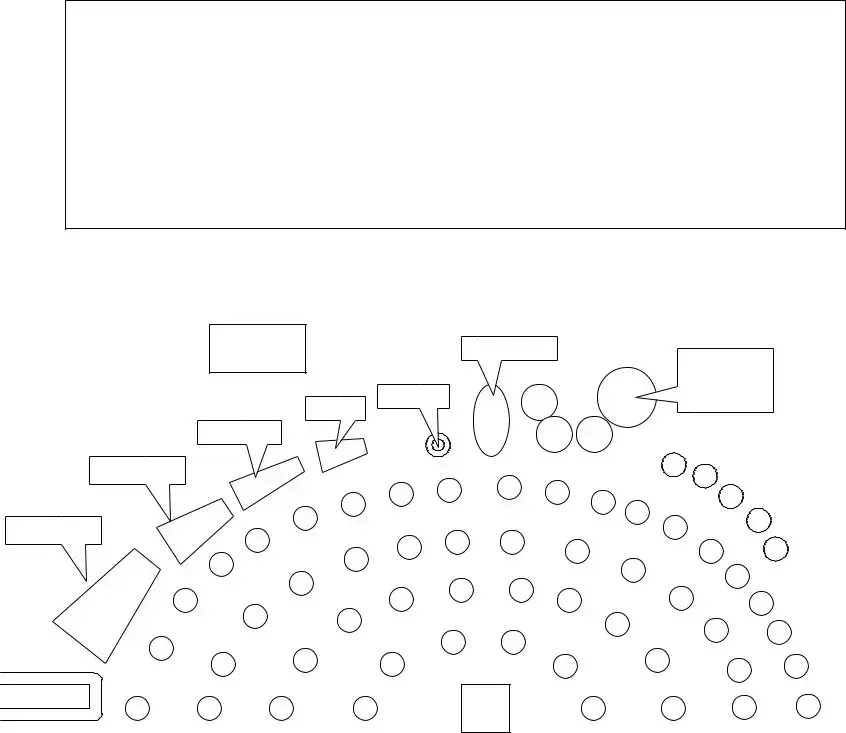
2007 Huron Concert Band
Row 1: 6 Chairs/3 Stands (Flute)
Row 2: 10 Chairs/8 Stands (1st & 2nd Clarinets, Oboe, Bassoon, Bass Clarinet)
Row 3: 14 Chairs/10 Stands (3rd Clarinet, Horns, Bari, Tenor, Alto
Row 4: 19 Chairs/13 Stands (Trumpets, Trombones, Euphonium, Tuba)
Row 5: 5 Stands
Percussion: 11 Stands
Auxiliary
Vibes
Bass
Timpani
Snare
Bells
Xylophone
Marimba
Chimes
| Fact Name | Description |
|---|---|
| Director Information | The form requires the name of the director and the school to ensure proper identification of the concert band setup. |
| Seating Arrangement | It includes a detailed diagram for arranging chairs and music stands in five rows, allowing for a clear view of the conductor. |
| Submission Instructions | Users must fax the completed form to the specified number before the deadline of March 1, 2008, to ensure proper setup. |
| Percussion Setup | The form specifies that percussion instruments must adhere to a basic setup, which is crucial for maintaining sight-lines to the conductor. |
Filling out the Band Seating Chart form is essential for organizing your concert band’s performance. This form helps to clearly define the arrangement of musicians, ensuring everyone knows where to sit and how to set up their equipment. Follow these steps to complete the form accurately.
What is the purpose of the Band Seating Chart form?
The Band Seating Chart form is designed to help organize the seating arrangement for a concert band performance. It allows the director to specify how many chairs and music stands are needed for each row. This ensures that all musicians are properly seated and can see the conductor during the performance.
How do I fill out the form correctly?
To fill out the form, start by entering the director's name and the school name at the top. Next, indicate the number of chairs and stands required for each row. Use the provided diagram as a guide for the traditional American concert band setup. Make sure to account for the percussion section, which has specific requirements. Double-check your totals to ensure accuracy.
What should I do if I have special seating requirements?
If there are special seating needs, such as for a soloist or specific instrument group, note these in the designated area of the form. Communication is key. You can also reach out to the stage crew for any further adjustments. They will do their best to accommodate your requests.
When is the deadline for submitting the form?
The completed form must be faxed to 780-438-1465, attention Rob Speers, before March 1, 2008. Timely submission is crucial to ensure that your seating arrangement can be properly set up for the performance.
What happens if I miss the deadline?
If you miss the deadline, there may be limited flexibility in accommodating your seating requests. The stage crew will have already planned the setup based on the forms they received. It’s best to submit your form on time to avoid any issues.
Can I make changes to the seating chart after submitting the form?
Changes can be made after submitting the form, but it’s important to communicate these changes as soon as possible. Contact the stage crew directly to discuss any modifications. They will do their best to adjust the setup according to your new requirements.
Failing to include the Director Name and School Name at the top of the form. This information is crucial for identification.
Not accurately drawing the Percussion Set-up. It's important for the percussion section to have a clear sight-line to the conductor.
Leaving any of the Chairs or Stands fields blank. Each row must have specified numbers for proper arrangements.
Misplacing the rows or failing to follow the Traditional American Concert Band Set-up Diagram. Stick to the layout provided.
Not faxing the completed form to the correct number: 780-438-1465. Double-check the number before sending.
Ignoring the deadline. Make sure to submit the form prior to March 1, 2008 to avoid any issues.
Overlooking the specific requirements for Percussion. They must remain in the basic set-up as shown on the form.
Not checking for clarity and accuracy in the performance date and time. This information is essential for scheduling.
Failing to review the entire form before submission. A quick check can prevent mistakes that may affect the performance.
When organizing a concert band performance, several essential forms and documents accompany the Band Seating Chart form. Each document serves a unique purpose, ensuring that the event runs smoothly and meets the needs of all participants.
Utilizing these forms and documents alongside the Band Seating Chart form fosters a well-organized and successful concert band performance. Each document plays a vital role in ensuring that all aspects of the event are considered and that participants are prepared for an enjoyable experience.
The Band Seating Chart form is essential for organizing musicians in a concert band setting. Several other documents serve similar purposes in various contexts. Here are nine documents that share similarities with the Band Seating Chart form:
When filling out the Band Seating Chart form, there are specific actions to take and avoid. Following these guidelines will help ensure a smooth process.
By following these dos and don'ts, you can help ensure that the band is set up properly for the performance. Clear communication and attention to detail are key.
Misconceptions about the Band Seating Chart form can lead to confusion and improper setup for performances. Below are six common misconceptions, clarified for better understanding.
Understanding these misconceptions can help ensure that the Band Seating Chart form is completed accurately, leading to a successful performance.
When filling out and using the Band Seating Chart form, keep the following key takeaways in mind:
By following these takeaways, you can help ensure a smooth and successful performance for your band.