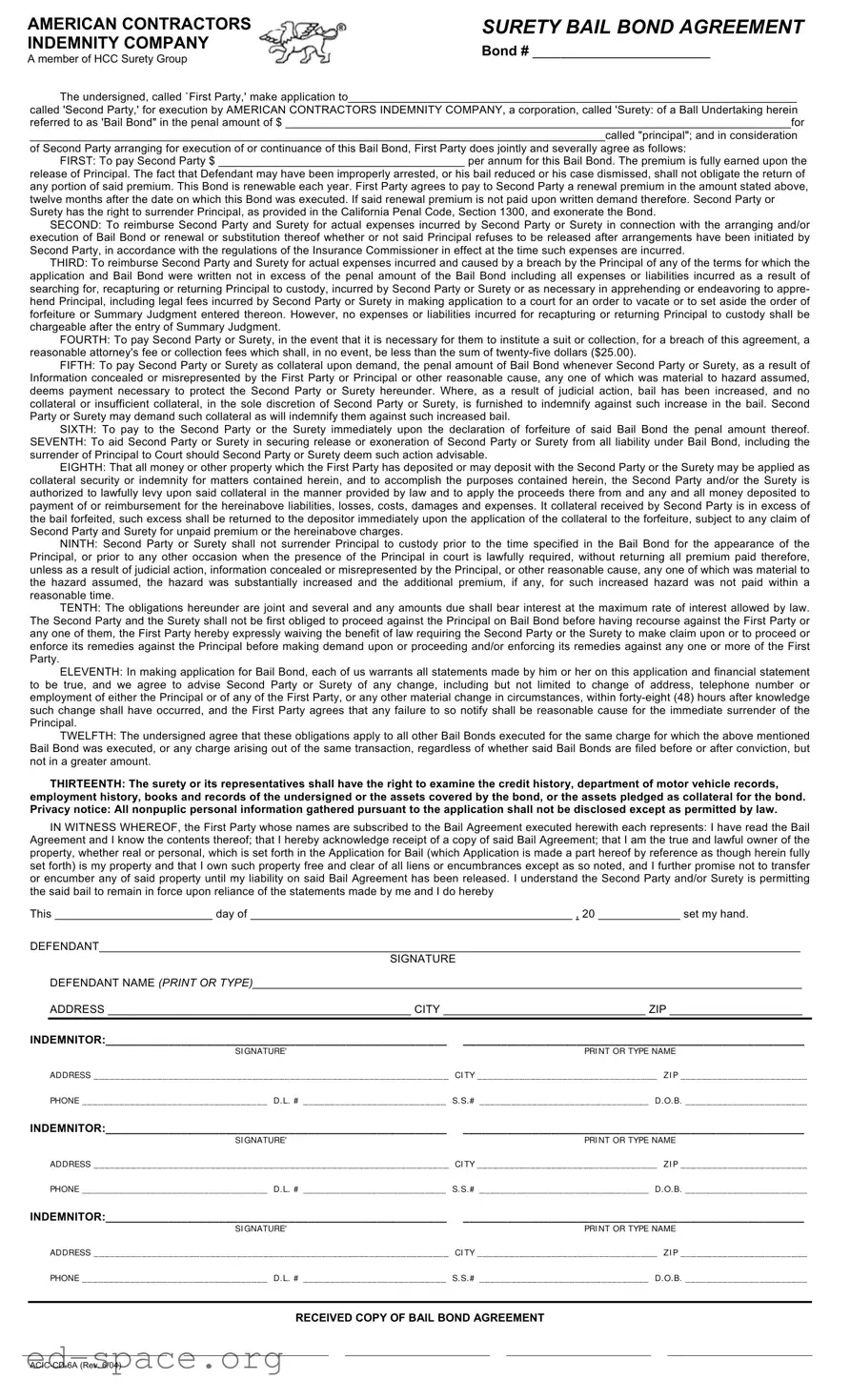
When someone is arrested, securing their release often hinges on the completion of a Bail Bond Release Paperwork form. This essential document outlines the agreement between the individual seeking the bond, referred to as the "First Party," and the bail bond company, known as the "Second Party" or "Surety." The form includes critical details such as the bond number, the penal amount of the bond, and the principal's name, which is the person for whom the bail is being arranged. It specifies the premium the First Party must pay annually and clarifies that this premium is fully earned upon the principal's release, regardless of any subsequent legal developments. The form also establishes the responsibilities of the First Party, including reimbursement for any expenses incurred by the Surety in connection with the bond, and outlines the consequences of failing to meet these obligations. Additionally, it addresses collateral requirements, conditions for renewing the bond, and the rights of the Surety in case of forfeiture. By understanding the nuances of this paperwork, individuals can navigate the bail process more effectively, ensuring that they meet all necessary requirements while securing the release of their loved ones.

AMERICAN CONTRACTORS |
SURETY BAIL BOND AGREEMENT |
|
INDEMNITY COMPANY |
Bond # _______________________ |
|
A member of HCC Surety Group |
||
|
The undersigned, called `First Party,' make application to_______________________________________________________________________
called 'Second Party,' for execution by AMERICAN CONTRACTORS INDEMNITY COMPANY, a corporation, called 'Surety: of a Ball Undertaking herein referred to as 'Bail Bond" in the penal amount of $ ________________________________________________________________________________for
___________________________________________________________________________________________called "principal"; and in consideration
of Second Party arranging for execution of or continuance of this Bail Bond, First Party does jointly and severally agree as follows:
FIRST: To pay Second Party $ _______________________________________ per annum for this Bail Bond. The premium is fully earned upon the
release of Principal. The fact that Defendant may have been improperly arrested, or his bail reduced or his case dismissed, shall not obligate the return of any portion of said premium. This Bond is renewable each year. First Party agrees to pay to Second Party a renewal premium in the amount stated above, twelve months after the date on which this Bond was executed. If said renewal premium is not paid upon written demand therefore. Second Party or Surety has the right to surrender Principal, as provided in the California Penal Code, Section 1300, and exonerate the Bond.
SECOND: To reimburse Second Party and Surety for actual expenses incurred by Second Party or Surety in connection with the arranging and/or execution of Bail Bond or renewal or substitution thereof whether or not said Principal refuses to be released after arrangements have been initiated by Second Party, in accordance with the regulations of the Insurance Commissioner in effect at the time such expenses are incurred.
THIRD: To reimburse Second Party and Surety for actual expenses incurred and caused by a breach by the Principal of any of the terms for which the application and Bail Bond were written not in excess of the penal amount of the Bail Bond including all expenses or liabilities incurred as a result of searching for, recapturing or returning Principal to custody, incurred by Second Party or Surety or as necessary in apprehending or endeavoring to appre- hend Principal, including legal fees incurred by Second Party or Surety in making application to a court for an order to vacate or to set aside the order of forfeiture or Summary Judgment entered thereon. However, no expenses or liabilities incurred for recapturing or returning Principal to custody shall be chargeable after the entry of Summary Judgment.
FOURTH: To pay Second Party or Surety, in the event that it is necessary for them to institute a suit or collection, for a breach of this agreement, a reasonable attorney's fee or collection fees which shall, in no event, be less than the sum of
FIFTH: To pay Second Party or Surety as collateral upon demand, the penal amount of Bail Bond whenever Second Party or Surety, as a result of Information concealed or misrepresented by the First Party or Principal or other reasonable cause, any one of which was material to hazard assumed, deems payment necessary to protect the Second Party or Surety hereunder. Where, as a result of judicial action, bail has been increased, and no collateral or insufficient collateral, in the sole discretion of Second Party or Surety, is furnished to indemnify against such increase in the bail. Second Party or Surety may demand such collateral as will indemnify them against such increased bail.
SIXTH: To pay to the Second Party or the Surety immediately upon the declaration of forfeiture of said Bail Bond the penal amount thereof. SEVENTH: To aid Second Party or Surety in securing release or exoneration of Second Party or Surety from all liability under Bail Bond, including the surrender of Principal to Court should Second Party or Surety deem such action advisable.
EIGHTH: That all money or other property which the First Party has deposited or may deposit with the Second Party or the Surety may be applied as collateral security or indemnity for matters contained herein, and to accomplish the purposes contained herein, the Second Party and/or the Surety is authorized to lawfully levy upon said collateral in the manner provided by law and to apply the proceeds there from and any and all money deposited to payment of or reimbursement for the hereinabove liabilities, losses, costs, damages and expenses. It collateral received by Second Party is in excess of the bail forfeited, such excess shall be returned to the depositor immediately upon the application of the collateral to the forfeiture, subject to any claim of Second Party and Surety for unpaid premium or the hereinabove charges.
NINTH: Second Party or Surety shall not surrender Principal to custody prior to the time specified in the Bail Bond for the appearance of the Principal, or prior to any other occasion when the presence of the Principal in court is lawfully required, without returning all premium paid therefore, unless as a result of judicial action, information concealed or misrepresented by the Principal, or other reasonable cause, any one of which was material to the hazard assumed, the hazard was substantially increased and the additional premium, if any, for such increased hazard was not paid within a reasonable time.
TENTH: The obligations hereunder are joint and several and any amounts due shall bear interest at the maximum rate of interest allowed by law. The Second Party and the Surety shall not be first obliged to proceed against the Principal on Bail Bond before having recourse against the First Party or any one of them, the First Party hereby expressly waiving the benefit of law requiring the Second Party or the Surety to make claim upon or to proceed or enforce its remedies against the Principal before making demand upon or proceeding and/or enforcing its remedies against any one or more of the First Party.
ELEVENTH: In making application for Bail Bond, each of us warrants all statements made by him or her on this application and financial statement to be true, and we agree to advise Second Party or Surety of any change, including but not limited to change of address, telephone number or employment of either the Principal or of any of the First Party, or any other material change in circumstances, within
TWELFTH: The undersigned agree that these obligations apply to all other Bail Bonds executed for the same charge for which the above mentioned Bail Bond was executed, or any charge arising out of the same transaction, regardless of whether said Bail Bonds are filed before or after conviction, but not in a greater amount.
THIRTEENTH: The surety or its representatives shall have the right to examine the credit history, department of motor vehicle records, employment history, books and records of the undersigned or the assets covered by the bond, or the assets pledged as collateral for the bond. Privacy notice: All nonpuplic personal information gathered pursuant to the application shall not be disclosed except as permitted by law.
IN WITNESS WHEREOF, the First Party whose names are subscribed to the Bail Agreement executed herewith each represents: I have read the Bail Agreement and I know the contents thereof; that I hereby acknowledge receipt of a copy of said Bail Agreement; that I am the true and lawful owner of the property, whether real or personal, which is set forth in the Application for Bail (which Application is made a part hereof by reference as though herein fully set forth) is my property and that I own such property free and clear of all liens or encumbrances except as so noted, and I further promise not to transfer or encumber any of said property until my liability on said Bail Agreement has been released. I understand the Second Party and/or Surety is permitting the said bail to remain in force upon reliance of the statements made by me and I do hereby
This _________________________ day of ___________________________________________________ , 20 _____________ set my hand.
DEFENDANT_______________________________________________________________________________________________________________
SIGNATURE
DEFENDANT NAME (PRINT OR TYPE)_______________________________________________________________________________________
ADDRESS ________________________________________________ CITY ________________________________ ZIP _____________________
INDEMNITOR:______________________________________________________ |
______________________________________________________ |
SI GNATURE' |
PRI NT OR TYPE NAME |
ADDRESS _ _ _ _ _ ___ _ __ __ _ __ __ __ _ ___ _ __ __ _ __ __ __ _ ___ _ __ __ _ __ __ __ _ ___ _ __ __ _ __ __ _ |
CI TY _ __ _ __ __ __ _ __ __ _ __ __ _ __ __ __ _ ___ _ __ ZI P _ __ _ __ __ _ __ __ _ __ __ __ _ ___ |
PHONE _ _ _ __ __ __ __ _ __ __ _ __ __ __ _ ___ _ __ __ _ __ D. L. # _ _ __ __ _ __ __ __ _ ___ _ __ __ _ __ __ |
S. S. # _ _ __ __ _ __ __ __ __ _ __ __ _ __ __ __ _ ___ _ D. O. B. __ __ __ __ _ __ __ _ __ __ __ _ __ |
INDEMNITOR:______________________________________________________ |
______________________________________________________ |
SI GNATURE' |
PRI NT OR TYPE NAME |
ADDRESS _ _ _ _ _ ___ _ __ __ _ __ __ __ _ ___ _ __ __ _ __ __ __ _ ___ _ __ __ _ __ __ __ _ ___ _ __ __ _ __ __ _ |
CI TY _ __ _ __ __ __ _ __ __ _ __ __ _ __ __ __ _ ___ _ __ ZI P _ __ _ __ __ _ __ __ _ __ __ __ _ ___ |
PHONE _ _ _ __ __ __ __ _ __ __ _ __ __ __ _ ___ _ __ __ _ __ D. L. # _ _ __ __ _ __ __ __ _ ___ _ __ __ _ __ __ |
S. S. # _ _ __ __ _ __ __ __ __ _ __ __ _ __ __ __ _ ___ _ D. O. B. __ __ __ __ _ __ __ _ __ __ __ _ __ |
INDEMNITOR:______________________________________________________ |
______________________________________________________ |
SI GNATURE' |
PRI NT OR TYPE NAME |
ADDRESS _ _ _ _ _ ___ _ __ __ _ __ __ __ _ ___ _ __ __ _ __ __ __ _ ___ _ __ __ _ __ __ __ _ ___ _ __ __ _ __ __ _ |
CI TY _ __ _ __ __ __ _ __ __ _ __ __ _ __ __ __ _ ___ _ __ ZI P _ __ _ __ __ _ __ __ _ __ __ __ _ ___ |
PHONE _ _ _ __ __ __ __ _ __ __ _ __ __ __ _ ___ _ __ __ _ __ D. L. # _ _ __ __ _ __ __ __ _ ___ _ __ __ _ __ __ |
S. S. # _ _ __ __ _ __ __ __ __ _ __ __ _ __ __ __ _ ___ _ D. O. B. __ __ __ __ _ __ __ _ __ __ __ _ __ |
RECEIVED COPY OF BAIL BOND AGREEMENT
| Fact Name | Details |
|---|---|
| Form Title | The document is officially titled "American Contractors Surety Bail Bond Agreement." It outlines the terms and conditions for obtaining a bail bond. |
| Parties Involved | It identifies three parties: the First Party (the applicant), the Second Party (the bail agent), and the Surety (the insurance company providing the bond). |
| Premium Payment | The First Party agrees to pay an annual premium for the bail bond, which is fully earned upon the release of the principal. |
| Renewal Clause | The bond is renewable each year, with the First Party required to pay the renewal premium within twelve months of execution. |
| Reimbursement Obligations | The First Party must reimburse the Second Party and Surety for any expenses incurred related to the bail bond, including legal fees. |
| Forfeiture Terms | Upon forfeiture of the bond, the First Party must pay the penal amount immediately, ensuring the Surety is protected. |
| Collateral Requirements | The First Party may be required to provide collateral if there is a material change in risk or if bail is increased due to judicial action. |
| Joint and Several Liability | All obligations under the agreement are joint and several, meaning each party can be held liable for the full amount due. |
| Governing Law | This form is governed by the California Penal Code, Section 1300, among other applicable laws, ensuring compliance with state regulations. |
Filling out the Bail Bond Release Paperwork form is an important step in securing a bail bond. Once completed, this form will be submitted to the appropriate surety company for processing. The following steps will guide you through the process of filling out the form correctly.
Once the form is filled out, review it for accuracy. Ensure that all required fields are completed and that the information is correct. After that, submit the form to the surety company to proceed with the bail bond process.
What is the purpose of the Bail Bond Release Paperwork form?
The Bail Bond Release Paperwork form is designed to facilitate the process of securing a bail bond for an individual, referred to as the Principal. This form outlines the agreement between the First Party (the person applying for the bond) and the Second Party (the bail bond company). It details the terms and conditions of the bond, including the financial obligations of the First Party and the responsibilities of the Surety, which is the company providing the bond.
What are the financial obligations of the First Party?
The First Party agrees to pay an annual premium for the bail bond, which is fully earned upon the release of the Principal. Even if the charges against the Principal are dropped or dismissed, the premium will not be refunded. Additionally, the First Party must reimburse the Second Party for any expenses incurred related to the bond, including legal fees and costs associated with the Principal’s release or any breach of the agreement.
What happens if the Principal does not appear in court?
If the Principal fails to appear in court as required, the bail bond may be forfeited. The Second Party or Surety can then demand payment of the penal amount of the bond from the First Party. This means that the First Party is financially responsible for the full amount of the bond if the Principal does not fulfill their court obligations.
Can the Bail Bond be renewed?
Yes, the Bail Bond can be renewed annually. The First Party must pay the renewal premium twelve months after the bond was executed. If the renewal premium is not paid upon demand, the Second Party or Surety has the right to surrender the Principal, which means they can take action to ensure the Principal is returned to custody.
What collateral may be required?
The Second Party or Surety may require collateral to secure the bail bond. This collateral can be in the form of money or property and is meant to protect against any potential increase in bail or other financial liabilities. If the collateral exceeds the amount of the bail forfeited, the excess will be returned to the depositor after the necessary deductions for unpaid premiums or charges.
What should I do if my personal information changes?
If there are any changes to your personal information, such as your address, phone number, or employment status, it is crucial to notify the Second Party or Surety within 48 hours. Failing to provide this information may be considered a breach of the agreement, which could lead to the immediate surrender of the Principal to custody.
Incomplete Information: Failing to fill out all required fields can lead to delays. Ensure that every section is completed before submission.
Incorrect Bond Amount: Entering an incorrect bond amount can cause issues. Double-check the amount you intend to secure.
Missing Signatures: Not signing the form where required can render it invalid. Make sure all necessary parties sign the document.
Incorrect Dates: Providing incorrect or inconsistent dates can lead to confusion. Verify that all dates are accurate and match throughout the form.
Failure to Disclose Information: Omitting relevant information or misrepresenting facts can have serious consequences. Be honest and thorough.
Not Updating Personal Information: If there are changes in address, employment, or other personal details, these must be updated promptly. Notify the surety within 48 hours of any changes.
Ignoring Renewal Premiums: Forgetting to account for renewal premiums can lead to complications. Be aware of renewal terms and obligations.
Not Understanding Terms: Failing to read and understand the terms of the agreement can lead to unintentional breaches. Take the time to review the document carefully.
Assuming All Collateral is Accepted: Not all forms of collateral may be accepted. Confirm what is acceptable with the surety before submitting.
The Bail Bond Release Paperwork form is a crucial document in the bail process, but it is often accompanied by several other forms and documents that help facilitate the bail arrangement. Each of these documents plays a specific role in ensuring that all parties understand their rights and obligations. Here’s a brief overview of some of the key documents typically used alongside the Bail Bond Release Paperwork.
Understanding these documents is essential for anyone involved in the bail process. Each form serves to protect the rights of the defendant, the indemnitor, and the bail agent, ensuring that all parties are clear about their responsibilities and the conditions of the bail arrangement.
When filling out the Bail Bond Release Paperwork form, it is essential to follow certain guidelines to ensure accuracy and compliance. Below is a list of things you should and shouldn't do:
By adhering to these guidelines, you can help facilitate a smoother process in securing the bail bond. Proper attention to detail is crucial, as inaccuracies may lead to delays or complications in your case.
Understanding bail bond release paperwork can be challenging, and several misconceptions often arise. Here are eight common misunderstandings related to the Bail Bond Release Paperwork form:
Many believe that if a defendant is found not guilty or if charges are dropped, the premium paid for the bail bond will be returned. However, the premium is fully earned upon the release of the principal and is not refundable under these circumstances.
Some assume that the obligations outlined in the bail bond agreement are limited to a single case. In reality, these obligations can extend to all bail bonds executed for the same charge or related transactions.
It is a common belief that collateral is unnecessary for obtaining a bail bond. In fact, collateral may be required, especially if there is a risk of increased bail or if information was concealed during the application process.
Some individuals think that a surety must wait until the principal misses a court date to take action. However, the surety has the right to act if they believe that the risk associated with the bond has increased significantly.
People often assume that all bail bond companies follow the same regulations. In reality, different companies may have varying policies and procedures, which can affect the terms of the bail bond agreement.
Many believe that the defendant must be physically present when the bail bond is signed. However, in certain situations, arrangements can be made for the bond to be executed without the defendant being present.
Some individuals view the bail bond agreement as a mere formality. In truth, it is a legally binding contract that carries significant responsibilities and potential financial liabilities for all parties involved.
Lastly, there is a misconception that the surety can take as much time as they want to act on a bail bond. However, there are specific timeframes within which the surety must operate, especially after a forfeiture declaration.
When filling out and using the Bail Bond Release Paperwork form, keep these key takeaways in mind: