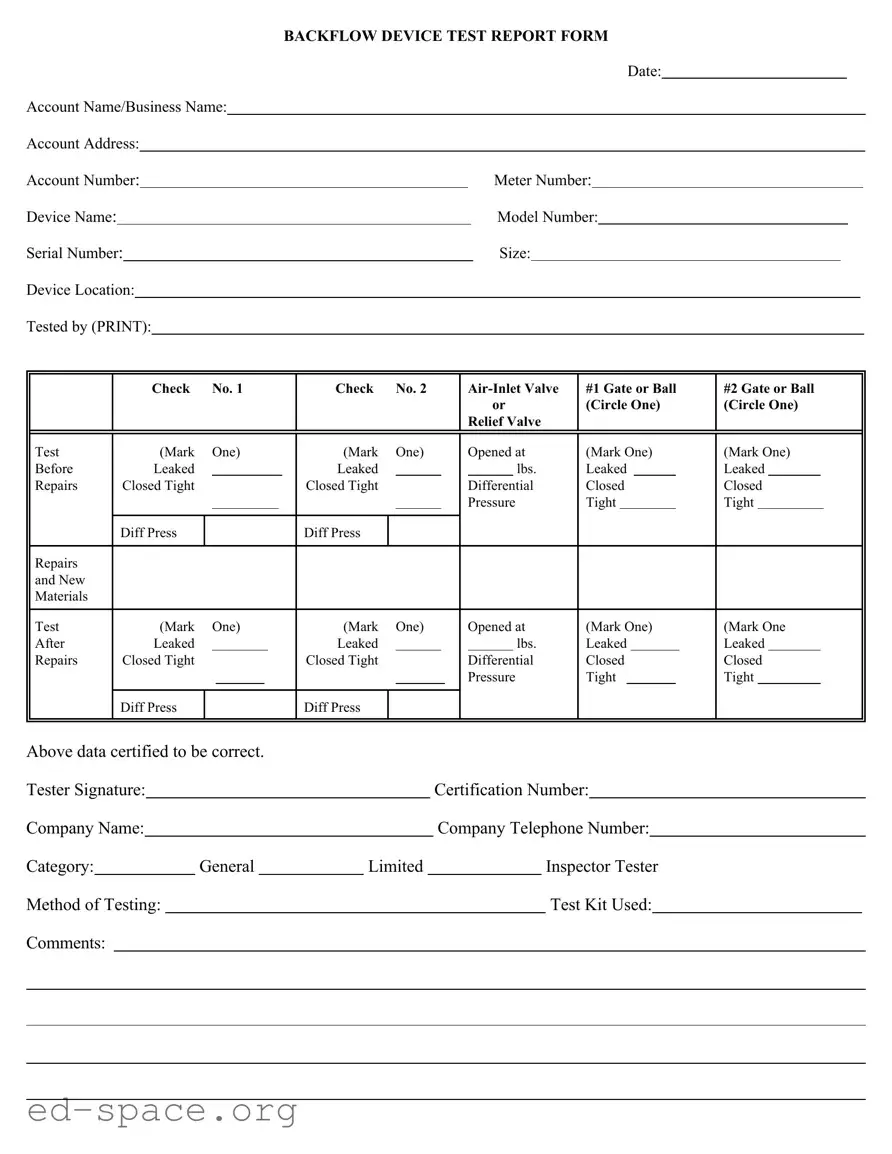
The Backflow Test Report form serves as a crucial document in ensuring the safety and integrity of a water supply system. This form captures essential details about the backflow prevention device being tested, including the date of the test, account information, and specific device characteristics such as its name, model number, and size. Each report includes a section for the tester's information, which is vital for accountability. The form also contains a series of checkboxes to indicate the performance of various components, such as the air-inlet valve and relief valve, noting whether they leaked or remained tight under pressure. Test results are meticulously documented, allowing for a clear understanding of the device's functionality. Additionally, the tester certifies the accuracy of the data provided, reinforcing the importance of compliance with safety regulations. The inclusion of a comments section allows for any additional observations or recommendations, ensuring that all relevant information is captured for future reference. Overall, the Backflow Test Report form is an indispensable tool in maintaining public health and safety by preventing contamination in water systems.

BACKFLOW DEVICE TEST REPORT FORM
Date:
Account Name/Business Name:
Account Address:
Account Number: |
|
|
|
|
|
|
|
|
|
|
|
|
|
|
|
|
|
|
|
|
Meter Number: |
|
|
|
|
|
|
|
|
||||||||||||||||||||||
Device Name: |
|
|
|
|
|
|
|
|
|
|
|
|
|
|
|
|
|
|
|
|
|
|
|
|
|
|
Model Number: |
|
|
|
|
|
|
|
|
||||||||||||||||
Serial Number: |
|
|
|
|
|
|
|
|
|
|
|
|
|
|
|
|
|
|
|
|
Size: |
|
|
|
|
|
|
|
|
|
|
|
|
|
|
|
|
|
|
|
|
|
|||||||||
Device Location: |
|
|
|
|
|
|
|
|
|
|
|
|
|
|
|
|
|
|
|
|
|
|
|
|
|
|
|
|
|
|
|
|
|
|
|
|
|
|
|
|
|
|
|
||||||||
Tested by (PRINT): |
|
|
|
|
|
|
|
|
|
|
|
|
|
|
|
|
|
|
|
|
|
|
|
|
|
|
|
|
|
|
|
|
|
|
|
|
|
|
|
|
|
|
|||||||||
|
|
|
|
|
|
|
|
|
|
|
|
|
|
|
|
|
|
|
|
|
|
|
|
|
|
|
|
|
|
|
|
|
|
|
|
|
|
|
|
|
|
|
|
|
|
|
|
|
|
|
|
|
|
|
|
|
|
|
|
CHECK |
|
|
NO. 1 |
CHECK |
|
NO. 2 |
|
|
|
|
#1 GATE OR BALL |
#2 GATE OR BALL |
|||||||||||||||||||||||||||||||
|
|
|
|
|
|
|
|
|
|
|
|
|
|
|
|
|
|
|
|
|
|
|
|
|
|
|
|
|
OR |
|
|
(CIRCLE ONE) |
(CIRCLE ONE) |
||||||||||||||||||
|
|
|
|
|
|
|
|
|
|
|
|
|
|
|
|
|
|
|
|
|
|
|
|
|
|
|
RELIEF VALVE |
|
|
|
|
|
|
|
|
|
|
|
|
|
|
|
|
|
|
|
|
||||
|
|
|
|
|
|
|
|
|
|
|
|
|
|
|
|
|
|
|
|
|
|
|
|
|
|
|
|
|
|
|
|
|
|
|
|
|
|
|
|
|
|
|
|
|
|
|
|
|
|
|
|
Test |
|
|
|
|
|
|
(Mark |
|
|
One) |
(Mark |
|
One) |
|
|
|
|
Opened at |
|
|
(Mark One) |
(Mark One) |
|||||||||||||||||||||||||||||
Before |
|
|
|
|
|
|
Leaked |
|
|
|
|
|
|
|
|
|
Leaked |
|
|
|
|
|
|
|
|
|
lbs. |
|
|
Leaked |
|
|
Leaked |
|
|
||||||||||||||||
Repairs |
|
Closed Tight |
|
|
|
|
|
|
|
|
|
Closed Tight |
|
|
|
|
|
|
Differential |
|
|
Closed |
Closed |
||||||||||||||||||||||||||||
|
|
|
|
|
|
|
|
|
|
|
|
|
|
|
|
|
|
|
|
|
|
|
|
|
|
|
Pressure |
|
|
Tight |
Tight |
||||||||||||||||||||
|
|
|
|
|
|
|
|
|
|
|
|
|
|
|
|
|
|
|
|
|
|
|
|
|
|
|
|
|
|
|
|
|
|
|
|
|
|
|
|
|
|
|
|
|
|
|
|
|
|
|
|
|
|
|
Diff Press |
|
|
|
|
|
|
|
|
|
Diff Press |
|
|
|
|
|
|
|
|
|
|
|
|
|
|
|
|
|
|
|
|
|
|
|
|
|
|
|
|
|
|
|
|||||||
|
|
|
|
|
|
|
|
|
|
|
|
|
|
|
|
|
|
|
|
|
|
|
|
|
|
|
|
|
|
|
|
|
|
|
|
|
|
|
|
|
|
|
|
|
|
|
|
|
|
|
|
Repairs |
|
|
|
|
|
|
|
|
|
|
|
|
|
|
|
|
|
|
|
|
|
|
|
|
|
|
|
|
|
|
|
|
|
|
|
|
|
|
|
|
|
|
|
|
|
|
|
|
|
|
|
and New |
|
|
|
|
|
|
|
|
|
|
|
|
|
|
|
|
|
|
|
|
|
|
|
|
|
|
|
|
|
|
|
|
|
|
|
|
|
|
|
|
|
|
|
|
|
|
|
|
|
|
|
Materials |
|
|
|
|
|
|
|
|
|
|
|
|
|
|
|
|
|
|
|
|
|
|
|
|
|
|
|
|
|
|
|
|
|
|
|
|
|
|
|
|
|
|
|
|
|
|
|
|
|
|
|
|
|
|
|
|
|
|
|
|
|
|
|
|
|
|
|
|
|
|
|
|
|
|
|
|
|
|
|
|
|
|
|
|
|
|
|
|
|
|
|
|
|
|
|
|
|
|
|
|
|
|
|
Test |
|
|
|
|
|
|
(Mark |
|
|
One) |
(Mark |
|
One) |
|
|
|
|
Opened at |
|
|
(Mark One) |
(Mark One |
|||||||||||||||||||||||||||||
After |
|
|
|
|
|
|
Leaked |
|
|
|
|
|
|
|
|
|
Leaked |
|
|
|
|
|
|
|
|
|
lbs. |
|
|
Leaked |
|
|
Leaked |
|
|
||||||||||||||||
Repairs |
|
Closed Tight |
|
|
|
|
|
|
|
|
|
Closed Tight |
|
|
|
|
|
|
Differential |
|
|
Closed |
Closed |
||||||||||||||||||||||||||||
|
|
|
|
|
|
|
|
|
|
|
|
|
|
|
|
|
|
|
|
|
|
|
|
|
|
|
Pressure |
|
|
Tight |
Tight |
||||||||||||||||||||
|
|
|
|
|
|
|
|
|
|
|
|
|
|
|
|
|
|
|
|
|
|
|
|
|
|
|
|
|
|
|
|
|
|
|
|
|
|
|
|
|
|
|
|
|
|
|
|
|
|
|
|
|
|
|
Diff Press |
|
|
|
|
|
|
|
|
|
Diff Press |
|
|
|
|
|
|
|
|
|
|
|
|
|
|
|
|
|
|
|
|
|
|
|
|
|
|
|
|
|
|
|
|||||||
|
|
|
|
|
|
|
|
|
|
|
|
|
|
|
|
|
|
|
|
|
|
|
|
|
|
|
|
|
|
|
|
|
|
|
|
|
|
|
|
|
|
|
|
|
|
|
|
|
|
||
|
|
|
|
|
|
|
|
|
|
|
|
|
|
|
|
|
|
|
|
|
|
|
|
|
|
|
|
|
|
|
|
|
|
|
|
|
|
|
|
|
|
|
|
|
|
|
|
|
|
|
|
Above data certified to be correct. |
|
|
|
|
|
|
|
|
|
|
|
|
|
|
|
|
|
|
|
|
|
|
|
|
|
|
|
|
|
|
|
|
|
||||||||||||||||||
Tester Signature: |
|
|
|
|
|
|
|
|
|
|
|
|
|
Certification Number: |
|
|
|
|
|
|
|
||||||||||||||||||||||||||||||
|
|
|
|
|
|
|
|
|
|
|
|
|
|
|
|
|
|
|
|
|
|
|
|
|
|
|
|
|
|||||||||||||||||||||||
Company Name: |
|
|
|
|
|
|
|
|
|
|
|
|
|
|
Company Telephone Number: |
|
|
|
|
|
|
|
|||||||||||||||||||||||||||||
|
|
|
|
|
|
|
|
|
|
|
|
|
|
|
|
|
|
|
|
|
|
|
|
|
|
|
|
|
|
|
|
|
|||||||||||||||||||
Category: |
|
|
|
|
|
|
|
|
General |
|
|
Limited |
|
|
|
|
|
|
|
|
|
Inspector Tester |
|
|
|
|
|
|
|
||||||||||||||||||||||
Method of Testing: |
|
|
|
|
|
|
|
|
|
|
|
|
|
|
|
|
|
|
|
|
|
|
|
Test Kit Used: |
|
|
|
|
|
|
|
||||||||||||||||||||
Comments: |
|
|
|
|
|
|
|
|
|
|
|
|
|
|
|
|
|
|
|
|
|
|
|
|
|
|
|
|
|
|
|
|
|
|
|
|
|
|
|
|
|
|
|
|
|
|
|
|
|
||
|
|
|
|
|
|
|
|
|
|
|
|
|
|
|
|
|
|
|
|
|
|
|
|
|
|
|
|
|
|
|
|
|
|
|
|
|
|
|
|
|
|
|
|
|
|
|
|
|
|
|
|
|
|
|
|
|
|
|
|
|
|
|
|
|
|
|
|
|
|
|
|
|
|
|
|
|
|
|
|
|
|
|
|
|
|
|
|
|
|
|
|
|
|
|
|
|
|
|
|
|
|
|
|
|
|
|
|
|
|
|
|
|
|
|
|
|
|
|
|
|
|
|
|
|
|
|
|
|
|
|
|
|
|
|
|
|
|
|
|
|
|
|
|
|
|
|
|
|
|
|
|
|
|
|
|
|
|
|
|
|
|
|
|
|
|
|
|
|
|
|
|
|
|
|
|
|
|
|
|
|
|
|
|
|
|
|
|
|
|
|
|
|
|
|
|
|
|
|
|
|
|
|
|
|
|
|
|
| Fact Name | Description |
|---|---|
| Date | The date of the backflow test must be recorded on the form. |
| Account Information | Account name, address, and number are required to identify the service location. |
| Device Details | Information about the backflow device, including name, model, serial number, and size, is essential. |
| Tester Information | The tester's name and certification number must be printed and signed for validation. |
| Test Results | Results of various tests, including air-inlet valve and relief valve checks, need to be documented. |
| Repairs | Any repairs made during the test must be noted, ensuring compliance with safety standards. |
| Method of Testing | The method and test kit used should be specified to ensure proper testing procedures were followed. |
| Comments | Additional comments can provide context or details about the testing process or results. |
| Governing Laws | Specific state laws may govern backflow testing, such as the Safe Drinking Water Act. |
Once you have the Backflow Test Report form ready, follow these steps to fill it out accurately. After completing the form, it will be submitted to the appropriate authority for record-keeping and compliance purposes.
What is the purpose of the Backflow Test Report form?
The Backflow Test Report form is used to document the results of testing backflow prevention devices. It ensures that these devices are functioning correctly to prevent contamination of the water supply. Proper documentation is essential for compliance with local regulations and for maintaining public health standards.
Who is responsible for completing the Backflow Test Report form?
The form should be completed by a certified tester. This individual must have the necessary qualifications and certification to perform backflow testing. Their signature on the report certifies that the testing was conducted in accordance with applicable standards.
What information is required on the Backflow Test Report form?
The form requires various details, including the date of the test, account name, account address, account number, meter number, device name, model number, serial number, size, and location of the device. Additionally, it includes test results for various components of the backflow device and the tester's information.
What does the testing process involve?
The testing process involves checking multiple components of the backflow device, including the air-inlet valve, gate or ball valves, and relief valve. Each component is assessed for leaks and proper functioning. The tester marks the results on the form, indicating whether each component is tight or has leaked.
What should be done if a leak is detected during testing?
If a leak is detected, repairs must be made to the backflow device. The tester should document any repairs conducted on the form. It is critical to resolve any issues promptly to ensure the device continues to protect the water supply effectively.
How often should backflow testing be conducted?
Backflow testing is typically required annually, although local regulations may vary. It is essential to check with local authorities to determine the specific requirements for your area. Regular testing helps to ensure compliance and the safety of the water supply.
What happens if the Backflow Test Report form is not submitted?
Failure to submit the Backflow Test Report form can result in penalties or fines. Additionally, it may lead to non-compliance with local water safety regulations. It is important to keep accurate records and submit the form in a timely manner to avoid these consequences.
Can I use a digital format for the Backflow Test Report form?
Yes, many jurisdictions accept digital formats of the Backflow Test Report form. However, it is crucial to confirm with local authorities whether a digital submission is acceptable. Ensure that all required information is accurately recorded, regardless of the format used.
Where can I find a Backflow Test Report form?
The Backflow Test Report form can often be obtained from local water authority websites or offices. Additionally, many plumbing supply companies provide the form. Ensure that you are using the correct version required by your local jurisdiction.
Incomplete Information: Failing to fill out all required fields can lead to processing delays. Ensure that every section, such as the account name and device details, is completed.
Incorrect Dates: Entering the wrong date can create confusion. Always double-check the date to ensure accuracy.
Missing Tester Signature: Not signing the form can invalidate the report. The tester must always provide their signature to certify the accuracy of the information.
Inaccurate Measurements: Entering incorrect readings for the pressure and differential can lead to serious compliance issues. Take your time to ensure these numbers are correct.
Neglecting to Circle Options: Failing to circle the appropriate options, such as the type of valve or test method, can result in misunderstandings. Be sure to clearly mark your selections.
Omitting Comments: Leaving the comments section blank may overlook important details about the test. Use this space to note any anomalies or specific observations.
Not Providing Certification Number: Forgetting to include the certification number can raise questions about the tester's qualifications. Always include this crucial information.
Using an Unapproved Test Kit: Utilizing a test kit that is not recognized can invalidate the results. Ensure that the kit used is compliant with regulations.
Ignoring Device Location: Failing to specify the device location can create challenges for future inspections. Clearly state where the device is situated.
The Backflow Test Report form is an essential document used to ensure that backflow prevention devices are functioning correctly. However, several other forms and documents are commonly used in conjunction with it to provide a comprehensive overview of the testing process and compliance requirements. Below is a list of these related documents.
These documents work together to ensure that backflow prevention devices are properly tested, maintained, and compliant with local regulations. Keeping accurate records and documentation is crucial for property owners and service providers alike.
The Backflow Test Report form is essential for documenting the testing of backflow prevention devices. Several other documents share similarities in structure and purpose. Below is a list of eight such documents, highlighting how they relate to the Backflow Test Report form.
When filling out the Backflow Test Report form, attention to detail is crucial. Here are important guidelines to follow, along with common pitfalls to avoid.
Following these guidelines will help ensure that the Backflow Test Report is completed correctly and efficiently. Take the time to review your work; it can save significant trouble down the line.
Misconceptions about the Backflow Test Report form can lead to confusion and errors in compliance. Here are nine common misunderstandings:
Understanding these misconceptions can help ensure that backflow testing is conducted properly, maintaining safety and compliance in your water supply system.
When filling out and using the Backflow Test Report form, it is essential to pay attention to several key aspects to ensure accuracy and compliance. Here are four important takeaways:
Following these guidelines will help ensure that the Backflow Test Report form is filled out correctly and serves its intended purpose effectively.