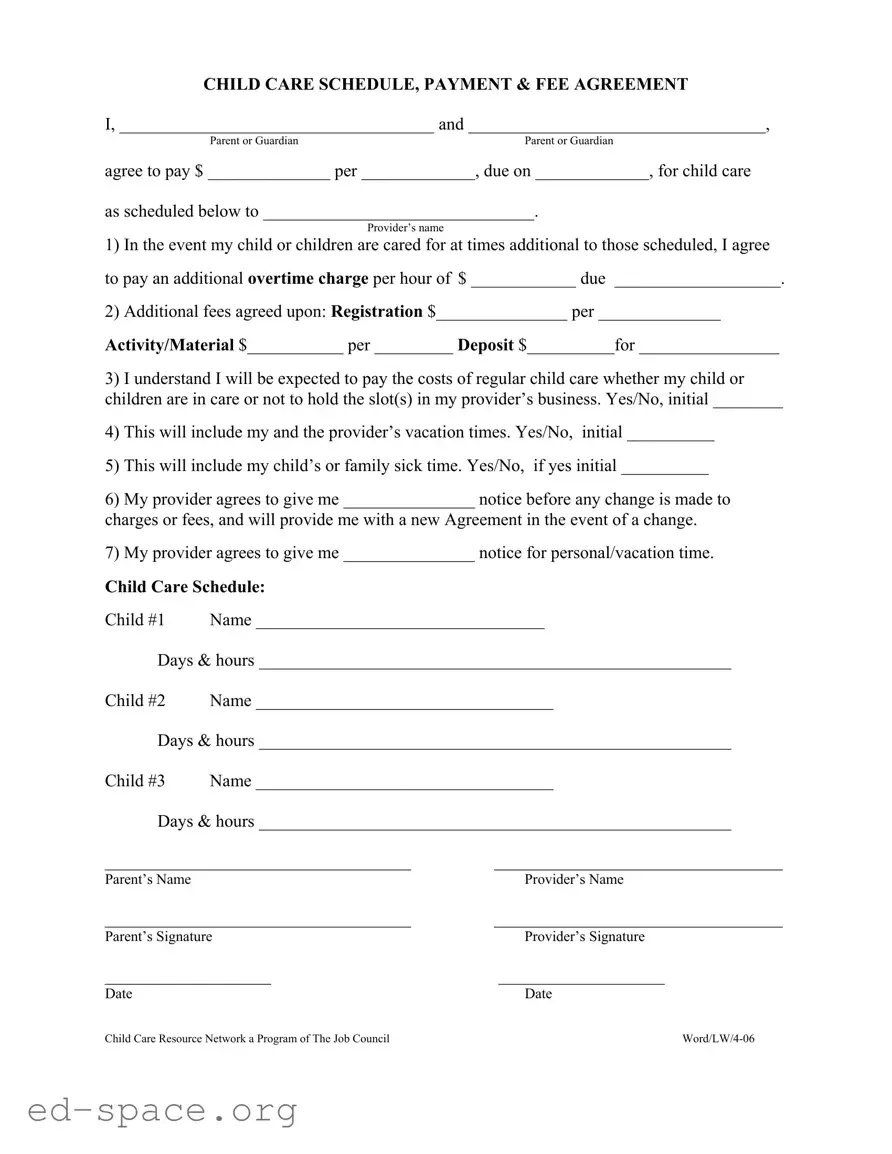
When hiring a babysitter, having a clear understanding between parents and caregivers is crucial. A Babysitting Contract Sample form serves as an essential tool to outline the terms of child care services. This form includes important sections such as the child care schedule, payment details, and any additional fees that may apply. Parents and guardians must agree on a specified payment amount, due dates, and the hours of care. The contract also addresses overtime charges for any extra hours worked beyond the agreed schedule. Furthermore, it clarifies expectations regarding regular payments, even if the child is not in attendance, and includes provisions for vacation and sick time for both the caregiver and the family. Additionally, the form stipulates the notice required for any changes in fees or personal time off, ensuring that both parties are informed and in agreement. With all these elements clearly laid out, the Babysitting Contract Sample form helps to foster a transparent and professional relationship between parents and their chosen child care provider.
CHILD CARE SCHEDULE, PAYMENT & FEE AGREEMENT
I, ____________________________________ and __________________________________,
Parent or GuardianParent or Guardian
agree to pay $ ______________ per _____________, due on _____________, for child care
as scheduled below to _______________________________.
Provider’s name
1)In the event my child or children are cared for at times additional to those scheduled, I agree to pay an additional overtime charge per hour of $ ____________ due ___________________.
2)Additional fees agreed upon: Registration $_______________ per ______________
Activity/Material $___________ per _________ Deposit $__________for ________________
3)I understand I will be expected to pay the costs of regular child care whether my child or children are in care or not to hold the slot(s) in my provider’s business. Yes/No, initial ________
4)This will include my and the provider’s vacation times. Yes/No, initial __________
5)This will include my child’s or family sick time. Yes/No, if yes initial __________
6)My provider agrees to give me _______________ notice before any change is made to charges or fees, and will provide me with a new Agreement in the event of a change.
7)My provider agrees to give me _______________ notice for personal/vacation time.
Child Care Schedule:
Child #1 |
Name _________________________________ |
|
Days & hours ______________________________________________________ |
||
Child #2 |
Name __________________________________ |
|
Days & hours ______________________________________________________ |
||
Child #3 |
Name __________________________________ |
|
Days & hours ______________________________________________________ |
||
___________________________________ |
_________________________________ |
|
Parent’s Name |
|
Provider’s Name |
___________________________________ |
_________________________________ |
|
Parent’s Signature |
Provider’s Signature |
|
___________________ |
___________________ |
|
Date |
|
Date |
Child Care Resource Network a Program of The Job Council |
| Fact Name | Details |
|---|---|
| Child Care Schedule | The contract includes a section for detailing the names of children and their specific days and hours of care. |
| Payment Agreement | Parents agree to pay a specified amount per time period, with the payment due on a designated date. |
| Overtime Charges | In the event of additional care beyond the scheduled times, an overtime charge per hour is agreed upon. |
| Additional Fees | The contract outlines potential additional fees, including registration, activity/material costs, and deposits. |
| Payment for Reserved Slots | Parents are required to pay for regular child care slots even if the child is not in care, to hold their place. |
| Notice Requirements | The provider must give advance notice for any changes to charges or fees, as well as for personal or vacation time. |
| State-Specific Laws | Different states may have specific laws governing child care contracts; parents should consult local regulations. |
Completing the Babysitting Contract Sample form is an important step in establishing clear expectations and agreements between parents and caregivers. This document outlines the child care schedule, payment details, and any additional fees that may apply. To ensure that all necessary information is accurately recorded, follow these steps carefully.
What is the purpose of the Babysitting Contract Sample form?
The Babysitting Contract Sample form serves as a written agreement between parents or guardians and the childcare provider. It outlines the terms of childcare, including the schedule, payment details, and any additional fees. This contract helps ensure that both parties understand their responsibilities and expectations, which can prevent misunderstandings in the future.
What information do I need to fill out in the contract?
You will need to provide the names of both the parent or guardian and the childcare provider. Additionally, you must specify the payment amount, the frequency of payments, and the due date. The contract also requires details about the childcare schedule for each child, including their names and the days and hours they will be cared for.
Are there additional fees I should be aware of?
Yes, the contract includes provisions for additional fees. These may include overtime charges if your child is cared for beyond the scheduled times. There may also be registration fees, activity or material costs, and a deposit requirement. It’s important to clarify these fees before signing the contract to avoid surprises later on.
Do I have to pay for childcare if my child is not present?
Yes, the contract states that you are expected to pay for regular childcare even if your child is not in attendance. This payment secures your child’s spot in the provider’s schedule. The contract also specifies that this includes both the provider’s vacation times and your family’s sick days, depending on your agreement.
How much notice will I receive for changes in fees or charges?
Your childcare provider agrees to give you a specified notice period before any changes are made to charges or fees. This notice period should be filled out in the contract. If changes occur, the provider will also provide you with a new agreement outlining the updated terms.
What should I do if I need to cancel or change the schedule?
If you need to cancel or change the schedule, it is best to communicate directly with your childcare provider as soon as possible. The contract may include terms regarding notice for personal or vacation time, so be sure to follow those guidelines. Open communication will help maintain a good relationship with your provider.
What happens if I do not agree with the terms of the contract?
If you do not agree with the terms outlined in the contract, it is crucial to discuss your concerns with the childcare provider. You can negotiate terms that work for both parties. It’s important to reach an agreement before signing the contract to ensure that both you and the provider are comfortable with the arrangement.
Incomplete Information: Failing to fill in all required fields, such as names, payment amounts, and schedules, can lead to confusion later. Ensure every section is completed thoroughly.
Missing Initials: Forgetting to initial next to important clauses regarding payment responsibilities and vacation policies can result in misunderstandings. Always provide your initials where indicated.
Ignoring Overtime Charges: Not specifying or understanding the additional overtime charge can lead to unexpected costs. Clearly outline this charge to avoid surprises.
Neglecting to Review Changes: Not confirming the notice period for changes in charges or fees can create issues. Ensure you understand how much notice you will receive for any adjustments.
Overlooking Sick Time Policies: Failing to acknowledge how sick time affects payment can lead to disputes. Make sure to clarify this aspect and initial accordingly.
When entering into a babysitting arrangement, several additional forms and documents may be beneficial to ensure clarity and mutual understanding between parents and caregivers. Below is a list of commonly used documents that complement the Babysitting Contract Sample form.
Utilizing these documents can help create a more structured and secure environment for both the child and the caregiver. Clear communication and proper documentation foster trust and understanding, which are essential in any childcare arrangement.
When filling out the Babysitting Contract Sample form, it's essential to approach the process with care. Here is a list of things you should and shouldn't do:
Understanding the Babysitting Contract Sample form is essential for both parents and caregivers. However, several misconceptions can lead to confusion. Here are eight common misconceptions explained:
Being informed about these misconceptions can help parents and caregivers navigate their agreements with confidence. Understanding the details of a babysitting contract fosters a positive relationship built on trust and clarity.
When it comes to using a Babysitting Contract Sample form, understanding the key components can help ensure a smooth experience for both parents and providers. Here are some important takeaways:
By keeping these points in mind, both parents and caregivers can foster a positive and professional relationship through effective communication and clear expectations.