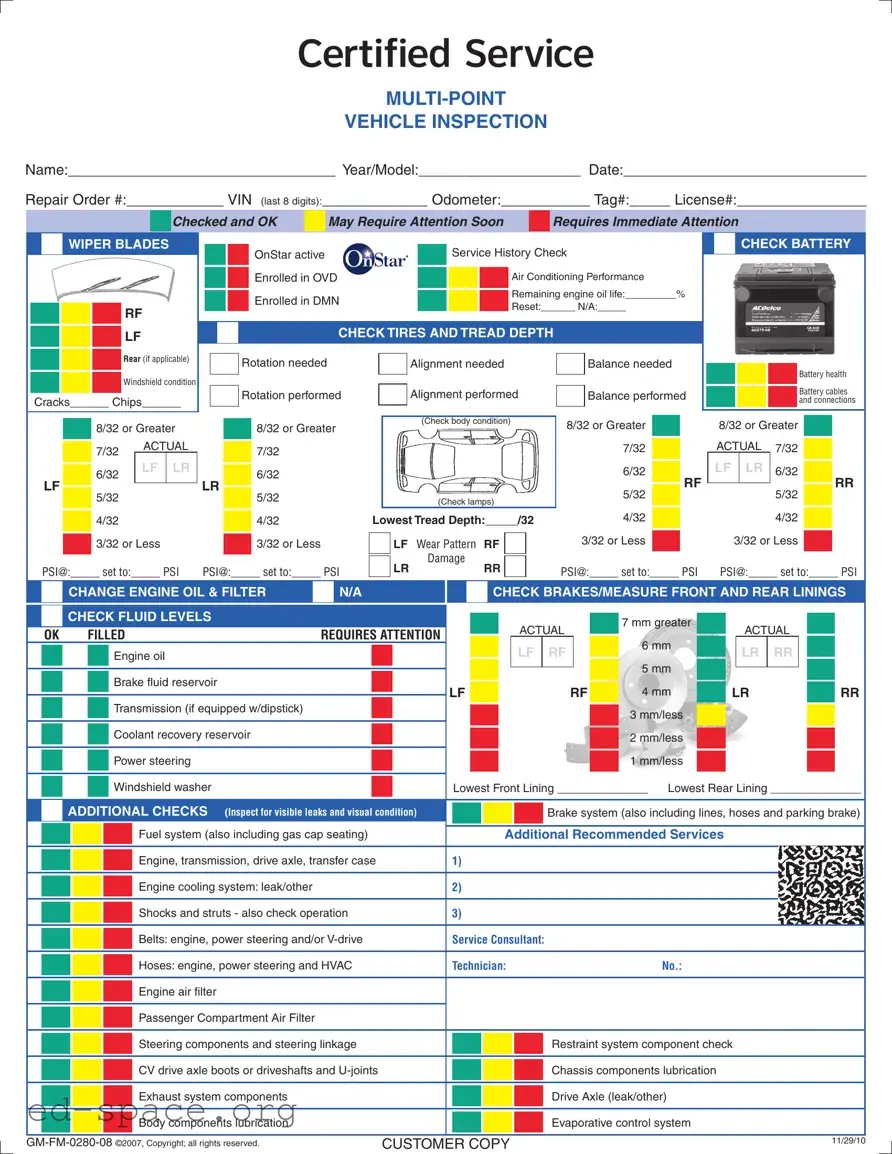
The Automobile Service Checklist form is an essential tool for maintaining vehicle safety and performance. It allows both service technicians and vehicle owners to keep track of important maintenance tasks and inspections. This comprehensive checklist includes sections for a multi-point vehicle inspection, covering vital components such as wiper blades, tires, battery health, engine oil levels, and brake systems. Each item is categorized by its condition, indicating whether it is checked and okay, may require attention soon, or needs immediate action. Additionally, the form prompts checks for fluid levels, tire tread depth, and overall vehicle condition, ensuring that nothing is overlooked. Regular use of this checklist can help prevent costly repairs and enhance the longevity of the vehicle, making it a valuable resource for any car owner.
VEHICLE INSPECTION
Name:_________________________________ Year/Model:____________________ Date:______________________________
Repair Order #:____________ VIN (last 8 digits):_____________ Odometer:___________ Tag#:_____ License#:________________
|
|
Checked and OK |
|
May Require Attention Soon |
|
Requires Immediate Attention |
|
|
|
|
|
|
|
WIPER BLADES
RF LF
OnStar active |
|
|
Service History Check |
|||
Enrolled in OVD |
|
|
|
|
|
Air Conditioning Performance |
|
|
|
|
|
||
Enrolled in DMN |
|
|
|
|
|
Remaining engine oil life:_________% |
|
|
|
|
|
||
|
|
|
|
|
Reset:______ N/A:_____ |
|
|
|
|
|
|
|
|
CHECK TIRES AND TREAD DEPTH
CHECK BATTERY
Rear (if applicable) Windshield condition
Cracks______ Chips______
8/32 or Greater
7/32 ACTUAL
6/32 LF LR
LF
5/32
4/32
3/32 or Less PSI@:_____ set to:_____ PSI
Rotation needed
Rotation performed
8/32 or Greater 7/32
6/32
LR
5/32
4/32
3/32 or Less
PSI@:_____ set to:_____ PSI
Alignment needed
Alignment performed
(Check body condition)
(Check lamps)
Lowest Tread Depth:_____/32
LF Wear Pattern RF
Damage
LRRR
Balance needed
Balance performed
8/32 or Greater 7/32
6/32
RF
5/32
4/32 3/32 or Less
PSI@:_____ set to:_____ PSI
Battery health
Battery cables and connections
8/32 or Greater ACTUAL 7/32
LF LR 6/32
RR
5/32
4/32 3/32 or Less
PSI@:_____ set to:_____ PSI
|
|
CHANGE ENGINE OIL & FILTER |
N/A |
|
CHECK BRAKES/MEASURE FRONT AND REAR LININGS |
||||||||||||||||||||||||
|
|
|
|
|
|
|
|
|
|
|
|
|
|
|
|
|
|
|
|
|
|
|
|
|
|
|
|
|
|
|
|
CHECK FLUID LEVELS |
|
|
|
|
|
|
ACTUAL |
|
7 mm greater |
|
|
ACTUAL |
|
|
|||||||||||||
|
|
|
|
|
|
|
|
|
|
|
|
|
|||||||||||||||||
|
|
|
|
|
|
|
|
|
|
|
|
|
|
|
|
|
|
|
|
|
|||||||||
|
OK |
|
|
|
FILLED |
REQUIRES ATTENTION |
|
|
|
|
6 mm |
|
|
|
|
||||||||||||||
|
|
|
|
|
|
|
|
|
|||||||||||||||||||||
|
|
|
|
|
|
|
LF |
|
RF |
|
|
|
|
LR |
RR |
|
|
|
|||||||||||
|
|
|
|
|
|
|
|
Engine oil |
|
|
|
|
|
|
|
|
|
|
|
|
|
|
|||||||
|
|
|
|
|
|
|
|
|
|
|
|
|
|
|
|
|
|
|
|
||||||||||
|
|
|
|
|
|
|
|
|
|
|
|
|
|
|
|
|
5 mm |
|
|
|
|
|
|||||||
|
|
|
|
|
|
|
|
|
|
|
|
|
|
|
|
||||||||||||||
|
|
|
|
|
|
|
|
Brake fluid reservoir |
|
|
|
|
|
|
|
|
|
|
|
|
|
|
|
|
|
|
|
||
|
|
|
|
|
|
|
|
|
|
|
LF |
|
|
|
|
RF |
|
4 mm |
|
LR |
|
|
|
|
RR |
||||
|
|
|
|
|
|
|
|
|
|
|
|
|
|
|
|
|
|
|
|
|
|||||||||
|
|
|
|
|
|
|
|
|
|
|
|
|
|
|
|
|
|
|
|
|
|||||||||
|
|
|
|
|
|
|
|
|
|
|
|
|
|
|
|
|
|
|
|
|
|
|
|||||||
|
|
|
|
|
|
|
|
Transmission (if equipped w/dipstick) |
|
|
|
|
|||||||||||||||||
|
|
|
|
|
|
|
|
|
|
|
|
|
|
|
|
|
|
|
3 mm/less |
|
|
|
|
|
|
|
|
||
|
|
|
|
|
|
|
|
|
|
|
|
|
|
|
|
|
|
|
|
|
|
|
|
|
|
|
|
|
|
|
|
|
|
|
|
|
|
Coolant recovery reservoir |
|
|
|
|
|
|
|
|
|
|
|
2 mm/less |
|
|
|
|
|
|
|
|
|
|
|
|
|
|
|
|
|
|
|
|
|
|
|
|
|
|
|
|
|
|
|
|
|
|
|
|
|||
|
|
|
|
|
|
|
|
|
|
|
|
|
|
|
|
|
|
|
|
|
1 mm/less |
|
|
|
|
|
|
|
|
|
|
|
|
|
|
|
|
Power steering |
|
|
|
|
|
|
|
|
|
|
|
|
|
|
|
|
|
|
|
||
|
|
|
|
|
|
|
|
|
|
|
|
|
|
|
|
|
|
|
|
|
|
|
|
|
|
|
|||
|
|
|
|
|
|
|
|
|
|
|
|
|
|
|
|
|
|
|
|
|
|
|
|
|
|
|
|
|
|
|
|
|
|
|
|
|
|
Windshield washer |
|
|
|
Lowest Front Lining ______________ Lowest Rear Lining ______________ |
|||||||||||||||||
|
|
|
|
|
|
|
|
|
|
|
|
|
|
|
|
|
|
|
|
|
|
|
|
|
|
|
|
|
|
|
|
ADDITIONAL CHECKS (Inspect for visible leaks and visual condition) |
|
|
|
|
|
Brake system (also including lines, hoses and parking brake) |
|||||||||||||||||||||
|
|
|
|
|
|
|
|
|
|
|
|
|
|
|
|
|
|
|
|
|
|
|
|
|
|
|
|||
|
|
|
|
|
|
|
|
|
Fuel system (also including gas cap seating) |
|
|
Additional Recommended Services |
|
|
|
|
|
|
|
||||||||||
|
|
|
|
|
|
|
|
|
|
|
|
|
|
|
|
|
|
|
|
|
|
|
|
|
|
|
|
|
|
|
|
|
|
|
|
|
|
|
Engine, transmission, drive axle, transfer case |
1) |
|
|
|
|
|
|
|
|
|
|
|
|
|
|
|
|
|||
|
|
|
|
|
|
|
|
|
|
|
|
|
|
|
|
|
|
|
|
|
|
|
|
|
|
|
|
|
|
|
|
|
|
|
|
|
|
|
Engine cooling system: leak/other |
|
|
|
2) |
|
|
|
|
|
|
|
|
|
|
|
|
|
|
|
|
|
|
|
|
|
|
|
|
|
|
|
|
|
|
|
|
|
|
|
|
|
|
|
|
|
|
|
|
||
|
|
|
|
|
|
|
|
|
|
|
|
|
|
|
|
|
|
|
|
|
|
|
|
|
|
|
|
|
|
|
|
|
|
|
|
|
|
|
Shocks and struts - also check operation |
3) |
|
|
|
|
|
|
|
|
|
|
|
|
|
|
|
|
|||
|
|
|
|
|
|
|
|
|
|
|
|
|
|
|
|
|
|
|
|
|
|
|
|
|
|||||
|
|
|
|
|
|
|
|
|
|
|
|
|
|
|
|
|
|
|
|
|
|
|
|
|
|
|
|
|
|
|
|
|
|
|
|
|
|
|
Belts: engine, power steering and/or |
Service Consultant: |
|
|
|
|
|
|
|
|
|
|
|
|
|||||||
|
|
|
|
|
|
|
|
|
|
|
|
|
|
|
|
|
|
|
|
|
|||||||||
|
|
|
|
|
|
|
|
|
|
|
|
|
|
|
|
|
|
|
|
|
|
|
|
|
|
|
|
|
|
|
|
|
|
|
|
|
|
|
Hoses: engine, power steering and HVAC |
Technician: |
|
|
|
No.: |
|
|
|
|
|
|
|
||||||||
|
|
|
|
|
|
|
|
|
|
|
|
|
|
|
|
|
|
|
|||||||||||
|
|
|
|
|
|
|
|
|
|
|
|
|
|
|
|
|
|
|
|
|
|
|
|
|
|
|
|
|
|
|
|
|
|
|
|
|
|
|
Engine air filter |
|
|
|
|
|
|
|
|
|
|
|
|
|
|
|
|
|
|
|
|
|
|
|
|
|
|
|
|
|
|
|
|
|
|
|
|
|
|
|
|
|
|
|
|
|
|
|
|
|
|
|
|
|
|
|
|
|
|
|
|
|
|
|
|
|
|
|
|
|
|
|
|
|
|
|
|
|
|
|
|
|
|
|
|
|
|
|
|
|
Passenger Compartment Air Filter |
|
|
|
|
|
|
|
|
|
|
|
|
|
|
|
|
|
|
|
|
|
|
|
|
|
|
|
|
|
|
|
|
|
|
|
|
|
|
|
|
|
|
|
|
|
|
|
|
|
|
|
|
|
|
|
|
|
|
|
|
|
|
|
|
|
|
|
|
|
|
|
|
|
|
|
|||||
|
|
|
|
|
|
|
|
|
Steering components and steering linkage |
|
|
|
|
|
Restraint system component check |
|
|
|
|
|
|||||||||
|
|
|
|
|
|
|
|
|
|
|
|
|
|
|
|
|
|
|
|||||||||||
|
|
|
|
|
|
|
|
|
|
|
|
|
|
|
|
|
|
|
|
|
|
|
|
|
|
||||
|
|
|
|
|
|
|
|
|
CV drive axle boots or driveshafts and |
|
|
|
|
|
Chassis components lubrication |
|
|
|
|
|
|
|
|||||||
|
|
|
|
|
|
|
|
|
|
|
|
|
|
|
|
|
|
|
|
|
|||||||||
|
|
|
|
|
|
|
|
|
|
|
|
|
|
|
|
|
|
|
|
|
|
|
|
|
|
|
|
|
|
|
|
|
|
|
|
|
|
|
Exhaust system components |
|
|
|
|
|
|
|
|
Drive Axle (leak/other) |
|
|
|
|
|
|
|
||||
|
|
|
|
|
|
|
|
|
|
|
|
|
|
|
|
|
|
|
|
|
|
|
|
||||||
|
|
|
|
|
|
|
|
|
|
|
|
|
|
|
|
|
|
|
|
|
|
|
|
|
|
|
|
|
|
|
|
|
|
|
|
|
|
|
Body components lubrication |
|
|
|
|
|
|
|
|
Evaporative control system |
|
|
|
|
|
|
|
||||
|
|
|
|
|
|
|
|
|
|
|
|
|
|
|
|
|
|
|
|
|
|
|
|
||||||
|
|
|
|
|
|
|
|
|
|
|
|
|
|
|
|
|
|
|
|
|
|
|
|
|
|
|
|
|
|
CUSTOMER COPY |
11/29/10 |
|
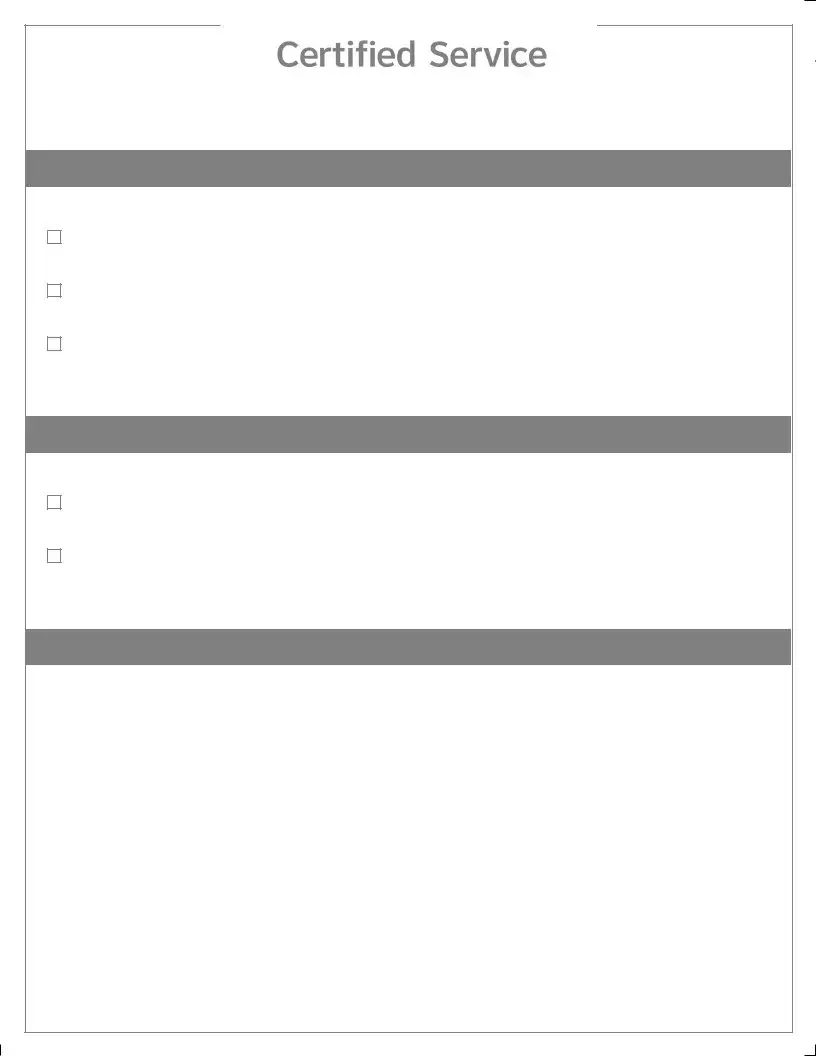
VEHICLE OWNER CHECKLIST
AT EACH FUEL STOP
Engine oil level check
Engine coolant level check
Windshield washer fluid level check
ONCE A MONTH
Tire inflation check
Tire wear inspection
ONCE A YEAR
Refer to your vehicle owner’s manual for additional required services. Visit your GM Goodwrench Dealer’s Service Department to assist you with these maintenance needs.
| Fact Name | Description |
|---|---|
| Multi-Point Inspection | The checklist is designed to ensure a comprehensive review of the vehicle's condition, covering essential systems and components. |
| Vehicle Identification | Each form requires specific vehicle information, including the name, year/model, VIN, and license plate number for accurate record-keeping. |
| Inspection Categories | Components are categorized into three sections: Checked and OK, May Require Attention Soon, and Requires Immediate Attention, helping prioritize repairs. |
| Fluid Level Checks | Regular checks on engine oil, brake fluid, coolant, and power steering fluid levels are crucial for vehicle performance and safety. |
| Tire Assessment | Tire tread depth is measured, and tire pressure is recorded to ensure safe driving conditions. Proper maintenance can prevent accidents. |
| Battery Health | The checklist includes a section for assessing battery health and connections, vital for vehicle reliability and starting performance. |
| Additional Checks | Inspecting for visible leaks and the condition of various systems, such as the brake and fuel systems, is part of the thorough evaluation. |
| Recommended Services | The form suggests additional services based on the inspection findings, ensuring the vehicle remains in optimal condition. |
| State-Specific Compliance | Some states may have specific laws governing vehicle inspections, such as emissions testing or safety standards, which should be adhered to. |
Completing the Automobile Service Checklist form is essential for ensuring that all necessary vehicle inspections and maintenance tasks are documented. Following the steps below will help you accurately fill out the form, allowing for a thorough assessment of your vehicle’s condition.
What is the purpose of the Automobile Service Checklist form?
The Automobile Service Checklist form is designed to provide a comprehensive inspection of your vehicle. It helps ensure that all critical components are checked for functionality and safety. This checklist can identify areas that may need immediate attention or maintenance soon, allowing you to keep your vehicle in optimal condition.
How often should I use the Automobile Service Checklist?
It is recommended to use the checklist during regular service appointments, typically every 5,000 to 7,500 miles, or as advised by your vehicle's manufacturer. Additionally, you should perform some basic checks, such as tire pressure and fluid levels, at each fuel stop and conduct a more thorough inspection monthly.
What items are included in the checklist?
The checklist covers a wide range of vehicle components, including wiper blades, tires, battery health, brakes, fluid levels, and more. Each section allows the technician to note the condition of these parts and whether they require immediate attention or can wait for future service. This thorough approach helps prevent potential issues before they become serious problems.
What should I do if my vehicle requires immediate attention?
If the checklist indicates that your vehicle requires immediate attention, it is crucial to address these issues as soon as possible. Ignoring these warnings can lead to more significant problems and potentially compromise your safety on the road. Consult with your mechanic to understand the necessary repairs and prioritize them accordingly.
Can I perform these checks myself?
While some items on the checklist, like checking fluid levels and tire pressure, can be done by vehicle owners, many inspections are best left to professionals. Technicians have the expertise and tools to accurately assess the condition of your vehicle and identify any underlying issues that may not be visible to the untrained eye.
How do I know if my vehicle is due for maintenance?
In addition to using the checklist, you should refer to your vehicle owner's manual for specific maintenance schedules. Many modern vehicles also have onboard systems that track oil life and other maintenance needs. Keeping an eye on these indicators can help you stay proactive about your vehicle's care.
Incomplete Information: Failing to fill in all required fields, such as the vehicle's year, model, or VIN, can lead to confusion and delays in service.
Ignoring Warning Signs: Not marking items that require immediate attention can result in serious vehicle issues being overlooked, potentially leading to safety hazards.
Misreading Tread Depth: Incorrectly assessing tire tread depth can lead to misinformed decisions about tire replacement, impacting vehicle safety and performance.
Overlooking Fluid Levels: Failing to check and document fluid levels, such as engine oil or brake fluid, may result in inadequate maintenance and vehicle malfunctions.
Skipping Additional Checks: Not performing or recording additional checks, like inspecting for visible leaks, can lead to unresolved issues that worsen over time.
Incorrectly Documenting Service History: Neglecting to accurately note service history can hinder future maintenance and warranty claims, complicating the vehicle's service record.
Inconsistent Tire Pressure Reporting: Failing to consistently report tire pressure readings can lead to improper tire maintenance, affecting fuel efficiency and safety.
The Automobile Service Checklist form serves as a vital tool for assessing the condition of a vehicle and ensuring that necessary maintenance is performed. However, it is often accompanied by several other forms and documents that enhance the service experience and provide comprehensive records for both the service provider and the vehicle owner. Below is a list of commonly used forms that complement the Automobile Service Checklist.
Each of these documents plays a crucial role in the overall vehicle maintenance process. Together, they help ensure that both the service provider and the customer are on the same page regarding the condition and care of the vehicle. By maintaining organized records, vehicle owners can better manage their automotive needs and service centers can provide more effective service.
Things to Do:
Things Not to Do:
Understanding the Automobile Service Checklist form can help vehicle owners maintain their cars effectively. However, several misconceptions can lead to confusion. Here are nine common misconceptions:
By addressing these misconceptions, vehicle owners can better utilize the Automobile Service Checklist form to ensure their cars remain in good condition.
Filling out and using the Automobile Service Checklist form can greatly enhance your vehicle's maintenance routine. Here are some key takeaways to keep in mind:
By following these takeaways, you can ensure that your vehicle remains in good condition and operates safely on the road.