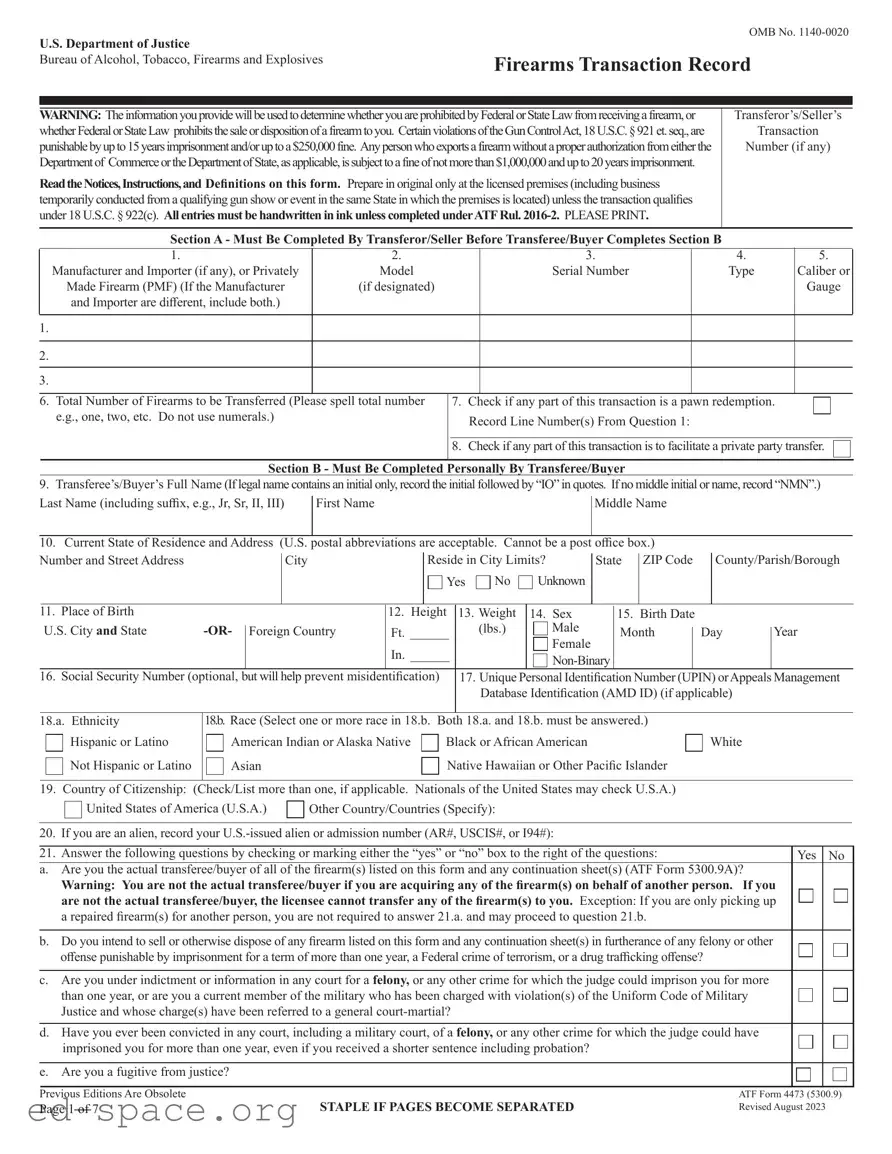
The ATF 4473 form is a crucial document in the process of purchasing firearms in the United States. This form serves multiple purposes, primarily ensuring that buyers undergo a thorough background check before acquiring a weapon. It collects essential information from the purchaser, including personal details such as name, address, date of birth, and social security number. Additionally, the form requires the buyer to disclose any criminal history or mental health issues that could disqualify them from owning a firearm. Sellers must also complete specific sections, verifying their Federal Firearms License (FFL) status. The information provided on the ATF 4473 is used to assess eligibility and maintain compliance with federal laws regarding gun ownership. Understanding the intricacies of this form is vital for both buyers and sellers to navigate the legal landscape of firearm transactions effectively.
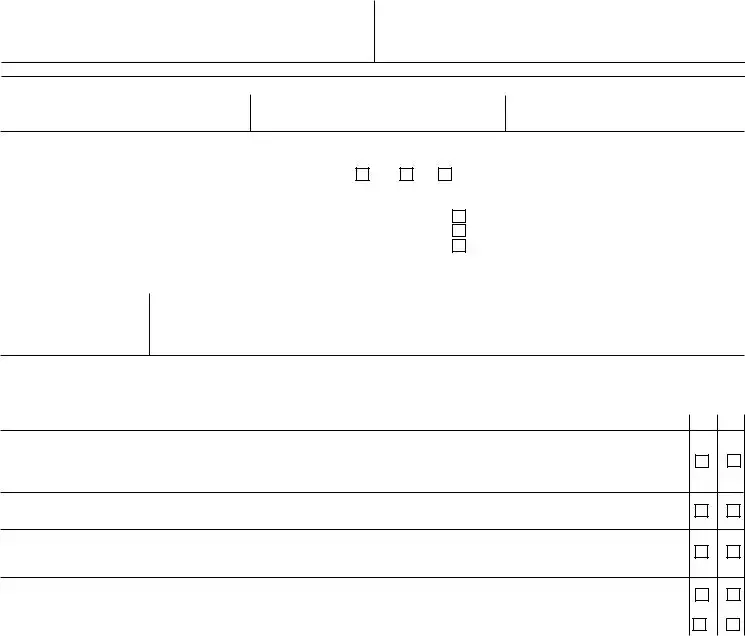
U.S. Department of Justice
OMB No.
Bureau of Alcohol, Tobacco, Firearms and Explosives |
|
|
Firearms Transaction Record |
|
|
|
|
|
||||
|
|
|
|
|
|
|
|
|
|
|||
|
|
|
|
|
|
|
|
|
|
|||
|
|
|
|
|
|
|
|
|
|
|
|
|
|
|
|
|
|
|
|
|
|
|
|
|
|
WARNING: The information you provide will be used to determine whether you are prohibited by Federal or State Law from receiving a firearm, or |
Transferor’s/Seller’s |
|||||||||||
whether Federal or State Law prohibits the sale or disposition of a firearm to you. Certain violations of the Gun ControlAct, 18 U.S.C. § 921 et. seq., are |
|
Transaction |
||||||||||
punishable by up to 15 years imprisonment and/or up to a $250,000 fine. Any person who exports a firearm without a proper authorization from either the |
Number (if any) |
|||||||||||
Department of Commerce or the Department of State, as applicable, is subject to a fine of not more than $1,000,000 and up to 20 years imprisonment. |
|
|
|
|
|
|
||||||
ReadtheNotices,Instructions,and Definitions on this form. Prepare in original only at the licensed premises (including business |
|
|
|
|
|
|
||||||
temporarily conducted from a qualifying gun show or event in the same State in which the premises is located) unless the transaction qualifies |
|
|
|
|
|
|
||||||
under 18 U.S.C. § 922(c). All entries must be handwritten in ink unless completed underATF Rul. |
|
|
|
|
|
|
||||||
|
|
|
|
|
|
|
|
|
|
|
||
|
Section A - Must Be Completed By Transferor/Seller Before Transferee/Buyer Completes Section B |
|
|
|
|
|
|
|||||
|
1. |
|
2. |
|
3. |
|
4. |
|
5. |
|
|
|
|
Manufacturer and Importer (if any), or Privately |
|
Model |
|
Serial Number |
|
Type |
|
Caliber or |
|||
|
Made Firearm (PMF) (If the Manufacturer |
|
(if designated) |
|
|
|
|
|
Gauge |
|||
|
and Importer are different, include both.) |
|
|
|
|
|
|
|
|
|
|
|
|
|
|
|
|
|
|
|
|
|
|
|
|
1. |
|
|
|
|
|
|
|
|
|
|
|
|
|
|
|
|
|
|
|
|
|
|
|
|
|
2. |
|
|
|
|
|
|
|
|
|
|
|
|
|
|
|
|
|
|
|
|
|
|
|
|
|
3. |
|
|
|
|
|
|
|
|
|
|
|
|
|
|
|
|
|
|
|
|
|
|
|||
6. Total Number of Firearms to be Transferred (Please spell total number |
7. Check if any part of this transaction is a pawn redemption. |
|
|
|
||||||||
|
|
|
||||||||||
|
e.g., one, two, etc. Do not use numerals.) |
|
Record Line Number(s) From Question 1: |
|
|
|
|
|
|
|||
|
|
|
|
|
|
|
|
|||||
|
|
|
|
|
|
|
|
|
|
|||
|
|
|
|
|
|
|
|
|
||||
|
|
|
|
8. Check if any part of this transaction is to facilitate a private party transfer. |
|
|||||||
|
|
|
|
|
||||||||
Section B - Must Be Completed Personally By Transferee/Buyer
9. Transferee’s/Buyer’s Full Name (If legal name contains an initial only, record the initial followed by “IO” in quotes. If no middle initial or name, record “NMN”.)
Last Name (including suffix, e.g., Jr, Sr, II, III) |
First Name |
Middle Name |
10.Current State of Residence and Address (U.S. postal abbreviations are acceptable. Cannot be a post office box.)
Number and Street Address |
|
|
|
|
|
City |
|
|
Reside in City Limits? |
|
State |
|
ZIP Code |
|
County/Parish/Borough |
|||||||||||||||||
|
|
|
|
|
|
|
|
|
|
|||||||||||||||||||||||
|
|
|
|
|
|
|
|
|
|
|
|
|
|
Yes |
No |
Unknown |
|
|
|
|
|
|
|
|
|
|
|
|
|
|||
|
|
|
|
|
|
|
|
|
|
|
|
|
|
|
|
|
|
|
|
|
|
|
|
|
|
|
|
|
|
|
|
|
|
|
11. Place of Birth |
|
|
|
|
|
|
12. |
Height |
|
|
13. Weight |
14. Sex |
|
15. |
|
Birth Date |
|
|
|
|
|
|||||||||
|
|
U.S. City and State |
|
Foreign Country |
Ft. |
|
|
|
|
|
|
(lbs.) |
Male |
|
|
Month |
|
|
Day |
|
Year |
|||||||||||
|
|
|
|
|
|
|
|
|
|
|
|
|
||||||||||||||||||||
|
|
|
|
|
|
|
|
|
|
|
|
|
|
|
|
|
|
|
Female |
|
|
|
|
|
|
|
|
|
|
|
|
|
|
|
|
|
|
|
|
|
|
|
|
In. |
|
|
|
|
|
|
|
|
|
|
|
|
|
|
|
|
|
|
|
|
|
|
|
|
|
|
|
|
|
|
|
|
|
|
|
|
|
|
|
|
|
|
|
|
|
|
|
|
|
|
||||
|
|
|
|
|
|
|
|
|
|
|
|
|
|
|
|
|
|
|
|
|
|
|
|
|
|
|
|
|
|
|||
|
16. Social Security Number (optional, but will help prevent misidentification) |
|
|
17. Unique Personal Identification Number (UPIN) orAppeals Management |
|
|||||||||||||||||||||||||||
|
|
|
|
|
|
|
|
|
|
|
|
|
|
|
|
|
|
Database Identification (AMD ID) (if applicable) |
|
|
|
|||||||||||
|
|
|
|
|
|
|
|
|
|
|
|
|
|
|
|
|
|
|||||||||||||||
18.a. Ethnicity |
18.b. Race (Select one or more race in 18.b. Both 18.a. and 18.b. must be answered.) |
|
|
|
|
|
||||||||||||||||||||||||||
|
|
|
|
Hispanic or Latino |
|
|
American Indian or Alaska Native |
|
|
Black or African American |
|
|
|
|
|
|
|
|
White |
|
|
|
||||||||||
|
|
|
|
|
|
|
|
|
|
|
|
|
|
|
|
|
|
|
||||||||||||||
|
|
|
|
Not Hispanic or Latino |
|
|
Asian |
|
|
|
|
Native Hawaiian or Other Pacific Islander |
|
|
|
|
|
|||||||||||||||
|
|
|
|
|
|
|
|
|
|
|
|
|
|
|
||||||||||||||||||
19. Country of Citizenship: (Check/List more than one, if applicable. Nationals of the United States may check U.S.A.)
|
|
|
|
United States of America (U.S.A.) |
|
Other Country/Countries (Specify): |
|
|
|
|
|
|
|
|
|
|
|
20. |
If you are an alien, record your |
|
|
|||||
|
|
|
|
|
|
|
|
|
21. |
Answer the following questions by checking or marking either the “yes” or “no” box to the right of the questions: |
Yes No |
|
|||||
a.Are you the actual transferee/buyer of all of the firearm(s) listed on this form and any continuation sheet(s) (ATF Form 5300.9A)?
Warning: You are not the actual transferee/buyer if you are acquiring any of the firearm(s) on behalf of another person. If you
are not the actual transferee/buyer, the licensee cannot transfer any of the firearm(s) to you. Exception: If you are only picking up a repaired firearm(s) for another person, you are not required to answer 21.a. and may proceed to question 21.b.
b.Do you intend to sell or otherwise dispose of any firearm listed on this form and any continuation sheet(s) in furtherance of any felony or other offense punishable by imprisonment for a term of more than one year, a Federal crime of terrorism, or a drug trafficking offense?
c.Are you under indictment or information in any court for a felony, or any other crime for which the judge could imprison you for more
than one year, or are you a current member of the military who has been charged with violation(s) of the Uniform Code of Military Justice and whose charge(s) have been referred to a general
d.Have you ever been convicted in any court, including a military court, of a felony, or any other crime for which the judge could have imprisoned you for more than one year, even if you received a shorter sentence including probation?
|
e. Are you a fugitive from justice? |
|
|
|
|
|
|
Previous Editions Are Obsolete |
STAPLE IF PAGES BECOME SEPARATED |
ATF Form 4473 (5300.9) |
|
Page 1 of 7 |
Revised August 2023 |
||
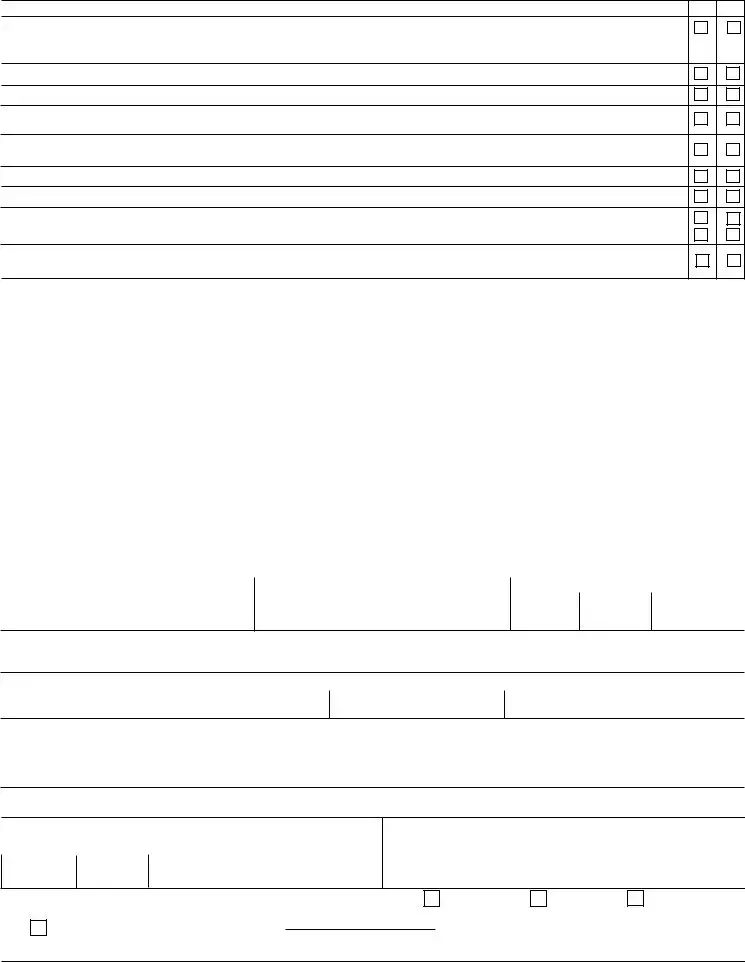
Yes No
f.Are you an unlawful user of, or addicted to, marijuana or any depressant, stimulant, narcotic drug, or any other controlled substance?
Warning: The use or possession of marijuana remains unlawful under Federal law regardless of whether it has been legalized or decriminalized for medicinal or recreational purposes in the state where you reside.
g. Have you ever been adjudicated as a mental defective OR have you ever been committed to a mental institution?
h. Have you ever been discharged from the Armed Forces under dishonorable conditions?
i.Are you subject to a court order, including a Military Protection Order issued by a military judge or magistrate, restraining you from harassing, stalking, or threatening your child or an intimate partner or child of such partner?
j.Have you ever been convicted in any court of a misdemeanor crime of domestic violence, or are you or have you ever been a member of the military and been convicted of a crime that included, as an element, the use of force against a person as identified in the instructions?
k. Have you ever renounced your United States citizenship?
l. Are you an alien illegally or unlawfully in the United States?
m.1. Are you an alien who has been admitted to the United States under a nonimmigrant visa?
m.2. If you answered “Yes” to question 21.m.1, do you fall within any of the exceptions stated in the instructions?
n.Do you intend to sell or dispose of any firearm(s) listed on this form or any continuation sheet(s) to any person described in questions
I certify that my answers in Section B are true, correct, and complete. I have read and understand the Notices, Instructions, and Definitions on ATF Form 4473. I understand that answering “yes” to question 21.a. if I am not the actual transferee/buyer is a crime punishable as a felony under Federal law, and may also violate State and/or local law. I understand that a person who answers “yes” to any of the questions 21.b. through 21.l. as well as 21.n. is prohibited from receiving, possessing, or purchasing a firearm. I understand that a person who answers “yes” to question 21.m.1. is prohibited from receiving or possessing a firearm, unless the person answers “yes” to question 21.m.2. and provides the documentation required in 26.d. I also understand that making any false oral or written statement, or exhibiting any false or misrepresented identification with respect to this transaction, is a crime punishable as a felony under Federal law, and may also violate State and/or local law. I further understand that the repetitive purchase of firearms for the purpose of resale to predominantly earn a profit without a Federal firearms license is a violation of Federal law.
|
|
|
|
|
|
|
|
|
|
|
|
|
|
|
|
|
|
|
|
|
|
22. Transferee’s/Buyer’s Signature |
|
|
|
|
|
|
|
23. Certification Date |
|
|
|||||||||
|
|
|
|
|
|
|
|
|
|
|
|
|
|
Month |
|
|
Day |
|
Year |
|
|
|
|
|
|
|
|
|
|
|
|
|
|
|
|
|
|
|
|||
|
|
|
|
|
|
Section C - Must Be Completed By Transferor/Seller Prior To The Transfer Of The Firearm(s) |
|
|
||||||||||||
|
|
24. Category of firearm(s) to be transferred (check or mark all that apply): |
25. If sale or transfer is at a qualifying gun show or event: |
|
|
|||||||||||||||
|
|
|
|
Handgun |
|
Long Gun |
|
Other Firearm |
Name of Function: |
|
|
|
|
County: |
|
|
||||
|
|
|
|
|
|
|
|
|
|
|
||||||||||
|
|
|
|
|
|
|
|
|
|
|
|
|
|
|
|
|
||||
|
|
|
|
|
|
(i.e., rifle or |
|
(e.g., frame, |
|
Address: |
|
|
|
|
|
|
|
|
||
|
|
|
|
|
|
shotgun) |
|
receiver, etc.) |
|
|
|
|
|
|
|
|
|
|
|
|
|
|
|
|
|
|
|
City, State, ZIP Code: |
|
|
|
|
|
|
|
|
|||||
|
|
|
|
|
|
|
|
|
|
|
|
|
|
|
|
|
|
|||
|
|
|
|
|
|
|
|
|
|
|
|
|
|
|
|
|
|
|
|
|
26.a. Identification (e.g., Virginia driver’s license (VA DL) or other valid |
|
|
||||||||||||||||||
Issuing Authority and Type of Identification |
Number on Identification |
Expiration Date of Identification (if any) |
||||||||||||||||||
|
|
|
|
|
|
|
|
|
|
|
|
|
Month |
Day |
Year |
|||||
26.b. Supplemental Government Issued Documentation (if identification document does not show current residence address or legal name)
26.c. Official Military Orders Establishing Permanent Change of Station (PCS):
PCS Base, City and State: |
PCS Effective Date: |
PCS Order Number (if any): |
26.d. Exception to the Nonimmigrant Alien Prohibition: If the transferee/buyer answered “yes” to 21.m.2. record the type of documentation showing the exception to the prohibition and attach a copy to this ATF Form 4473:
Notice: If transferee/buyer is under 21, a waiting period of up to 10 days may apply where notification from NICS is received within 3 business days to further investigate a possible disqualifying juvenile record. A NICS check is only valid for 30 calendar days from the date recorded in question 27.a.
27.a. Date the transferee’s/buyer’s identifying information in Section B was transmitted to NICS or the appropriate State agency:
Month Day Year
27.b. The NICS or State transaction number (if provided) was:
27.c. The response initially provided by NICS or the appropriate State agency was:
Delayed. The firearm(s) may be transferred on appropriate State agency, and State law allows (optional).
ProceedDeniedCancelled
(date) if time period is not extended by NICS or the
Page 2 of 7 |
STAPLE IF PAGES BECOME SEPARATED |
ATF Form 4473 (5300.9) Revised August 2023
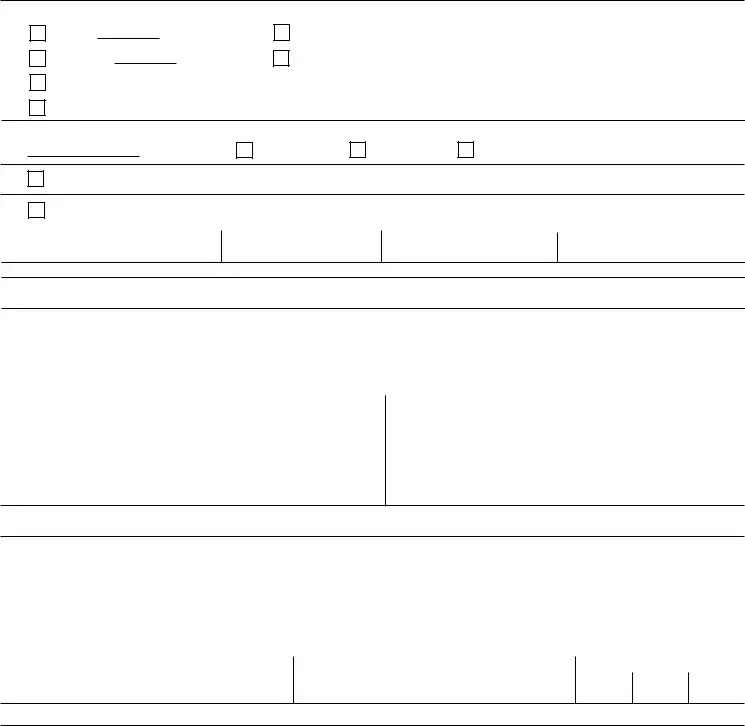
27.d. Prior to transfer the following response(s) was/were later provided by NICS or the appropriate State agency:
Proceed(date)
Overturned(date)
Denied |
|
(date) |
|
Cancelled |
|
(date) |
|
|
|
|
|
|
|
No response was provided within 3 business days.
Notice of additional delay of transferee under 21 years of age received on |
|
(date). Transfer of the firearm may occur on |
|
(optional). |
No response was provided within 10 business days after additional delay for transferee/buyer under 21 years of age.
27.e. After the firearm was transferred, the following response was provided by NICS or the appropriate State agency (if applicable) on:
(date).
Proceed
Denied
Cancelled
28.
29.
No NICS check is required because a background check was completed during the NFA approval process on the individual who will receive the NFA firearm(s), as reflected on the approved NFA application.
No NICS check is required because the transferee/buyer has a valid permit from the State where the transfer is to take place, which qualifies as an exemption to NICS.
Issuing State and Permit Type |
Date of Issuance (if any) |
Expiration Date (if any) |
Section D - Must Be Completed Personally By Transferee/Buyer
Permit Number (if any)
If the transfer of the firearm(s) takes place on a different day from the date that the transferee/buyer signed Section B, the transferee/buyer must complete Section D immediately prior to the transfer of the firearm(s).
I certify that all of my responses in Section B of this form are still true, correct, and complete.
|
30. |
Transferee’s/Buyer’s Signature |
|
31. Recertification Date |
|||||
|
|
|
|
|
Month |
|
Day |
|
Year |
|
|
|
|
|
|
|
|||
|
|
|
|
|
|
|
|
|
|
|
|
|
|
Section E - Must Be Completed By Transferor/Seller |
|
|
|
|
|
|
|
32. |
For Use by Licensee |
33. Trade/corporate name and address of transferor/seller and Federal |
|||||
|
|
|
|
Firearm License Number (must contain at least first three and last |
|||||
|
|
|
|
five digits |
|
|
|||
The Individual Transferring The Firearm(s) Must Complete Questions
For Denied/Cancelled Transactions, The Individual Who Completed Section C Must Complete Questions
I certify that: (1) I have read and understand the Notices, Instructions, and Definitions on thisATF Form 4473; (2) the information recorded in SectionsA, C and E is true, correct, and complete; and (3) this entire transaction record has been completed at the licensed business premises (“licensed premises” includes business temporarily conducted from a qualifying gun show or event in the same State in which the licensed premises is located) unless this transaction has met the requirements of 18 U.S.C. § 922(c). Unless this transaction has been denied or cancelled by NICS or State agency, I further certify on the basis of — (1) the transferee’s/buyer’s responses in Section B (and Section D, if applicable); (2) the verification of the identification recorded in question 26 (and the
34. Transferor’s/Seller’s Name (please print) |
35. Transferor’s/Seller’s Signature |
36. Date Transferred |
Year |
|
|
|
Month |
Day |
|
REMINDER - By the Close of Business Complete ATF Form 3310.4 for Multiple Sales of Handguns Within 5 Consecutive Business Days
NOTICES, INSTRUCTIONS, AND DEFINITIONS
Purpose of the Form: The information and certification on this form are designed so that a person licensed under 18 U.S.C. § 923 may determine if he/she may lawfully sell or deliver a firearm to the person identified in Section B, and to alert the transferee/buyer of certain restrictions on the receipt and possession of firearms. The transferor/seller of a firearm must determine the lawfulness of the transaction and maintain proper records of the transaction. Consequently, the transferor/seller must be familiar with the provisions of 18 U.S.C. §
27 CFR Parts 478 and 479. In determining the lawfulness of the sale or delivery of a rifle or shotgun to a resident of another State, the transferor/seller is presumed to know the applicable State laws and published ordinances in both the transferor’s/ seller’s State and the transferee’s/buyer’s State. (See State Laws and Published Ordinances
Generally, ATF Form 4473 must be completed at the licensed business premises when a firearm is transferred
18 U.S.C. § 922(c), 27 CFR 478.96(b), and ATF Procedure
After the transferor/seller has completed the firearms transaction, he/she must make the completed, original ATF Form 4473 (which includes the Notices, General Instructions, and Definitions), and any supporting documents, part of his/her permanent records. Such Forms 4473 must be retained until discontinuance of business or licensed activity. Paper forms over 20 years of age may be stored at a separate warehouse, which is considered part of the business premises subject to inspection. Filing may be chronological (by date of disposition), alphabetical (by name of purchaser), or numerical (by transaction serial number), as long as all of the transferor’s/seller’s completed Forms 4473 are filed in the same manner.
Page 3 of 7 |
STAPLE IF PAGES BECOME SEPARATED |
ATF Form 4473 (5300.9) Revised August 2023
FORMS 4473 FOR DENIED/CANCELLED TRANSFERS MUST BE RETAINED: If the transfer of a firearm is denied/cancelled by NICS, or if for any other reason the transfer is not completed, the licensee must retain the ATF Form 4473 in his/her records. Forms 4473 with respect to which a sale, delivery, or transfer did not take place shall be separately retained in alphabetical (by name of transferee) or chronological (by date of transferee’s certification) order.
If the transferor/seller or the transferee/buyer discovers that an ATF Form 4473 is incomplete or improperly completed after the firearm has been transferred, and the transferor/seller or the transferee/buyer wishes to correct the omission(s) or error(s), photocopy the inaccurate form and make any necessary additions or revisions to the photocopy.
The transferor/seller should only make changes to Sections A, C, and E. The transferee/buyer should only make changes to Sections B and D. Whoever made the changes should initial and date the changes. The corrected photocopy should be attached to the original Form 4473 and retained as part of the transferor’s/seller’s permanent records.
Section A
Questions
If more than three firearms are involved in a transaction, please provide the information required by Section A, Questions
Types of firearms include, but are not limited to: pistol, revolver, rifle, shotgun, receiver, frame, and firearms that are neither handguns nor long guns (rifles or shotguns), such as firearms having a pistol grip that expel a shotgun shell (pistol grip firearm) or NFA firearms (machinegun, silencer,
Additional firearms purchases by the same transferee/buyer may not be added to the form after the transferor/seller has signed and dated it. A transferee/buyer who wishes to acquire additional firearms after the transferor/seller has signed and dated the form must complete a new ATF Form 4473 and undergo a new NICS check.
Question 8. Private Party Transfer: Check this box if the licensee is facilitating the sale or transfer of a firearm between private unlicensed individuals in accordance with ATF Procedure
a PMF, the PMF must first be taken into inventory and properly marked with a licensee’s serial number.
Section B
The transferee/buyer must personally complete Section B of this form and certify (sign and date) that the answers are true, correct, and complete. However, if the transferee/buyer is unable to read and/or write, the answers (other than the signature) may be completed by another person, excluding the transferor/seller. Two persons (other than the transferor/seller) must then sign as witnesses to the transferee’s/ buyer’s answers and signature/certification in question 22.
When the transferee/buyer of a firearm is a corporation, company, association, partnership, or other such business entity, an officer authorized to act on behalf of the business must complete Section B of the form with his/her personal information, sign Sec- tion B, and attach a written statement, executed under penalties of perjury, stating: (A) the firearm is being acquired for the use of and will be the property of that business entity; and (B) the name and address of that business entity.
Question 9. Transferee’s/Buyers Full Name: If the transferee’s/buyer’s name is illegible, the transferor/seller must print the transferee’s/buyer’s name above the
Page 4 of 7
name written by the transferee/buyer.
Question 10. Current Residence Address: A rural route (RR) may be accepted provided the transferee/buyer lives in a State or locality where it is considered a legal residence address. If the transferee/buyer is a member of the Armed Forces on active duty, his/her State of residence is the State in which his/her permanent duty station is located. If the service member is acquiring a firearm in a State where his/ her permanent duty station is located, but resides in a different State, the transferee/ buyer must list both his/her permanent duty station address and residence address. In these instances, the Armed Forces member must answer “Reside in city limits?” only for their residence address.
If the transferee/buyer has two States of residence, the transferee/buyer should list his/her current residence address (e.g., if the transferee/buyer is purchasing a firearm while staying at his/her weekend home in State X, list the address in State X).
Question 14. Sex: Individuals with neither male nor female on their identification document(s) should check
Question 17. Unique Personal Identification Number (UPIN) or Appeals Management Database Identification (AMD ID): For transferees/buyers approved to have information maintained about them in the FBI NICS Voluntary Appeal File, NICS will provide them with a UPIN, which the transferee/buyer should record in question 17. The AMD ID is a number that will be provided to an appellant on certain types of overturned appeals and should also be recorded in question 17. The transferor/seller should provide the UPIN/AMD ID when conducting background checks through the NICS or the State POC.
Questions 18.a. and 18.b. Ethnicity and Race: Federal regulations (27 CFR 478.124(c)(1)) require licensees to obtain the race of the transferee/buyer. This information helps the FBI and/or State POC make or rule out potential matches during the background check process and can assist with criminal investigations.
Ethnicity refers to a person’s heritage. Persons of Cuban, Mexican, Puerto Rican, South or Central American, or other Spanish culture or origin, regardless of race, are considered Hispanic or Latino.
Race - one or more of the following responses must be selected: (1) American Indian or Alaska Native - A person having origins in any of the original peoples of North and South America (including Central America), and who maintains an affiliation or community attachment; (2) Asian - A person having origins in any of the original peoples of the Far East, Southeast Asia, or the Indian subcontinent including, for example, Cambodia, China, India, Japan, Korea, Malaysia, Pakistan, the Philippine Islands, Thailand, and Vietnam; (3) Black or African American - A person having origins in any of the Black racial groups of Africa; (4) Native Hawaiian or Other Pacific Islander - A person having origins in any of the original peoples of Hawaii, Guam, Samoa, or other Pacific Islands; and/or (5) White - A person having origins in any of the original peoples of Europe, the Middle East, or North Africa. Select the closest representation for any other race or ethnicity that does not fall within those indicated.
Question 20.
Question 21.a. Actual Transferee/Buyer: For purposes of this form, a person is the actual transferee/buyer if he/she is purchasing the firearm for him/herself or otherwise acquiring the firearm for him/herself. (e.g., redeeming the firearm from pawn, retrieving it from consignment, firearm raffle winner). A person is also the actual transferee/buyer if he/she is legitimately purchasing the firearm as a bona fide gift for a third party. A gift is not bona fide if another person offered or gave the person completing this form money, service(s), or item(s) of value to acquire the firearm for him/her, or if the other person is prohibited by law from receiving or possessing the firearm.
EXAMPLES: Mr. Smith asks Mr. Jones to purchase a firearm for Mr. Smith (who may or may not be prohibited). Mr. Smith gives Mr. Jones the money for the firearm. Mr. Jones is NOT THE ACTUAL TRANSFEREE/BUYER of the firearm and must answer “no” to question 21.a. The licensee may not transfer the firearm to Mr. Jones. However, if Mr. Brown buys the firearm with his own money to give to Mr. Black as a gift (with no service or tangible thing of value provided by Mr. Black),
ATF Form 4473 (5300.9)
Revised August 2023
Mr. Brown is the actual transferee/buyer of the firearm and should answer “yes” to question 21.a. However, the transferor/seller may not transfer a firearm to any person he/she knows or has reasonable cause to believe is prohibited under 18 U.S.C. § 922(g), (h), (n), or (x).
Questions 21.c. - 21.m. Prohibited Persons: Generally, 18 U.S.C. § 922(g) prohibits the shipment, transportation, receipt, or possession in or affecting interstate commerce of a firearm by one who: has been convicted of a felony in any Federal, including a general
A member of the Armed Forces must answer “yes” to 21.c. if charged with an offense that is referred to a general
Discharged “under dishonorable conditions” means separation from the Armed Forces resulting from a dishonorable discharge or dismissal adjudged by a general
EXCEPTION: A person is not prohibited from receiving or possessing a firearm
if that person: (1) has been convicted of any Federal or State offense pertaining to antitrust violations, unfair trade practices, restraints of trade, or other similar offenses relating to the regulation of business practices; (2) has been convicted of a State misdemeanor punishable by imprisonment of two years or less; or (3) following conviction of a felony or other crime for which the judge could have imprisoned the person for more than one year, or a misdemeanor crime of domestic violence, has received a pardon, an expungement or set aside of the conviction, or has lost and regained civil rights (the right to vote, sit on a jury, and hold public office) in the jurisdiction in which the conviction occurred, AND the law of the convicting jurisdiction does not prohibit the person from receiving or possessing firearms.
Also, a person who has no more than one conviction of a misdemeanor crime of domestic violence against an individual in a dating relationship, and is not otherwise prohibited under this chapter, is not prohibited if 5 years have elapsed from conviction or completion of the person’s custodial or supervisory sentence, whichever occurs later, and the person has not subsequently been convicted of any other misdemeanor crime of violence, or any other offense that would disqualify the person under 18 U.S.C. § 922(g). A person subject to any of these exceptions, or who received relief from disabilities under 18 U.S.C. § 925(c), should answer “no” to the applicable question.
Question 21.e. Fugitive from Justice: Any person who has fled from any State to avoid prosecution for a felony or a misdemeanor; or any person who leaves the State to avoid giving testimony in any criminal proceeding. The term also includes any person who knows that misdemeanor or felony charges are pending against such person and who leaves the State of prosecution.
Question 21.g. Adjudicated as a Mental Defective: A determination by a court, board, commission, or other lawful authority that a person, as a result of marked subnormal intelligence, or mental illness, incompetency, condition, or disease: (1) is a danger to himself or to others; or (2) lacks the mental capacity to contract or manage his own affairs. This term shall include: (1) a finding of insanity by a court in a criminal case; and (2) those persons found incompetent to stand trial or found not guilty by reason of lack of mental responsibility.
Committed to a Mental Institution: A formal commitment of a person to a mental institution by a court, board, commission, or other lawful authority. The term includes a commitment to a mental institution involuntarily. The term includes commitment for mental defectiveness or mental illness. It also includes commitments for other reasons, such as for drug use. The term does not include a person in a mental institution for observation or a voluntary admission to a mental institution.
Page 5 of 7
EXCEPTION: Under the NICS Improvement Amendments Act of 2007, a person who has been adjudicated as a mental defective or committed to a mental institution in a State proceeding is not prohibited by the adjudication or commitment if the person has been granted relief by the adjudicating/committing State pursuant to a qualifying mental health relief from disabilities program. Also, a person who has been adjudicated as a mental defective or committed to a mental institution by a department or agency of Federal Government is not prohibited by the adjudication or commitment if either: (a) the person’s adjudication or commitment was set aside or expunged by the adjudicating/committing agency; (b) the person has been fully released or discharged from all mandatory treatment, supervision, or monitoring by the agency; (c) the person was found by the agency to no longer suffer from the mental health condition that served as the basis of the initial adjudication/ commitment; (d) the adjudication or commitment, respectively, is based solely on a medical finding of disability, without an opportunity for a hearing by a court, board, commission, or other lawful authority, and the person has not been adjudicated as a mental defective consistent with 18 U.S.C. § 922(g)(4); or (e) the person was granted relief from the adjudicating/committing agency pursuant to a qualified mental health relief from disabilities program. This exception to an adjudication or commitment by a Federal department or agency does not apply to any person who was adjudicated to be not guilty by reason of insanity, or based on lack of mental responsibility, or found incompetent to stand trial, in any criminal case or under the Uniform Code of Military Justice. Persons who fall within one of the above exceptions should answer “no” to question 21.g.
Question 21.i. Qualifying Restraining Orders: Under 18 U.S.C. § 922, firearms
may not be sold to or received by persons subject to a court order that: (A) was issued after a hearing which the person received actual notice of and had an opportunity to participate in; (B) restrains such person from harassing, stalking, or threatening an intimate partner or child of such intimate partner or person, or engaging in other conduct that would place an intimate partner in reasonable fear of bodily injury to the partner or child; and (C)(i) includes a finding that such person represents a credible threat to the physical safety of such intimate partner or child; or (ii) by its terms explicitly prohibits the use, attempted use, or threatened use
of physical force against such intimate partner or child that would reasonably be expected to cause bodily injury. An “intimate partner” of a person is: the spouse or former spouse of the person, the parent of a child of the person, or an individual who cohabitates or has cohabitated with the person.
Question 21.j. Misdemeanor Crime of Domestic Violence: A Federal, including a general
A current or former member of the military who has been convicted of a violation of the Uniform Code of Military Justice that included, as an element, the use of force against a person as identified in the instructions under question 21.j. must answer “yes” to this question. This may include a qualifying offense that was referred to a special or general
Question 21.m. Immigration Status: If you are a U.S. citizen/national, it is ap- propriate to answer “No” to question 21.m.1. and to leave question 21.m.2. blank. An alien admitted to the United States under a nonimmigrant visa includes, among others, persons visiting the United States temporarily for business or pleasure, persons studying in the United States who maintain a residence abroad, and certain temporary foreign workers. These aliens must answer “yes” to this question and provide the ad- ditional documentation as required under question 26.d.to establish they are excepted from the nonimmigrant alien prohibition. Permanent resident aliens and aliens legally admitted to the United States pursuant to either the Visa Waiver Program or to regulations otherwise exempting them from visa requirements may answer “no” to this question, leave 21.m.2 blank and are not required to submit the additional documentation under question 26.d.
ATF Form 4473 (5300.9)
Revised August 2023
Question 22. Transferee/Buyer Certification: Under 18 U.S.C. § 922(a)(1), it is unlawful for a person to engage in the business of dealing in firearms without a license.
A person is engaged in the business of dealing in firearms if he/she devotes time, attention, and labor to dealing in firearms as a regular course of trade or business to predominately earn a profit through the repetitive purchase and resale of firearms. A license is not required of a person who only makes occasional sales, exchanges, or purchases of firearms for the enhancement of a personal collection or for a hobby, or who sells all or part of his/her personal collection of firearms.
Section C
Question 24. Category of Firearm(s): “Other” refers to frames, receivers, and other firearms that are neither handguns nor long guns (rifles or shotguns), such as firearms having a pistol grip that expel a shotgun shell, or National Firearms Act (NFA) firearms, including silencers. If a frame or receiver can only be made into a long gun (rifle or shotgun), it is still a frame or receiver, not a handgun or long gun. All frames and receivers are “firearms” by definition, and subject to the same GCA limitations. See 18 U.S.C § 921(a)(3)(B). 18 U.S.C. § 922(b)(1) makes it unlawful for a licensee to sell any firearm other than a shotgun or rifle to any person under the age of 21. Since a frame or receiver for a firearm, to include one that can only be made into a long gun, is a “firearm other than a shotgun or rifle,” it cannot be trans- ferred to anyone under the age of 21, nor can these firearms be transferred to anyone who is not a resident of the State where the transfer is to take place. Also, note that multiple sales forms are not required for frames or receivers of any firearms, or pistol grip shotguns, since they are not “pistols or revolvers” under 18 U.S.C.§ 923(g)(3)(A).
Question 25. Qualifying Gun Show or Event: As defined in 27 CFR 478.100, a gun show or event is a function sponsored by any national, State, or local organization, devoted to the collection, competitive use, or other sporting use of firearms, or an organization or association that sponsors functions devoted to the collection, competitive use, or other sporting use of firearms in the community.
Question 26.a. Identification: Before a licensee may sell or deliver a firearm to a nonlicensee, the licensee must establish the identity, place of residence, and age of the transferee/buyer. The transferee/buyer must provide a valid
Identification documents such as a driver’s license or identification card issued with binary,
If the transferee/buyer is a member of the Armed Forces on active duty acquiring a firearm in the State where his/her permanent duty station is located, but he/she has a driver’s license from another State, the transferor/seller must list the transferee’s/ buyer’s military identification card in response to question 26.a., in addition to PCS orders as indicated in 26.c.
Question 26.b. Supplemental Documentation: Licensees may accept a combination of valid
Question 26.c. Official Military Orders Establishing Permanent Change of Station (PCS): Licensees may accept electronic PCS orders to establish residency.
Question 26.d. Exceptions to the Nonimmigrant Alien Prohibition: An alien admitted to the United States under a nonimmigrant visa is not prohibited from
Page 6 of 7
purchasing, receiving, or possessing a firearm if the alien: (1) is in possession of a hunting license or permit lawfully issued by the Federal Government, a State or local government, or an Indian tribe federally recognized by the Bureau of Indian Affairs, which is valid and unexpired; (2) was admitted to the United States for lawful hunting or sporting purposes; (3) has received a waiver from the prohibition from the Attorney General of the United States; (4) is an official representative of a foreign government who is accredited to the United States Government or the Government’s mission to an international organization having its headquarters in the United States; (5) is an official representative of a foreign government who is en route to or from another country to which that alien is accredited; (6) is an official of a foreign government or a distinguished foreign visitor who has been so designated by the Department of State; or (7) is a foreign law enforcement officer of a friendly foreign government entering the United States on official law enforcement business.
Question 27. NICS Background Checks: 18 U.S.C. § 922(t) requires that prior to transferring any firearm to an unlicensed person, a licensed importer, manufacturer, or dealer must first contact the National Instant Criminal Background Check System (NICS). NICS will advise the licensee whether the system finds any information that the transfer to, or receipt by, the transferee is prohibited by law. For purposes of this form, contacts to NICS include State agencies designated as
The licensee should NOT contact NICS and must stop the transaction if there is reasonable cause to believe that the sale or disposition of a firearm to the transferee/ buyer is prohibited or the transferee/buyer is prohibited from receiving or possessing a firearm, including if: the transferee/buyer answered “no” to questions 21.a; the transferee/buyer answered “yes” to questions 21.b. – 21.1 as well as 21.n.; the transferee/buyer answered “yes” to question 21.m.1., and answered “no” to question 21.m.2. Warning: Any person who transfers a firearm to any person knowing or having reasonable cause to believe the sale or disposition to such person is prohib- ited violates the law, 18 U.S.C. § 922(d), even if the transferor/seller has complied with the Federal background check requirements.
NICS Responses: If NICS provides a “proceed” response, the transaction may proceed. If NICS provides a “denied” or “cancelled” (and does not immediately provide a new transaction number) response, the transferor/seller is prohibited from transferring the firearm to the transferee/buyer. If NICS provides a “delayed” response, the transferor/seller is prohibited from transferring firearms to the transferee/buyer unless 3 business days have elapsed and, before the transfer, NICS or the State has not advised the transferor that the transfer to, or receipt or possession by, the transferee/buyer would be in violation of law. (See 27 CFR 478.102(a) for an example of how to calculate 3 business days.). If within 3 business days NICS or the State notifies the transferor/seller that it has cause to further investigate a possibly disqualifying juvenile record of a transferee/buyer under 21 years of age, the transfer may occur only after 10 business days since the licensee initially contacted NICS, and NICS has not notified the licensee that the transfer is prohibited. If NICS provides a “delayed” response, NICS also will provide a Missing Disposition Information (MDI) date that calculates the 3 business days and reflects when the firearm(s) can be transferred under Federal law. States may not provide an MDI date. Some States may not provide a transaction number for denials. However, if a firearm is transferred within the three business day period, a transaction number is required. State law may impose a waiting period or other requirements on transferring firearms.
At the time that NICS is contacted, the licensee must record in question 27.a. – 27.c.: the date of contact, the NICS (or State) transaction number, and the initial response provided by NICS or the State. The licensee may record the date the firearms may be transferred to the transferee/buyer (also known as the Missing Disposition Information (MDI) date) in 27.c. that NICS provides for delayed transactions (States may not provide this date). If the licensee receives any subsequent response(s) before transferring the firearm, the licensee must record in question 27.d. any response later provided by NICS or the State, or that no response was provided within 3 business days. If, within 3 business days, the licensee receives notice of additional
delay (only if transferee/buyer under the age of 21), the licensee must indicate this response in item 27.d. If no response is received after 10 days, the licensee may transfer the firearm assuming State law allows. If the licensee receives a response from NICS or the State after the firearm has been transferred, he/she must record this information in question 27.e. If the transaction was denied and later overturned, in addition to checking the “Proceed” in 27.d. and entering the date, the licensee must also check “Overturned” and, if provided, attach the overturn certificate issued by NICS or the State POC to this ATF Form 4473. If more than 30 days have elapsed
ATF Form 4473 (5300.9)
Revised August 2023

and a new NICS check is required, record the new transaction number, date of contact and the response provided by NICS or the State on this Form 4473 in questions
Questions 28 and 29. NICS Exceptions: A NICS check is not required if the transfer qualifies for any of the exceptions in 27 CFR 478.102(d). Generally these include: (a) transfers of National Firearms Act firearms to an individual who has undergone a background check during the NFA approval process; (b) transfers where the transferee/buyer has presented the licensee with a permit or license that allows the transferee/buyer to possess, acquire, or carry a firearm, and the permit has been recognized by ATF as a valid alternative to the NICS check requirement; or
(c)transfers certified by ATF as exempt because compliance with the NICS check requirements is impracticable. If the transfer qualifies for one of these exceptions, the licensee must obtain the documentation required by 27 CFR 478.131. A firearm must not be transferred to any transferee/buyer who fails to provide such documentation.
A NICS check must be conducted if an NFA firearm has been approved for transfer to a trust, or to a legal entity such as a corporation, and no background check was conducted as part of the NFA approval process on the individual who will receive the firearm. Individuals who have undergone a background check during the NFA application process are listed on the approved NFA transfer form.
Section D
Questions 30 and 31. Transfer on a Different Day and Recertification: If the transfer takes place on a different day from the date that the transferee/buyer signed Section B, the licensee must again check the photo identification of the transferee/ buyer at the time of transfer.
Section E
Question 32. For Use by Licensee: This item is for the licensee’s use in recording any information he/she finds necessary to conduct business or any additional information received from NICS that is not recorded in Questions 27.a. – 27.e.
Privacy Act Information
Solicitation of this information is authorized under 18 U.S.C. § 923(g) and 922(b)(5). Disclosure of this information by the transferee/buyer is mandatory for the transfer of a firearm. Disclosure of the individual’s Social Security number is voluntary. The number may be used to verify the transferee’s/buyer’s identity.
For information about the routine uses of this form see System of Records Notice
Paperwork Reduction Act Notice
The information required on this form is in accordance with the Paperwork Reduction Act of 1995. The purpose of the information is to determine the eligibility of the transferee to receive and possess firearms under Federal law. The information is subject to inspection by ATF officers and is required by 18 U.S.C. § 922 and 923.
The estimated average burden associated with this collection is 30 minutes per respondent or recordkeeper, depending on individual circumstances. Comments about the accuracy of this burden estimate and suggestions for reducing it should be directed to Reports Management Officer, Resource Management Staff, Contracts and Forms Office, Bureau of Alcohol, Tobacco, Firearms and Explosives, 99 New York Ave, N.E. Washington, DC 20226.
An agency may not conduct or sponsor, and a person is not required to respond to, a collection of information unless it displays a currently valid Office of Management and Budget control number. Confidentiality is not assured.
Page 7 of 7 |
ATF Form 4473 (5300.9) |
Revised August 2023 |
| Fact Name | Description |
|---|---|
| Purpose | The ATF 4473 form is used for the transfer of firearms from a Federal Firearms Licensee (FFL) to a buyer. |
| Background Check | Completing the ATF 4473 initiates a background check through the National Instant Criminal Background Check System (NICS). |
| Record Keeping | FFLs must keep the ATF 4473 form on file for at least 20 years for record-keeping purposes. |
| State-Specific Forms | Some states require additional forms or have their own specific laws governing firearm transfers. |
| Eligibility Criteria | Buyers must meet certain eligibility criteria, including age and legal status, to complete the form successfully. |
Filling out the ATF 4473 form is an important step in the process of purchasing a firearm. Once you have completed the form, it will be reviewed by the dealer to ensure all information is accurate and complete. Follow these steps to fill out the form correctly.
What is the ATF 4473 form?
The ATF 4473 form, officially known as the Firearms Transaction Record, is a document used in the United States for the sale of firearms. This form is required by the Bureau of Alcohol, Tobacco, Firearms and Explosives (ATF) and must be completed by individuals purchasing a firearm from a licensed dealer. It collects essential information about the buyer, including personal identification details and background information, to ensure compliance with federal and state laws regarding firearm ownership.
Who needs to fill out the ATF 4473 form?
Any individual who wishes to purchase a firearm from a federally licensed dealer must fill out the ATF 4473 form. This includes first-time buyers as well as those who may have purchased firearms in the past. The form is also required for private transfers in certain states, depending on local laws. Completing the form accurately is crucial, as any discrepancies can lead to delays or denial of the transaction.
What information is required on the ATF 4473 form?
The ATF 4473 form requires several pieces of information from the buyer. This includes the buyer's name, address, date of birth, and Social Security number. Additionally, the form asks about the buyer's citizenship status and any felony convictions or mental health issues that may disqualify them from owning a firearm. Buyers must also provide details about the firearm being purchased, including the make, model, and serial number.
How is the information on the ATF 4473 form used?
The information collected on the ATF 4473 form is used primarily to conduct background checks on prospective firearm purchasers. Licensed dealers submit the necessary information to the National Instant Criminal Background Check System (NICS) to verify that the buyer is eligible to purchase a firearm. If the background check returns a favorable result, the sale can proceed. If there are issues, the dealer may be required to deny the sale or take further action.
What happens if I make a mistake on the ATF 4473 form?
Errors on the ATF 4473 form can lead to complications during the purchase process. If a mistake is identified before the transaction is completed, the buyer should notify the dealer immediately to correct the error. If the form has already been submitted and a mistake is found, it may result in a delay while the issue is resolved. In some cases, significant errors could lead to a denial of the sale. Therefore, it is important to review the form carefully before submission to ensure all information is accurate and complete.
Failing to provide accurate personal information.
Many individuals overlook the importance of ensuring that their name, address, and date of birth are correct. Even small errors can lead to delays or denials.
Not answering all questions completely.
Every question on the ATF 4473 form must be answered. Leaving questions blank can raise red flags and complicate the approval process.
Misunderstanding the eligibility criteria.
Some individuals may not fully understand what disqualifies them from purchasing a firearm. It's crucial to read each question carefully and answer truthfully.
Incorrectly filling out the signature section.
Signatures must match the name provided on the form. If there are discrepancies, it could lead to complications in the transaction.
The ATF 4473 form is a crucial document in the process of purchasing firearms in the United States. It is primarily used to record the buyer's information and certify their eligibility to purchase a firearm. However, there are several other forms and documents that are often utilized alongside the ATF 4473 to ensure compliance with federal and state laws. Below is a list of these documents, each serving a specific purpose in the firearms transaction process.
Understanding these forms and documents is vital for anyone involved in the purchase or transfer of firearms. Each document plays a role in ensuring that the transaction complies with legal standards and helps to promote responsible ownership.
The ATF 4473 form is used in the process of purchasing firearms in the United States. Several other documents serve similar purposes in different contexts. Here are four documents that share similarities with the ATF 4473 form:
When filling out the ATF 4473 form, it is important to follow certain guidelines to ensure accuracy and compliance. Below is a list of things you should and shouldn't do:
Following these guidelines can help ensure a smoother process when submitting the ATF 4473 form.
The ATF 4473 form is an important document in the process of purchasing firearms in the United States. However, several misconceptions exist about this form. Here are six common misunderstandings:
This is not entirely true. The form is required for purchases from licensed dealers, but private sales between individuals may not require it, depending on state laws.
While the form is part of the process that can lead to a background check, it is not the background check itself. The form collects information that dealers use to initiate a background check through the FBI's National Instant Criminal Background Check System (NICS).
Completing the form does not guarantee that a buyer will be approved to purchase a firearm. If the background check reveals disqualifying information, the sale may be denied.
Dealers are required to keep the forms for a certain period, but they do not submit the forms to the ATF. After the retention period, the forms can be destroyed, ensuring that personal information is not stored indefinitely.
The form also requires information about the firearm being purchased, including its make, model, and serial number. This information is crucial for tracking firearms.
Buyers can correct mistakes on the form before the transaction is completed. It is important to ensure that all information is accurate to avoid complications during the purchase process.
Understanding these misconceptions can help clarify the role and importance of the ATF 4473 form in the firearm purchasing process.
When filling out and using the ATF 4473 form, it’s crucial to understand its importance in the firearm purchasing process. Here are some key takeaways to keep in mind: