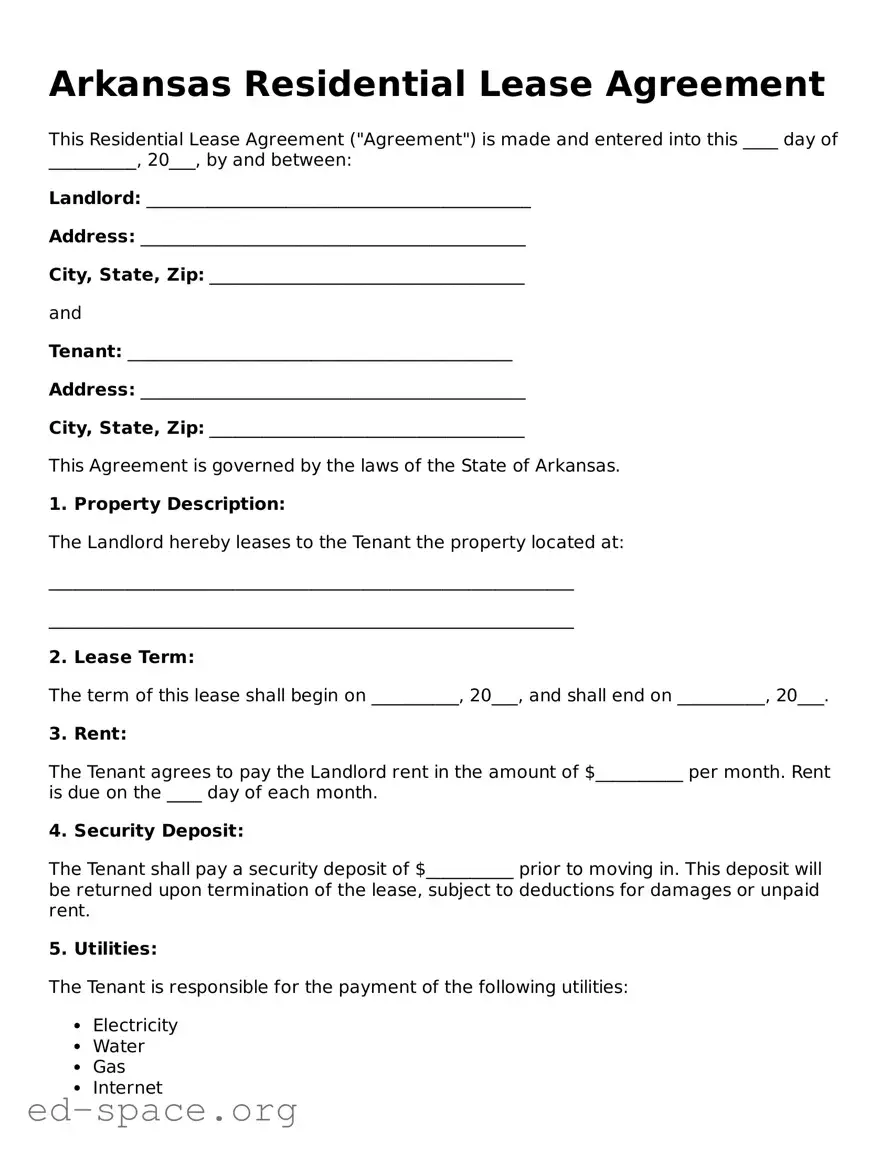
When renting a property in Arkansas, understanding the Residential Lease Agreement form is crucial for both landlords and tenants. This document serves as a binding contract that outlines the rights and responsibilities of each party involved. Key aspects include the duration of the lease, rental payment terms, and security deposit requirements. It also specifies maintenance responsibilities, rules regarding pets, and conditions for terminating the lease. By clearly defining these elements, the agreement helps prevent misunderstandings and disputes, ensuring a smoother rental experience. Whether you are a seasoned landlord or a first-time renter, familiarizing yourself with this essential form can protect your interests and foster a positive rental relationship.
Arkansas Residential Lease Agreement
This Residential Lease Agreement ("Agreement") is made and entered into this ____ day of __________, 20___, by and between:
Landlord: ____________________________________________
Address: ____________________________________________
City, State, Zip: ____________________________________
and
Tenant: ____________________________________________
Address: ____________________________________________
City, State, Zip: ____________________________________
This Agreement is governed by the laws of the State of Arkansas.
1. Property Description:
The Landlord hereby leases to the Tenant the property located at:
____________________________________________________________
____________________________________________________________
2. Lease Term:
The term of this lease shall begin on __________, 20___, and shall end on __________, 20___.
3. Rent:
The Tenant agrees to pay the Landlord rent in the amount of $__________ per month. Rent is due on the ____ day of each month.
4. Security Deposit:
The Tenant shall pay a security deposit of $__________ prior to moving in. This deposit will be returned upon termination of the lease, subject to deductions for damages or unpaid rent.
5. Utilities:
The Tenant is responsible for the payment of the following utilities:
6. Maintenance and Repairs:
The Tenant agrees to keep the premises in good condition and to notify the Landlord of any needed repairs.
7. Pets:
Pets are allowed / not allowed (circle one). If allowed, the Tenant must pay a non-refundable pet deposit of $__________.
8. Termination:
Either party may terminate this Agreement by providing written notice at least ____ days in advance.
9. Governing Law:
This Agreement shall be governed by the laws of the State of Arkansas.
IN WITNESS WHEREOF, the parties have executed this Residential Lease Agreement as of the date first above written.
Landlord Signature: ___________________________ Date: __________
Tenant Signature: ___________________________ Date: __________
| Fact Name | Details |
|---|---|
| Governing Law | The Arkansas Residential Lease Agreement is governed by the Arkansas Code Annotated Title 18, Chapter 17. |
| Parties Involved | The agreement involves a landlord and a tenant, both of whom must be identified in the document. |
| Property Description | A detailed description of the rental property, including the address, must be included in the agreement. |
| Lease Term | The lease term specifies the duration of the lease, which can be month-to-month or for a fixed period. |
| Rent Payment | The agreement must outline the amount of rent due, the payment method, and the due date. |
| Security Deposit | It is customary to include the amount of the security deposit and the conditions for its return. |
| Maintenance Responsibilities | The lease should clarify the responsibilities of both parties regarding property maintenance and repairs. |
| Termination Clause | A termination clause should be included to explain how either party can end the lease agreement. |
| Signatures | Both the landlord and tenant must sign the lease to make it legally binding. |
Filling out the Arkansas Residential Lease Agreement form is an important step in establishing a rental relationship. This document will help both the landlord and tenant understand their rights and responsibilities. To ensure everything is completed accurately, follow the steps outlined below.
Once the form is completed, both parties should keep a copy for their records. This will help ensure that everyone is on the same page regarding the terms of the lease.
What is an Arkansas Residential Lease Agreement?
The Arkansas Residential Lease Agreement is a legal document that outlines the terms and conditions under which a landlord rents property to a tenant. This agreement typically includes details such as the rental amount, duration of the lease, responsibilities of both parties, and rules regarding the use of the property. It serves to protect the rights of both landlords and tenants by clearly defining expectations and obligations.
What key elements should be included in the lease agreement?
A comprehensive lease agreement should include several essential elements. These include the names of the landlord and tenant, the address of the rental property, the duration of the lease, the amount of rent and payment due dates, security deposit details, maintenance responsibilities, and any specific rules regarding pets or alterations to the property. Additionally, it should outline the process for terminating the lease and any applicable penalties for breaking the agreement.
How long is a typical lease term in Arkansas?
In Arkansas, lease terms can vary widely, but they commonly range from six months to one year. Some landlords may offer month-to-month agreements, which provide more flexibility for tenants. It's important for tenants to understand the duration of the lease and any provisions for renewal or termination, as these can significantly affect their living situation.
Can a landlord increase rent during the lease term?
Generally, a landlord cannot increase rent during the lease term unless the lease agreement explicitly allows for it. Most leases specify the rental amount for the duration of the lease. However, if the lease is month-to-month, landlords may have the right to raise rent with proper notice, typically 30 days, depending on state laws and the terms of the agreement.
What happens if a tenant wants to break the lease early?
If a tenant wishes to break the lease early, they should first review the lease agreement for any specific clauses regarding early termination. Many leases include penalties or require notice to be given in advance. In some cases, tenants may be able to negotiate with the landlord to find a mutually agreeable solution, such as subletting the property or paying a fee to terminate the lease early.
Are there any specific laws governing residential leases in Arkansas?
Yes, Arkansas has specific laws that govern residential leases. These laws cover various aspects of landlord-tenant relationships, including security deposits, eviction processes, and tenant rights. It is essential for both landlords and tenants to be aware of these laws to ensure compliance and to understand their rights and responsibilities. Familiarity with the Arkansas Residential Landlord-Tenant Act can provide valuable insights into these regulations.
Incomplete Tenant Information: One of the most common mistakes is failing to provide complete and accurate information about all tenants. Each tenant's full name, contact information, and identification should be included.
Missing Lease Dates: Another frequent error involves neglecting to specify the start and end dates of the lease. Clearly stating these dates helps prevent misunderstandings later on.
Omitting Rent Details: Rent amount, due dates, and payment methods must be clearly outlined. Omitting these details can lead to confusion and disputes.
Ignoring Security Deposit Terms: Failing to specify the amount of the security deposit and the conditions for its return can create issues at the end of the lease term.
Not Including Maintenance Responsibilities: It is essential to clarify who is responsible for maintenance and repairs. Leaving this out can lead to disputes over property upkeep.
Neglecting to Address Utilities: Clearly stating which utilities are included in the rent and which are the tenant's responsibility is crucial. This avoids unexpected expenses for tenants.
Forgetting About Pets: If pets are allowed or prohibited, this must be explicitly stated. Failing to address pet policies can lead to conflicts between landlords and tenants.
Not Reviewing Local Laws: Many people overlook the importance of being aware of local rental laws. Familiarity with these regulations can help avoid legal pitfalls.
Skipping Signatures: Finally, one cannot underestimate the importance of signatures. Both parties must sign the lease for it to be legally binding. Forgetting this step renders the agreement unenforceable.
When entering into a rental agreement in Arkansas, several additional forms and documents may be necessary to ensure clarity and protection for both landlords and tenants. Each of these documents serves a specific purpose in the leasing process. Below is a list of commonly used forms alongside the Arkansas Residential Lease Agreement.
Having these documents prepared and understood can help both landlords and tenants navigate their rights and responsibilities effectively. Clear communication and proper documentation reduce the likelihood of disputes and foster a better rental experience.
The Residential Lease Agreement is a crucial document in the realm of rental properties. It establishes the terms and conditions between a landlord and a tenant. There are several other documents that share similarities with the Residential Lease Agreement, each serving a specific purpose in the rental process. Below is a list of these related documents:
Understanding these documents can help both landlords and tenants navigate their rights and responsibilities more effectively. Each document plays a vital role in ensuring a smooth rental experience.
When filling out the Arkansas Residential Lease Agreement form, there are important considerations to keep in mind. Below is a list of things you should and shouldn't do.
Understanding the Arkansas Residential Lease Agreement form is crucial for both landlords and tenants. However, several misconceptions can lead to confusion. Here are nine common misconceptions explained:
Many believe that all lease agreements follow the same format and terms. In reality, each lease can be tailored to fit the specific needs of the landlord and tenant.
Some people think that verbal agreements are enough. However, written agreements provide clear documentation and are enforceable in court.
It is a common belief that all security deposits are non-refundable. In Arkansas, landlords must return the deposit or provide an itemized list of deductions within a specific timeframe.
Some tenants think landlords have unrestricted access to their rental units. However, landlords must provide notice before entering the property, except in emergencies.
Many tenants assume they can modify the property as they wish. Any changes typically require written consent from the landlord.
Some believe that once a lease is signed, the terms cannot be changed. However, both parties can negotiate amendments if agreed upon in writing.
It is a misconception that landlords handle all maintenance issues. Tenants also have responsibilities, such as keeping the property clean and reporting issues promptly.
Some tenants think landlords can raise rent whenever they want. In Arkansas, landlords must follow the lease terms regarding rent increases, usually requiring notice.
Many people think that notarization is necessary for a lease to be valid. In Arkansas, notarization is not required for residential leases.
Being aware of these misconceptions can help both landlords and tenants navigate their agreements more effectively. Understanding the terms and conditions of the lease can lead to a more positive rental experience.
When filling out and using the Arkansas Residential Lease Agreement form, keep these key takeaways in mind:
By keeping these points in mind, you can create a solid foundation for your rental relationship in Arkansas.