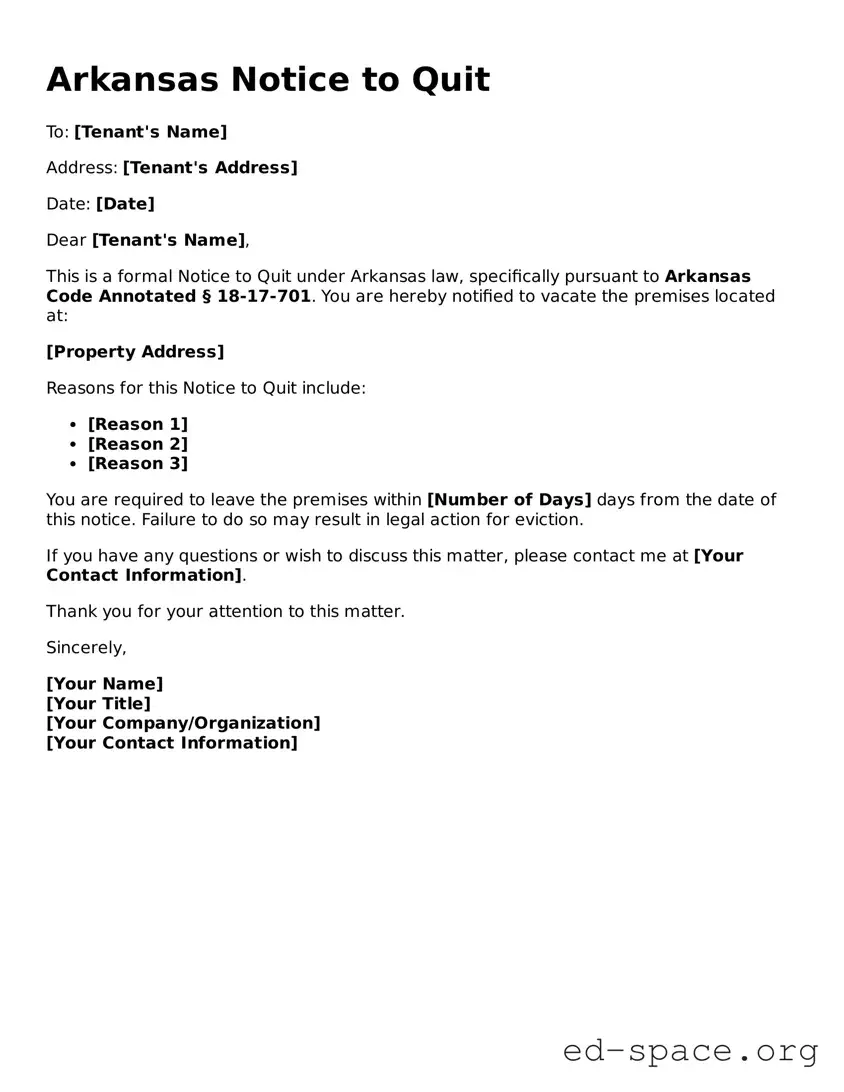
In Arkansas, the Notice to Quit form plays a crucial role in the landlord-tenant relationship, serving as a formal communication tool that initiates the process of eviction. This document is typically issued when a tenant has violated the terms of their lease agreement, such as failing to pay rent or engaging in illegal activities on the property. The form outlines the specific reasons for the eviction and provides the tenant with a clear timeframe to vacate the premises, which is usually set at a minimum of 10 days. It is important for landlords to ensure that the notice is properly filled out and delivered, as any mistakes can lead to delays or complications in the eviction process. Additionally, tenants must understand their rights and the implications of receiving such a notice, as it can significantly impact their housing situation. By adhering to the legal requirements associated with the Notice to Quit, both parties can navigate this challenging situation more effectively.
Arkansas Notice to Quit
To: [Tenant's Name]
Address: [Tenant's Address]
Date: [Date]
Dear [Tenant's Name],
This is a formal Notice to Quit under Arkansas law, specifically pursuant to Arkansas Code Annotated § 18-17-701. You are hereby notified to vacate the premises located at:
[Property Address]
Reasons for this Notice to Quit include:
You are required to leave the premises within [Number of Days] days from the date of this notice. Failure to do so may result in legal action for eviction.
If you have any questions or wish to discuss this matter, please contact me at [Your Contact Information].
Thank you for your attention to this matter.
Sincerely,
[Your Name]
[Your Title]
[Your Company/Organization]
[Your Contact Information]
| Fact Name | Details |
|---|---|
| Purpose | The Arkansas Notice to Quit form is used to inform a tenant that they must vacate the rental property. |
| Governing Law | This form is governed by the Arkansas Code Annotated § 18-17-701. |
| Delivery Method | The notice can be delivered in person, via certified mail, or by posting it on the property. |
| Notice Period | Typically, the notice period is at least 30 days, depending on the lease agreement and reason for eviction. |
| Contents Required | The form must include the tenant's name, the address of the rental property, and the reason for eviction. |
| Tenant's Rights | Tenants have the right to contest the eviction in court if they believe the notice is unjust. |
| Landlord's Responsibility | Landlords must ensure that the notice complies with state laws to avoid legal complications. |
| Timeframe for Action | After serving the notice, landlords may file for eviction if the tenant does not vacate within the specified time. |
| Legal Assistance | Both landlords and tenants may seek legal advice to understand their rights and obligations related to the notice. |
After obtaining the Arkansas Notice to Quit form, you will need to complete it accurately. This form is essential for notifying a tenant about the need to vacate the premises. Ensure all information is correct to avoid any delays in the process.
What is the Arkansas Notice to Quit form?
The Arkansas Notice to Quit form is a legal document used by landlords to inform tenants that they must vacate the rental property. This notice is typically issued when a tenant has violated the terms of the lease agreement or has not paid rent. It serves as a formal request for the tenant to leave the premises within a specified time frame.
When should a landlord use the Notice to Quit?
A landlord should use the Notice to Quit when a tenant fails to comply with lease terms, such as non-payment of rent, lease violations, or engaging in illegal activities on the property. This notice is often the first step in the eviction process.
How long does a tenant have to respond to a Notice to Quit?
The time frame for a tenant to respond to a Notice to Quit can vary based on the reason for the notice. Generally, tenants may have anywhere from 3 to 30 days to vacate the property, depending on state laws and the specific circumstances of the lease violation.
Is the Notice to Quit required by law?
In Arkansas, issuing a Notice to Quit is not always legally required, but it is strongly recommended. Providing this notice gives tenants an opportunity to remedy the situation or prepare for relocation, which can help prevent further legal complications.
What information must be included in the Notice to Quit?
The Notice to Quit should include the tenant's name, the address of the rental property, the reason for the notice, and the date by which the tenant must vacate. It is also advisable to include the landlord's contact information and any relevant lease details.
Can a tenant contest a Notice to Quit?
Yes, a tenant can contest a Notice to Quit. If the tenant believes the notice is unjust or that they have not violated the lease terms, they may choose to respond in writing or seek legal counsel. Ultimately, if the matter escalates, it may lead to a court hearing.
What happens if a tenant does not leave by the deadline?
If a tenant does not vacate the property by the deadline specified in the Notice to Quit, the landlord may proceed with the eviction process. This typically involves filing an unlawful detainer action in court to seek legal possession of the property.
Can a Notice to Quit be delivered electronically?
In Arkansas, a Notice to Quit can be delivered in person, by mail, or potentially through electronic means, such as email. However, it is crucial to ensure that the delivery method complies with state laws and that the tenant receives the notice in a timely manner.
What should a landlord do after issuing a Notice to Quit?
After issuing a Notice to Quit, a landlord should keep a copy of the notice for their records. They should also monitor the tenant's response and prepare for the next steps, which may include filing for eviction if the tenant does not comply.
Are there any local regulations that affect the Notice to Quit?
Yes, local regulations may impact the Notice to Quit process. Landlords should familiarize themselves with any city or county ordinances that may impose additional requirements or protections for tenants. Consulting with a local attorney can provide clarity on these matters.
Incomplete Tenant Information: One common mistake is failing to provide all required details about the tenant. This includes their full name, address, and any other identifying information. Omitting these details can lead to confusion and delays in the process.
Incorrect Date: The date on which the notice is issued is crucial. If it’s incorrect or missing, it can invalidate the notice. Always double-check that the date is accurate and clearly written.
Improper Grounds for Termination: It's essential to specify the reasons for the notice. Failing to provide valid grounds, such as non-payment of rent or lease violations, can render the notice ineffective. Be clear and concise about the reasons.
Not Following State Requirements: Each state has specific laws regarding eviction notices. Ignoring Arkansas's requirements, such as the notice period or delivery method, can lead to legal complications. Familiarize yourself with these regulations to ensure compliance.
Failure to Sign the Notice: A notice that isn’t signed by the landlord or their authorized agent is not valid. Always make sure to include a signature, as this confirms the authenticity of the document.
When dealing with rental agreements and potential evictions in Arkansas, several documents may accompany the Notice to Quit form. Each of these forms serves a specific purpose and can help clarify the situation for both landlords and tenants. Below is a list of commonly used documents in this context.
Understanding these documents can aid both landlords and tenants in navigating the complexities of rental agreements and eviction processes. Each form plays a crucial role in ensuring that all parties are aware of their rights and responsibilities.
When filling out the Arkansas Notice to Quit form, there are important guidelines to follow. Below is a list of things you should and shouldn't do to ensure the process goes smoothly.
Things You Should Do:
Things You Shouldn't Do:
Misconceptions about the Arkansas Notice to Quit form can lead to confusion for both landlords and tenants. Here are five common misconceptions clarified:
The Notice to Quit is not an eviction notice. It serves as a preliminary step, informing the tenant that they must vacate the premises. An eviction notice follows if the tenant does not comply.
A Notice to Quit can only be issued for specific reasons, such as non-payment of rent or lease violations. It is not a blanket notice for any dissatisfaction with the tenant.
While personal delivery is an option, the Notice to Quit can also be sent via certified mail. This provides a documented way to ensure the tenant receives the notice.
The Notice to Quit must specify a time frame within which the tenant must vacate the property. This period varies depending on the reason for the notice.
The tenant is not required to leave immediately upon receiving the Notice to Quit. They have the specified time frame to respond or vacate the premises before further legal action is taken.
When it comes to the Arkansas Notice to Quit form, understanding its importance and proper usage is essential for both landlords and tenants. Here are some key takeaways:
By following these takeaways, you can navigate the Notice to Quit process with confidence and clarity.