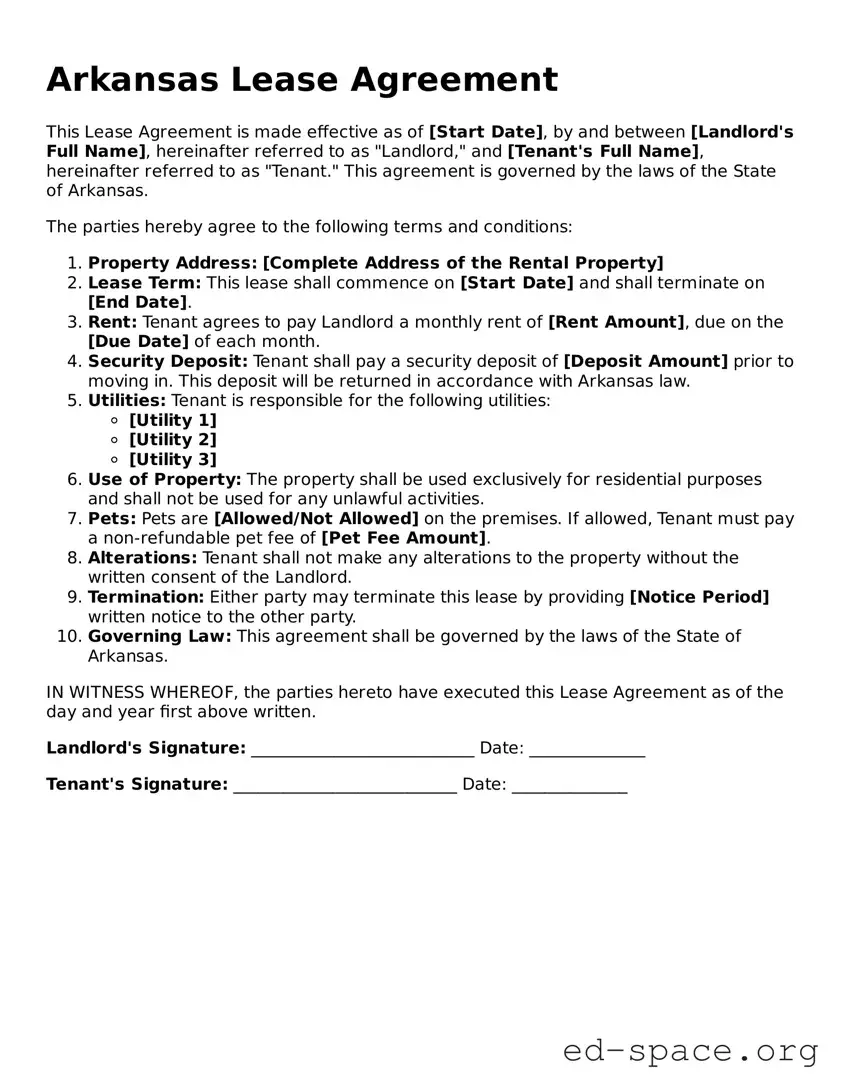
The Arkansas Lease Agreement form serves as a vital document in the rental process, establishing clear terms between landlords and tenants. This form outlines the rights and responsibilities of both parties, ensuring that expectations are set from the outset. Key elements typically included are the duration of the lease, rental payment details, security deposit requirements, and maintenance obligations. Additionally, it addresses important issues such as late fees, property rules, and termination conditions. By using this standardized form, both landlords and tenants can minimize disputes and foster a more harmonious rental experience. Understanding the nuances of this agreement is crucial for anyone involved in a rental transaction in Arkansas.
Arkansas Lease Agreement
This Lease Agreement is made effective as of [Start Date], by and between [Landlord's Full Name], hereinafter referred to as "Landlord," and [Tenant's Full Name], hereinafter referred to as "Tenant." This agreement is governed by the laws of the State of Arkansas.
The parties hereby agree to the following terms and conditions:
IN WITNESS WHEREOF, the parties hereto have executed this Lease Agreement as of the day and year first above written.
Landlord's Signature: ___________________________ Date: ______________
Tenant's Signature: ___________________________ Date: ______________
| Fact Name | Details |
|---|---|
| Governing Law | Arkansas Code Annotated § 18-16-101 et seq. |
| Parties Involved | The agreement is between the landlord (lessor) and the tenant (lessee). |
| Property Description | The lease must clearly describe the rental property, including the address. |
| Lease Duration | Specify the length of the lease, whether it's month-to-month or for a fixed term. |
| Rent Payment | The form should outline the amount of rent, payment due date, and accepted payment methods. |
| Security Deposit | Arkansas law allows landlords to collect a security deposit, typically one month's rent. |
| Maintenance Responsibilities | Clearly state who is responsible for property maintenance and repairs. |
| Termination Notice | Specify the notice period required for termination of the lease by either party. |
Once you have the Arkansas Lease Agreement form ready, you will need to provide specific information to ensure that both the landlord and tenant are protected under the terms of the lease. Follow these steps carefully to complete the form accurately.
After completing these steps, review the form to ensure all information is accurate. Both parties should retain a copy for their records.
What is an Arkansas Lease Agreement form?
An Arkansas Lease Agreement form is a legal document that outlines the terms and conditions under which a landlord agrees to rent property to a tenant. This form typically includes details such as the rental amount, duration of the lease, responsibilities of both parties, and other pertinent information related to the tenancy.
What are the key components of an Arkansas Lease Agreement?
The key components of an Arkansas Lease Agreement typically include the names of the landlord and tenant, property address, lease term, rent amount, security deposit details, maintenance responsibilities, and provisions for termination or renewal of the lease. Additional clauses may address pets, utilities, and alterations to the property.
Is a written lease required in Arkansas?
How long is a typical lease term in Arkansas?
Lease terms in Arkansas can vary widely. They may be short-term (such as month-to-month) or long-term (usually one year). The specific duration should be clearly stated in the lease agreement, as it impacts the rights and responsibilities of both parties.
Can a landlord raise the rent during the lease term?
A landlord cannot raise the rent during the lease term unless the lease agreement specifically allows for such an increase. If the lease is month-to-month, the landlord may increase the rent by providing proper notice to the tenant, typically 30 days in advance.
What happens if a tenant wants to terminate the lease early?
If a tenant wishes to terminate the lease early, they should review the lease agreement for any clauses regarding early termination. Many leases include penalties or require a notice period. Communication with the landlord is essential to discuss potential options or negotiate an agreement.
What rights do tenants have under Arkansas law?
Tenants in Arkansas have several rights, including the right to a habitable living environment, the right to privacy, and the right to be free from discrimination. Additionally, tenants have the right to receive proper notice before eviction and to have their security deposit returned within a specified timeframe after moving out.
Can a landlord evict a tenant without cause in Arkansas?
In Arkansas, a landlord may terminate a month-to-month lease without cause by providing the tenant with a written notice, typically 30 days in advance. However, if the tenant has a fixed-term lease, the landlord must have a valid reason, such as a breach of lease terms, to initiate eviction proceedings.
What should be done if a lease agreement is violated?
If a lease agreement is violated, the affected party should first document the violation and communicate with the other party to seek a resolution. If the issue remains unresolved, legal action may be necessary, depending on the nature of the violation and the terms of the lease.
Where can I obtain an Arkansas Lease Agreement form?
An Arkansas Lease Agreement form can be obtained from various sources, including online legal document providers, real estate offices, or local housing authorities. It is important to ensure that the form complies with Arkansas laws and is tailored to the specific rental situation.
Failing to include the full names of all tenants. It's crucial to list everyone who will be living in the rental unit to avoid future disputes.
Not specifying the lease term. Clearly stating the start and end dates of the lease helps both parties understand their obligations.
Overlooking rent payment details. Be sure to include the amount of rent, due dates, and acceptable payment methods to prevent confusion.
Ignoring security deposit terms. Clearly outline the amount, conditions for its return, and any deductions that may apply.
Not addressing maintenance responsibilities. Specify who is responsible for repairs and maintenance to avoid misunderstandings later.
Failing to include pet policies. If pets are allowed, outline any restrictions or additional fees to ensure clarity for both parties.
Leaving out termination clauses. Include the conditions under which either party can terminate the lease to protect everyone involved.
Not providing contact information. Ensure that both landlord and tenant have updated contact details for communication throughout the lease.
Neglecting to clarify subletting rules. If subletting is allowed or prohibited, it should be clearly stated to avoid potential issues.
Failing to read the entire agreement before signing. Taking the time to review every section can prevent future disputes and misunderstandings.
When entering into a lease agreement in Arkansas, several additional forms and documents may be necessary to ensure clarity and legal compliance. These documents serve various purposes, from outlining specific terms to providing necessary disclosures. Below is a list of commonly used forms that often accompany the Arkansas Lease Agreement.
Utilizing these documents in conjunction with the Arkansas Lease Agreement can help clarify the responsibilities and expectations of both landlords and tenants. It is essential to ensure that all forms are completed accurately and retained for future reference to foster a positive rental experience.
Rental Agreement: Similar to a lease agreement, a rental agreement outlines the terms of renting a property. However, it typically covers a shorter duration, often on a month-to-month basis, providing flexibility for both the landlord and tenant.
Sublease Agreement: This document allows a tenant to rent out their leased property to another individual. It mirrors a lease agreement in terms of responsibilities and rights, but it involves multiple parties.
Commercial Lease Agreement: Used for business properties, this type of lease agreement details the terms of renting commercial space. Like residential leases, it specifies the duration, rent, and responsibilities of both parties but often includes additional clauses relevant to business operations.
Roommate Agreement: When multiple tenants share a rental unit, a roommate agreement can clarify each person’s responsibilities. It is similar to a lease in that it outlines terms and conditions but focuses on shared living arrangements.
Lease Option Agreement: This document gives tenants the option to purchase the property at the end of the lease term. It combines elements of a lease with a purchase agreement, providing both rental terms and a potential sale price.
Real Estate Purchase Agreement: While primarily focused on buying a property, this agreement shares similarities with lease agreements in that it outlines the terms of the transaction, including price, contingencies, and responsibilities.
Property Management Agreement: This document establishes the relationship between a property owner and a management company. It details the management company’s responsibilities, similar to how a lease outlines tenant and landlord obligations.
Tenancy Agreement: Often used interchangeably with lease agreements, a tenancy agreement sets forth the terms under which a tenant occupies a property. It covers duration, rent, and other conditions, much like a lease.
When filling out the Arkansas Lease Agreement form, it is crucial to approach the task with care and attention to detail. Here are some important dos and don'ts to consider:
By following these guidelines, you can help ensure a smoother leasing process and avoid potential misunderstandings in the future.
Understanding lease agreements is crucial for both landlords and tenants. However, there are several misconceptions about the Arkansas Lease Agreement form that can lead to confusion. Below are seven common misunderstandings:
This is incorrect. While many lease agreements share common elements, each one can vary significantly based on the specific terms negotiated between the landlord and tenant.
Many people believe that a verbal agreement is enough to establish a lease. However, written agreements provide clear documentation and are often necessary for legal enforcement.
In Arkansas, security deposits can be refundable, depending on the terms outlined in the lease. Landlords must return deposits unless there are damages or unpaid rent.
This misconception overlooks the fact that lease agreements can also be used for short-term rentals, such as month-to-month agreements or vacation rentals.
While landlords do have rights to access the property, they typically must provide notice to tenants before entering, except in emergencies.
While many terms can be negotiated, some aspects, such as local laws and regulations, must be adhered to and cannot be changed.
This is not entirely true. While a lease is a binding agreement, both parties can agree to amend it. Any changes should be documented in writing.
Being aware of these misconceptions can help both landlords and tenants navigate the leasing process more effectively.
When it comes to filling out and using the Arkansas Lease Agreement form, there are several important points to keep in mind. Here are some key takeaways to help you navigate the process smoothly:
By keeping these key points in mind, both landlords and tenants can create a more effective and clear lease agreement, fostering a better rental experience.