The Arkansas Homeschool Letter of Intent form is a crucial document for families looking to educate their children at home. This form serves as an official notification to the local school district of a parent's intention to homeschool. It requires essential information, including the names and ages of the children being homeschooled, as well as the address of the family's residence. By submitting this letter, parents affirm their commitment to providing a structured educational environment outside of traditional schooling. The form also plays a vital role in ensuring compliance with state regulations, allowing families to navigate the homeschooling process smoothly. Understanding the requirements and implications of this document is essential for any parent considering homeschooling in Arkansas, as it sets the foundation for a successful educational journey tailored to their child's unique needs.
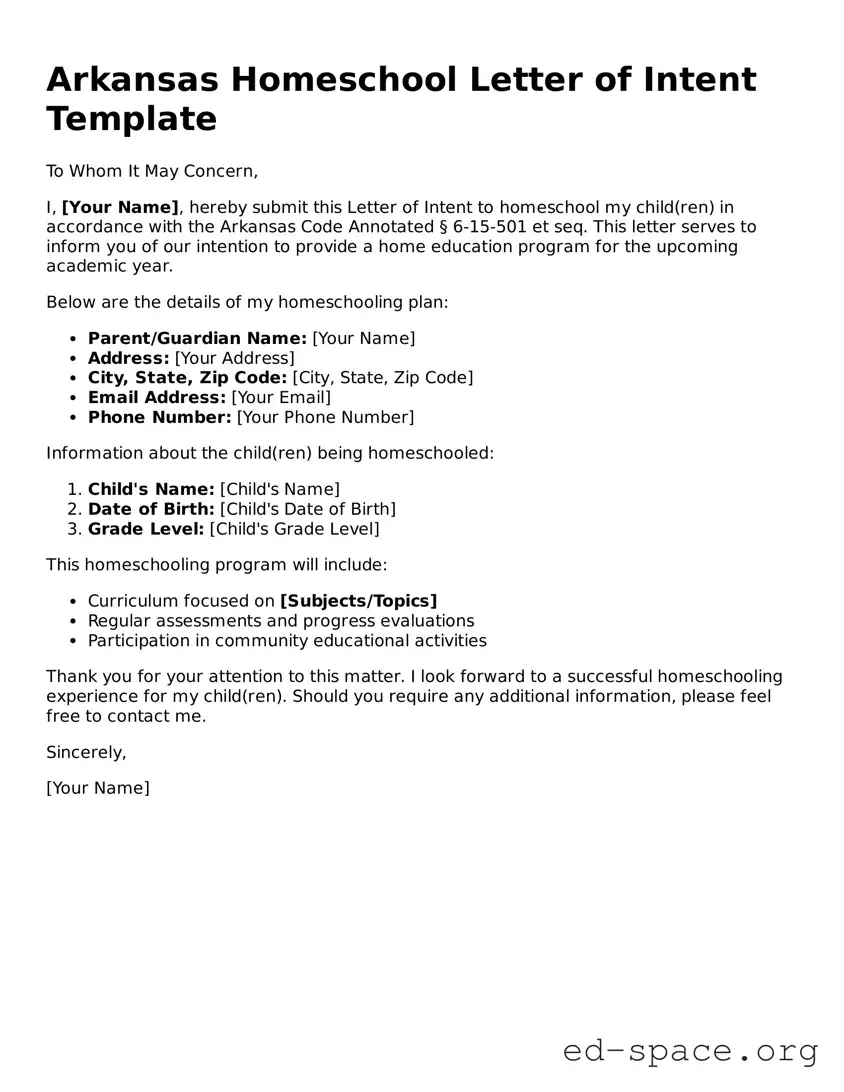
Arkansas Homeschool Letter of Intent Template
To Whom It May Concern,
I, [Your Name], hereby submit this Letter of Intent to homeschool my child(ren) in accordance with the Arkansas Code Annotated § 6-15-501 et seq. This letter serves to inform you of our intention to provide a home education program for the upcoming academic year.
Below are the details of my homeschooling plan:
Information about the child(ren) being homeschooled:
This homeschooling program will include:
Thank you for your attention to this matter. I look forward to a successful homeschooling experience for my child(ren). Should you require any additional information, please feel free to contact me.
Sincerely,
[Your Name]
| Fact Name | Description |
|---|---|
| Governing Law | The Arkansas Homeschool Letter of Intent is governed by Arkansas Code Annotated § 6-15-503. |
| Purpose | This form notifies the local school district of the intent to homeschool a child. |
| Who Needs to File | Parents or guardians of children ages 5 to 17 must file this form if they choose to homeschool. |
| Submission Deadline | The form must be submitted by August 15th for the upcoming school year. |
| Required Information | It requires the child's name, age, and address, along with the name of the parent or guardian. |
| Frequency of Filing | The letter must be filed annually, even if the child continues to be homeschooled. |
| Changes in Intent | If a family decides to stop homeschooling, they must notify the school district in writing. |
| Additional Requirements | Homeschooling families must also comply with other state regulations regarding curriculum and assessments. |
Once you have your Arkansas Homeschool Letter of Intent form ready, you will need to fill it out completely. This form is important for notifying the state about your decision to homeschool your child. Follow these steps carefully to ensure that all necessary information is included.
What is the Arkansas Homeschool Letter of Intent form?
The Arkansas Homeschool Letter of Intent is a formal document that parents or guardians must submit to notify the state of their decision to homeschool their children. This letter serves as an official declaration of intent to provide home education and must be filed with the local school district. It is essential to complete this step to comply with state regulations regarding homeschooling.
Who needs to submit the Letter of Intent?
Any parent or guardian who wishes to homeschool their child in Arkansas must submit the Letter of Intent. This requirement applies to all children aged 5 to 17 who are not enrolled in a public or private school. It is crucial to ensure that the letter is submitted before the beginning of the school year or within 14 days of withdrawing a child from a traditional school setting.
What information is required on the Letter of Intent?
The Letter of Intent must include specific information such as the names and ages of the children being homeschooled, the address of the residence, and the name of the parent or guardian responsible for the education. Additionally, it is advisable to provide a brief overview of the educational plan or curriculum intended for use. This information helps local school officials understand your commitment to providing a quality education at home.
What are the consequences of not submitting the Letter of Intent?
Failing to submit the Letter of Intent can lead to legal complications. The state may consider the child truant if the letter is not filed, which can result in penalties or fines. Moreover, parents may face challenges in accessing educational resources or support services available to homeschoolers. To avoid these issues, it is vital to ensure that the Letter of Intent is submitted in a timely manner and in accordance with state guidelines.
Incomplete Information: Many individuals fail to provide all required details, such as the names and ages of the children being homeschooled. Omitting this information can lead to delays or rejection of the application.
Incorrect Formatting: Some people do not follow the specified format for the letter. This includes not using the correct headings or failing to sign the document. Proper formatting is essential for clarity.
Missing Signatures: A common mistake is neglecting to sign the form. Both parents or guardians should ensure their signatures are included where required to validate the intent.
Late Submission: Submitting the letter after the deadline can result in complications. It is crucial to be aware of the timeline and submit the form promptly to avoid issues with homeschooling eligibility.
When you decide to homeschool in Arkansas, submitting the Homeschool Letter of Intent is just the first step. Along with this letter, there are several other forms and documents that can help streamline your homeschooling journey. Below is a list of essential documents that you may need to consider.
By preparing these documents alongside your Homeschool Letter of Intent, you can create a comprehensive approach to your child's education. This not only meets legal requirements but also enhances the learning experience for both you and your child.
Filling out the Arkansas Homeschool Letter of Intent form can be a straightforward process if you keep a few key points in mind. Here’s a list of things to do and avoid as you prepare your submission.
By following these guidelines, you can ensure a smooth process in declaring your intent to homeschool in Arkansas.
When it comes to homeschooling in Arkansas, there are several misconceptions about the Letter of Intent form that can lead to confusion. Understanding the truth behind these myths can help parents make informed decisions about their homeschooling journey.
Many parents believe that the Letter of Intent requires extensive legal knowledge or complicated paperwork. In reality, the form is straightforward and designed to be user-friendly.
Some think that they can choose whether or not to submit this form. However, in Arkansas, it is a requirement to officially begin homeschooling.
While it is common to submit the form at the start of the academic year, parents can submit it at any time if they choose to begin homeschooling mid-year.
Some parents fear that once they submit the form, they are locked into homeschooling. In fact, families can withdraw from homeschooling at any time and return to traditional schooling if they wish.
There is a belief that only first-time homeschoolers need to submit this form. However, even families who have homeschooled previously must submit a new Letter of Intent if they decide to continue homeschooling in a new school year.
Filling out the Arkansas Homeschool Letter of Intent form is a crucial step for families looking to homeschool their children. Here are some key takeaways to consider:
By keeping these key points in mind, you can successfully complete and utilize the Arkansas Homeschool Letter of Intent form, paving the way for a fulfilling homeschooling experience.