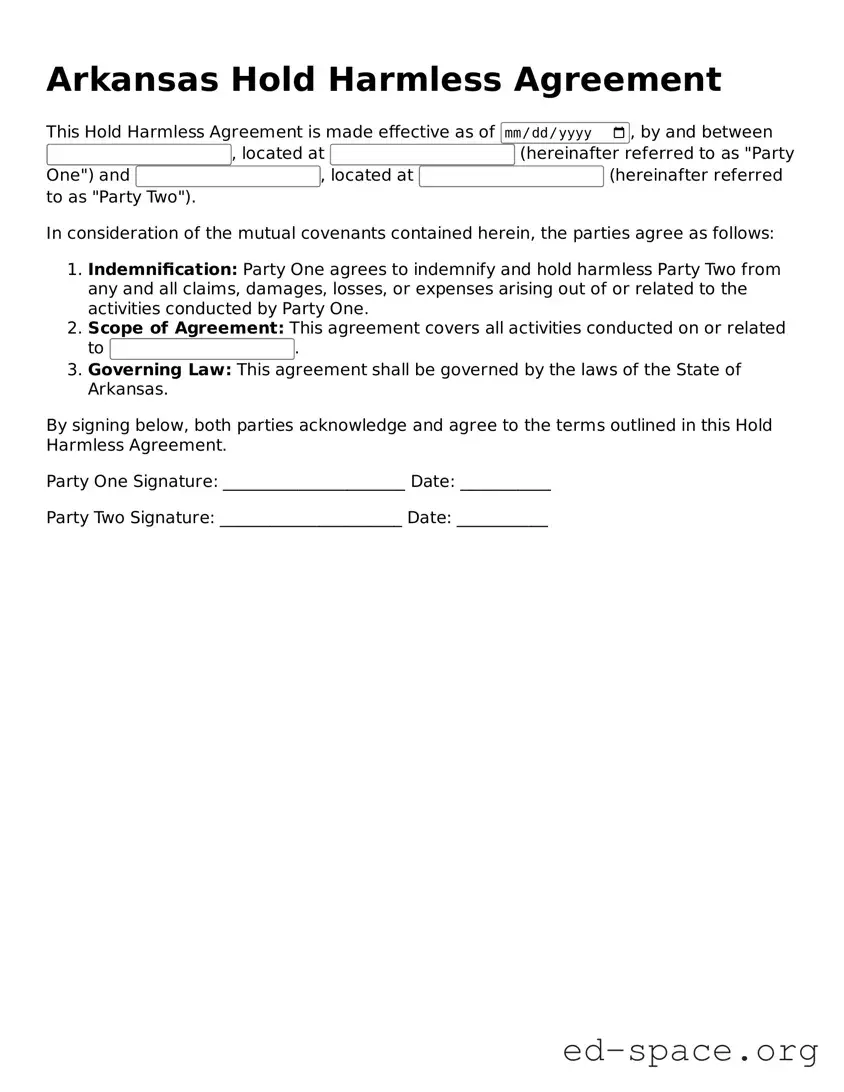
In the state of Arkansas, the Hold Harmless Agreement form serves a crucial role in protecting individuals and organizations from liability in various situations. This agreement outlines the responsibilities of parties involved, ensuring that one party agrees to assume the risk of certain activities, thereby shielding the other party from legal claims or damages that may arise. Typically utilized in contexts such as events, construction projects, or recreational activities, the form requires clear identification of the parties and a detailed description of the activities covered. Additionally, it often includes provisions regarding indemnification, which means that one party will compensate the other for any losses incurred. By understanding the components and implications of this agreement, individuals can make informed decisions and foster safer environments for all involved. Properly executed, the Hold Harmless Agreement can offer peace of mind, allowing parties to engage in activities with reduced fear of potential legal repercussions.
Arkansas Hold Harmless Agreement
This Hold Harmless Agreement is made effective as of , by and between , located at (hereinafter referred to as "Party One") and , located at (hereinafter referred to as "Party Two").
In consideration of the mutual covenants contained herein, the parties agree as follows:
By signing below, both parties acknowledge and agree to the terms outlined in this Hold Harmless Agreement.
Party One Signature: ______________________ Date: ___________
Party Two Signature: ______________________ Date: ___________
| Fact Name | Details |
|---|---|
| Definition | An Arkansas Hold Harmless Agreement is a legal document that protects one party from liability for certain actions or events. |
| Purpose | The agreement is used to ensure that one party will not hold another party responsible for damages or injuries. |
| Common Uses | These agreements are often used in rental agreements, contractor agreements, and event planning. |
| Governing Laws | The agreement is governed by the laws of the State of Arkansas, particularly under Arkansas Code Annotated § 4-86-101. |
| Enforceability | For the agreement to be enforceable, it must be clear, specific, and voluntarily signed by both parties. |
| Limitations | It cannot protect a party from liability due to gross negligence or willful misconduct. |
| Signatures | Both parties must sign the agreement for it to be valid and enforceable. |
| Legal Advice | It is advisable to consult with a legal professional before drafting or signing the agreement. |
Completing the Arkansas Hold Harmless Agreement form is an important step in ensuring that all parties involved understand their responsibilities and liabilities. Once the form is filled out correctly, it can be submitted to the appropriate entity for processing. Here’s how to fill out the form step by step.
What is a Hold Harmless Agreement in Arkansas?
A Hold Harmless Agreement is a legal document that protects one party from liability or claims that may arise from the actions or negligence of another party. In Arkansas, this agreement is often used in various contexts, such as rental agreements, event planning, and contractor agreements. It essentially shifts the risk of legal responsibility from one party to another, ensuring that the party providing the service or event is not held liable for any damages or injuries that may occur.
Who typically uses a Hold Harmless Agreement?
Hold Harmless Agreements are commonly utilized by businesses, property owners, and event organizers. For example, if a venue is rented for a wedding, the venue owner may require the couple to sign this agreement to protect themselves from any claims that might arise during the event. Similarly, contractors may ask clients to sign a Hold Harmless Agreement before starting work on a project.
What should be included in a Hold Harmless Agreement?
An effective Hold Harmless Agreement should clearly outline the responsibilities of both parties. Key elements often include the identification of the parties involved, a description of the activities covered by the agreement, and specific language that indicates which party is assuming the risk of liability. Additionally, it should include a statement that the party signing the agreement understands the risks involved.
Is a Hold Harmless Agreement legally binding in Arkansas?
Yes, a Hold Harmless Agreement can be legally binding in Arkansas, provided that it is properly executed. This means that both parties must agree to the terms, and the agreement should be signed and dated. However, courts may not enforce certain clauses if they are deemed unreasonable or if they attempt to waive liability for gross negligence or willful misconduct.
Can a Hold Harmless Agreement be modified after it is signed?
Yes, a Hold Harmless Agreement can be modified, but both parties must agree to the changes. It is advisable to document any modifications in writing and have both parties sign the revised agreement. This ensures clarity and helps prevent disputes in the future.
Are there any limitations to a Hold Harmless Agreement?
While Hold Harmless Agreements can provide significant protection, they do have limitations. They typically cannot protect against gross negligence or intentional misconduct. Additionally, the enforceability of certain clauses may vary depending on state laws and public policy considerations. It is essential to consult with a legal professional to understand the specific limitations in your situation.
How can one ensure the Hold Harmless Agreement is enforceable?
To ensure that a Hold Harmless Agreement is enforceable, it is important to draft it clearly and include all necessary elements. Both parties should fully understand the terms before signing. It may also be beneficial to have the agreement reviewed by a legal professional to confirm that it complies with Arkansas laws and adequately protects the interests of both parties.
Failing to provide accurate personal information. It is essential to include correct names, addresses, and contact details. Inaccuracies can lead to complications in the agreement's enforcement.
Not understanding the scope of the agreement. Some individuals may not fully grasp what they are agreeing to, which can result in unexpected liabilities. It is important to read the entire document carefully before signing.
Overlooking the date of the agreement. Omitting the date can create confusion regarding the timeline of the agreement's validity. Always ensure that the date is clearly indicated.
Neglecting to have witnesses or notarization, if required. Some agreements may need a witness or a notary to be legally binding. Failing to include these elements can invalidate the agreement.
When entering into agreements that involve liability, various documents can complement the Arkansas Hold Harmless Agreement. Each of these forms serves a specific purpose and helps clarify the responsibilities and expectations of the parties involved. Below is a list of commonly used forms that may accompany the Hold Harmless Agreement.
Understanding these documents can help individuals and organizations navigate potential risks associated with various activities. Each form plays a vital role in defining responsibilities and protecting parties from unforeseen circumstances. When used in conjunction with the Arkansas Hold Harmless Agreement, they create a comprehensive framework for managing liability and ensuring clarity in agreements.
A Hold Harmless Agreement is a useful legal document that protects one party from liability for certain actions or events. There are several other documents that serve similar purposes, each with its own nuances. Here’s a look at nine documents that share similarities with a Hold Harmless Agreement:
When filling out the Arkansas Hold Harmless Agreement form, it’s important to follow certain guidelines to ensure accuracy and compliance. Here are four things you should and shouldn't do:
When discussing the Arkansas Hold Harmless Agreement, several misconceptions often arise. These misunderstandings can lead to confusion about the purpose and implications of the agreement. Here are four common misconceptions:
Understanding these misconceptions can help individuals and organizations navigate the complexities of liability and risk management more effectively.
When dealing with the Arkansas Hold Harmless Agreement form, keep these key takeaways in mind: