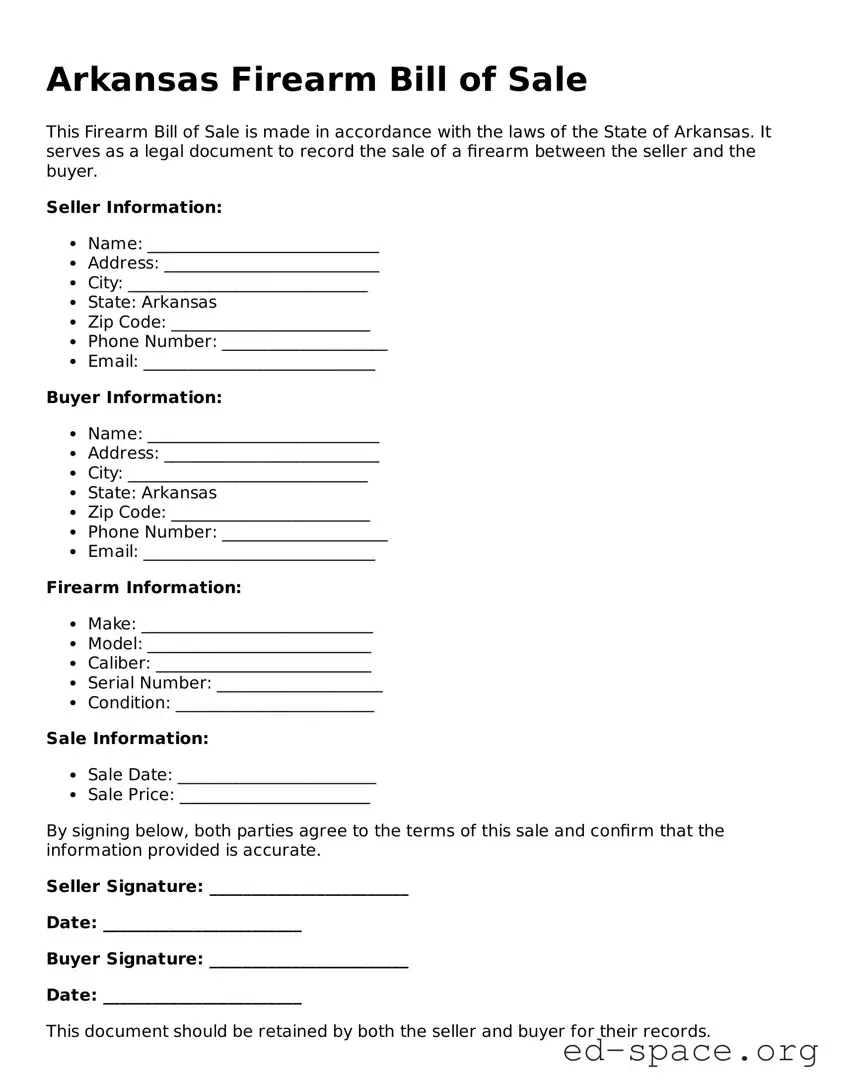
The Arkansas Firearm Bill of Sale form serves as an essential document for individuals engaging in the private sale or transfer of firearms within the state. This form outlines the details of the transaction, including the names and addresses of both the buyer and seller, as well as the specific firearm being transferred, which must be described with precision. Important information such as the make, model, caliber, and serial number of the firearm is included to ensure clarity and prevent any potential disputes in the future. Additionally, the form often requires both parties to affirm that they are legally eligible to buy and sell firearms, adhering to state and federal laws. By documenting the transaction in this manner, both the buyer and seller can protect their interests and maintain a clear record of ownership, which is vital in the event of any legal inquiries or concerns. The form not only facilitates a smooth transfer but also promotes responsible firearm ownership and accountability among individuals in the community.
Arkansas Firearm Bill of Sale
This Firearm Bill of Sale is made in accordance with the laws of the State of Arkansas. It serves as a legal document to record the sale of a firearm between the seller and the buyer.
Seller Information:
Buyer Information:
Firearm Information:
Sale Information:
By signing below, both parties agree to the terms of this sale and confirm that the information provided is accurate.
Seller Signature: ________________________
Date: ________________________
Buyer Signature: ________________________
Date: ________________________
This document should be retained by both the seller and buyer for their records.
| Fact Name | Description |
|---|---|
| Purpose | The Arkansas Firearm Bill of Sale form is used to document the sale or transfer of a firearm between private parties. |
| Governing Law | This form is governed by Arkansas Code Annotated § 5-73-101, which outlines firearm ownership and transfer regulations. |
| Parties Involved | The form requires the names and addresses of both the seller and the buyer to ensure clear identification of the parties involved. |
| Firearm Description | A detailed description of the firearm being sold is necessary. This includes the make, model, caliber, and serial number. |
| Purchase Price | The agreed-upon purchase price must be stated in the form to provide a record of the transaction. |
| Signatures | Both the seller and buyer must sign the form to validate the sale. Their signatures confirm that both parties agree to the terms outlined. |
| Witness Requirement | While not mandatory, having a witness sign the form can add an extra layer of legitimacy to the transaction. |
| Record Keeping | It is advisable for both parties to keep a copy of the completed Bill of Sale for their records, in case of future disputes. |
| Legal Age | Both the seller and buyer must be of legal age to own a firearm in Arkansas, which is typically 18 years old. |
Filling out the Arkansas Firearm Bill of Sale form is a straightforward process that ensures both the buyer and seller have a clear record of the transaction. Once completed, this document can serve as proof of ownership and transfer, providing peace of mind for both parties involved.
Once you have filled out the form, it's important to keep it in a safe place. It can be helpful for future reference or in case any questions arise about the sale down the line.
What is an Arkansas Firearm Bill of Sale?
An Arkansas Firearm Bill of Sale is a legal document that records the sale or transfer of a firearm between two parties. It serves as proof of the transaction and includes important details about the firearm, the buyer, and the seller.
Is a Bill of Sale required for firearm transactions in Arkansas?
No, Arkansas law does not require a Bill of Sale for private firearm transactions. However, it is highly recommended to have one. This document can provide protection for both the buyer and the seller by clearly outlining the terms of the sale and proving ownership.
What information should be included in the Bill of Sale?
The Bill of Sale should include the names and addresses of both the buyer and the seller, a description of the firearm (including make, model, caliber, and serial number), the date of the transaction, and the purchase price. Both parties should sign the document to validate the transaction.
Can I create my own Bill of Sale?
Yes, you can create your own Bill of Sale. There are templates available online that you can customize to fit your needs. Just ensure that all required information is included and that both parties sign the document.
Do I need to notarize the Bill of Sale?
Notarization is not required in Arkansas for a Bill of Sale to be valid. However, having the document notarized can add an extra layer of authenticity and may be beneficial if any disputes arise in the future.
What if the firearm is a gift?
If you are gifting a firearm, it is still advisable to complete a Bill of Sale. This document can help clarify the transfer of ownership and protect both parties in case of any future legal issues.
Are there any restrictions on who can buy or sell a firearm in Arkansas?
Yes, certain individuals are prohibited from purchasing or possessing firearms, including convicted felons, individuals with restraining orders, and those adjudicated as mentally incompetent. It’s essential for sellers to verify the eligibility of buyers before completing a transaction.
How long should I keep the Bill of Sale?
It is recommended to keep the Bill of Sale for as long as you own the firearm. If you sell or transfer the firearm in the future, you should retain the document as part of your records for potential legal reference.
What should I do if I lose my Bill of Sale?
If you lose your Bill of Sale, you may be able to recreate it by contacting the other party involved in the transaction. If you cannot obtain a copy, consider documenting the loss and keeping any other records related to the purchase, such as receipts or emails.
Can I use the Bill of Sale for registering my firearm?
Arkansas does not require firearm registration, so a Bill of Sale is not needed for that purpose. However, it can serve as proof of ownership if you ever need to provide evidence that you legally acquired the firearm.
Incomplete Information: Failing to fill out all required fields can lead to issues down the line. Ensure that every section is completed accurately.
Incorrect Identification: Providing wrong identification details, such as the seller's or buyer's name, can invalidate the document. Double-check all names and addresses.
Missing Signatures: Both parties must sign the form. A missing signature can render the bill of sale ineffective.
Improper Date: Not dating the form correctly can lead to confusion about when the transaction took place. Always include the date of sale.
Failure to Provide a Description: Omitting a detailed description of the firearm, including make, model, and serial number, can create problems in the future.
Not Keeping Copies: Failing to make copies of the completed bill of sale for both parties can lead to disputes later. Always retain a copy for your records.
Ignoring Local Laws: Not being aware of specific local or state laws regarding firearm transactions can result in legal issues. Research the regulations that apply.
Neglecting to Verify Eligibility: Not confirming that the buyer is legally eligible to purchase a firearm can lead to serious legal consequences. Always verify eligibility before completing the sale.
When engaging in the sale or transfer of firearms in Arkansas, several other forms and documents may accompany the Firearm Bill of Sale. These documents help ensure compliance with state and federal laws, protect both parties involved, and provide necessary information regarding the transaction.
Utilizing these documents alongside the Firearm Bill of Sale can help ensure a smooth and legally compliant transaction. It is advisable for both buyers and sellers to familiarize themselves with these forms to safeguard their interests.
The Firearm Bill of Sale form is an important document in the process of transferring ownership of a firearm. It serves as proof of the transaction and can be similar to other documents in various ways. Here are four documents that share similarities with the Firearm Bill of Sale:
When filling out the Arkansas Firearm Bill of Sale form, it's important to follow certain guidelines to ensure a smooth process. Here are six things you should and shouldn't do:
By following these guidelines, you can help ensure that your firearm transaction is handled properly and legally.
When discussing the Arkansas Firearm Bill of Sale form, several misconceptions often arise. Understanding these can help clarify the actual requirements and implications of the form.
Being aware of these misconceptions can help individuals navigate firearm transactions in Arkansas more effectively and responsibly.
Filling out and using the Arkansas Firearm Bill of Sale form is an important process for both buyers and sellers. Here are some key takeaways to keep in mind:
By following these key points, individuals can ensure a smooth and legally compliant firearm transaction in Arkansas.