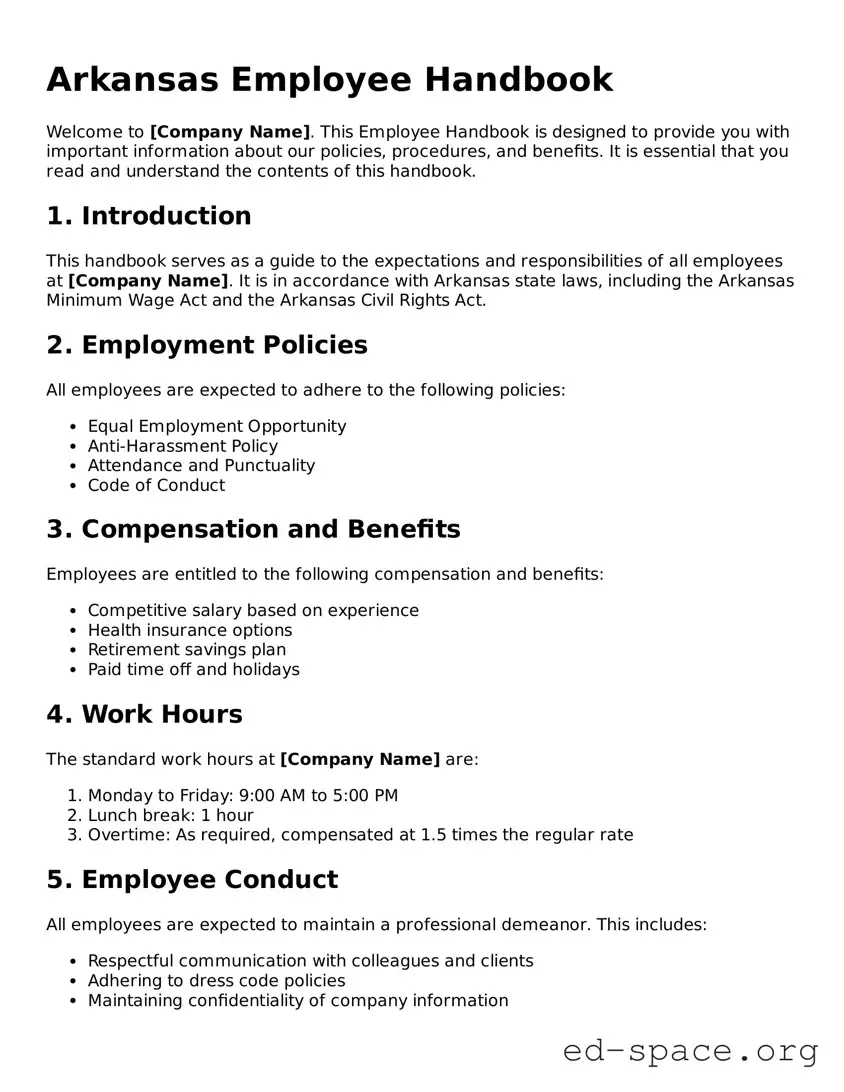
The Arkansas Employee Handbook form serves as a vital resource for both employers and employees, outlining essential workplace policies and procedures. This comprehensive document typically includes sections on employee rights, workplace conduct, and benefits, ensuring that all team members understand their responsibilities and entitlements. It also addresses critical topics such as anti-discrimination policies, safety protocols, and disciplinary actions, fostering a transparent and respectful work environment. By providing clear guidelines, the handbook helps to prevent misunderstandings and promotes a culture of accountability. Employers can customize this form to reflect their specific organizational values and operational needs, making it an indispensable tool for effective human resource management.
Arkansas Employee Handbook
Welcome to [Company Name]. This Employee Handbook is designed to provide you with important information about our policies, procedures, and benefits. It is essential that you read and understand the contents of this handbook.
1. Introduction
This handbook serves as a guide to the expectations and responsibilities of all employees at [Company Name]. It is in accordance with Arkansas state laws, including the Arkansas Minimum Wage Act and the Arkansas Civil Rights Act.
2. Employment Policies
All employees are expected to adhere to the following policies:
3. Compensation and Benefits
Employees are entitled to the following compensation and benefits:
4. Work Hours
The standard work hours at [Company Name] are:
5. Employee Conduct
All employees are expected to maintain a professional demeanor. This includes:
6. Disciplinary Procedures
Failure to comply with company policies may result in disciplinary action, which can include:
7. Acknowledgment
By signing below, you acknowledge that you have received and read the Employee Handbook of [Company Name].
Employee Name: ________________________
Date: ________________________
For any questions regarding this handbook, please contact [HR Contact Information].
| Fact Name | Description |
|---|---|
| Purpose | The Arkansas Employee Handbook form serves as a guide for employees, outlining company policies, procedures, and expectations. |
| Legal Requirement | While not mandated by law, having an employee handbook is highly recommended to ensure compliance with federal and state labor laws. |
| Governing Laws | The handbook should align with the Arkansas Minimum Wage Act and other relevant employment laws to provide accurate guidance. |
| Content Essentials | Key sections typically include anti-discrimination policies, workplace safety guidelines, and procedures for reporting grievances. |
| Updates and Revisions | Regular updates are crucial to reflect changes in laws and company policies, ensuring the handbook remains relevant and useful. |
After gathering the necessary information, you will be ready to fill out the Arkansas Employee Handbook form. This form is essential for ensuring that all employees understand the policies and procedures of the workplace. Follow the steps below to complete the form accurately.
What is the Arkansas Employee Handbook form?
The Arkansas Employee Handbook form is a document that outlines the policies, procedures, and expectations for employees working in Arkansas. It serves as a guide for both employers and employees, ensuring everyone understands their rights and responsibilities in the workplace.
Who needs an Employee Handbook in Arkansas?
Any business operating in Arkansas, regardless of size, can benefit from having an Employee Handbook. It helps establish clear guidelines for employees and can protect the employer from potential legal issues by ensuring compliance with state and federal laws.
What should be included in the Employee Handbook?
The Employee Handbook should cover a variety of topics, including company policies, employee rights, workplace expectations, disciplinary procedures, and benefits. It should also include information on anti-discrimination policies, safety protocols, and leave policies.
Is it mandatory to have an Employee Handbook in Arkansas?
While it is not legally required to have an Employee Handbook in Arkansas, it is highly recommended. Having a handbook can help clarify policies and reduce misunderstandings between employees and management.
How often should the Employee Handbook be updated?
The Employee Handbook should be reviewed and updated regularly, especially when there are changes in laws or company policies. It is a good practice to review the handbook at least once a year to ensure all information is current and accurate.
Can employees suggest changes to the Employee Handbook?
Yes, employees can and should be encouraged to provide feedback on the Employee Handbook. Their input can help improve the document and ensure it meets the needs of everyone in the workplace.
How should the Employee Handbook be distributed?
The Employee Handbook can be distributed in various ways, including printed copies or digital formats. It’s important that all employees receive a copy and acknowledge that they have read and understood the handbook.
What should employees do if they have questions about the Employee Handbook?
If employees have questions about the Employee Handbook, they should reach out to their supervisor or the HR department. Open communication is key to ensuring everyone understands the policies and procedures outlined in the handbook.
What happens if an employee violates a policy in the Employee Handbook?
If an employee violates a policy, the consequences will depend on the severity of the violation and the company’s disciplinary procedures. Actions can range from a verbal warning to termination, depending on the circumstances.
Is legal advice needed when creating an Employee Handbook?
While it is not strictly necessary to seek legal advice when creating an Employee Handbook, it is highly advisable. Consulting with a legal professional can help ensure that the handbook complies with all applicable laws and regulations.
Incomplete Information: Many individuals forget to fill out all required fields. This can lead to delays in processing the form.
Incorrect Personal Details: Some people may provide outdated or incorrect personal information, such as their address or phone number. This can cause communication issues.
Missing Signatures: A common mistake is neglecting to sign the form. Without a signature, the form is not considered valid.
Not Reading the Handbook: Failing to review the employee handbook before signing can lead to misunderstandings about company policies and expectations.
Ignoring Deadlines: Some individuals submit their forms late. This can affect their employment status or benefits.
Failure to Ask Questions: Many people do not seek clarification on confusing sections. This can result in incorrect interpretations of the policies.
The Arkansas Employee Handbook serves as a vital resource for employees and employers, outlining workplace policies, procedures, and expectations. Alongside this handbook, various other documents are commonly utilized to enhance employee understanding of their rights and responsibilities. Below is a list of forms and documents often used in conjunction with the Arkansas Employee Handbook.
These documents play an essential role in maintaining clear communication between employers and employees. They help establish expectations and protect the rights of all parties involved in the employment relationship.
Policy Manual: Like an employee handbook, a policy manual outlines the rules and regulations of the workplace. It serves as a comprehensive guide for employees, detailing company policies on various topics such as attendance, dress code, and workplace behavior.
Employee Orientation Guide: This document is similar to the employee handbook in that it provides new hires with essential information about the company. It often includes an overview of company culture, values, and expectations, helping employees acclimate to their new environment.
Code of Conduct: A code of conduct sets forth the ethical standards and behavioral expectations for employees. Much like the employee handbook, it aims to promote a positive work environment and outlines the consequences of violating these standards.
Safety Manual: This document focuses specifically on workplace safety protocols. Similar to an employee handbook, it provides guidelines that help ensure a safe working environment and outlines procedures for reporting hazards or incidents.
Benefits Guide: A benefits guide details the various employee benefits offered by the company, such as health insurance, retirement plans, and paid time off. It complements the employee handbook by providing specific information on employee entitlements and how to access them.
Training Manual: A training manual is used to educate employees on specific job-related skills and procedures. Like the employee handbook, it serves as a resource for employees to refer to as they develop their capabilities within the organization.
Performance Review Guide: This document outlines the process for evaluating employee performance. It is similar to the employee handbook in that it sets expectations for performance and provides guidance on how reviews will be conducted, including criteria and timelines.
When filling out the Arkansas Employee Handbook form, keep these tips in mind to ensure a smooth process.
By following these guidelines, you can ensure that your form is completed correctly and efficiently.
Many people have misunderstandings about the Arkansas Employee Handbook form. Here are six common misconceptions:
Some believe that having an Employee Handbook is not necessary. However, it serves as an important guide for both employers and employees, outlining policies and expectations.
Each handbook should be tailored to the specific needs and culture of the organization. A one-size-fits-all approach can lead to confusion and miscommunication.
While the handbook provides written guidelines, it should not replace open dialogue between management and staff. Regular communication is vital for a healthy workplace.
Policies and regulations can change. Regularly reviewing and updating the handbook ensures that it remains relevant and compliant with current laws.
It is crucial for employees to familiarize themselves with the handbook. Understanding company policies can help prevent misunderstandings and promote a positive work environment.
While the handbook can provide some legal protection, it does not guarantee immunity from all lawsuits. Proper implementation and adherence to the policies are equally important.
When filling out and using the Arkansas Employee Handbook form, there are several important points to keep in mind. Understanding these key takeaways can help ensure that the handbook serves its intended purpose effectively.
By focusing on these key aspects, employers can create a comprehensive and effective Employee Handbook that benefits both the organization and its employees.