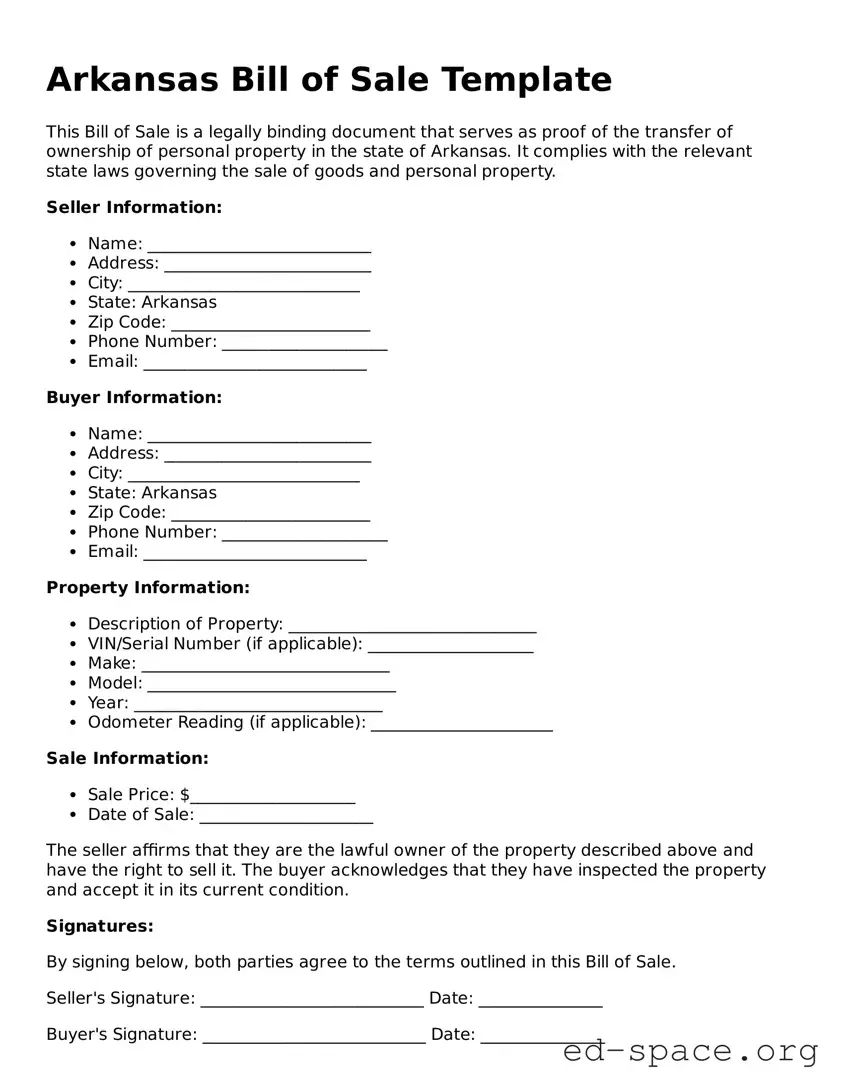
When it comes to buying or selling personal property in Arkansas, having a Bill of Sale form is essential for both parties involved. This document serves as a written record of the transaction, outlining key details such as the names and addresses of the buyer and seller, a description of the item being sold, and the agreed-upon purchase price. Not only does it help protect the interests of both parties, but it also provides proof of ownership transfer. Whether you’re dealing with a vehicle, a piece of furniture, or any other item of value, using a Bill of Sale ensures that everyone is on the same page and can help prevent misunderstandings down the line. Additionally, it may be required for certain transactions to register the property or for tax purposes. Understanding how to properly fill out this form can save you time and trouble, making it a vital step in any sale. In this article, we’ll explore the key components of the Arkansas Bill of Sale form and why it’s important for a smooth transaction.
Arkansas Bill of Sale Template
This Bill of Sale is a legally binding document that serves as proof of the transfer of ownership of personal property in the state of Arkansas. It complies with the relevant state laws governing the sale of goods and personal property.
Seller Information:
Buyer Information:
Property Information:
Sale Information:
The seller affirms that they are the lawful owner of the property described above and have the right to sell it. The buyer acknowledges that they have inspected the property and accept it in its current condition.
Signatures:
By signing below, both parties agree to the terms outlined in this Bill of Sale.
Seller's Signature: ___________________________ Date: _______________
Buyer's Signature: ___________________________ Date: _______________
This document is effective as of the date signed by both parties. It is advisable to keep a copy for your records.
| Fact Name | Details |
|---|---|
| Purpose | The Arkansas Bill of Sale form serves as a legal document that records the transfer of ownership of personal property from one party to another. |
| Governing Law | This form is governed by Arkansas Code Annotated § 18-28-101, which outlines the requirements for a valid bill of sale. |
| Types of Property | The form can be used for various types of personal property, including vehicles, boats, and equipment, among others. |
| Signature Requirement | Both the seller and buyer must sign the Bill of Sale for it to be legally binding, ensuring that both parties agree to the terms of the sale. |
After obtaining the Arkansas Bill of Sale form, you will need to complete it accurately to ensure a smooth transaction. This form serves as a record of the sale and includes essential details about the buyer, seller, and the item being sold. Follow these steps carefully to fill out the form correctly.
Once you have completed the form, ensure that both parties retain a copy for their records. This document will serve as proof of the transaction and can be useful for future reference.
What is a Bill of Sale in Arkansas?
A Bill of Sale is a legal document that serves as proof of the transfer of ownership of personal property from one person to another. In Arkansas, it is commonly used for transactions involving vehicles, boats, and other valuable items. This document outlines the details of the sale, including the identities of the buyer and seller, a description of the item, and the purchase price.
Is a Bill of Sale required in Arkansas?
What information should be included in an Arkansas Bill of Sale?
An effective Bill of Sale should include several key pieces of information. This includes the full names and addresses of both the buyer and seller, a detailed description of the item being sold (such as make, model, and VIN for vehicles), the purchase price, and the date of the transaction. It’s also wise to include any warranties or conditions related to the sale.
Can I create my own Bill of Sale?
Yes, you can create your own Bill of Sale in Arkansas. There are no specific forms mandated by the state, so you have the flexibility to draft one that meets your needs. However, ensure that it includes all necessary details to avoid any disputes in the future. Many templates are available online that can guide you in creating a comprehensive document.
Do I need to have the Bill of Sale notarized?
Notarization is not required for a Bill of Sale in Arkansas. However, having the document notarized can add an extra layer of security and authenticity. It may be particularly beneficial if there are any potential disputes or if you wish to ensure that the transaction is legally binding.
What if the item being sold has a lien?
If the item being sold has a lien, it is crucial to address this before completing the sale. The seller should provide proof that the lien has been satisfied, or the buyer may want to ensure that the lien will be released upon payment. Failing to do so can lead to complications for the buyer down the line, including potential repossession of the item.
How does a Bill of Sale affect taxes?
In Arkansas, a Bill of Sale can impact tax responsibilities. For vehicle sales, the buyer is typically responsible for paying sales tax based on the purchase price listed in the Bill of Sale. It’s important to keep this document, as it may be required when registering the vehicle with the state and paying any associated taxes.
What should I do if I lose my Bill of Sale?
If you lose your Bill of Sale, it can be challenging but not impossible to recover from the situation. If you have a copy or any records of the transaction, that can help. You may also consider drafting a new Bill of Sale, referencing the original transaction details. If necessary, consult with a legal professional for guidance on how to proceed.
Can I use a Bill of Sale for a gift?
Yes, a Bill of Sale can be used for a gift, although it may not be necessary. If you are transferring ownership of an item as a gift, you can still document the transaction with a Bill of Sale. This can help clarify the intent and protect both parties, especially if the item has significant value.
Failing to include complete buyer and seller information. Both parties must provide their full names and addresses.
Not accurately describing the item being sold. A detailed description, including make, model, and VIN for vehicles, is essential.
Omitting the date of sale. This date is crucial for establishing the timeline of the transaction.
Forgetting to include the purchase price. Clearly stating the amount helps prevent disputes later.
Neglecting to sign the form. Both the buyer and seller must sign to validate the transaction.
Using incorrect or outdated form versions. Always ensure you are using the latest version of the Bill of Sale form.
Not checking for required witnesses or notarization. Depending on the item, additional verification may be necessary.
Leaving out additional terms or conditions. If there are specific agreements, they should be documented in the form.
Filling out the form in pencil. Use a pen to ensure the information remains permanent and legible.
Not keeping a copy of the completed form. Both parties should retain a copy for their records.
When completing a transaction involving the purchase or sale of personal property in Arkansas, several documents may accompany the Bill of Sale form. Each of these documents serves a specific purpose, ensuring that both parties are protected and the transaction is properly documented.
Having these documents prepared and organized can streamline the transaction process. They provide clarity and protection for both the buyer and the seller, ensuring a smooth exchange of property.
The Bill of Sale form is an essential document in various transactions, particularly when it comes to the sale of personal property. Several other documents serve similar purposes in different contexts. Here are four documents that share similarities with the Bill of Sale:
Understanding these documents can help individuals navigate transactions more effectively, ensuring that their rights and responsibilities are clearly defined.
When filling out the Arkansas Bill of Sale form, it's important to follow certain guidelines to ensure the document is valid and clear. Here are five things you should and shouldn't do:
By following these tips, you can ensure that your Bill of Sale is properly completed and serves its purpose effectively.
When dealing with the Arkansas Bill of Sale form, several misconceptions can arise. Understanding these can help ensure that transactions are completed smoothly and legally. Here are four common misconceptions:
Many people believe that a Bill of Sale is only required for expensive items, such as vehicles or real estate. In reality, a Bill of Sale can be beneficial for any transfer of ownership, regardless of the item's value. It provides proof of the transaction and protects both the buyer and seller.
Some individuals think that a Bill of Sale is merely a formality and lacks legal weight. However, when properly completed and signed, it serves as a legal document that can be enforced in court. It clearly outlines the terms of the sale, protecting both parties involved.
Many assume that a verbal agreement is enough to finalize a sale. While verbal agreements can be valid, they are often difficult to prove if disputes arise. A written Bill of Sale provides clear evidence of the terms agreed upon, which can be crucial in case of misunderstandings.
Some people think that only specific items, like cars or boats, need a Bill of Sale. In fact, any item that is being sold can benefit from this document. Whether it’s furniture, electronics, or collectibles, a Bill of Sale helps clarify ownership and transaction details.
When engaging in a transaction involving the sale of personal property in Arkansas, understanding the Bill of Sale form is crucial. Here are some key takeaways to keep in mind:
By keeping these key points in mind, individuals can navigate the process of completing and using the Arkansas Bill of Sale form more effectively, ensuring a smoother transaction experience.