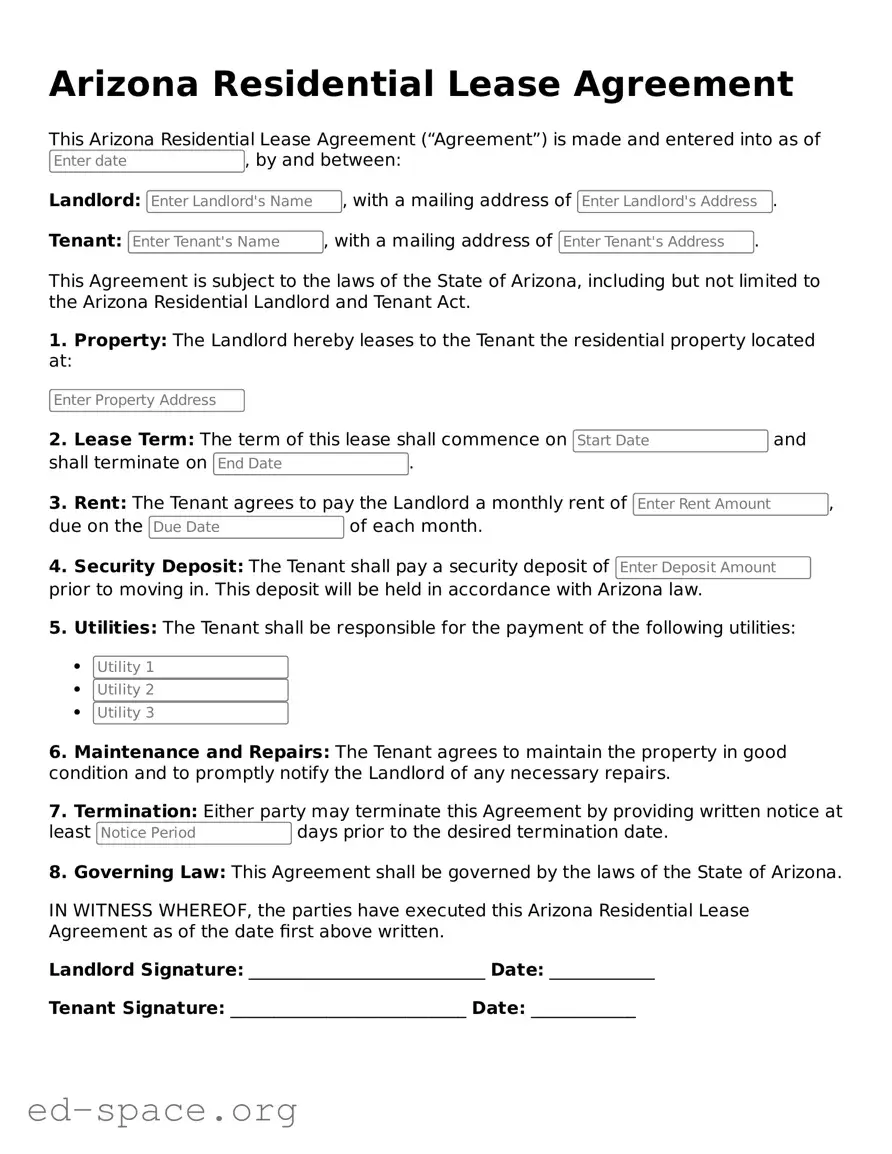
The Arizona Residential Lease Agreement form serves as a crucial document for landlords and tenants entering into a rental arrangement in the state. This form outlines the terms and conditions of the lease, ensuring that both parties understand their rights and responsibilities. Key aspects include the duration of the lease, rental payment details, and security deposit requirements. Additionally, it addresses maintenance obligations, rules regarding pets, and procedures for terminating the lease. By clearly defining these elements, the agreement helps to prevent misunderstandings and disputes during the rental period. Furthermore, it may also include provisions for late fees, utilities, and any specific regulations that apply to the property. Overall, the Arizona Residential Lease Agreement is designed to protect the interests of both landlords and tenants while fostering a clear and respectful rental relationship.
Arizona Residential Lease Agreement
This Arizona Residential Lease Agreement (“Agreement”) is made and entered into as of , by and between:
Landlord: , with a mailing address of .
Tenant: , with a mailing address of .
This Agreement is subject to the laws of the State of Arizona, including but not limited to the Arizona Residential Landlord and Tenant Act.
1. Property: The Landlord hereby leases to the Tenant the residential property located at:
2. Lease Term: The term of this lease shall commence on and shall terminate on .
3. Rent: The Tenant agrees to pay the Landlord a monthly rent of , due on the of each month.
4. Security Deposit: The Tenant shall pay a security deposit of prior to moving in. This deposit will be held in accordance with Arizona law.
5. Utilities: The Tenant shall be responsible for the payment of the following utilities:
6. Maintenance and Repairs: The Tenant agrees to maintain the property in good condition and to promptly notify the Landlord of any necessary repairs.
7. Termination: Either party may terminate this Agreement by providing written notice at least days prior to the desired termination date.
8. Governing Law: This Agreement shall be governed by the laws of the State of Arizona.
IN WITNESS WHEREOF, the parties have executed this Arizona Residential Lease Agreement as of the date first above written.
Landlord Signature: ___________________________ Date: ____________
Tenant Signature: ___________________________ Date: ____________
| Fact Name | Description |
|---|---|
| Governing Law | The Arizona Residential Lease Agreement is governed by Arizona state laws, particularly Title 33 of the Arizona Revised Statutes. |
| Parties Involved | The lease agreement involves at least two parties: the landlord (lessor) and the tenant (lessee). |
| Property Description | The agreement must clearly identify the rental property, including the address and any specific unit number. |
| Lease Duration | The lease can be for a fixed term (e.g., one year) or a month-to-month basis, as specified in the agreement. |
| Rent Payment | The lease should state the amount of rent, the due date, and the acceptable methods of payment. |
| Security Deposit | Landlords may require a security deposit, which must comply with Arizona law regarding maximum amounts and return timelines. |
| Maintenance Responsibilities | The agreement outlines responsibilities for property maintenance, specifying what the landlord and tenant must handle. |
| Termination Conditions | Conditions for terminating the lease, including notice periods and reasons for eviction, must be clearly defined. |
Filling out the Arizona Residential Lease Agreement form is an essential step in establishing a clear understanding between landlords and tenants. Completing this form accurately helps both parties know their rights and responsibilities. Here’s how to fill it out step-by-step.
What is an Arizona Residential Lease Agreement?
An Arizona Residential Lease Agreement is a legal document that outlines the terms and conditions under which a landlord rents property to a tenant. This agreement includes details such as the rental amount, duration of the lease, security deposit requirements, and rules regarding the use of the property. It serves to protect both parties by clearly defining their rights and responsibilities.
What are the key components of the lease agreement?
Key components of an Arizona Residential Lease Agreement typically include the names of the landlord and tenant, property address, lease term (length of rental), rent amount and payment due dates, security deposit details, maintenance responsibilities, and any rules regarding pets or alterations to the property. Additionally, it may outline procedures for terminating the lease.
How long is a typical lease term in Arizona?
Lease terms in Arizona can vary widely. They often range from six months to one year, but month-to-month agreements are also common. The specific duration should be clearly stated in the lease agreement to avoid any confusion later on.
What happens if the tenant wants to break the lease early?
If a tenant wishes to break the lease early, they may face penalties as outlined in the agreement. Typically, the tenant must provide written notice to the landlord. Depending on the lease terms, the tenant might be responsible for paying rent until a new tenant is found or until the lease officially ends. It’s crucial to read the lease carefully to understand the consequences of breaking it.
Are there specific laws governing lease agreements in Arizona?
Yes, Arizona has specific laws that govern residential lease agreements. These laws cover various aspects, including security deposits, eviction procedures, and the rights of tenants and landlords. Familiarizing oneself with these regulations can help ensure compliance and protect both parties' interests.
What should a tenant do if they have a dispute with their landlord?
If a tenant has a dispute with their landlord, the first step is to communicate directly with the landlord to try to resolve the issue. If that does not work, the tenant may consider mediation or seeking assistance from local housing authorities. In some cases, legal action may be necessary, but it is often best to explore all other options first.
Can a landlord increase rent during a lease term?
Generally, a landlord cannot increase rent during the lease term unless the lease agreement specifically allows for it. Rent increases typically take effect only after the lease has expired. However, for month-to-month leases, landlords can usually raise rent with proper notice, often 30 days in advance.
What are the security deposit rules in Arizona?
In Arizona, landlords can charge a security deposit, which is usually equivalent to one and a half times the monthly rent. The landlord must return the security deposit within 14 days after the tenant moves out, minus any deductions for damages or unpaid rent. It's important for both parties to document the property's condition at move-in and move-out to avoid disputes.
Incorrect Dates: Many people forget to enter the correct start and end dates for the lease. This can lead to confusion about when the lease actually begins and ends.
Missing Signatures: It’s essential for both the landlord and tenant to sign the agreement. Failing to include signatures can render the lease invalid.
Not Specifying Rent Amount: Some individuals forget to clearly state the monthly rent amount. This omission can cause disputes later on.
Ignoring Security Deposit Details: The lease should outline the amount of the security deposit and the conditions for its return. Omitting this information can lead to misunderstandings.
Neglecting Maintenance Responsibilities: It's important to specify who is responsible for maintenance and repairs. Leaving this out can create tension between landlords and tenants.
Failure to Include Pet Policies: If pets are allowed or not, this should be clearly stated. Not addressing pet policies can lead to issues if a tenant brings a pet unexpectedly.
Inadequate Description of the Property: A detailed description of the rental property is necessary. Vague descriptions can lead to confusion about what is being rented.
When entering into a residential lease agreement in Arizona, several other forms and documents may be beneficial to ensure a smooth rental experience. These documents provide clarity and protection for both landlords and tenants. Below is a list of commonly used forms that accompany the Arizona Residential Lease Agreement.
Using these documents in conjunction with the Arizona Residential Lease Agreement can help both landlords and tenants navigate their rental relationship more effectively. Each form plays a critical role in establishing clear expectations and protecting the interests of both parties.
When filling out the Arizona Residential Lease Agreement form, it is important to follow certain guidelines to ensure clarity and legality. Here are some dos and don'ts to consider:
When it comes to the Arizona Residential Lease Agreement form, several misconceptions can lead to confusion for both landlords and tenants. Understanding these myths can help clarify the leasing process and ensure that all parties are on the same page.
While it is highly recommended to have a written lease for clarity and legal protection, verbal agreements can also be binding in Arizona. However, proving the terms of a verbal agreement can be challenging, making a written lease the safer option.
Not all residential leases in Arizona have automatic renewal clauses. Many leases are for a fixed term, and once that term ends, the lease may require renewal or renegotiation. It’s essential to read the lease terms carefully to understand renewal conditions.
In Arizona, security deposits are generally refundable, provided the tenant leaves the property in good condition. Landlords can only withhold amounts for specific reasons, such as unpaid rent or damages beyond normal wear and tear.
Breaking a lease in Arizona can have significant consequences, including financial penalties. Tenants should be aware of the terms outlined in their lease regarding early termination and any associated fees or responsibilities.
Understanding the Arizona Residential Lease Agreement form is essential for both landlords and tenants. Here are some key takeaways that can help ensure a smooth leasing process: