In Arizona, engaging in various activities—whether recreational, athletic, or professional—often comes with inherent risks. To address these risks, individuals and organizations frequently utilize a Release of Liability form. This document serves as a crucial tool for protecting against potential legal claims arising from injuries or damages that may occur during an activity. By signing this form, participants acknowledge the risks involved and agree to relinquish their right to sue for any injuries sustained, thereby providing a layer of protection for organizers and facilitators. The form typically outlines the specific activities covered, the responsibilities of all parties involved, and any potential hazards associated with the activity. It is essential for anyone considering participation in high-risk activities in Arizona to understand the implications of this form, as it plays a significant role in promoting safety while also delineating legal boundaries. Understanding how to properly use and interpret the Release of Liability can help individuals make informed decisions and ensure that their rights are protected.
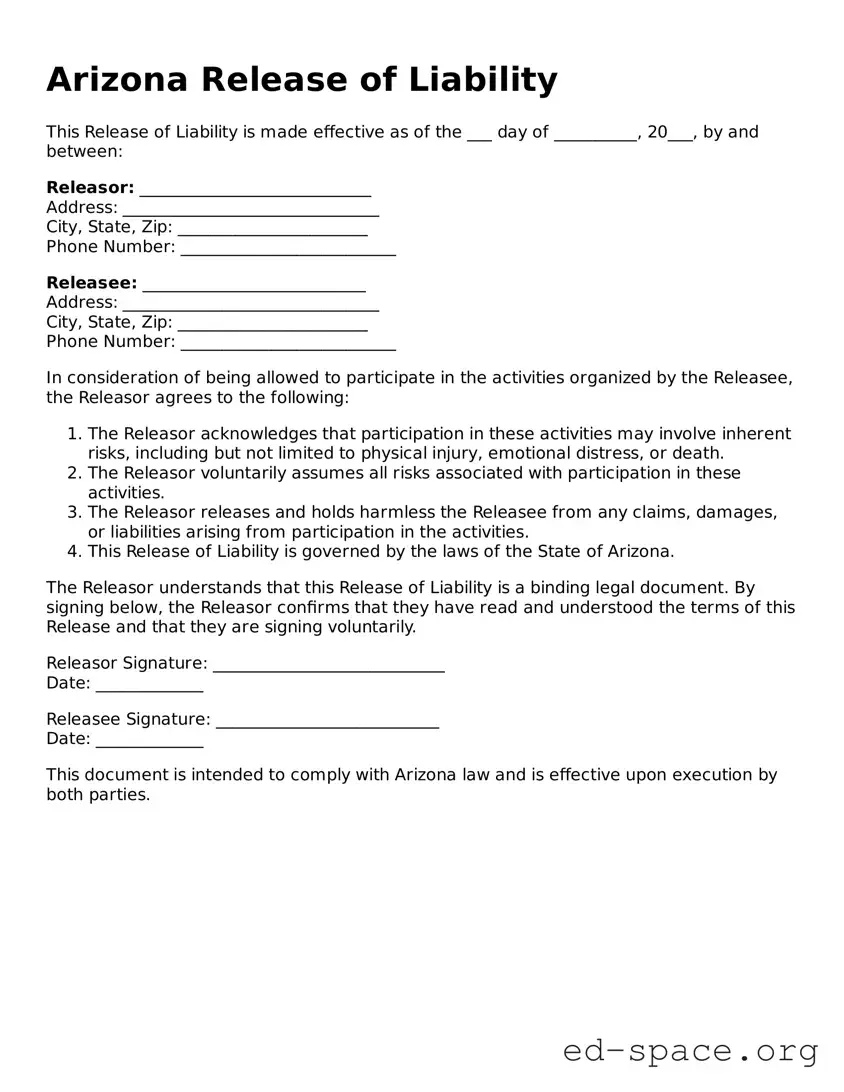
Arizona Release of Liability
This Release of Liability is made effective as of the ___ day of __________, 20___, by and between:
Releasor: ____________________________
Address: _______________________________
City, State, Zip: _______________________
Phone Number: __________________________
Releasee: ___________________________
Address: _______________________________
City, State, Zip: _______________________
Phone Number: __________________________
In consideration of being allowed to participate in the activities organized by the Releasee, the Releasor agrees to the following:
The Releasor understands that this Release of Liability is a binding legal document. By signing below, the Releasor confirms that they have read and understood the terms of this Release and that they are signing voluntarily.
Releasor Signature: ____________________________
Date: _____________
Releasee Signature: ___________________________
Date: _____________
This document is intended to comply with Arizona law and is effective upon execution by both parties.
| Fact Name | Description |
|---|---|
| Purpose | The Arizona Release of Liability form is designed to protect organizations and individuals from legal claims arising from injuries or damages that occur during activities. |
| Governing Law | This form is governed by Arizona state law, specifically under statutes related to liability waivers and personal injury claims. |
| Voluntary Agreement | Participants must voluntarily sign the form, indicating their understanding and acceptance of the risks involved in the activity. |
| Enforceability | For the release to be enforceable, it must be clear, specific, and not against public policy. |
| Limitations | The form does not protect against gross negligence or intentional misconduct by the party seeking the release. |
Completing the Arizona Release of Liability form is an essential step in ensuring that all parties involved understand the terms and conditions of the release. This form typically requires clear and accurate information to be valid. Follow these steps carefully to fill out the form correctly.
What is an Arizona Release of Liability form?
The Arizona Release of Liability form is a legal document designed to protect individuals or organizations from being held liable for injuries or damages that may occur during specific activities. By signing this form, participants acknowledge the risks involved and agree not to hold the organizers or property owners responsible for any accidents or injuries that may arise. This form is commonly used in recreational activities, events, and even some professional settings.
Who should use a Release of Liability form?
Any individual or organization that hosts activities where there is a potential risk of injury should consider using a Release of Liability form. This includes sports organizations, event planners, recreational facilities, and even private individuals hosting gatherings. By having participants sign this form, hosts can help mitigate their risk of legal claims related to injuries or accidents.
Is a Release of Liability form legally binding in Arizona?
Yes, a properly drafted and executed Release of Liability form is generally considered legally binding in Arizona, provided it meets certain requirements. The form must clearly outline the risks involved, be signed voluntarily by the participant, and not contain any language that is deemed unconscionable or misleading. It is advisable to consult with a legal professional to ensure the form complies with state laws and adequately protects the interests of the parties involved.
Can a minor sign a Release of Liability form?
Minors cannot legally enter into contracts, including a Release of Liability form, without parental or guardian consent. Therefore, if a minor is participating in an activity that requires a Release of Liability, a parent or guardian must sign the form on their behalf. This ensures that the minor is covered while also protecting the organization or individual hosting the event.
What happens if someone gets injured despite signing the form?
Even with a signed Release of Liability form, there are circumstances where a party may still be held liable for injuries. If negligence can be proven, such as failing to maintain safe conditions or providing inadequate supervision, the release may not protect the party from legal claims. Each situation is unique, and courts will consider the specifics of the case when determining liability.
How can I obtain a Release of Liability form for my event?
Obtaining a Release of Liability form is relatively straightforward. Many templates are available online that can be customized for specific activities. However, it is crucial to ensure that any form used complies with Arizona laws and adequately addresses the risks associated with the event. Consulting with a legal professional is recommended to create a tailored document that meets all necessary legal requirements.
Not Reading the Form Carefully: Many individuals rush through the Release of Liability form without fully understanding its contents. This can lead to unintentional acceptance of terms that may not be favorable.
Failing to Provide Complete Information: Omitting necessary details, such as names, addresses, or dates, can render the form invalid. Ensure that all required fields are filled out accurately.
Ignoring the Legal Implications: Some people underestimate the seriousness of signing a Release of Liability. This document can limit or eliminate your right to seek compensation in case of injury or damage.
Not Seeking Legal Advice: It is common for individuals to sign the form without consulting a lawyer. Legal advice can clarify potential risks and implications associated with the release.
Assuming It Is Standard: Just because a form looks similar to others does not mean the terms are the same. Each Release of Liability can have unique clauses that need careful consideration.
Not Keeping a Copy: After signing the form, individuals often forget to keep a copy for their records. Retaining a copy is essential for future reference and any potential disputes.
The Arizona Release of Liability form is a crucial document for individuals or organizations seeking to protect themselves from legal claims related to injuries or damages. However, it is often used in conjunction with other forms and documents that further clarify responsibilities and expectations. Below are some commonly associated documents.
Using these forms in conjunction with the Arizona Release of Liability can enhance protection and clarity for all parties involved. It is essential to ensure that all documents are completed accurately and understood by participants to minimize potential legal issues.
When filling out the Arizona Release of Liability form, it's essential to approach the process with care. Here are some important dos and don'ts to consider:
The Arizona Release of Liability form is often misunderstood. Here are eight common misconceptions about this important document:
Many people believe that signing a release of liability means that the other party cannot be held responsible for any harm. However, this is not always the case. The form typically protects against ordinary negligence but may not cover gross negligence or willful misconduct.
While commonly associated with sports and recreational activities, release of liability forms can be used in various situations, including business transactions, events, and other activities where risks are involved.
A release of liability may not be enforceable if it is deemed unconscionable or if the signer was under duress or did not have the capacity to understand the document.
Signing a release of liability does not replace the need for insurance. Individuals and businesses should still carry appropriate insurance coverage to protect against potential claims.
While notarization can add an extra layer of validity, it is not a requirement for a release of liability to be legally binding in Arizona.
While templates are available, it is advisable to have a legally sound document drafted or reviewed by a qualified attorney to ensure it meets legal standards and adequately protects the parties involved.
A release of liability typically covers specific risks outlined in the document. It does not automatically protect against all claims, especially those not mentioned or that arise from intentional harm.
In some cases, a release of liability can be revoked if both parties agree or if certain conditions are met. Understanding the terms of the document is crucial.
Being informed about these misconceptions can help individuals and businesses navigate the use of the Arizona Release of Liability form more effectively.
Filling out and using the Arizona Release of Liability form is an important process for individuals and organizations looking to protect themselves from potential legal claims. Here are some key takeaways to keep in mind:
By keeping these points in mind, individuals and organizations can better navigate the complexities of liability waivers in Arizona.