The Arizona Power of Attorney for a Child form serves as a crucial legal document that allows a parent or legal guardian to designate another adult to make decisions on behalf of their minor child. This arrangement can be particularly beneficial in various situations, such as when a parent is temporarily unable to care for their child due to travel, illness, or other commitments. The form outlines the specific powers granted to the appointed individual, which may include making medical decisions, enrolling the child in school, or managing day-to-day care. It is important for the designated agent to understand their responsibilities, as they will be acting in the best interests of the child during the specified period. Furthermore, the form must be signed by the parent or guardian and may need to be notarized to ensure its validity. By understanding the implications and requirements of this Power of Attorney, parents can make informed decisions that prioritize the welfare of their children while ensuring legal protections are in place.
Arizona Power of Attorney for a Child
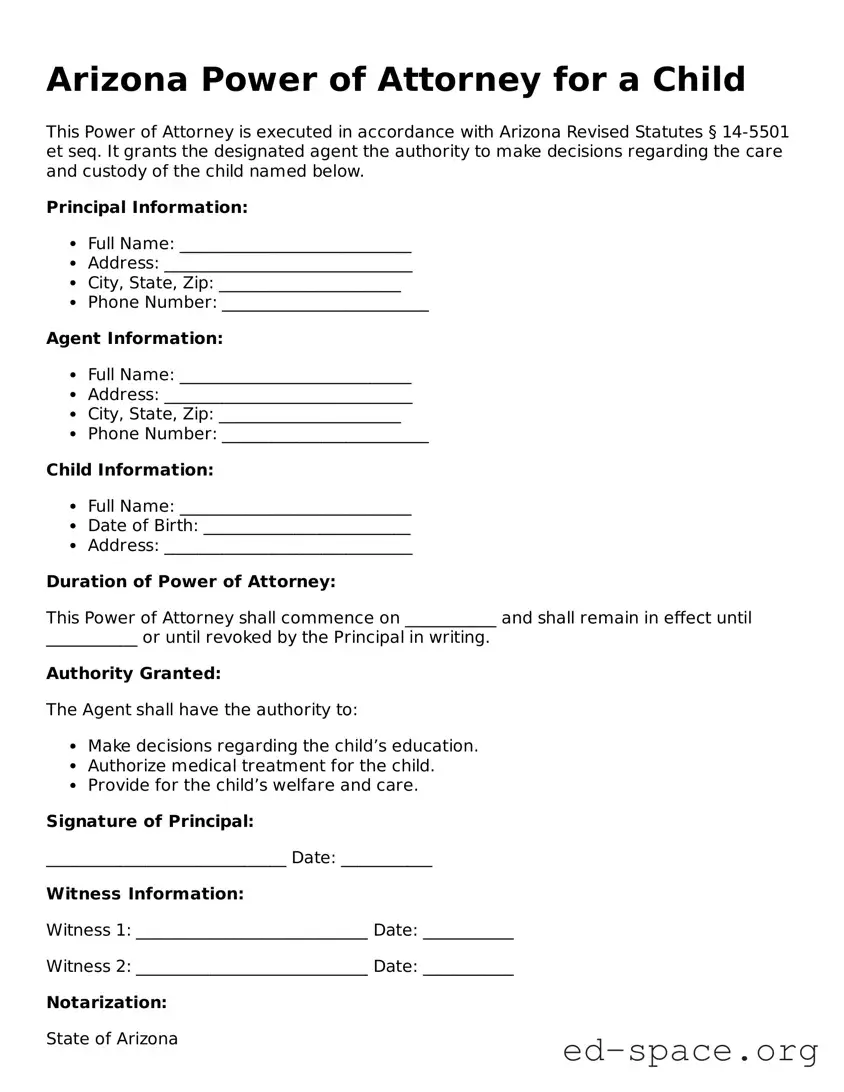
This Power of Attorney is executed in accordance with Arizona Revised Statutes § 14-5501 et seq. It grants the designated agent the authority to make decisions regarding the care and custody of the child named below.
Principal Information:
Agent Information:
Child Information:
Duration of Power of Attorney:
This Power of Attorney shall commence on ___________ and shall remain in effect until ___________ or until revoked by the Principal in writing.
Authority Granted:
The Agent shall have the authority to:
Signature of Principal:
_____________________________ Date: ___________
Witness Information:
Witness 1: ____________________________ Date: ___________
Witness 2: ____________________________ Date: ___________
Notarization:
State of Arizona
County of ____________________________
Subscribed and sworn to before me this ______ day of ___________, 20__.
_____________________________
Notary Public
| Fact Name | Details |
|---|---|
| Purpose | The Arizona Power of Attorney for a Child form allows a parent or legal guardian to designate another adult to make decisions for their child. |
| Governing Law | Arizona Revised Statutes, Title 14, Chapter 5. |
| Duration | This power of attorney is effective until revoked or until the child reaches 18 years of age. |
| Who Can Be an Agent | The designated agent can be a relative, family friend, or any trusted adult. |
| Limitations | The form does not grant the agent the authority to make medical decisions unless specifically stated. |
| Revocation | A parent can revoke the power of attorney at any time by providing written notice to the agent. |
| Witness Requirement | The form must be signed in the presence of a notary public or two witnesses. |
| Use Cases | This form is often used for travel, temporary guardianship, or when a parent is unavailable for an extended period. |
Filling out the Arizona Power of Attorney for a Child form requires careful attention to detail. This document allows a parent or guardian to designate another individual to make decisions on behalf of a child. It is important to ensure that all information is accurate and complete to avoid any issues in the future.
After completing the form, ensure that the designated agent understands their responsibilities. It is advisable to discuss the details with them to ensure a smooth process in the future.
What is a Power of Attorney for a Child in Arizona?
A Power of Attorney for a Child in Arizona is a legal document that allows a parent or legal guardian to grant another person the authority to make decisions on behalf of their child. This can include decisions related to healthcare, education, and general welfare. It is often used when a parent is temporarily unable to care for their child due to travel, illness, or other circumstances. This document ensures that the child’s needs are met and that someone is legally authorized to act in their best interest.
Who can be appointed as an agent in a Power of Attorney for a Child?
In Arizona, a parent or legal guardian can appoint a trusted individual as an agent in the Power of Attorney for a Child. This agent can be a relative, family friend, or any responsible adult. It is crucial to choose someone who understands the child's needs and can make informed decisions. The appointed agent should be willing to accept this responsibility and be prepared to act in the child's best interests.
How long does a Power of Attorney for a Child remain valid?
The Power of Attorney for a Child remains valid until the specified duration outlined in the document. If no duration is mentioned, it generally lasts until the child reaches the age of majority, which is 18 years old in Arizona. However, the parent or guardian can revoke the Power of Attorney at any time, as long as they provide notice to the agent and any relevant parties. It is essential to keep a copy of the revocation document for your records.
Do I need to have the Power of Attorney for a Child notarized?
Yes, in Arizona, the Power of Attorney for a Child must be signed in the presence of a notary public to be considered valid. Notarization helps to verify the identities of the individuals involved and ensures that the document is executed properly. It is advisable to consult with a legal professional if you have questions about the notarization process or any other aspects of the document.
Can a Power of Attorney for a Child be used for medical decisions?
Yes, a Power of Attorney for a Child can grant the agent authority to make medical decisions on behalf of the child. This includes the ability to consent to medical treatment, access medical records, and make decisions regarding healthcare providers. It is important to specify the extent of medical authority in the document to avoid any confusion. Parents should communicate their wishes clearly to the agent to ensure that the child receives appropriate care.
What should I do if I need to revoke a Power of Attorney for a Child?
If you need to revoke a Power of Attorney for a Child, you should create a written revocation document stating your intention to cancel the previous Power of Attorney. This document should be signed and dated. It is important to notify the appointed agent and any relevant parties, such as schools or healthcare providers, about the revocation. Keeping a copy of the revocation for your records is also advisable to prevent any misunderstandings in the future.
Failing to include the full names of both the child and the agent. It is essential to provide complete names to avoid any confusion.
Not specifying the duration of the power of attorney. Indicating how long the authority is granted is crucial for clarity.
Overlooking the need for signatures. Both the parent and the agent must sign the document for it to be valid.
Using outdated forms. Always ensure that the latest version of the Power of Attorney for a Child form is used to comply with current laws.
Not providing contact information for the agent. Including a phone number and address helps in case of emergencies.
Failing to have the form witnessed or notarized when required. Some situations may necessitate additional verification of the signatures.
Leaving out specific powers granted to the agent. Clearly outlining what the agent can and cannot do prevents misunderstandings.
Not discussing the arrangement with the child. It is important to ensure that the child understands the situation and feels comfortable.
Neglecting to keep copies of the completed form. Retaining copies is essential for reference and for the agent's use.
Failing to review the form for accuracy before submission. Double-checking all entries helps to avoid mistakes that could invalidate the document.
When appointing someone to act on behalf of a child, the Arizona Power of Attorney for a Child form is essential. However, several other documents can complement this form to ensure that all legal and practical aspects of guardianship and care are covered. Here are some common forms and documents that may be used alongside it:
Utilizing these documents alongside the Arizona Power of Attorney for a Child form can help ensure that the child’s needs are met in various situations. By preparing these forms, parents can provide clarity and peace of mind for both themselves and the designated caregiver.
When filling out the Arizona Power of Attorney for a Child form, it is important to follow specific guidelines to ensure the document is valid and effective. Below is a list of things to do and avoid during this process.
Things to Do:
Things to Avoid:
When it comes to the Arizona Power of Attorney for a Child form, several misconceptions can lead to confusion for parents and guardians. Understanding the truth behind these misunderstandings is crucial for making informed decisions regarding child care and legal authority.
Many believe this form is only useful in urgent situations. In reality, it can be used for various scenarios, such as temporary travel arrangements or when a parent is unable to care for their child for an extended period.
This is not true. Granting a Power of Attorney does not terminate parental rights. Instead, it allows another person to make decisions on behalf of the child while still retaining your rights as a parent.
While notarization is often recommended for added legal weight, it is not always a requirement. The form can still be valid without a notary, depending on the specific circumstances.
Many assume that this arrangement lasts indefinitely. However, the Power of Attorney can be revoked or expires after a specified time or event, allowing parents to regain full control when needed.
While it is true that parents can designate a trusted individual, there are legal guidelines regarding who can serve in this role. It is essential to choose someone responsible and capable of making decisions in the child's best interest.
When considering the Arizona Power of Attorney for a Child form, it’s important to understand its purpose and how to fill it out properly. Here are some key takeaways:
By following these guidelines, you can ensure that the Power of Attorney for a Child form serves its intended purpose effectively.