In Arizona, a Power of Attorney (POA) form is a crucial legal document that allows individuals to appoint someone they trust to make decisions on their behalf. This can be especially important in times of illness or incapacity. The person designated is known as the agent or attorney-in-fact, and they can be granted a wide range of powers, from managing financial affairs to making healthcare decisions. It's vital to understand that the authority given can be broad or limited, depending on the specific needs of the individual. The form must be signed and dated, and in some cases, it may require notarization or witnesses to ensure its validity. Additionally, the Arizona POA allows for revocation, meaning the principal can change their mind and cancel the document at any time, as long as they are mentally competent. Understanding these key aspects can help individuals make informed decisions about their future and ensure their wishes are respected when they are unable to communicate them directly.
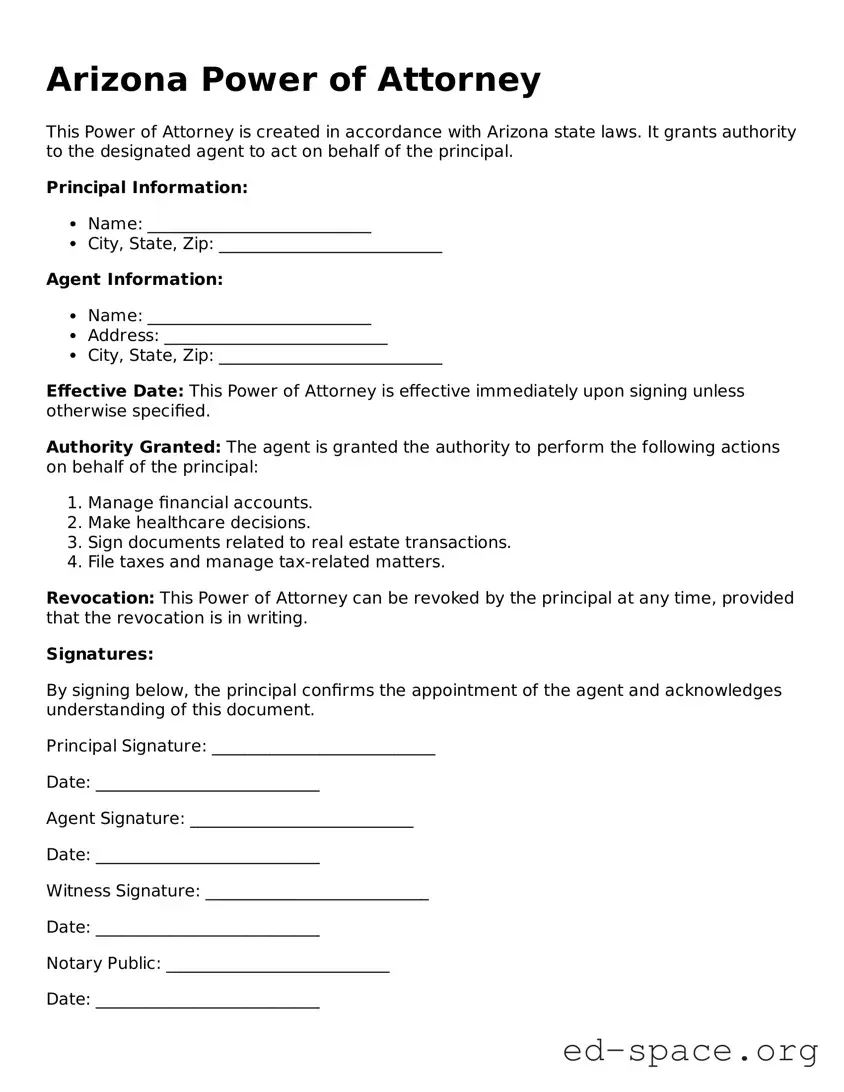
Arizona Power of Attorney
This Power of Attorney is created in accordance with Arizona state laws. It grants authority to the designated agent to act on behalf of the principal.
Principal Information:
Agent Information:
Effective Date: This Power of Attorney is effective immediately upon signing unless otherwise specified.
Authority Granted: The agent is granted the authority to perform the following actions on behalf of the principal:
Revocation: This Power of Attorney can be revoked by the principal at any time, provided that the revocation is in writing.
Signatures:
By signing below, the principal confirms the appointment of the agent and acknowledges understanding of this document.
Principal Signature: ___________________________
Date: ___________________________
Agent Signature: ___________________________
Date: ___________________________
Witness Signature: ___________________________
Date: ___________________________
Notary Public: ___________________________
Date: ___________________________
| Fact Name | Description |
|---|---|
| Definition | A Power of Attorney (POA) is a legal document that allows one person to act on behalf of another in legal or financial matters. |
| Types of POA | In Arizona, there are different types of POA, including General, Limited, Durable, and Medical Power of Attorney. |
| Governing Law | The Arizona Power of Attorney is governed by Arizona Revised Statutes, Title 14, Chapter 5. |
| Durability | A Durable Power of Attorney remains effective even if the principal becomes incapacitated, unlike a regular POA. |
| Revocation | The principal can revoke a Power of Attorney at any time, as long as they are mentally competent to do so. |
| Notarization | In Arizona, a Power of Attorney must be signed by the principal and acknowledged by a notary public to be valid. |
| Agent Responsibilities | The agent, or attorney-in-fact, must act in the best interest of the principal and follow their wishes as outlined in the POA. |
Filling out the Arizona Power of Attorney form is an important step in designating someone to act on your behalf in legal matters. After completing the form, it will need to be signed and notarized to ensure its validity. Below are the steps to guide you through the process of filling out the form.
What is a Power of Attorney in Arizona?
A Power of Attorney (POA) in Arizona is a legal document that allows one person, known as the principal, to authorize another person, called the agent or attorney-in-fact, to act on their behalf. This can include making financial decisions, managing property, or handling legal matters. The principal can specify the extent of the agent's authority, which can be broad or limited to specific tasks.
How do I create a Power of Attorney in Arizona?
To create a Power of Attorney in Arizona, you must complete a written document that meets state requirements. The document should clearly identify the principal and the agent, outline the powers granted, and include the principal's signature. It is advisable to have the document notarized to enhance its validity. Depending on the situation, you may also want to have witnesses present when signing.
Can I revoke a Power of Attorney in Arizona?
Yes, a Power of Attorney can be revoked in Arizona. The principal must create a written revocation document that states their intention to cancel the POA. This revocation should be signed and dated by the principal. It is important to notify the agent and any institutions or individuals who were relying on the original POA about the revocation to prevent any unauthorized actions.
What happens if the principal becomes incapacitated?
If the principal becomes incapacitated, the Power of Attorney remains in effect unless it is a non-durable POA, which automatically terminates upon the principal's incapacitation. A durable Power of Attorney, however, continues to be valid even if the principal is unable to make decisions. It is crucial to specify whether the POA is durable when creating the document to ensure it meets the principal's needs in such situations.
Not Specifying the Powers Granted: One common mistake is failing to clearly outline the specific powers the agent will have. The form should detail whether the agent can handle financial matters, make medical decisions, or both. Without this clarity, the agent may not have the authority to act when needed.
Choosing the Wrong Agent: Selecting someone who is not trustworthy or capable can lead to significant issues. It’s important to choose an agent who understands your wishes and can act in your best interest. Friends or family members may not always be the best choice.
Not Signing the Document Properly: A Power of Attorney must be signed in accordance with Arizona law. Failing to sign the document in the presence of a notary or witnesses, when required, can invalidate it. Ensure all necessary signatures are in place.
Ignoring State-Specific Requirements: Each state has its own laws regarding Power of Attorney forms. Some people mistakenly use a generic form without checking Arizona's specific requirements. It’s crucial to use the correct form to ensure it is legally binding.
Not Updating the Document: Life changes, and so should your Power of Attorney. Failing to update the document after major life events—like marriage, divorce, or the death of a previous agent—can lead to complications. Regularly review and revise your Power of Attorney to reflect your current wishes.
When creating a Power of Attorney (POA) in Arizona, several additional forms and documents can enhance its effectiveness and clarity. These documents help ensure that the principal's wishes are clearly communicated and legally recognized.
Incorporating these documents alongside the Arizona Power of Attorney form can provide comprehensive support for individuals planning for their future. Each document serves a unique purpose, contributing to a more robust legal framework for decision-making and care management.
When filling out the Arizona Power of Attorney form, it's essential to approach the process thoughtfully. Here’s a list of things you should and shouldn’t do to ensure that your document is valid and meets your needs.
By following these guidelines, you can create a Power of Attorney that truly reflects your wishes and provides peace of mind for you and your loved ones.
Understanding the Arizona Power of Attorney form is essential for effective legal planning. However, several misconceptions can lead to confusion. Below are four common misconceptions regarding this form.
This is not accurate. While many people associate Power of Attorney with financial decisions, it can also cover health care decisions, property management, and other legal matters. The specific powers granted depend on the language used in the document.
This is incorrect. A Power of Attorney can be revoked at any time by the principal, as long as they are mentally competent. It is important to follow the proper procedures for revocation to ensure that the change is legally recognized.
This is misleading. While it is advisable to seek legal guidance, individuals can create a Power of Attorney themselves using templates or forms available online. However, ensuring that the document meets all legal requirements is crucial.
This is not always true. A Power of Attorney can be set up to take effect immediately or only upon the principal's incapacitation, depending on how it is drafted. It is essential to specify the desired timing in the document.
When considering the Arizona Power of Attorney form, it’s important to understand its key aspects. This document can empower someone to make decisions on your behalf, so clarity and accuracy are crucial.
By keeping these takeaways in mind, you can approach the Arizona Power of Attorney process with greater confidence and clarity.