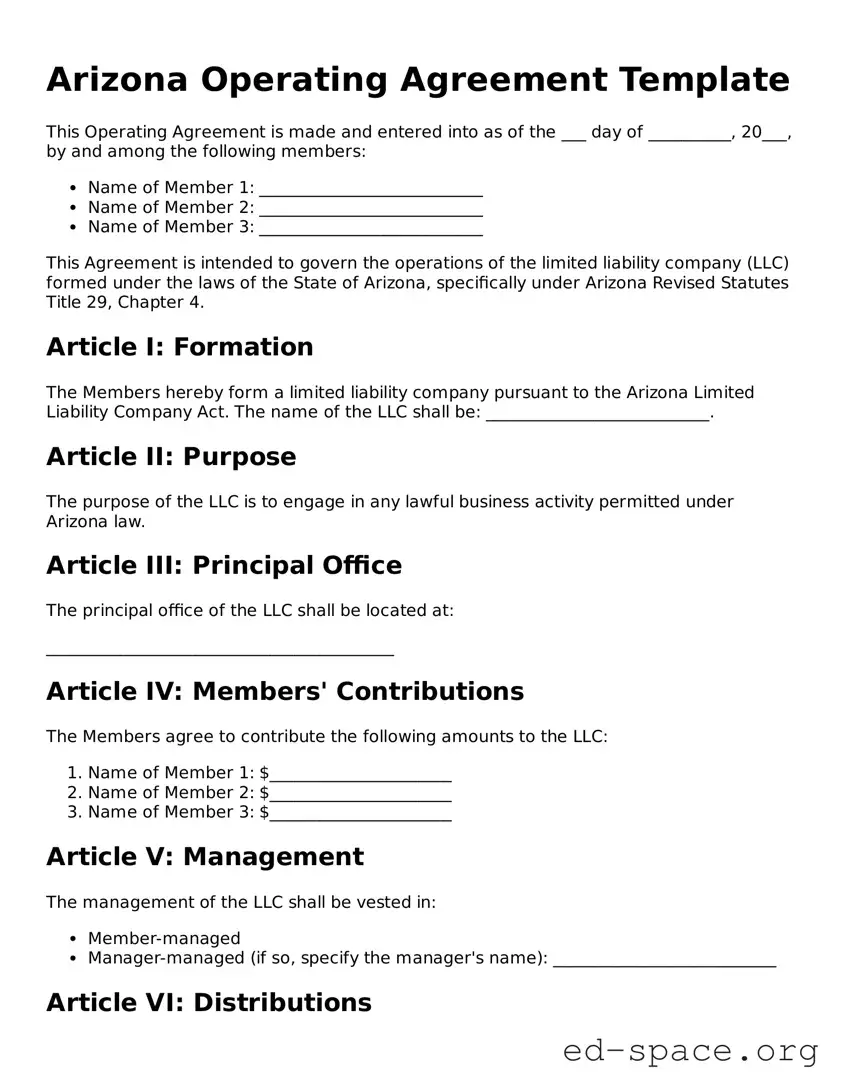
When forming a limited liability company (LLC) in Arizona, one of the most important steps is creating an Operating Agreement. This document serves as a foundational blueprint for how your LLC will operate, outlining the roles and responsibilities of its members, the management structure, and the distribution of profits and losses. It also addresses crucial aspects such as decision-making processes, voting rights, and procedures for adding or removing members. By clearly defining these elements, the Operating Agreement helps prevent misunderstandings and disputes among members. Additionally, while Arizona does not legally require an Operating Agreement, having one in place can provide significant protection for your business and its owners. It can enhance credibility with banks and investors, and it establishes a clear framework for operations, making it easier to navigate challenges that may arise. Ultimately, an Operating Agreement is an essential tool for any LLC, ensuring that all members are on the same page and that the business can thrive in a structured environment.
Arizona Operating Agreement Template
This Operating Agreement is made and entered into as of the ___ day of __________, 20___, by and among the following members:
This Agreement is intended to govern the operations of the limited liability company (LLC) formed under the laws of the State of Arizona, specifically under Arizona Revised Statutes Title 29, Chapter 4.
Article I: Formation
The Members hereby form a limited liability company pursuant to the Arizona Limited Liability Company Act. The name of the LLC shall be: ___________________________.
Article II: Purpose
The purpose of the LLC is to engage in any lawful business activity permitted under Arizona law.
Article III: Principal Office
The principal office of the LLC shall be located at:
__________________________________________
Article IV: Members' Contributions
The Members agree to contribute the following amounts to the LLC:
Article V: Management
The management of the LLC shall be vested in:
Article VI: Distributions
Distributions of profits and losses shall be allocated to the Members in proportion to their respective contributions as outlined in Article IV.
Article VII: Indemnification
The LLC shall indemnify its Members to the fullest extent permitted by Arizona law against any losses, expenses, or liabilities incurred in connection with the LLC.
Article VIII: Amendments
This Operating Agreement may be amended only by a written agreement signed by all Members.
Article IX: Governing Law
This Agreement shall be governed by and construed in accordance with the laws of the State of Arizona.
IN WITNESS WHEREOF, the Members have executed this Operating Agreement as of the date first above written.
______________________________
Signature of Member 1
______________________________
Signature of Member 2
______________________________
Signature of Member 3
| Fact Name | Details |
|---|---|
| Purpose | The Arizona Operating Agreement outlines the management structure and operational procedures of an LLC. |
| Governing Law | The agreement is governed by the Arizona Revised Statutes, specifically Title 29, Chapter 4. |
| Members | All members of the LLC should be included in the agreement to ensure clarity and transparency. |
| Flexibility | The Operating Agreement allows for flexibility in management and profit distribution among members. |
| Not Mandatory | While not required by law, having an Operating Agreement is highly recommended for LLCs in Arizona. |
| Dispute Resolution | The agreement can specify procedures for resolving disputes among members, promoting harmony. |
| Amendments | Members can amend the Operating Agreement as needed, provided all parties agree to the changes. |
| Confidentiality | Provisions for confidentiality can be included to protect sensitive information related to the LLC. |
| Duration | The agreement can specify the duration of the LLC, whether it is perpetual or for a fixed term. |
| State Filing | The Operating Agreement does not need to be filed with the state but should be kept on record by the LLC. |
Filling out the Arizona Operating Agreement form is an essential step for anyone looking to establish a limited liability company (LLC) in the state. Once you have completed the form, it will serve as a foundational document that outlines the management structure and operational procedures of your LLC. Here’s how to fill it out effectively.
After completing the form, it’s a good idea to keep a copy for your records. You may also want to consult with a legal professional to ensure everything is in order before you proceed with your LLC formation.
What is an Arizona Operating Agreement?
An Arizona Operating Agreement is a key document for limited liability companies (LLCs) in Arizona. It outlines the management structure, operational procedures, and ownership details of the LLC. This agreement serves as a roadmap for how the company will function and helps prevent misunderstandings among members. Although it is not legally required in Arizona, having one is highly recommended to protect the interests of all parties involved.
Who should create an Operating Agreement?
All members of an LLC should participate in creating the Operating Agreement. Whether you are starting a new business or are an existing LLC, every member's input is valuable. This document is especially important for multi-member LLCs, as it clarifies each member's rights and responsibilities. Even single-member LLCs benefit from having an Operating Agreement, as it reinforces the separation between personal and business assets.
What should be included in the Operating Agreement?
Several key components should be included in your Operating Agreement. These include the LLC's name, the purpose of the business, the names of the members, and their respective ownership percentages. Additionally, outline the management structure—whether it will be member-managed or manager-managed. It’s also wise to include procedures for adding new members, handling disputes, and dissolving the LLC if necessary. Clearly defining these elements can save time and confusion in the future.
Is the Operating Agreement filed with the state?
No, the Operating Agreement is not filed with the state of Arizona. Instead, it is kept as an internal document. While you do need to file Articles of Organization to officially form your LLC, the Operating Agreement remains private. However, it’s essential to keep it updated and accessible, as it may be needed for banking purposes or in case of legal disputes.
Can I change the Operating Agreement later?
Yes, you can change the Operating Agreement at any time. It’s a flexible document designed to adapt to the evolving needs of your LLC. To make changes, all members should agree to the amendments, and it’s a good idea to document these changes in writing. Regularly reviewing and updating the Operating Agreement can help ensure that it reflects the current state of your business and the relationships among members.
Incomplete Information: One of the most common mistakes is leaving sections blank. Every part of the form should be filled out completely to avoid confusion later.
Incorrect Member Details: Failing to accurately list the names and addresses of all members can lead to disputes. Ensure that the information is current and correct.
Not Specifying Ownership Percentages: Members must clearly state their ownership percentages. Omitting this detail can cause misunderstandings regarding profit distribution.
Ignoring Voting Rights: It’s crucial to outline the voting rights of each member. Neglecting this can lead to confusion about decision-making processes.
Failure to Include a Buyout Clause: Not addressing what happens if a member wants to leave the business can create complications. A buyout clause helps prevent future conflicts.
Not Defining Management Structure: Clearly stating how the business will be managed is essential. Ambiguities in management roles can lead to operational inefficiencies.
Overlooking Amendment Procedures: It’s important to include how the agreement can be amended. Without this, making future changes may become difficult.
Failing to Consult Legal Advice: Many individuals try to fill out the form without professional guidance. Consulting with a lawyer can help ensure that the agreement meets all legal requirements.
When forming a limited liability company (LLC) in Arizona, several documents complement the Arizona Operating Agreement. Each of these documents serves a specific purpose in the establishment and operation of the LLC. Below is a list of commonly used forms and documents associated with the Arizona Operating Agreement.
Understanding these documents is crucial for anyone involved in the formation and management of an LLC in Arizona. Each document plays a role in ensuring compliance with state laws and facilitating smooth operations within the company.
When filling out the Arizona Operating Agreement form, it's important to be thorough and accurate. Here are some guidelines to follow:
Following these guidelines will help ensure that your Operating Agreement is properly filled out and legally sound.
When it comes to the Arizona Operating Agreement form, several misconceptions can lead to confusion for those involved in forming a Limited Liability Company (LLC). Understanding these misconceptions is crucial for ensuring that all parties are informed and prepared. Below are some common misunderstandings:
Addressing these misconceptions can help ensure that LLC members in Arizona are better prepared and informed about the importance and function of the Operating Agreement. By clarifying these points, members can foster a more harmonious and efficient business environment.
When filling out and using the Arizona Operating Agreement form, consider these key takeaways:
By keeping these points in mind, you can create a comprehensive Operating Agreement that serves your LLC well.