The Arizona Notice to Quit form serves as a critical tool in the landlord-tenant relationship, particularly when disputes arise. This document is essential for landlords who need to terminate a tenancy, either due to non-payment of rent or lease violations. It outlines the specific reasons for the termination, providing clear instructions on the next steps for both parties. Importantly, the form specifies the time frame in which the tenant must vacate the property, ensuring compliance with Arizona's legal requirements. By using this form, landlords can communicate their intentions formally, while tenants receive a clear notice of their obligations. Understanding the nuances of this form can help both landlords and tenants navigate the often-complex landscape of rental agreements and evictions in Arizona.
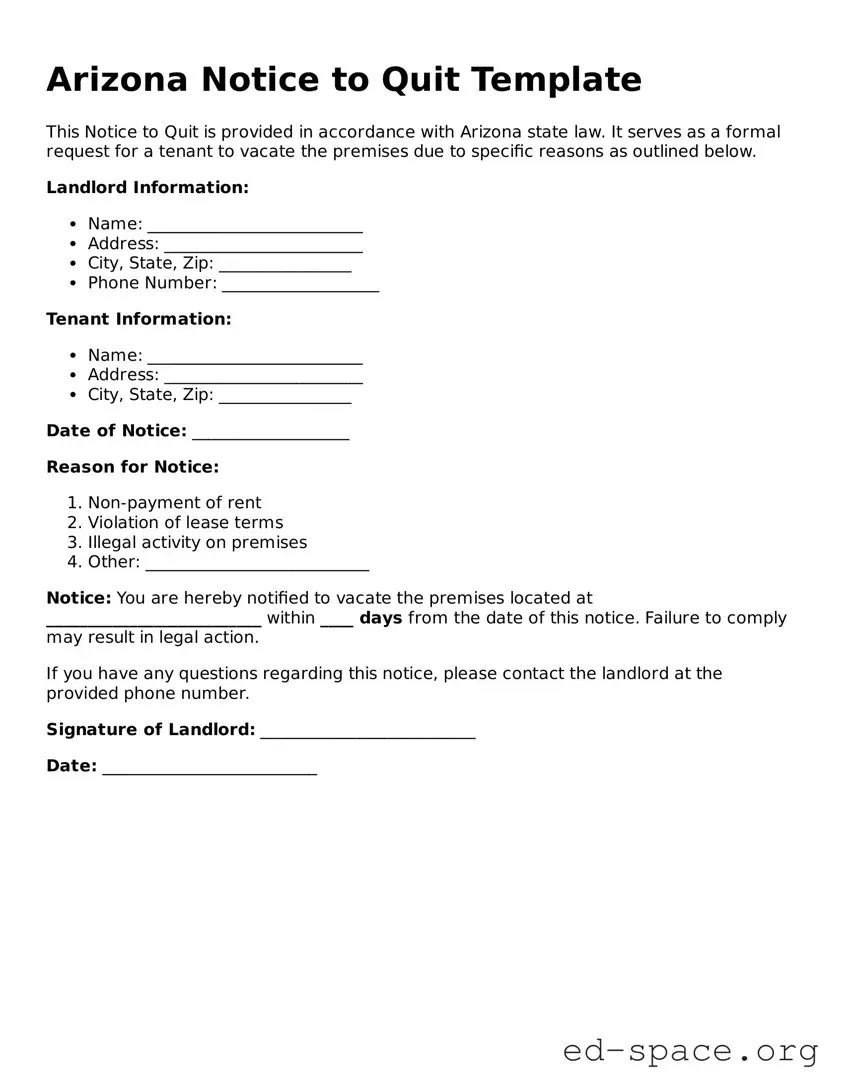
Arizona Notice to Quit Template
This Notice to Quit is provided in accordance with Arizona state law. It serves as a formal request for a tenant to vacate the premises due to specific reasons as outlined below.
Landlord Information:
Tenant Information:
Date of Notice: ___________________
Reason for Notice:
Notice: You are hereby notified to vacate the premises located at __________________________ within ____ days from the date of this notice. Failure to comply may result in legal action.
If you have any questions regarding this notice, please contact the landlord at the provided phone number.
Signature of Landlord: __________________________
Date: __________________________
| Fact Name | Details |
|---|---|
| Purpose | The Arizona Notice to Quit form is used by landlords to inform tenants that they must vacate the rental property. |
| Governing Law | The form is governed by Arizona Revised Statutes, Title 33, Chapter 10. |
| Notice Period | Typically, the notice period is five days for non-payment of rent and 10 days for other lease violations. |
| Delivery Methods | Landlords can deliver the notice in person, by mail, or by posting it on the property. |
| Tenant Rights | Tenants have the right to respond to the notice and may contest it in court if they believe it is unjust. |
| Form Requirements | The form must include the date, tenant's name, property address, and specific reasons for termination. |
After completing the Arizona Notice to Quit form, you will need to deliver it to the tenant. This step is crucial for ensuring that the tenant is formally notified about the need to vacate the premises. Follow these steps to accurately fill out the form.
Once the form is filled out, it should be delivered to the tenant, either in person or via certified mail, to ensure proper documentation of the notice.
What is the Arizona Notice to Quit form?
The Arizona Notice to Quit form is a legal document that a landlord uses to inform a tenant that they must vacate the rental property. This notice is typically issued when a tenant has violated the terms of the lease agreement or has failed to pay rent. It serves as a formal request for the tenant to leave the premises within a specified time frame.
When is a Notice to Quit required in Arizona?
A Notice to Quit is required in situations where a tenant has breached their lease agreement. Common reasons include non-payment of rent, illegal activities on the property, or significant damage to the rental unit. Depending on the circumstances, the landlord may need to provide a specific notice period before taking further legal action.
How much notice must a landlord give before a tenant must leave?
The notice period can vary based on the reason for the eviction. For non-payment of rent, landlords typically must provide a 5-day notice. For lease violations or other issues, a 10-day notice may be required. It's important to check the specific terms of the lease and local laws to ensure compliance.
Can a tenant contest a Notice to Quit?
Yes, tenants can contest a Notice to Quit. If a tenant believes the notice was issued in error or that they have rectified the situation (for example, by paying overdue rent), they can communicate with the landlord. If the issue is not resolved, tenants may choose to respond legally by filing a counterclaim or defending against eviction in court.
What happens if a tenant does not leave after receiving a Notice to Quit?
If a tenant does not vacate the property after the notice period expires, the landlord may file an eviction lawsuit, known as an unlawful detainer action. This legal process allows the landlord to seek a court order to remove the tenant from the property. It's crucial for tenants to respond promptly to any legal notices they receive.
Is a Notice to Quit the same as an eviction notice?
While a Notice to Quit is a type of eviction notice, it is not the final step in the eviction process. The Notice to Quit is the initial notice that informs the tenant they must leave the property. If the tenant does not comply, the landlord can then proceed with filing for eviction through the court system.
Do landlords need to provide a reason for issuing a Notice to Quit?
Yes, landlords must provide a valid reason for issuing a Notice to Quit. The reason should be clearly stated in the notice. This transparency helps tenants understand why they are being asked to leave and allows them the opportunity to address the issue if possible.
What should a tenant do upon receiving a Notice to Quit?
Upon receiving a Notice to Quit, tenants should carefully read the document to understand the reason for the notice and the time frame they have to respond. It is advisable to communicate with the landlord to discuss the situation. If necessary, seeking legal advice can help tenants understand their rights and options.
Can a Notice to Quit be served electronically?
In Arizona, a Notice to Quit can be served in person, by mail, or through other methods allowed by law. However, electronic service is generally not recognized as a valid method for delivering eviction notices. It is important to follow the legal requirements for service to ensure that the notice is enforceable.
Incomplete Information: One common mistake is failing to fill in all required fields. Ensure that all sections, including tenant and landlord details, are fully completed.
Incorrect Dates: Providing the wrong date for the notice can lead to confusion. Double-check that the date you list aligns with the required notice period.
Failure to Specify the Reason: Not stating a clear reason for the notice can weaken your position. Be specific about why you are issuing the Notice to Quit.
Not Following Legal Requirements: Each state has specific rules regarding notices. Ensure that your form complies with Arizona's laws to avoid complications.
Improper Delivery: Simply filling out the form is not enough. The notice must be delivered correctly, either in person or via certified mail, as required by law.
Neglecting to Keep a Copy: Failing to keep a copy of the completed Notice to Quit can be problematic. Always retain a copy for your records.
Ignoring Local Regulations: Local jurisdictions may have additional requirements. Research any specific rules that apply in your area to ensure compliance.
When dealing with tenant issues in Arizona, the Notice to Quit form is just one piece of the puzzle. Understanding other related documents can help ensure a smoother process for landlords and tenants alike. Here are five additional forms you might encounter:
Having these documents on hand can make navigating rental agreements and disputes much easier. Being well-prepared helps protect the rights of both landlords and tenants, ensuring a fair process for everyone involved.
The Notice to Quit form is an important legal document often used in landlord-tenant relationships. However, it shares similarities with several other documents in the realm of property law. Here’s a list of seven documents that are comparable to the Notice to Quit form, along with a brief explanation of how they are alike:
When filling out the Arizona Notice to Quit form, it is essential to approach the process with care and attention to detail. Here are some important dos and don'ts to consider:
By following these guidelines, you can help ensure that the process goes smoothly and that you are in compliance with Arizona's legal requirements.
Many people hold misconceptions about the Arizona Notice to Quit form. Understanding the truth behind these misconceptions can help landlords and tenants navigate the eviction process more effectively. Here are six common misconceptions:
Understanding these misconceptions can lead to better communication and outcomes for both landlords and tenants in Arizona.
Filling out and using the Arizona Notice to Quit form is an essential step in the eviction process. Understanding the nuances of this document can significantly impact both landlords and tenants. Here are key takeaways to consider: