In Arizona, the Medical Power of Attorney form plays a crucial role in healthcare decision-making for individuals who may become unable to communicate their wishes. This legal document allows you to appoint a trusted person, often referred to as your agent, to make medical decisions on your behalf when you cannot do so. It covers a wide range of healthcare choices, from routine medical care to end-of-life decisions, ensuring that your preferences are honored even when you are incapacitated. The form outlines the authority granted to your agent, which can be tailored to suit your specific needs and values. Importantly, it also provides guidance on how to handle situations that may arise, giving both you and your loved ones peace of mind. By completing this form, you empower someone you trust to act in your best interests during challenging times, reinforcing the importance of clear communication about your healthcare desires.
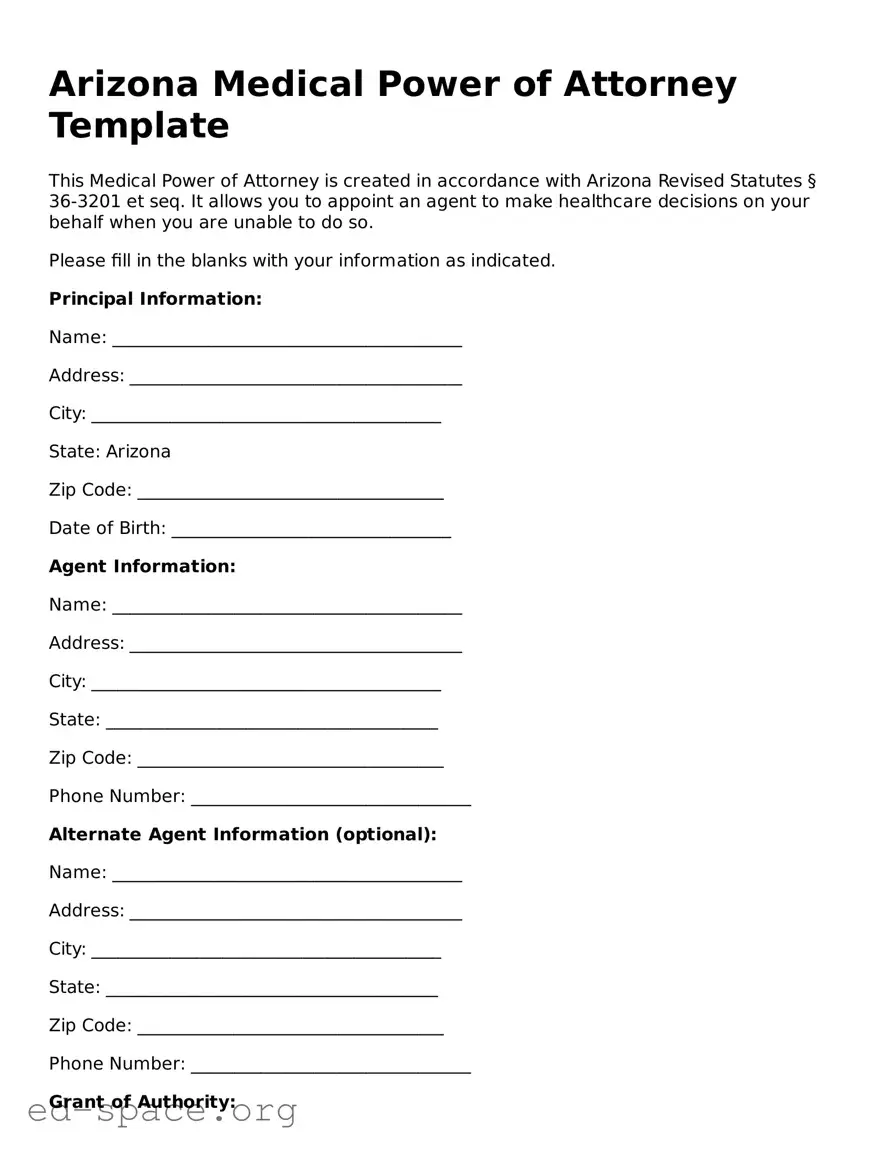
Arizona Medical Power of Attorney Template
This Medical Power of Attorney is created in accordance with Arizona Revised Statutes § 36-3201 et seq. It allows you to appoint an agent to make healthcare decisions on your behalf when you are unable to do so.
Please fill in the blanks with your information as indicated.
Principal Information:
Name: ________________________________________
Address: ______________________________________
City: ________________________________________
State: Arizona
Zip Code: ___________________________________
Date of Birth: ________________________________
Agent Information:
Name: ________________________________________
Address: ______________________________________
City: ________________________________________
State: ______________________________________
Zip Code: ___________________________________
Phone Number: ________________________________
Alternate Agent Information (optional):
Name: ________________________________________
Address: ______________________________________
City: ________________________________________
State: ______________________________________
Zip Code: ___________________________________
Phone Number: ________________________________
Grant of Authority:
I, the undersigned, hereby appoint my agent to make healthcare decisions on my behalf in accordance with Arizona law. This authority includes, but is not limited to:
Effective Date:
This Medical Power of Attorney becomes effective upon my incapacity as determined by a qualified healthcare professional.
Signature:
_________________________________________
Principal's Signature
Date: _____________________________________
Witnesses:
This document must be signed in the presence of two witnesses who are not related to you or your agent.
Notarization (optional):
State of Arizona
County of _________________________________
Subscribed and sworn before me on this ______ day of __________, 20__.
_________________________________________
Notary Public
My Commission Expires: __________________
| Fact Name | Description |
|---|---|
| Definition | The Arizona Medical Power of Attorney form allows individuals to designate someone to make healthcare decisions on their behalf if they become unable to do so. |
| Governing Law | This form is governed by Arizona Revised Statutes, specifically ARS § 36-3201 through § 36-3210. |
| Eligibility | Any competent adult can create a Medical Power of Attorney in Arizona, allowing them to choose a trusted person as their agent. |
| Agent Responsibilities | The designated agent is responsible for making medical decisions based on the individual’s wishes, values, and best interests. |
| Revocation | The form can be revoked at any time by the principal as long as they are still competent, allowing for flexibility in decision-making. |
| Witness Requirements | Arizona law requires that the Medical Power of Attorney form be signed in the presence of two witnesses or a notary public to ensure its validity. |
Filling out the Arizona Medical Power of Attorney form is an important step in ensuring your healthcare wishes are respected. Once you have completed the form, you will need to have it signed and witnessed according to Arizona law.
What is a Medical Power of Attorney in Arizona?
A Medical Power of Attorney is a legal document that allows you to appoint someone to make healthcare decisions on your behalf if you become unable to do so. This person, known as your agent or proxy, will have the authority to make choices about your medical treatment based on your preferences and values.
Why should I consider creating a Medical Power of Attorney?
Creating a Medical Power of Attorney is essential for ensuring that your healthcare wishes are honored. In the event of a medical emergency or serious illness, having a designated agent can relieve your loved ones from the burden of making difficult decisions. It also helps prevent confusion and conflict among family members about what you would want.
Who can be my agent for the Medical Power of Attorney?
Your agent can be any competent adult, such as a family member, friend, or trusted individual. However, it’s important to choose someone who understands your values and preferences regarding medical treatment. In Arizona, your agent cannot be your healthcare provider or an employee of your healthcare provider unless they are also a family member.
How do I create a Medical Power of Attorney in Arizona?
To create a Medical Power of Attorney in Arizona, you need to complete a form that complies with state laws. You can find templates online or consult with an attorney for assistance. After filling out the form, you must sign it in the presence of a notary public or two witnesses who are not related to you or named in the document. This ensures that your document is legally binding.
Can I revoke or change my Medical Power of Attorney?
Yes, you can revoke or change your Medical Power of Attorney at any time, as long as you are competent to do so. To revoke it, you should create a written statement indicating your intent to revoke the previous document and notify your agent and any healthcare providers involved in your care. If you wish to change your agent, simply create a new Medical Power of Attorney and follow the proper signing and witnessing procedures.
What happens if I don’t have a Medical Power of Attorney?
If you do not have a Medical Power of Attorney and become incapacitated, healthcare providers will typically follow the state’s laws regarding who can make decisions on your behalf. This may lead to delays in treatment or decisions being made by individuals who may not fully understand your wishes. Having a Medical Power of Attorney ensures that your preferences are respected and followed.
Is a Medical Power of Attorney the same as a Living Will?
No, a Medical Power of Attorney and a Living Will serve different purposes. A Medical Power of Attorney appoints someone to make decisions for you, while a Living Will outlines your preferences for medical treatment in specific situations, such as end-of-life care. Many people choose to have both documents to provide comprehensive guidance regarding their healthcare wishes.
Do I need an attorney to create a Medical Power of Attorney?
While it is not required to have an attorney to create a Medical Power of Attorney in Arizona, consulting one can provide valuable guidance. An attorney can help ensure that your document meets all legal requirements and accurately reflects your wishes. If you feel comfortable navigating the process on your own, you can use available templates and resources to create your document.
Not Designating a Clear Agent: One common mistake is failing to clearly designate an agent. It’s essential to choose someone you trust to make medical decisions on your behalf.
Forgetting to Discuss Your Wishes: Many individuals neglect to have a conversation with their chosen agent about their medical preferences. Open communication is vital to ensure your agent understands your values and desires.
Using Outdated Forms: Some people use old versions of the Medical Power of Attorney form. Always check that you are using the most current form to avoid any legal issues.
Not Signing the Form: It may seem obvious, but forgetting to sign the document is a frequent oversight. Without your signature, the form holds no legal weight.
Neglecting Witness Requirements: Arizona law requires that the form be signed in the presence of at least one witness. Failing to meet this requirement can invalidate the document.
Choosing an Ineligible Agent: Some individuals mistakenly select someone who is not eligible to serve as their agent. For example, certain healthcare providers cannot act as your agent.
Not Updating the Document: Life circumstances change. Failing to update your Medical Power of Attorney after significant life events, like marriage or divorce, can lead to complications.
Overlooking Alternate Agents: It’s wise to designate an alternate agent in case your primary choice is unavailable. Many people forget this crucial step.
Being Vague About Medical Preferences: Providing vague instructions can lead to confusion. It’s important to be as specific as possible about your healthcare wishes.
Failing to Store the Document Properly: After completing the form, many individuals do not store it in an accessible place. Make sure your agent knows where to find it when needed.
When considering the Arizona Medical Power of Attorney, it’s important to be aware of other related documents that can complement this form. Each of these documents serves a specific purpose and can help ensure that your healthcare wishes are respected and communicated effectively. Below are four commonly used forms that often accompany the Medical Power of Attorney.
Understanding these documents and how they work together can empower you to make informed choices about your healthcare. Being proactive in your planning can provide peace of mind for both you and your loved ones.
When filling out the Arizona Medical Power of Attorney form, it's essential to approach the process with care and attention to detail. Here are five important do's and don'ts to consider:
By following these guidelines, you can help ensure that your Medical Power of Attorney form is filled out correctly and reflects your wishes accurately.
Understanding the Arizona Medical Power of Attorney (MPOA) is crucial for making informed decisions about healthcare. However, several misconceptions can lead to confusion. Here are eight common misconceptions:
Addressing these misconceptions is essential for ensuring that individuals can make informed choices about their healthcare and legal rights.
When filling out and using the Arizona Medical Power of Attorney form, consider the following key takeaways: