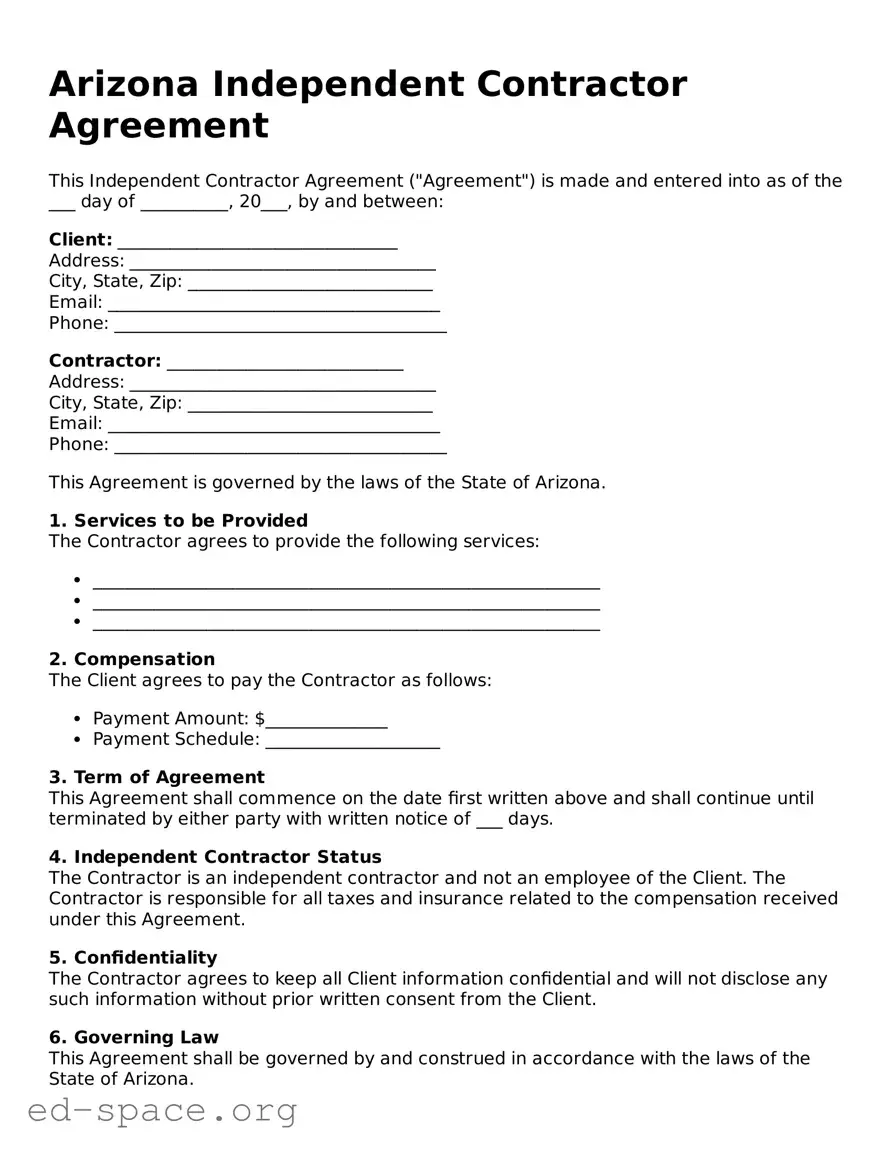
The Arizona Independent Contractor Agreement form serves as a crucial document in establishing the relationship between a business and an independent contractor. This form outlines the terms of engagement, ensuring clarity and mutual understanding. It typically includes sections detailing the scope of work, payment terms, and the duration of the contract. Additionally, it addresses the responsibilities of both parties, including confidentiality clauses and provisions for termination. By defining these aspects, the agreement helps prevent misunderstandings and protects the interests of both the contractor and the hiring entity. It is important for all parties to review the form carefully, as it lays the groundwork for a successful working relationship while adhering to Arizona state laws.
Arizona Independent Contractor Agreement
This Independent Contractor Agreement ("Agreement") is made and entered into as of the ___ day of __________, 20___, by and between:
Client: ________________________________
Address: ___________________________________
City, State, Zip: ____________________________
Email: ______________________________________
Phone: ______________________________________
Contractor: ___________________________
Address: ___________________________________
City, State, Zip: ____________________________
Email: ______________________________________
Phone: ______________________________________
This Agreement is governed by the laws of the State of Arizona.
1. Services to be Provided
The Contractor agrees to provide the following services:
2. Compensation
The Client agrees to pay the Contractor as follows:
3. Term of Agreement
This Agreement shall commence on the date first written above and shall continue until terminated by either party with written notice of ___ days.
4. Independent Contractor Status
The Contractor is an independent contractor and not an employee of the Client. The Contractor is responsible for all taxes and insurance related to the compensation received under this Agreement.
5. Confidentiality
The Contractor agrees to keep all Client information confidential and will not disclose any such information without prior written consent from the Client.
6. Governing Law
This Agreement shall be governed by and construed in accordance with the laws of the State of Arizona.
7. Entire Agreement
This Agreement constitutes the entire understanding between the parties and supersedes all prior discussions or agreements.
IN WITNESS WHEREOF, the parties hereto have executed this Independent Contractor Agreement as of the date first above written.
Client Signature: ____________________________
Date: ________________
Contractor Signature: _______________________
Date: ________________
| Fact Name | Description |
|---|---|
| Definition | The Arizona Independent Contractor Agreement is a legal document that outlines the terms of the working relationship between a contractor and a client. |
| Purpose | This agreement serves to clarify the expectations, responsibilities, and rights of both parties involved in the contract. |
| Governing Law | The agreement is governed by the laws of the State of Arizona, specifically under Arizona Revised Statutes. |
| Key Elements | Important components typically include payment terms, scope of work, and termination conditions. |
| Independent Status | By signing this agreement, the contractor affirms their status as an independent entity, not an employee of the client. |
Filling out the Arizona Independent Contractor Agreement form is a straightforward process that helps define the working relationship between a contractor and a client. To ensure clarity and protect both parties, it’s essential to provide accurate information. Follow the steps below to complete the form effectively.
Once you have filled out the form, review it one last time to ensure all information is accurate and complete. This will help prevent any potential disputes down the line. After that, both parties can proceed with their agreed-upon work with confidence.
What is an Arizona Independent Contractor Agreement?
An Arizona Independent Contractor Agreement is a legal document that outlines the relationship between a business and an independent contractor. This agreement specifies the terms under which the contractor will perform services for the business. It typically includes details such as the scope of work, payment terms, deadlines, and the rights and responsibilities of both parties. By having this agreement in place, both the contractor and the business can avoid misunderstandings and ensure that their expectations are aligned.
Why is it important to have an Independent Contractor Agreement?
Having an Independent Contractor Agreement is crucial for several reasons. First, it provides clarity regarding the work to be done, which helps prevent disputes. Second, it establishes the contractor’s status as an independent entity rather than an employee, which has implications for taxes and liability. Third, the agreement can protect both parties by outlining confidentiality clauses and intellectual property rights. Overall, this document serves as a safeguard for both the contractor and the business.
What should be included in the Arizona Independent Contractor Agreement?
Essential elements of the Arizona Independent Contractor Agreement include the following: a clear description of the services to be provided, the payment structure (hourly, flat fee, etc.), deadlines for project completion, and terms for termination of the agreement. Additionally, it should address issues like confidentiality, ownership of work produced, and any required licenses or permits. Including these details helps ensure that both parties understand their obligations and rights.
Can an Independent Contractor Agreement be modified after it is signed?
Yes, an Independent Contractor Agreement can be modified after it has been signed, but both parties must agree to the changes. It is advisable to document any modifications in writing and have both parties sign the updated agreement. This process helps maintain clarity and ensures that both parties are aware of any changes to the original terms. Always keep a copy of the revised agreement for your records.
Inaccurate Personal Information: Many individuals fail to provide accurate personal details, such as their full name, address, or Social Security number. This can lead to issues with tax reporting and legal identification.
Missing Scope of Work: A common mistake is not clearly defining the scope of work. This can result in misunderstandings about the tasks to be performed and the expectations of both parties.
Omitting Payment Terms: Some people neglect to specify payment terms, including the rate, payment schedule, and method of payment. Without this information, disputes over compensation may arise.
Ignoring Termination Clauses: Failing to include or understand termination clauses can create complications. It's important to know how either party can end the agreement and what notice is required.
Not Reviewing Legal Obligations: Many individuals overlook their legal obligations as independent contractors. This includes understanding tax responsibilities and insurance requirements, which can lead to legal and financial issues down the line.
When entering into an agreement with an independent contractor in Arizona, several other forms and documents can complement the Independent Contractor Agreement. These documents help clarify the relationship, outline expectations, and ensure compliance with various regulations. Here’s a brief overview of five important forms often used alongside the Independent Contractor Agreement:
Utilizing these documents in conjunction with the Arizona Independent Contractor Agreement can enhance clarity and protect the interests of both parties. By being thorough and organized, businesses and contractors can foster a professional relationship built on mutual understanding and respect.
When filling out the Arizona Independent Contractor Agreement form, it's important to approach the process with care. Here are five things to keep in mind:
By following these guidelines, you can help ensure that your Independent Contractor Agreement is filled out correctly and efficiently.
When it comes to the Arizona Independent Contractor Agreement, there are several misconceptions that can lead to confusion. Understanding these misconceptions can help individuals and businesses navigate their agreements more effectively.
Many people believe that if a worker is classified as an independent contractor, a formal agreement is not needed. However, having a written agreement is crucial. It outlines the expectations, responsibilities, and payment terms, protecting both parties in case of disputes.
Some assume that independent contractors are not entitled to any legal protections. In reality, they are protected under various laws, including those related to discrimination and safety. An agreement can help clarify these protections.
This belief overlooks the fact that each independent contractor may have different needs and responsibilities. The agreement should be tailored to reflect the specific nature of the work and the relationship between the parties involved.
While verbal agreements can be enforceable, they are often difficult to prove. A written agreement provides clear documentation of the terms, reducing the risk of misunderstandings and disputes.
Many believe that the terms of an independent contractor agreement are set in stone. In fact, independent contractors have the right to negotiate terms that better suit their needs. Open communication can lead to a more favorable agreement for both parties.
When filling out and using the Arizona Independent Contractor Agreement form, keep these key takeaways in mind: