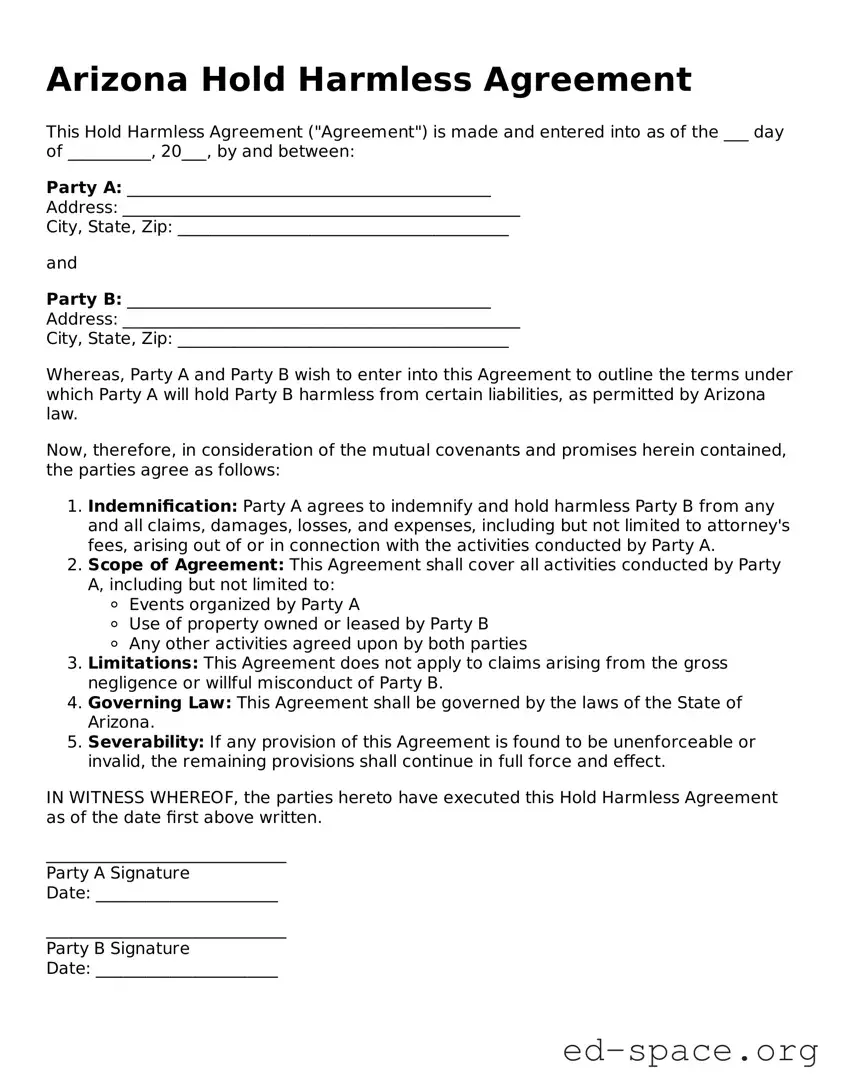
The Arizona Hold Harmless Agreement form serves as a crucial document in various transactions and activities, providing essential protections for parties involved. This agreement is designed to ensure that one party does not hold the other liable for any potential damages or injuries that may occur during the course of an event or activity. It outlines the responsibilities of each party and clearly delineates the scope of liability that is being waived. By signing this form, individuals or organizations can mitigate risks associated with accidents or unforeseen incidents, fostering a sense of security and trust. It is particularly relevant in contexts such as rental agreements, community events, and recreational activities, where the potential for accidents is heightened. Understanding the key components of this form, including the specific language used and the implications of its clauses, is vital for all parties involved to ensure that their rights are protected while engaging in various activities in Arizona.
Arizona Hold Harmless Agreement
This Hold Harmless Agreement ("Agreement") is made and entered into as of the ___ day of __________, 20___, by and between:
Party A: ____________________________________________
Address: ________________________________________________
City, State, Zip: ________________________________________
and
Party B: ____________________________________________
Address: ________________________________________________
City, State, Zip: ________________________________________
Whereas, Party A and Party B wish to enter into this Agreement to outline the terms under which Party A will hold Party B harmless from certain liabilities, as permitted by Arizona law.
Now, therefore, in consideration of the mutual covenants and promises herein contained, the parties agree as follows:
IN WITNESS WHEREOF, the parties hereto have executed this Hold Harmless Agreement as of the date first above written.
_____________________________
Party A Signature
Date: ______________________
_____________________________
Party B Signature
Date: ______________________
| Fact Name | Description |
|---|---|
| Purpose | The Arizona Hold Harmless Agreement is designed to protect one party from liability for injuries or damages that may occur during an activity or event. |
| Parties Involved | This agreement typically involves two parties: the indemnitor (the party agreeing to hold harmless) and the indemnitee (the party being protected). |
| Governing Law | The agreement is governed by Arizona state law, which outlines the enforceability and limitations of such agreements. |
| Limitations | Arizona law may impose certain limitations on hold harmless agreements, particularly in cases involving gross negligence or willful misconduct. |
| Common Uses | These agreements are commonly used in various contexts, including recreational activities, events, and construction projects, to mitigate risk. |
After obtaining the Arizona Hold Harmless Agreement form, it is important to complete it accurately to ensure that all parties involved are protected. Follow the steps below to fill out the form correctly.
What is a Hold Harmless Agreement in Arizona?
A Hold Harmless Agreement is a legal document that protects one party from liability for any damages or injuries that may occur during a specific activity or event. In Arizona, this agreement is commonly used in various situations, such as rental agreements, construction contracts, and event planning. By signing this agreement, one party agrees not to hold the other responsible for certain risks associated with the activity.
Who typically uses a Hold Harmless Agreement?
This type of agreement is often utilized by businesses, property owners, event organizers, and contractors. For example, a property owner may require a tenant to sign a Hold Harmless Agreement to limit liability for injuries that occur on the property. Similarly, contractors may ask subcontractors to sign such an agreement to protect themselves from claims arising from the subcontractor's work.
What are the key components of a Hold Harmless Agreement?
A Hold Harmless Agreement generally includes the following elements: identification of the parties involved, a clear description of the activity or event, the specific risks associated with that activity, and a statement indicating that one party will not hold the other liable for those risks. It is essential for the agreement to be clear and comprehensive to ensure all parties understand their rights and responsibilities.
Is a Hold Harmless Agreement legally binding in Arizona?
Yes, a Hold Harmless Agreement can be legally binding in Arizona, provided it meets certain criteria. The agreement must be clear, voluntary, and signed by both parties. However, courts may not enforce these agreements if they are deemed overly broad or if they attempt to waive liability for gross negligence or willful misconduct.
Can a Hold Harmless Agreement protect against all types of liability?
No, a Hold Harmless Agreement cannot protect against all types of liability. While it can cover many risks associated with an activity, it cannot shield a party from liability for gross negligence, intentional harm, or violations of public policy. It is crucial to understand the limitations of the agreement when drafting or signing one.
How do I create a Hold Harmless Agreement?
Creating a Hold Harmless Agreement involves drafting a document that includes all necessary components. It is advisable to clearly outline the scope of the agreement and specify the risks involved. While templates are available online, consulting with a legal professional can ensure that the agreement complies with Arizona law and adequately protects your interests.
Can a Hold Harmless Agreement be modified after it is signed?
Yes, a Hold Harmless Agreement can be modified after it is signed, but both parties must agree to the changes. Any modifications should be documented in writing and signed by both parties to ensure clarity and enforceability. Verbal agreements regarding changes may not be legally binding.
What should I do if I have questions about a Hold Harmless Agreement?
If you have questions about a Hold Harmless Agreement, it is best to consult with a legal professional. They can provide guidance on the implications of the agreement, help with drafting or reviewing the document, and clarify any concerns you may have about liability and responsibilities.
Where can I find a Hold Harmless Agreement template for Arizona?
Templates for Hold Harmless Agreements can be found online through various legal websites and resources. However, it is important to ensure that any template used is specific to Arizona law and tailored to the specific situation. Again, seeking legal advice is recommended to ensure that the document meets all legal requirements.
Not Reading the Entire Agreement: Many individuals skim through the document, missing important clauses. It's essential to understand all terms and conditions before signing.
Failing to Provide Accurate Information: Some people neglect to fill in their personal details correctly. This can lead to confusion or disputes later on.
Ignoring the Scope of Liability: Individuals often overlook the specific activities covered by the agreement. Understanding what you are agreeing to is crucial for your protection.
Not Seeking Legal Advice: Many sign the form without consulting a legal professional. Getting advice can help clarify your rights and responsibilities.
Overlooking Signature Requirements: Some forget to sign or date the document, rendering it invalid. Always ensure that all required signatures are present before submission.
When dealing with a Hold Harmless Agreement in Arizona, it's essential to understand that this document often works in conjunction with other forms. Each of these documents plays a crucial role in ensuring that all parties are protected and that the terms of the agreement are clear. Here are four commonly associated forms:
Understanding these documents can help ensure that you are fully prepared and protected. Each form serves a specific purpose and, when used together, they create a comprehensive safety net for all parties involved. Always consider consulting with a legal professional to ensure that your agreements are thorough and enforceable.
When completing the Arizona Hold Harmless Agreement form, it's important to approach the task with care. Below are some guidelines on what to do and what to avoid.
Understanding the Arizona Hold Harmless Agreement form is crucial for anyone entering into contracts in the state. However, several misconceptions often arise regarding this legal document. Here are six common misconceptions:
Being aware of these misconceptions can help individuals and businesses make informed decisions when dealing with Hold Harmless Agreements in Arizona.
When filling out and using the Arizona Hold Harmless Agreement form, it’s important to understand its key aspects. Here are some essential takeaways: