Creating a comprehensive employee handbook is an essential step for any business operating in Arizona. This vital document serves as a roadmap for employees, outlining their rights, responsibilities, and the company’s policies. The Arizona Employee Handbook form typically includes sections on workplace conduct, attendance policies, and procedures for reporting grievances. Additionally, it addresses important topics such as employee benefits, workplace safety, and anti-discrimination policies, ensuring that all employees understand the expectations and resources available to them. By clearly communicating these guidelines, employers not only promote a positive work environment but also protect themselves from potential legal issues. A well-crafted handbook can foster a culture of transparency and trust, making it easier for employees to navigate their roles within the organization. Understanding the significance of each component in the handbook will help employers create a tailored document that meets both legal requirements and the unique needs of their workforce.
Arizona Employee Handbook Template
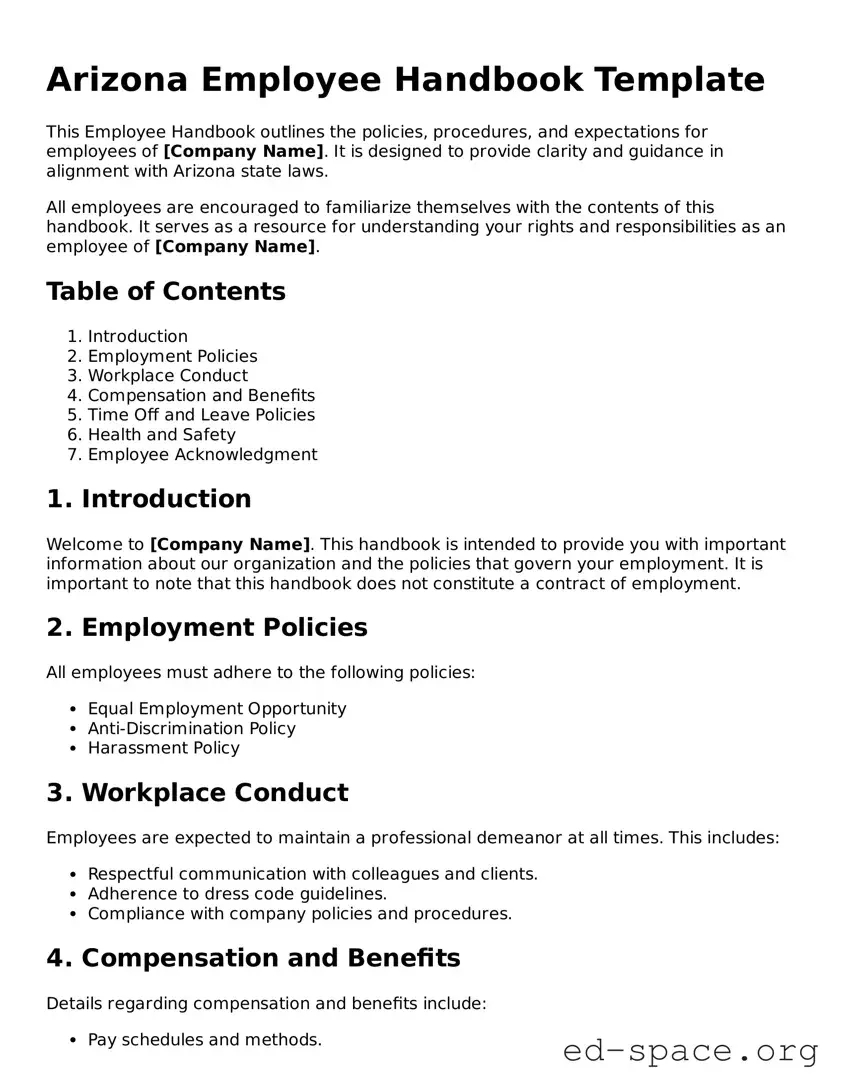
This Employee Handbook outlines the policies, procedures, and expectations for employees of [Company Name]. It is designed to provide clarity and guidance in alignment with Arizona state laws.
All employees are encouraged to familiarize themselves with the contents of this handbook. It serves as a resource for understanding your rights and responsibilities as an employee of [Company Name].
Table of Contents
1. Introduction
Welcome to [Company Name]. This handbook is intended to provide you with important information about our organization and the policies that govern your employment. It is important to note that this handbook does not constitute a contract of employment.
2. Employment Policies
All employees must adhere to the following policies:
3. Workplace Conduct
Employees are expected to maintain a professional demeanor at all times. This includes:
4. Compensation and Benefits
Details regarding compensation and benefits include:
5. Time Off and Leave Policies
Employees are entitled to various forms of leave, including:
6. Health and Safety
The health and safety of our employees is a top priority. Employees must:
7. Employee Acknowledgment
By signing below, you acknowledge that you have received and understood the policies outlined in this Employee Handbook.
Employee Name: [Employee Name]
Signature: ______________________
Date: __________________________
| Fact Name | Description |
|---|---|
| Purpose | The Arizona Employee Handbook serves to communicate company policies, procedures, and expectations to employees. |
| Legal Requirement | While not legally required, having an employee handbook is highly recommended to clarify workplace rules and protect the company. |
| Governing Laws | Arizona labor laws, including the Arizona Revised Statutes (ARS), govern employment practices and workplace rights. |
| Content Guidelines | It should include sections on employment policies, workplace conduct, and benefits, among others. |
| At-Will Employment | Arizona is an at-will employment state, meaning employers can terminate employees for any lawful reason, unless stated otherwise in the handbook. |
| Non-Discrimination Policies | The handbook should outline the company’s commitment to a discrimination-free workplace, aligning with federal and state laws. |
| Employee Acknowledgment | It’s important for employees to sign an acknowledgment form indicating they have received and understood the handbook. |
| Regular Updates | The handbook should be reviewed and updated regularly to reflect changes in laws and company policies. |
After you have obtained the Arizona Employee Handbook form, it is essential to complete it accurately. This ensures that all necessary information is provided for your employment records. Follow these steps carefully to fill out the form correctly.
Once you have filled out the form, ensure that it is submitted to the appropriate department for processing. Keep a copy for your records.
What is the Arizona Employee Handbook form?
The Arizona Employee Handbook form is a document designed to outline the policies, procedures, and expectations of an employer for their employees. It serves as a guide for employees regarding workplace rules, benefits, and company culture. This handbook is essential for maintaining clarity and consistency within the workplace.
Why is an Employee Handbook important?
An Employee Handbook is important because it helps establish a clear understanding of the company’s policies and procedures. It can prevent misunderstandings and disputes by providing employees with written guidelines. Additionally, having a handbook can protect the employer by demonstrating that they have communicated their policies effectively.
What should be included in the Arizona Employee Handbook?
The handbook should include sections on company values, employee conduct, attendance policies, benefits information, and procedures for reporting grievances. It may also cover topics such as workplace safety, anti-discrimination policies, and disciplinary actions. Each section should be clear and concise to ensure that all employees can easily understand the content.
How often should the Employee Handbook be updated?
The Employee Handbook should be reviewed and updated regularly, at least annually. Changes in laws, company policies, or workplace culture may necessitate updates. Keeping the handbook current ensures that employees have access to the most relevant information and helps the company remain compliant with legal requirements.
Who is responsible for distributing the Employee Handbook?
The responsibility for distributing the Employee Handbook typically falls to the human resources department or the management team. It is crucial that all employees receive a copy upon hiring and are informed about any updates or revisions made to the handbook throughout their employment.
Can employees provide feedback on the Employee Handbook?
Yes, employees can and should provide feedback on the Employee Handbook. Encouraging employee input can lead to improvements in the handbook and foster a sense of ownership among staff. Feedback can be gathered through surveys, meetings, or suggestion boxes, allowing employees to voice their opinions on policies and procedures.
What should an employee do if they have questions about the handbook?
If an employee has questions about the handbook, they should first review the relevant section of the document. If further clarification is needed, they should reach out to their supervisor or the human resources department. Open communication is encouraged to ensure that all employees fully understand the policies and procedures outlined in the handbook.
Is the Employee Handbook legally binding?
While the Employee Handbook is not typically considered a legally binding contract, it can have legal implications. The policies outlined may create expectations for both the employer and the employee. Therefore, it is important for the handbook to be carefully crafted to avoid unintended contractual obligations. Consulting legal counsel during the creation or revision of the handbook is advisable.
Failing to read the entire handbook before signing. Understanding the policies is crucial.
Not providing accurate personal information. Double-check names, addresses, and contact details.
Skipping required signatures. Every signature is necessary to validate the form.
Overlooking the acknowledgment section. This section confirms understanding of the handbook.
Ignoring the deadline for submission. Late submissions can lead to complications.
Not asking questions about unclear policies. Clarification is key to compliance.
Failing to update the form after personal changes. Keep information current to avoid issues.
Neglecting to keep a copy of the submitted form. Always retain a personal record.
Assuming all policies are the same as previous handbooks. Changes can occur, so review carefully.
Not seeking help from HR if needed. HR is there to assist with any concerns or confusion.
When establishing workplace policies and guidelines, the Arizona Employee Handbook is just one of several important documents that employers may need. Each of these documents serves a unique purpose in creating a clear and compliant work environment. Below is a list of other forms and documents commonly used alongside the Employee Handbook.
Each of these documents plays a vital role in shaping the workplace environment and ensuring compliance with legal standards. Together with the Employee Handbook, they help create a structured and supportive atmosphere for employees, ultimately contributing to the organization's success.
The Employee Handbook serves as a crucial resource for employees, outlining policies, procedures, and expectations within the workplace. Several other documents share similarities with the Employee Handbook, each serving a distinct purpose while providing essential information to employees. Here is a list of seven documents that resemble the Employee Handbook in various ways:
Each of these documents plays a vital role in fostering a clear understanding of workplace expectations and resources available to employees. Together, they contribute to a well-informed and engaged workforce.
When filling out the Arizona Employee Handbook form, it is essential to follow specific guidelines to ensure accuracy and compliance. Here are some important do's and don'ts to consider:
When it comes to the Arizona Employee Handbook form, there are several misconceptions that can lead to confusion for both employers and employees. Understanding these misconceptions is crucial for creating a clear and effective handbook.
Many people believe that once an employee signs the handbook, it becomes a contract. However, this is not necessarily true. Most employee handbooks include a disclaimer stating that the policies are subject to change and do not create a contractual obligation.
Some think that there is a one-size-fits-all approach to employee handbooks. In reality, each handbook should reflect the unique culture, values, and legal requirements of the specific organization. Customization is key.
While handbooks aim to address a wide range of workplace scenarios, they cannot cover every possible situation that may arise. It is important to remember that handbooks serve as guidelines, and managers should still use their discretion in unique circumstances.
Some employers believe that once an employee handbook is established, it can remain unchanged indefinitely. This is a misconception. Laws and workplace dynamics evolve, so regular updates are necessary to ensure compliance and relevance.
When filling out and using the Arizona Employee Handbook form, there are several important points to keep in mind. Here are key takeaways to ensure you navigate the process effectively:
By following these key takeaways, organizations can create a comprehensive and effective employee handbook that serves both the employer's and employees' interests.