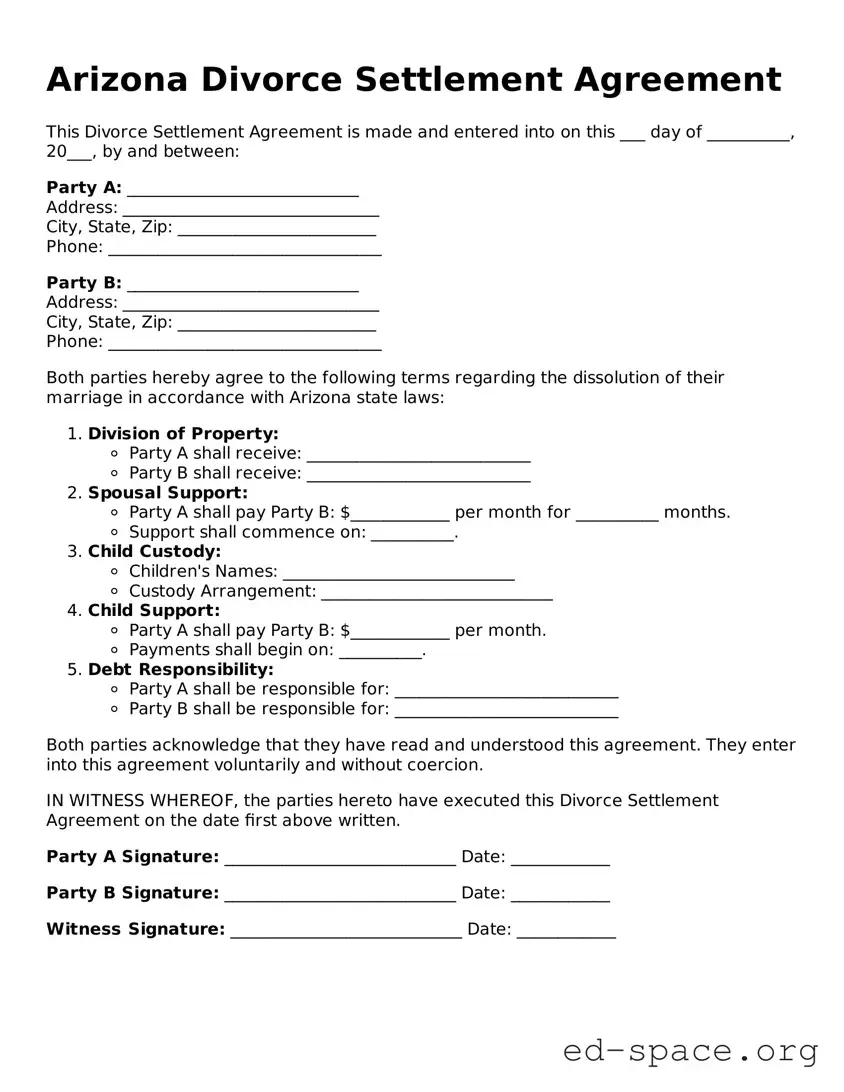
In the landscape of divorce proceedings in Arizona, the Divorce Settlement Agreement form plays a pivotal role in facilitating a smooth transition for both parties involved. This document serves as a comprehensive outline of the terms and conditions agreed upon by spouses seeking to dissolve their marriage. It encompasses critical aspects such as the division of property, allocation of debts, child custody arrangements, and spousal support, ensuring that all necessary details are meticulously addressed. By clearly delineating the responsibilities and rights of each party, this agreement not only aids in minimizing potential disputes but also provides a sense of closure as couples move forward with their lives. Understanding the nuances of this form is essential for anyone navigating the complexities of divorce, as it lays the groundwork for a fair and equitable resolution.
Arizona Divorce Settlement Agreement
This Divorce Settlement Agreement is made and entered into on this ___ day of __________, 20___, by and between:
Party A: ____________________________
Address: _______________________________
City, State, Zip: ________________________
Phone: _________________________________
Party B: ____________________________
Address: _______________________________
City, State, Zip: ________________________
Phone: _________________________________
Both parties hereby agree to the following terms regarding the dissolution of their marriage in accordance with Arizona state laws:
Both parties acknowledge that they have read and understood this agreement. They enter into this agreement voluntarily and without coercion.
IN WITNESS WHEREOF, the parties hereto have executed this Divorce Settlement Agreement on the date first above written.
Party A Signature: ____________________________ Date: ____________
Party B Signature: ____________________________ Date: ____________
Witness Signature: ____________________________ Date: ____________
| Fact Name | Details |
|---|---|
| Purpose | The Arizona Divorce Settlement Agreement form outlines the terms agreed upon by both parties regarding the division of assets, debts, and other relevant issues during a divorce. |
| Governing Law | This form is governed by Arizona Revised Statutes Title 25, which covers marriage and divorce laws in the state. |
| Mutual Agreement | Both parties must voluntarily agree to the terms specified in the settlement agreement for it to be valid and enforceable. |
| Filing Requirement | The completed agreement must be filed with the court as part of the divorce proceedings to ensure it is recognized legally. |
| Modification | Changes to the settlement agreement can be made, but both parties must consent to any modifications in writing. |
After obtaining the Arizona Divorce Settlement Agreement form, it’s important to ensure that all necessary information is filled out accurately. Completing this form is a critical step in the divorce process. Once the form is filled out, it will need to be submitted to the court along with any other required documents.
What is a Divorce Settlement Agreement in Arizona?
A Divorce Settlement Agreement is a legal document that outlines the terms of a divorce between two parties. It addresses various issues such as property division, child custody, visitation rights, and spousal support. This agreement is crucial for ensuring that both parties have a clear understanding of their rights and responsibilities following the divorce.
Who needs to complete a Divorce Settlement Agreement?
Both spouses involved in a divorce should complete a Divorce Settlement Agreement. It is particularly important for couples who have children, shared assets, or debts. This document helps to clarify arrangements and minimize disputes, making the divorce process smoother.
How do I create a Divorce Settlement Agreement?
Creating a Divorce Settlement Agreement typically involves discussions between both parties about their needs and preferences. It can be drafted with the assistance of a lawyer or through mediation. Once the terms are agreed upon, the document should be written clearly and signed by both parties to ensure it is legally binding.
Is a Divorce Settlement Agreement legally binding?
Yes, once both parties sign the Divorce Settlement Agreement and it is submitted to the court, it becomes legally binding. This means that both parties are required to adhere to the terms outlined in the agreement. If one party fails to comply, the other party may seek legal recourse.
Can I modify a Divorce Settlement Agreement after it is signed?
Modifications to a Divorce Settlement Agreement can be made, but they typically require mutual consent from both parties. If circumstances change significantly, such as a job loss or relocation, a court may allow for modifications. It is essential to document any changes formally to maintain clarity and legality.
What happens if we cannot agree on the terms of the Divorce Settlement Agreement?
If the parties cannot reach an agreement, they may need to go through mediation or, in some cases, litigation. Mediation involves a neutral third party who helps facilitate discussions and negotiations. If mediation fails, the case may proceed to court, where a judge will make the final decisions regarding the divorce terms.
Do I need a lawyer to draft a Divorce Settlement Agreement?
While it is not mandatory to have a lawyer draft a Divorce Settlement Agreement, it is highly advisable. A lawyer can ensure that the agreement complies with state laws and adequately protects your interests. They can also provide guidance on complex issues such as child custody and asset division.
How long does it take to finalize a Divorce Settlement Agreement?
The time it takes to finalize a Divorce Settlement Agreement varies depending on the complexity of the issues and the willingness of both parties to negotiate. If both parties agree on terms quickly, it may take a few weeks. However, if there are disputes, it could take several months or longer to reach a resolution.
Where do I file the Divorce Settlement Agreement?
The Divorce Settlement Agreement should be filed with the family court in the county where the divorce is taking place. It is important to follow the local court's procedures for filing, as requirements may vary by jurisdiction. Once filed, the court will review the agreement and, if acceptable, incorporate it into the final divorce decree.
Incomplete Information: One common mistake is leaving sections blank or not providing all required details. Ensure every part of the form is filled out completely.
Incorrect Names: Using incorrect names for either party can lead to complications. Double-check spelling and ensure the names match legal documents.
Failure to Disclose Assets: Not listing all assets and debts can result in future disputes. Be thorough and honest about financial matters.
Misunderstanding Custody Terms: Misinterpreting custody arrangements can affect parenting plans. Clearly outline custody terms to avoid confusion.
Ignoring State Guidelines: Each state has specific requirements for divorce settlements. Familiarize yourself with Arizona's rules to ensure compliance.
Not Considering Tax Implications: Failing to account for tax consequences of asset division can lead to unexpected financial burdens. Consult a tax professional if necessary.
Skipping Signatures: Forgetting to sign the agreement can delay the divorce process. Ensure both parties have signed and dated the document.
Neglecting to Review the Agreement: Not reviewing the completed form can lead to overlooked errors. Take time to read through the entire document carefully.
Rushing the Process: Hurrying to complete the form can result in mistakes. Take the necessary time to gather information and fill out the agreement accurately.
The Arizona Divorce Settlement Agreement form is a crucial document in the divorce process, outlining the terms agreed upon by both parties. However, several other forms and documents often accompany it to ensure a comprehensive resolution of all matters related to the divorce. Below is a list of these commonly used documents.
Each of these documents plays a vital role in the divorce process, ensuring that all aspects are addressed and that both parties have a clear understanding of their rights and responsibilities. Proper completion and submission of these forms can facilitate a smoother transition into post-divorce life.
When filling out the Arizona Divorce Settlement Agreement form, it’s important to approach the task carefully. Here are some things you should and shouldn't do:
Understanding the Arizona Divorce Settlement Agreement form is crucial for anyone navigating the divorce process. However, several misconceptions can lead to confusion. Here are nine common misunderstandings:
This is incorrect. The Divorce Settlement Agreement form is essential for all divorces, regardless of whether children are part of the equation. It outlines the terms of the divorce, including asset division and spousal support.
This is a misconception. While the signed agreement is binding, parties can modify the terms if both agree and submit the changes to the court for approval.
This is not true. The Divorce Settlement Agreement can address various matters, including child custody, visitation rights, and property division.
While it can be complex, many people find the process straightforward, especially with proper guidance. The form is designed to be user-friendly.
This is misleading. Individuals can complete the form themselves, but consulting with a legal professional is advisable to ensure all aspects are covered.
This is not accurate. The court reviews the agreement to ensure it is fair and in the best interest of any children involved before granting approval.
This can be misleading. While divorce filings are generally public, certain details in the agreement can be kept confidential, depending on the circumstances.
This is not necessarily true. Many jurisdictions allow for electronic filing of the Divorce Settlement Agreement, making the process more convenient.
This is a risky assumption. While templates can be helpful, each divorce is unique, and it is essential to tailor the agreement to specific circumstances.
By addressing these misconceptions, individuals can approach the Arizona Divorce Settlement Agreement with greater clarity and confidence.
When filling out and using the Arizona Divorce Settlement Agreement form, keep the following key points in mind:
Following these guidelines can help make the process smoother and ensure that your interests are protected.