When entering into a commercial lease agreement in Arizona, both landlords and tenants should pay close attention to the details outlined in the lease form. This document serves as a binding contract that establishes the terms and conditions under which a business can occupy a commercial space. Key components typically included in the Arizona Commercial Lease Agreement form are the duration of the lease, rental payment terms, security deposits, and maintenance responsibilities. Additionally, clauses regarding property use, subleasing, and termination rights are critical for both parties. Understanding these elements is essential for ensuring that the lease aligns with the business needs and legal requirements. By carefully reviewing and negotiating the terms of this agreement, both landlords and tenants can protect their interests and foster a successful business relationship.
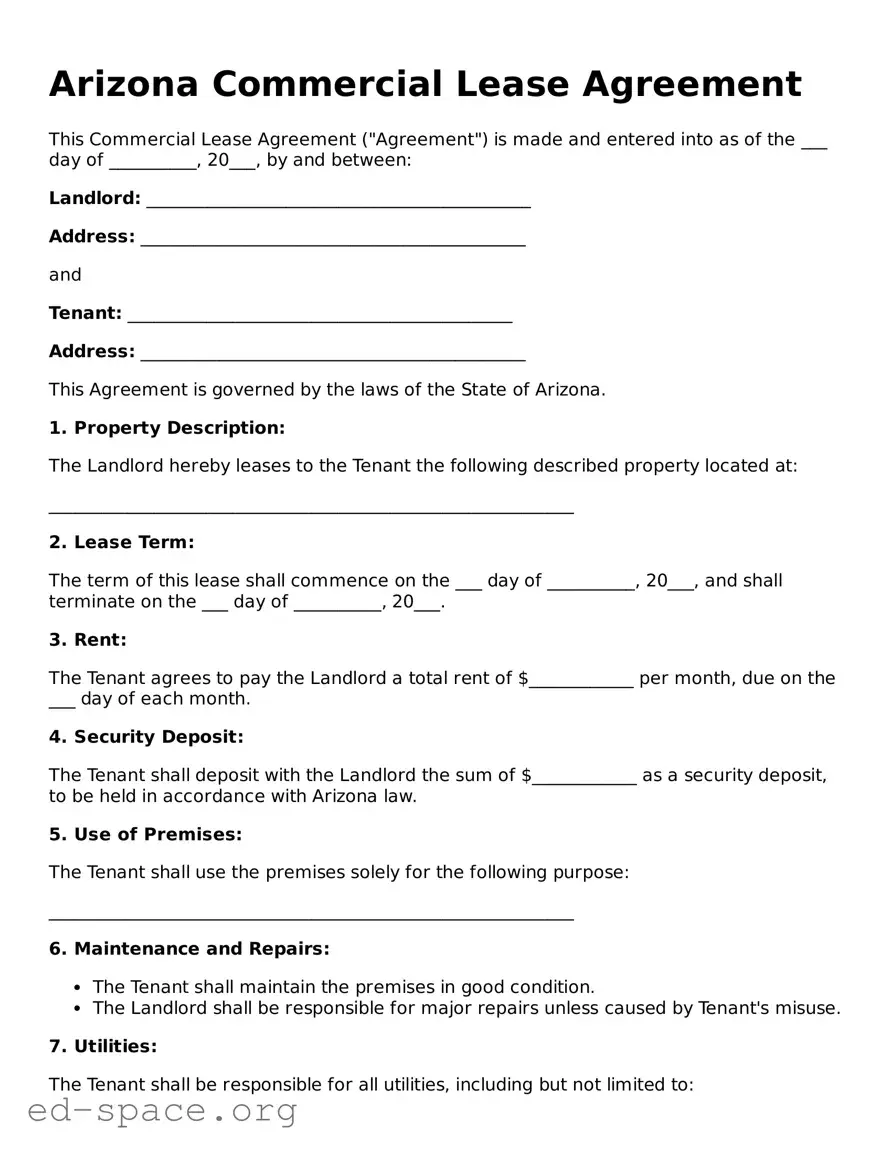
Arizona Commercial Lease Agreement
This Commercial Lease Agreement ("Agreement") is made and entered into as of the ___ day of __________, 20___, by and between:
Landlord: ____________________________________________
Address: ____________________________________________
and
Tenant: ____________________________________________
Address: ____________________________________________
This Agreement is governed by the laws of the State of Arizona.
1. Property Description:
The Landlord hereby leases to the Tenant the following described property located at:
____________________________________________________________
2. Lease Term:
The term of this lease shall commence on the ___ day of __________, 20___, and shall terminate on the ___ day of __________, 20___.
3. Rent:
The Tenant agrees to pay the Landlord a total rent of $____________ per month, due on the ___ day of each month.
4. Security Deposit:
The Tenant shall deposit with the Landlord the sum of $____________ as a security deposit, to be held in accordance with Arizona law.
5. Use of Premises:
The Tenant shall use the premises solely for the following purpose:
____________________________________________________________
6. Maintenance and Repairs:
7. Utilities:
The Tenant shall be responsible for all utilities, including but not limited to:
8. Insurance:
The Tenant shall maintain liability insurance in the amount of $____________ and provide proof of such insurance to the Landlord.
9. Termination:
Either party may terminate this Agreement with a written notice of ___ days prior to the desired termination date.
10. Governing Law:
This Agreement shall be governed by and construed in accordance with the laws of the State of Arizona.
IN WITNESS WHEREOF, the parties hereto have executed this Agreement as of the day and year first above written.
Landlord Signature: ___________________________
Date: ___________________________
Tenant Signature: ___________________________
Date: ___________________________
| Fact Name | Details |
|---|---|
| Governing Law | The Arizona Commercial Lease Agreement is governed by Arizona state laws, specifically Title 33 of the Arizona Revised Statutes. |
| Parties Involved | The lease agreement involves at least two parties: the landlord (lessor) and the tenant (lessee). |
| Property Description | A detailed description of the commercial property being leased must be included, specifying the address and any relevant characteristics. |
| Lease Term | The lease agreement should clearly state the duration of the lease, including start and end dates, as well as any renewal options. |
| Rent Payment | The agreement must outline the rent amount, payment schedule, and acceptable payment methods. |
| Security Deposit | Details regarding the security deposit, including the amount and conditions for its return, should be clearly specified. |
| Maintenance Responsibilities | The lease should define the responsibilities of both the landlord and tenant regarding property maintenance and repairs. |
Completing the Arizona Commercial Lease Agreement form is a straightforward process. This document outlines the terms and conditions for leasing commercial property in Arizona. To ensure accuracy and clarity, follow these steps carefully.
What is an Arizona Commercial Lease Agreement?
An Arizona Commercial Lease Agreement is a legally binding contract between a landlord and a business tenant. It outlines the terms under which the tenant may occupy and use a commercial property. This agreement typically covers essential aspects such as rent, duration of the lease, maintenance responsibilities, and permitted uses of the property.
What are the key components of the agreement?
The key components of an Arizona Commercial Lease Agreement include the names of the parties involved, a description of the leased premises, the lease term, rental payment details, security deposit requirements, maintenance obligations, and provisions for terminating the lease. Additionally, it may address issues such as subleasing, insurance requirements, and dispute resolution procedures.
How is rent typically structured in a commercial lease?
Rent in a commercial lease can be structured in various ways. It may be a fixed monthly amount, or it could be based on a percentage of the tenant's sales. Some leases also include provisions for annual rent increases. It is crucial for both parties to clearly define the payment schedule and any additional costs, such as utilities or property taxes, in the agreement.
What happens if the tenant fails to pay rent?
If a tenant fails to pay rent as stipulated in the lease, the landlord has several options. Typically, the lease will outline a grace period during which the tenant can make the payment without penalty. If the tenant still does not pay, the landlord may initiate eviction proceedings, provided they follow the legal process outlined in Arizona law. This often involves providing notice to the tenant before taking further action.
Can a commercial lease be modified after signing?
Yes, a commercial lease can be modified after signing, but both parties must agree to the changes. Any modifications should be documented in writing and signed by both the landlord and the tenant to ensure they are enforceable. Verbal agreements are generally not sufficient to alter the terms of a lease.
What is the typical lease term for a commercial lease?
The typical lease term for a commercial lease in Arizona can vary widely, ranging from one year to ten years or more. The duration often depends on the nature of the business and the specific needs of the tenant. Shorter leases may offer flexibility, while longer leases can provide stability and predictability for both parties.
Are there any specific legal requirements for commercial leases in Arizona?
Yes, Arizona has specific legal requirements that govern commercial leases. For instance, the lease must comply with state laws regarding security deposits, property maintenance, and eviction processes. Additionally, certain disclosures may be required, such as information about the condition of the property. It is advisable for both landlords and tenants to familiarize themselves with these laws to ensure compliance.
What should tenants consider before signing a commercial lease?
Before signing a commercial lease, tenants should carefully review the terms of the agreement. They should consider the location, size, and suitability of the space for their business needs. Additionally, tenants should assess the financial implications, including rent and additional costs, and seek legal advice if necessary. Understanding the lease's terms can prevent disputes and ensure a successful tenancy.
Failing to provide accurate property details. It's crucial to include the correct address and specific unit number. Omissions can lead to confusion and potential legal disputes.
Not specifying the lease term. Clearly stating the start and end dates of the lease is essential. Ambiguities can result in misunderstandings about the duration of occupancy.
Overlooking the rent amount and payment terms. Ensure that the rent is stated clearly, along with the due date and acceptable payment methods. Missing this information can lead to late payments or disputes.
Ignoring maintenance responsibilities. Clearly outline who is responsible for repairs and maintenance. This prevents future disagreements regarding property upkeep.
Not including provisions for renewals or terminations. Addressing how the lease can be renewed or terminated protects both parties and clarifies their options at the end of the lease term.
Failing to disclose any existing liens or encumbrances. Full transparency about any claims against the property is necessary to avoid legal complications down the line.
Neglecting to review local laws and regulations. Each jurisdiction may have specific requirements that must be met. Ignoring these can invalidate parts of the lease agreement.
When entering into a commercial lease agreement in Arizona, several additional documents may be necessary to ensure a smooth transaction and clear understanding between the parties involved. These documents help clarify responsibilities, outline terms, and protect the interests of both landlords and tenants. Below is a list of commonly used forms and documents that often accompany the Arizona Commercial Lease Agreement.
These documents play a crucial role in establishing a clear and legally binding relationship between landlords and tenants. By ensuring that all necessary paperwork is in order, both parties can avoid potential misunderstandings and disputes in the future.
Residential Lease Agreement: Similar to a commercial lease, a residential lease agreement outlines the terms under which a landlord rents property to a tenant. Both documents specify the duration of the lease, payment terms, and responsibilities of each party. However, the residential lease is tailored for living spaces, while the commercial lease is designed for business purposes.
Sublease Agreement: A sublease agreement allows a tenant to rent out all or part of their leased space to another party. Like a commercial lease, it includes terms regarding the use of the property and payment obligations. The primary difference lies in the fact that a sublease is dependent on the original lease agreement.
Letter of Intent: A letter of intent serves as a preliminary agreement outlining the basic terms of a lease before formal negotiations begin. It shares similarities with a commercial lease in that it addresses critical aspects such as rental rates and lease duration, but it is typically non-binding and less detailed.
Real Estate Purchase Agreement: This document is used when a property is being sold rather than leased. While a commercial lease agreement details the terms of renting a property, a purchase agreement outlines the terms of sale, including price, contingencies, and closing details. Both documents share the need for clarity in terms and conditions.
When filling out the Arizona Commercial Lease Agreement form, attention to detail is crucial. Below is a list of things you should and shouldn't do to ensure a smooth process.
By following these guidelines, you can help avoid misunderstandings and ensure that your lease agreement is legally sound.
Understanding the Arizona Commercial Lease Agreement form can be challenging. Many people hold misconceptions about it. Here are nine common misunderstandings:
By understanding these misconceptions, both landlords and tenants can approach the Arizona Commercial Lease Agreement with more confidence and clarity.
When filling out and using the Arizona Commercial Lease Agreement form, there are several important points to keep in mind. Understanding these key takeaways can help ensure a smooth leasing process.
By keeping these takeaways in mind, you can navigate the Arizona Commercial Lease Agreement process more effectively.