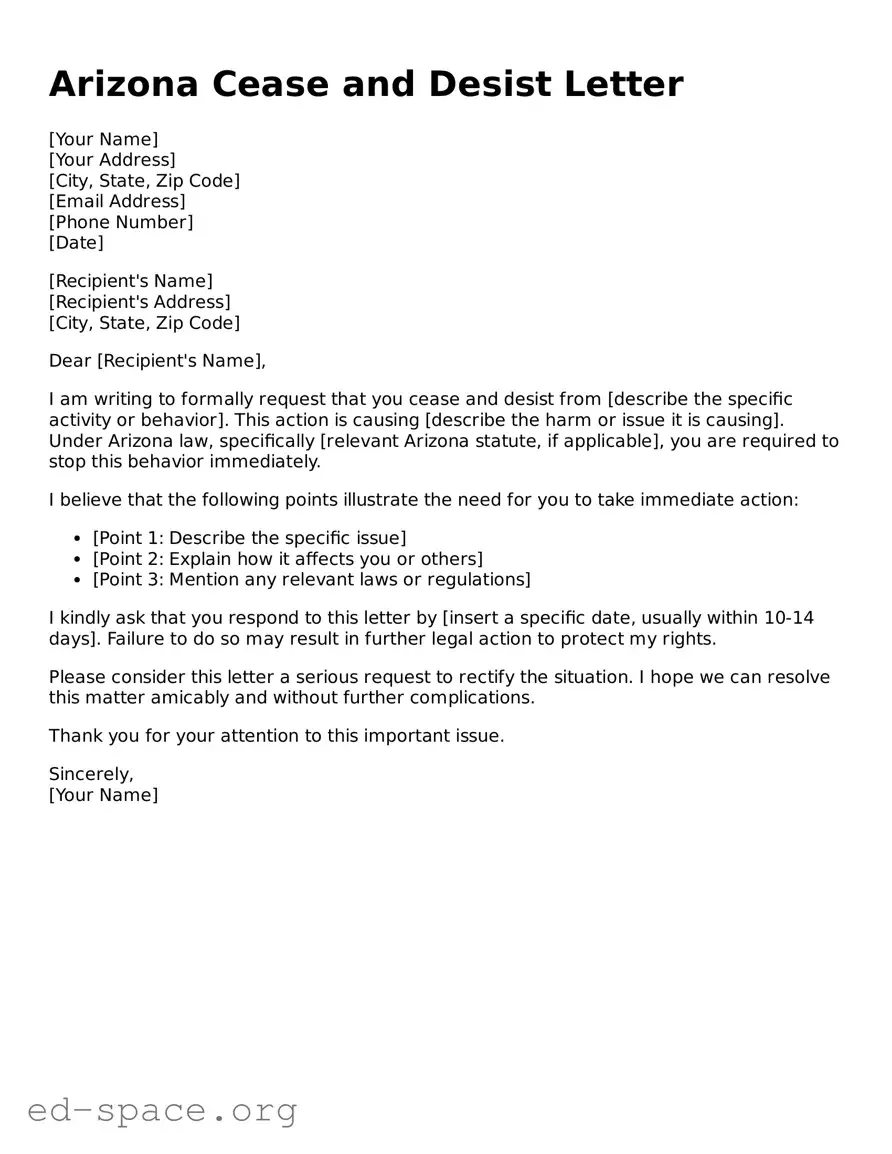
In Arizona, a Cease and Desist Letter serves as an important tool for individuals and businesses seeking to address unwanted behavior or actions that infringe upon their rights. This letter is often the first step in resolving disputes without resorting to litigation. It outlines specific grievances, such as harassment, copyright infringement, or breach of contract, and demands that the offending party stop the identified actions immediately. By clearly stating the issues at hand and the desired outcomes, the letter not only communicates the seriousness of the situation but also establishes a formal record of the complaint. The form typically includes essential details such as the names of the parties involved, a description of the objectionable conduct, and a deadline for compliance. Additionally, it may highlight potential legal consequences if the recipient fails to adhere to the request. Overall, utilizing a Cease and Desist Letter can be an effective way to protect one’s rights while fostering a resolution that avoids further conflict.
Arizona Cease and Desist Letter
[Your Name]
[Your Address]
[City, State, Zip Code]
[Email Address]
[Phone Number]
[Date]
[Recipient's Name]
[Recipient's Address]
[City, State, Zip Code]
Dear [Recipient's Name],
I am writing to formally request that you cease and desist from [describe the specific activity or behavior]. This action is causing [describe the harm or issue it is causing]. Under Arizona law, specifically [relevant Arizona statute, if applicable], you are required to stop this behavior immediately.
I believe that the following points illustrate the need for you to take immediate action:
I kindly ask that you respond to this letter by [insert a specific date, usually within 10-14 days]. Failure to do so may result in further legal action to protect my rights.
Please consider this letter a serious request to rectify the situation. I hope we can resolve this matter amicably and without further complications.
Thank you for your attention to this important issue.
Sincerely,
[Your Name]
| Fact Name | Description |
|---|---|
| Purpose | A cease and desist letter is used to formally request that an individual or organization stop a specific activity that is believed to be unlawful or harmful. |
| Governing Law | In Arizona, cease and desist letters are governed by various state laws, including Arizona Revised Statutes (ARS) Title 12 and Title 44. |
| Format | The letter should be clear and concise, typically including the sender's information, the recipient's information, a description of the issue, and a request to cease the activity. |
| Delivery Method | It is recommended to send the letter via certified mail to ensure that there is proof of delivery. |
| Legal Standing | While a cease and desist letter is not a legal order, it can serve as a formal notice before pursuing further legal action. |
| Response Time | Recipients are generally given a reasonable amount of time to respond, often 10 to 30 days, depending on the situation. |
| Consequences of Ignoring | If the recipient ignores the letter, the sender may choose to escalate the matter by filing a lawsuit or taking other legal actions. |
| Use in Business | Businesses often use cease and desist letters to protect intellectual property rights, such as trademarks or copyrights. |
| Consultation Recommended | It is advisable to consult with a legal professional before sending a cease and desist letter to ensure it is appropriately drafted and effective. |
Once you have the Arizona Cease and Desist Letter form ready, it’s important to fill it out accurately. Completing this form correctly is crucial for ensuring that your request is taken seriously. Follow the steps below to provide all necessary information.
What is an Arizona Cease and Desist Letter?
An Arizona Cease and Desist Letter is a formal document sent to an individual or organization to demand that they stop engaging in a specific activity that is believed to be unlawful or harmful. This letter serves as a warning and outlines the nature of the objectionable behavior, providing the recipient an opportunity to correct their actions before legal action is pursued.
When should I use a Cease and Desist Letter?
This letter is typically used when someone believes their rights are being violated. Common scenarios include copyright infringement, harassment, defamation, or breach of contract. If you have made attempts to resolve the issue informally without success, a Cease and Desist Letter can serve as a more formal means of communication.
Is a Cease and Desist Letter legally binding?
No, a Cease and Desist Letter is not legally binding. It is essentially a request or demand. However, it can be an important step in the legal process. Sending this letter can demonstrate that you attempted to resolve the issue before escalating it to litigation, which may be viewed favorably by a court if the matter proceeds to that stage.
What should be included in an Arizona Cease and Desist Letter?
The letter should clearly identify the parties involved, describe the specific behavior that is being challenged, and explain how it violates your rights. Additionally, it should outline what actions you want the recipient to take to resolve the issue and provide a deadline for compliance. Including any relevant evidence or documentation can strengthen your position.
Can I send a Cease and Desist Letter on my own?
Yes, individuals can draft and send their own Cease and Desist Letters. However, it is advisable to consult with a legal professional, especially if the matter is complex or if you anticipate a potential dispute. A lawyer can ensure that the letter is appropriately worded and that your rights are adequately protected.
What happens if the recipient ignores the Cease and Desist Letter?
If the recipient ignores the letter, you may have several options. You can choose to escalate the matter by seeking legal counsel and potentially filing a lawsuit. Ignoring the letter does not absolve the recipient of responsibility; it may even strengthen your case if you decide to take further action.
How should I deliver the Cease and Desist Letter?
Delivery methods can vary, but it is recommended to send the letter via certified mail with a return receipt. This provides proof that the recipient received the letter. Alternatively, using a reputable courier service can also serve as a reliable delivery method. Email may be appropriate in some cases, but it is less formal and may not provide the same level of proof.
Can a Cease and Desist Letter be used in any situation?
While a Cease and Desist Letter is a versatile tool, it is not suitable for every situation. It is primarily effective for addressing disputes that involve rights violations. For issues that require immediate legal intervention or involve criminal behavior, contacting law enforcement or seeking legal advice may be more appropriate.
What are the potential consequences of sending a Cease and Desist Letter?
Sending a Cease and Desist Letter can have various consequences. It may prompt the recipient to cease their objectionable behavior, leading to a resolution without further conflict. Conversely, it could escalate tensions, prompting the recipient to respond defensively or even counter with their own legal actions. Careful consideration should be given to the situation before proceeding.
Inaccurate Information: One of the most common mistakes is providing incorrect or incomplete information. This can include misspelling names, using outdated addresses, or failing to include essential details about the parties involved. Accuracy is crucial, as any discrepancies can undermine the letter's effectiveness.
Lack of Specificity: The letter must clearly state the actions that are being requested to cease. Vague language or general complaints can lead to confusion. It's important to outline specific behaviors or actions that are objectionable, so the recipient understands exactly what needs to stop.
Failure to Include Supporting Evidence: Sometimes, individuals neglect to attach or reference any evidence supporting their claims. Including documentation, such as photographs, emails, or witness statements, can strengthen the case. Without this, the recipient may not take the claims seriously.
Ignoring Legal Requirements: Each state has specific legal requirements for cease and desist letters. Failing to adhere to these can result in the letter being ineffective. It's essential to understand Arizona's laws regarding such letters to ensure compliance and enhance the likelihood of a favorable outcome.
When dealing with disputes or unwanted actions, a Cease and Desist Letter is often just the first step. Several other forms and documents can support your case or help clarify your position. Here’s a look at some common documents that may accompany a Cease and Desist Letter in Arizona.
Understanding these documents can help you navigate the complexities of a legal dispute more effectively. Each serves a unique purpose and can play a crucial role in resolving your issue amicably or preparing for further action if necessary.
When completing the Arizona Cease and Desist Letter form, it is essential to approach the task with care and attention to detail. Below are some important dos and don’ts to keep in mind.
By following these guidelines, you can ensure that your Cease and Desist Letter is both effective and respectful. Taking the time to carefully prepare your letter can help facilitate a resolution to the issue at hand.
Many individuals have misunderstandings regarding the Arizona Cease and Desist Letter form. Below are six common misconceptions along with clarifications to provide a clearer understanding.
Understanding these misconceptions can help individuals approach the use of a cease and desist letter with realistic expectations and informed decision-making.
When filling out and using the Arizona Cease and Desist Letter form, keep the following key points in mind: