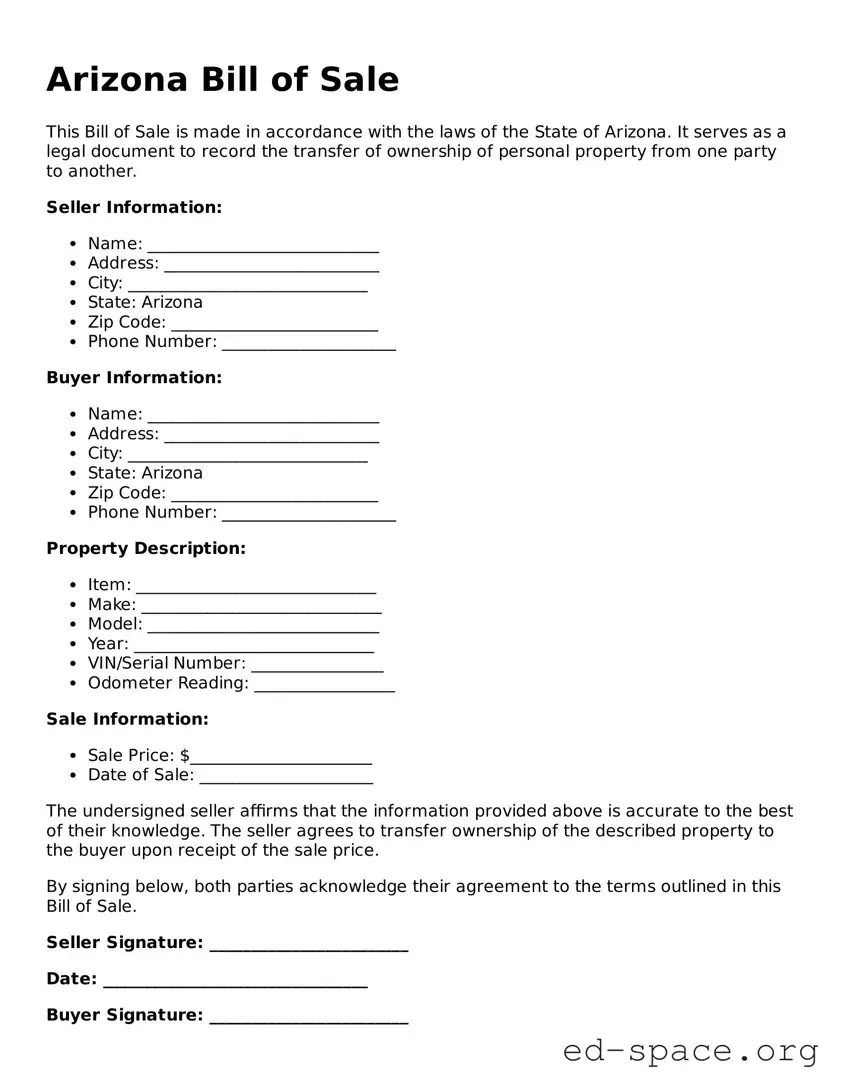
When engaging in the buying or selling of personal property in Arizona, a Bill of Sale form becomes an essential document to facilitate the transaction. This form serves as a written record that details the transfer of ownership from the seller to the buyer, ensuring that both parties have a clear understanding of the terms involved. Key elements typically included in the Arizona Bill of Sale are the names and addresses of both the buyer and seller, a description of the item being sold, the sale price, and the date of the transaction. Additionally, it may contain information regarding any warranties or representations made by the seller. By providing a structured outline of the agreement, this document not only protects the interests of both parties but also serves as a legal safeguard in case any disputes arise in the future. Understanding the nuances of this form is crucial for anyone looking to make a smooth and legally sound transaction in the state of Arizona.
Arizona Bill of Sale
This Bill of Sale is made in accordance with the laws of the State of Arizona. It serves as a legal document to record the transfer of ownership of personal property from one party to another.
Seller Information:
Buyer Information:
Property Description:
Sale Information:
The undersigned seller affirms that the information provided above is accurate to the best of their knowledge. The seller agrees to transfer ownership of the described property to the buyer upon receipt of the sale price.
By signing below, both parties acknowledge their agreement to the terms outlined in this Bill of Sale.
Seller Signature: ________________________
Date: ________________________________
Buyer Signature: ________________________
Date: ________________________________
| Fact Name | Description |
|---|---|
| Purpose | The Arizona Bill of Sale is used to document the transfer of ownership of personal property from one party to another. |
| Governing Law | The Bill of Sale is governed by Arizona Revised Statutes, specifically Title 44, Chapter 2. |
| Types of Property | This form can be used for various types of personal property, including vehicles, furniture, and equipment. |
| Notarization | While notarization is not required for all transactions, it is recommended for added legal protection. |
| Seller and Buyer Information | The form requires the full names and addresses of both the seller and the buyer for identification purposes. |
| Consideration | The document should state the purchase price or consideration exchanged for the property. |
| Condition of Property | It is advisable to include a description of the property's condition to avoid future disputes. |
| Retention of Copies | Both parties should retain a signed copy of the Bill of Sale for their records after the transaction. |
After obtaining the Arizona Bill of Sale form, you will need to complete it accurately. This document will serve as proof of the transaction between the buyer and the seller. Follow the steps below to fill out the form correctly.
Once you have completed the form, ensure that both parties keep a copy for their records. This will help avoid any disputes in the future.
What is an Arizona Bill of Sale form?
An Arizona Bill of Sale form is a legal document that records the transfer of ownership of personal property from one party to another. It serves as proof of the transaction and can be used for various types of property, including vehicles, boats, and personal items. Having a Bill of Sale is crucial for both the buyer and seller to ensure a clear understanding of the terms of the sale.
Is a Bill of Sale required in Arizona?
What information should be included in an Arizona Bill of Sale?
An effective Bill of Sale should include the following information: the names and addresses of both the buyer and seller, a detailed description of the property being sold, the purchase price, the date of the transaction, and signatures of both parties. Additional details, such as the condition of the item and any warranties or guarantees, can also be beneficial.
Do I need to have the Bill of Sale notarized?
Notarization is not a requirement for a Bill of Sale in Arizona. However, having the document notarized can add an extra layer of authenticity and may be useful in case of disputes. It is advisable to check with local regulations or the requirements of any involved institutions, such as the DMV for vehicle sales.
Can I create my own Bill of Sale form?
Yes, you can create your own Bill of Sale form in Arizona. It is important to ensure that all necessary information is included and that the document is clear and concise. Various templates are available online, which can serve as a helpful starting point. Always make sure to tailor the document to fit your specific transaction.
What if the item being sold has a lien on it?
If the item being sold has a lien, it is essential to disclose this information in the Bill of Sale. The seller must ensure that the lien is satisfied before transferring ownership. Failure to do so can lead to legal issues for both parties. It is advisable to contact the lienholder to understand the process for clearing the lien before completing the sale.
What should I do with the Bill of Sale after the transaction?
After the transaction is completed, both the buyer and seller should keep a copy of the Bill of Sale for their records. This document serves as proof of the transaction and can be useful for tax purposes or in case of any future disputes. It is recommended to store it in a safe place where it can be easily accessed if needed.
Can a Bill of Sale be used for gifting property?
Yes, a Bill of Sale can be used for gifting property in Arizona. Even if no money is exchanged, documenting the transfer is important. The Bill of Sale should clearly state that the property is being gifted, and it should include all relevant details about the item. This helps avoid any misunderstandings in the future.
Incomplete Information: Failing to provide all required details can lead to issues. This includes not listing the names, addresses, and signatures of both the buyer and seller.
Incorrect Item Description: Not accurately describing the item being sold can create confusion. Ensure that the make, model, year, and Vehicle Identification Number (VIN) are correctly stated for vehicles.
Missing Date: Omitting the date of the transaction can complicate the legal standing of the sale. Always include the exact date when the sale occurs.
Not Notarizing When Required: Certain transactions may require notarization. Failing to notarize can invalidate the document in some cases.
Ignoring State-Specific Requirements: Each state may have unique requirements for a Bill of Sale. Not adhering to Arizona's specific laws can lead to complications.
Failing to Keep Copies: Not retaining a copy of the Bill of Sale for personal records can cause problems later. Both parties should keep a signed copy for their records.
When completing a transaction in Arizona, especially involving the sale of personal property, several documents can accompany the Bill of Sale. These forms help ensure that both parties are protected and that the transaction is clear and legally binding. Here’s a list of commonly used documents that you might find useful.
Using these forms alongside the Arizona Bill of Sale can help streamline the transaction process and protect both parties involved. Always ensure that all documents are completed accurately and retained for your records.
A Bill of Sale is a document used to transfer ownership of personal property from one party to another. Several other documents serve similar purposes in various contexts. Below is a list of ten documents that share similarities with a Bill of Sale:
Each of these documents plays a role in establishing ownership rights and detailing the terms of a transaction, much like a Bill of Sale.
When filling out the Arizona Bill of Sale form, it’s important to ensure accuracy and completeness. Here’s a guide to help you navigate the process smoothly.
Understanding the Arizona Bill of Sale form is crucial for anyone involved in buying or selling personal property. However, there are several misconceptions that can lead to confusion. Here’s a breakdown of seven common misunderstandings:
Clearing up these misconceptions can help ensure that your transactions in Arizona go smoothly. Always consider having a Bill of Sale for your protection, regardless of the item or situation.
When filling out and using the Arizona Bill of Sale form, several important points should be considered to ensure the document is valid and serves its intended purpose. Below are key takeaways regarding the process: