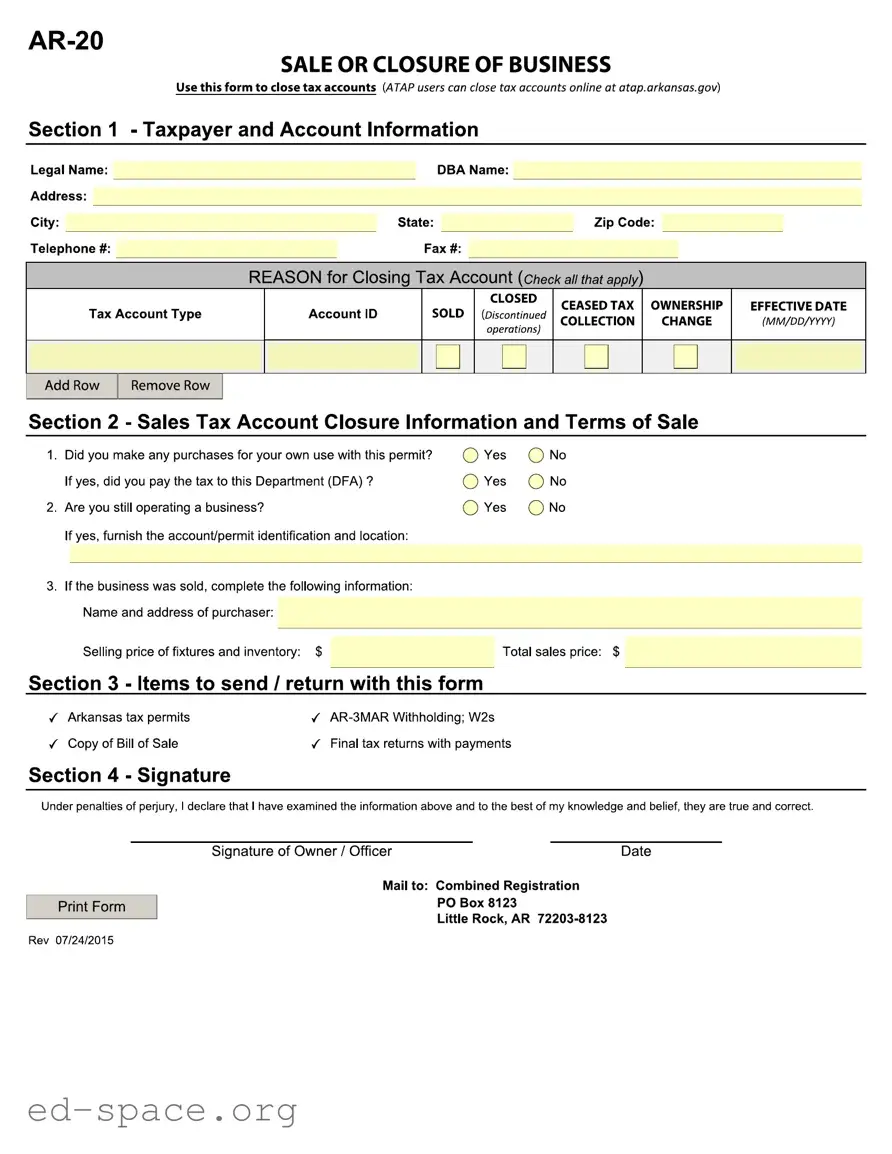
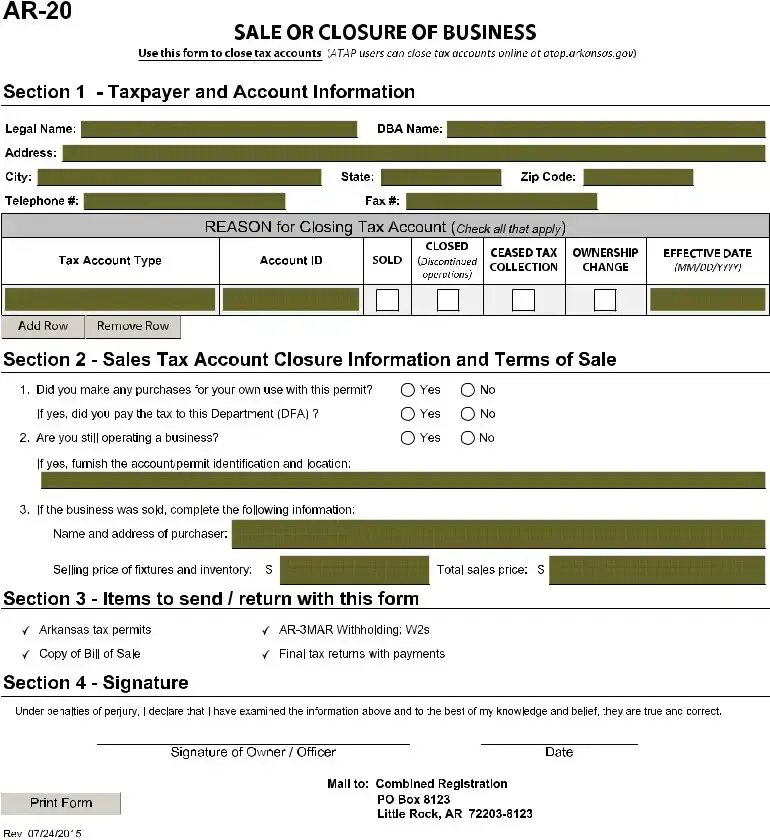
The AR-20 form is an essential document for individuals and businesses in Arkansas looking to officially close their tax accounts or report the sale of their business. This form provides a structured way to communicate important details about the taxpayer and their account, including legal names, addresses, and contact information. It also requires the taxpayer to specify the reason for closing the account, such as a sale, discontinuation of operations, or a change in ownership. Additionally, Section 2 delves into the specifics of the business's sales tax account closure, asking whether any purchases were made for personal use and if taxes were paid accordingly. If the business was sold, the form requests information about the purchaser and the selling price of fixtures and inventory. To ensure a complete submission, Section 3 outlines the necessary items to include with the form, such as Arkansas tax permits and final tax returns. Finally, the form mandates a signature from the owner or officer, affirming the accuracy of the provided information under penalty of perjury. This process is crucial for maintaining compliance with state tax regulations and ensuring a smooth transition for both the seller and buyer.
| Fact Name | Details |
|---|---|
| Purpose of Form | The AR-20 form is used to close tax accounts for businesses in Arkansas. |
| Online Closure Option | ATAP users can close tax accounts online at atap.arkansas.gov, providing a convenient alternative. |
| Required Information | Taxpayers must provide their legal name, address, and account information when completing the form. |
| Closure Reasons | Reasons for closing a tax account can include selling the business, ceasing operations, or an ownership change. |
| Supporting Documents | Along with the AR-20 form, taxpayers must send relevant documents like the Bill of Sale and final tax returns. |
| Governing Law | This form is governed by Arkansas state tax laws, ensuring compliance with local regulations. |
Completing the AR-20 form is essential for individuals or businesses wishing to officially close their tax accounts. This process ensures that all necessary information is provided to the Arkansas Department of Finance and Administration. Below are the steps to fill out the form accurately.
What is the purpose of the AR-20 form?
The AR-20 form is used to officially close tax accounts in Arkansas. It allows taxpayers to report the closure of their business, whether due to sale, discontinuation, or other reasons. This form helps ensure that the Arkansas Department of Finance and Administration (DFA) updates its records accordingly.
Who should fill out the AR-20 form?
Any business owner or authorized officer must complete the AR-20 form when they decide to close their business or terminate their tax accounts. This includes individuals who have sold their business, ceased operations, or experienced an ownership change.
What information is required on the AR-20 form?
The form requires various details, including the legal name of the business, address, and any "Doing Business As" (DBA) names. Additionally, it asks for the reason for closing the tax account, the effective date of closure, and information about any sales or purchases made under the tax permit.
What should I do if my business was sold?
If your business was sold, you must provide the name and address of the purchaser, along with the selling price of fixtures and inventory. You should also indicate the total sales price of the business on the form. This information is crucial for the DFA to process the closure accurately.
Are there any documents I need to submit with the AR-20 form?
Yes, when submitting the AR-20 form, you must include relevant documents such as Arkansas tax permits, a copy of the bill of sale, and any final tax returns with payments. These documents support the information provided and help finalize the closure process.
What happens after I submit the AR-20 form?
After submitting the AR-20 form, the DFA will review the information. If everything is in order, they will update their records to reflect the closure of your tax accounts. It is advisable to keep a copy of the submitted form and any accompanying documents for your records.
Incomplete Taxpayer Information: Failing to provide the complete legal name, address, and contact information can lead to delays or issues in processing the form.
Incorrect Reason for Closure: Not checking the appropriate reason for closing the tax account may result in confusion and additional follow-up from the tax authority.
Missing Sales Tax Account Closure Details: Neglecting to answer questions about purchases made with the permit can cause complications in the review process.
Failure to Provide Purchaser Information: If the business was sold, omitting the name and address of the purchaser is a common mistake that can hinder the closure process.
Not Including Required Documents: Forgetting to attach necessary documents, such as the bill of sale or final tax returns, can delay the processing of the form.
Missing Signature: Submitting the form without the signature of the owner or authorized officer is a frequent oversight that invalidates the submission.
Incorrect Mailing Address: Sending the form to the wrong address can result in lost paperwork and additional complications.
Not Keeping Copies: Failing to retain a copy of the submitted form and documents for personal records can create issues if questions arise later.
Ignoring the Effective Date: Not specifying the effective date of closure can lead to misunderstandings regarding the timeline of tax obligations.
When closing a business, it's essential to ensure that all necessary paperwork is completed accurately. Along with the AR-20 form, several other documents play a critical role in the process. Each of these forms serves a specific purpose, helping to streamline the closure and ensure compliance with state regulations.
Completing these documents accurately can help avoid potential issues down the line. It's always a good idea to double-check everything and consult with a professional if needed. Taking these steps ensures a smoother transition when closing a business.
The AR-20 form is essential for closing tax accounts in Arkansas, particularly when a business is sold or ceases operations. Several other documents share similarities with the AR-20 form, primarily in their purpose of reporting changes in business status or tax obligations. Here’s a look at seven such documents:
Understanding these documents can help ensure compliance with tax regulations and facilitate smoother transitions during business changes.
Filling out the AR-20 form can seem daunting, but with careful attention, you can navigate the process smoothly. Here are some important dos and don’ts to keep in mind:
By following these guidelines, you can help ensure that your AR-20 form is processed efficiently and correctly. Remember, attention to detail is key.
Misconceptions about the AR-20 form can lead to confusion for business owners looking to close their tax accounts. Here are five common misconceptions, along with clarifications:
Understanding these misconceptions can help business owners navigate the process of closing their tax accounts more effectively.
When filling out the AR-20 form, consider the following key takeaways: