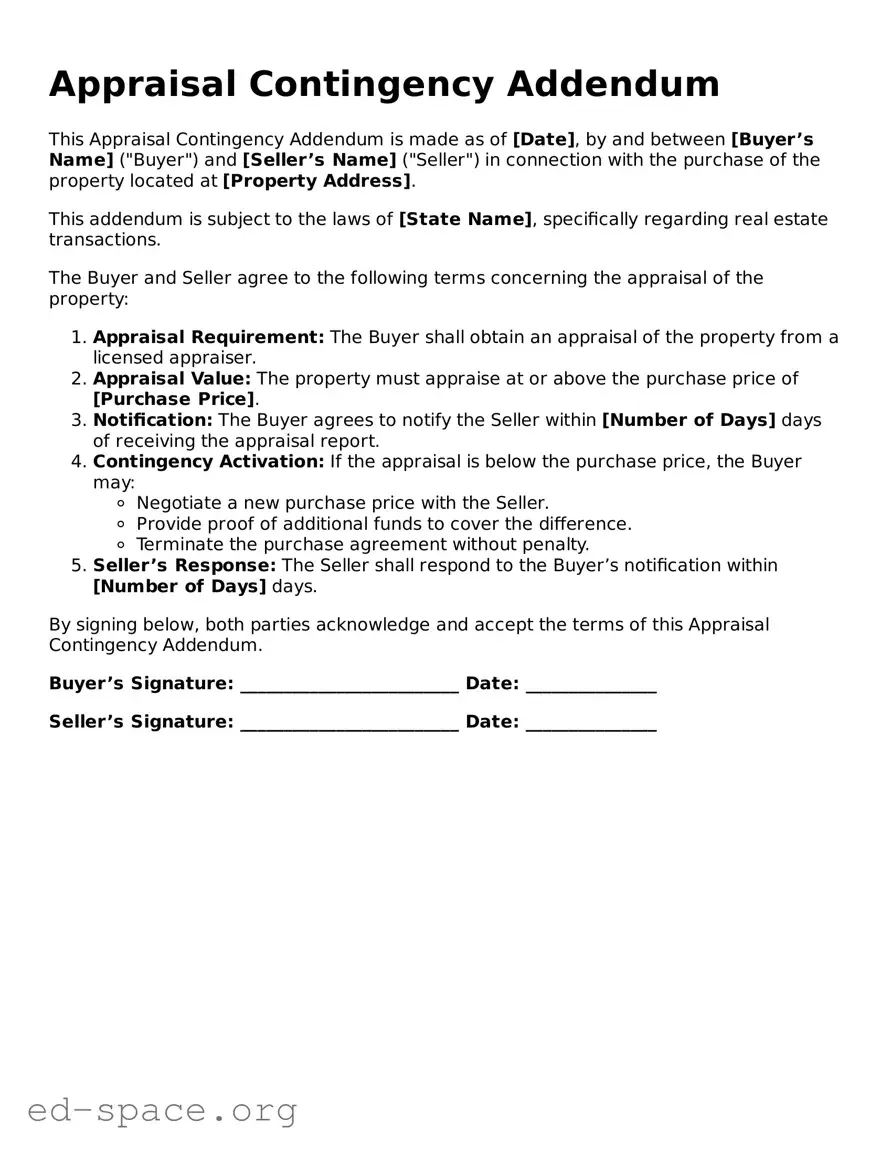
The Appraisal Contingency Addendum is a critical component in real estate transactions, particularly for buyers seeking to protect their investment. This form serves as an agreement that the purchase of a property is contingent upon the appraisal meeting or exceeding a specified value. Buyers can negotiate terms that allow them to withdraw from the purchase if the appraisal falls short, safeguarding them from overpaying. The addendum outlines the responsibilities of both parties, including timelines for the appraisal process and the conditions under which the buyer can request repairs or renegotiate the purchase price. It also clarifies how the appraisal will be conducted, ensuring transparency and fairness in the evaluation of the property’s worth. Understanding this addendum is essential for both buyers and sellers, as it plays a pivotal role in the overall transaction process, influencing financing options and the final agreement.
Appraisal Contingency Addendum
This Appraisal Contingency Addendum is made as of [Date], by and between [Buyer’s Name] ("Buyer") and [Seller’s Name] ("Seller") in connection with the purchase of the property located at [Property Address].
This addendum is subject to the laws of [State Name], specifically regarding real estate transactions.
The Buyer and Seller agree to the following terms concerning the appraisal of the property:
By signing below, both parties acknowledge and accept the terms of this Appraisal Contingency Addendum.
Buyer’s Signature: _________________________ Date: _______________
Seller’s Signature: _________________________ Date: _______________
| Fact Name | Description |
|---|---|
| Definition | The Appraisal Contingency Addendum is a document used in real estate transactions to ensure that a property's appraised value meets or exceeds the purchase price. |
| Purpose | This addendum protects buyers from overpaying for a property. If the appraisal comes in low, buyers can negotiate or withdraw from the deal without penalty. |
| Timing | Typically, the appraisal must be completed within a specified timeframe, often within a few weeks after the contract is signed. |
| State-Specific Forms | Many states have their own versions of the appraisal contingency form, reflecting local laws and practices. |
| Governing Laws | In California, for example, the governing law includes the California Civil Code, which outlines property transaction regulations. |
| Negotiation Leverage | If the appraisal is lower than expected, the buyer can negotiate repairs or a price reduction with the seller. |
| Financing Implications | Lenders often require an appraisal as part of the mortgage process. The appraisal contingency aligns with financing conditions to protect the lender's investment. |
After obtaining the Appraisal Contingency Addendum form, the next steps involve carefully completing each section to ensure clarity and accuracy. This will help facilitate the appraisal process in relation to the real estate transaction.
What is an Appraisal Contingency Addendum?
The Appraisal Contingency Addendum is a document used in real estate transactions. It protects buyers by allowing them to back out of a purchase if the property appraises for less than the agreed-upon purchase price. This addendum ensures that the buyer is not obligated to proceed with the sale if the property's value does not meet expectations, thus safeguarding their investment.
Why is an appraisal contingency important?
An appraisal contingency is crucial because it provides a layer of security for buyers. If the appraisal comes in lower than expected, the buyer has options. They can negotiate a lower price with the seller, request repairs, or even walk away from the deal without penalty. This contingency helps prevent buyers from overpaying for a property and ensures that they are making a sound financial decision.
How does the appraisal process work?
The appraisal process typically involves hiring a licensed appraiser to evaluate the property. The appraiser will consider various factors, including the home’s condition, location, and recent sales of comparable properties in the area. After the evaluation, the appraiser will provide a report that states the appraised value. This value is then used to determine if the buyer can proceed with the purchase under the terms of the appraisal contingency.
What happens if the appraisal is lower than the purchase price?
If the appraisal comes in lower than the purchase price, the buyer has several options. They can negotiate with the seller to lower the sale price to match the appraised value. Alternatively, the buyer may choose to cover the difference out-of-pocket or seek additional financing. If an agreement cannot be reached, the buyer can exercise their right to terminate the contract without facing penalties, provided the addendum is included in the purchase agreement.
Can the appraisal contingency be waived?
Yes, buyers can choose to waive the appraisal contingency, but this decision should be made with caution. Waiving the contingency means that the buyer is agreeing to proceed with the purchase regardless of the appraisal outcome. This can be risky, especially in a competitive market where properties may be overvalued. Buyers should carefully consider their financial situation and the potential risks before deciding to waive this important protection.
Not understanding the purpose of the appraisal contingency. This clause is designed to protect buyers by ensuring that the property is valued at or above the purchase price. Without this understanding, a buyer may overlook its importance.
Failing to specify the appraisal amount. Buyers should clearly state the minimum acceptable appraisal value. If this is not included, it may lead to confusion or disputes later on.
Ignoring deadlines. Each real estate transaction has specific timelines. Not adhering to these deadlines can result in losing the right to negotiate based on the appraisal.
Not including necessary documentation. Some buyers forget to attach supporting documents, such as previous appraisals or comparable sales data, which can strengthen their position.
Overlooking the consequences of a low appraisal. Buyers should understand that if the appraisal comes in low, they may need to either renegotiate the price or come up with additional funds to cover the difference.
Neglecting to communicate with the lender. Buyers often forget to inform their lender about the appraisal contingency. This communication is crucial for ensuring that the financing aligns with the appraisal process.
Assuming all appraisals are the same. Different appraisers may have varying opinions on property value. Buyers should be prepared for this variability and understand how it may affect their transaction.
Not consulting a real estate professional. Many buyers attempt to navigate the process without expert guidance. This can lead to mistakes that a knowledgeable agent could have easily avoided.
Rushing through the form. Taking the time to carefully fill out the Appraisal Contingency Addendum is essential. Hasty completion can lead to errors that might complicate the buying process.
The Appraisal Contingency Addendum form is an important document in real estate transactions, specifically designed to protect buyers by ensuring that the property appraises at or above the agreed-upon purchase price. However, several other forms and documents are often used in conjunction with this addendum to facilitate a smooth transaction. Below are four common forms that may accompany the Appraisal Contingency Addendum.
Understanding these documents can enhance the buyer's position in negotiations and ensure that all parties are aware of their rights and obligations throughout the transaction process. Proper documentation is crucial for a successful real estate experience.
The Appraisal Contingency Addendum form serves a specific purpose in real estate transactions, ensuring that the property's appraised value meets or exceeds the agreed-upon purchase price. Several other documents share similar functions or objectives in the context of real estate deals. Here is a list of eight such documents:
When filling out the Appraisal Contingency Addendum form, it's essential to approach the task with care. Here are five things you should and shouldn't do:
By following these guidelines, you can navigate the Appraisal Contingency Addendum form more effectively, ensuring a smoother transaction process.
Many buyers believe that including an appraisal contingency is not necessary. However, this addendum is crucial for protecting buyers from overpaying for a property. It ensures that the purchase price aligns with the appraised value, providing a safeguard against inflated market prices.
Some assume that if an appraisal comes in at or above the sale price, the deal is secure. While a favorable appraisal can strengthen the buyer's position, it does not eliminate other potential issues, such as financing problems or buyer's remorse.
There is often confusion between appraisals and home inspections. An appraisal determines the property's market value, while a home inspection assesses the condition of the property. Both are important, but they serve different purposes in the buying process.
Buyers frequently think they must cover all appraisal fees. In reality, the responsibility for these costs can vary. Sometimes sellers may agree to pay for the appraisal as part of negotiations, making it essential to clarify this upfront.
Many believe that appraisals are a quick and straightforward process. However, various factors can delay an appraisal, such as scheduling conflicts, the appraiser's workload, or the need for additional documentation. Patience is often required during this stage of the transaction.
Understanding the Appraisal Contingency Addendum form is crucial for anyone involved in a real estate transaction. Here are some key takeaways to keep in mind:
Being informed about these aspects can help streamline the buying process and safeguard your investment. Take action now to ensure you are prepared!