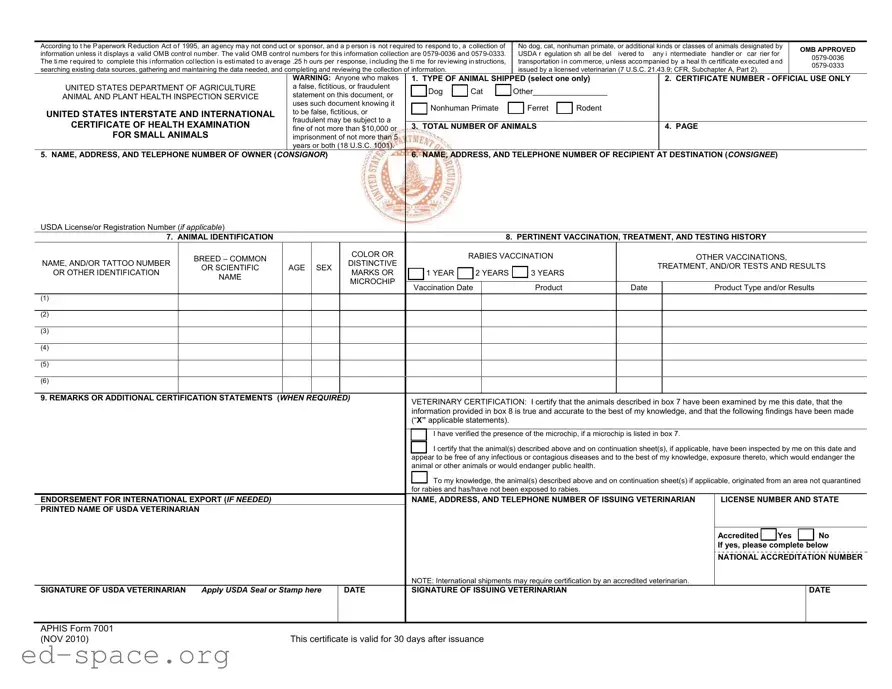
The Aphis 7001 form serves as a crucial document for the transportation of certain animals across state lines or internationally, ensuring compliance with health and safety regulations. This certificate, officially titled the United States Interstate and International Certificate of Health Examination for Small Animals, is essential for pet owners, breeders, and animal transporters. It requires detailed information, including the type and number of animals being shipped, as well as the owner and recipient's contact details. Additionally, the form mandates a veterinary certification, confirming that the animals have been examined and are free from infectious diseases, which is vital for public health and animal welfare. The form also includes sections for vaccination history and any pertinent treatments, ensuring that all necessary health precautions are documented. It is important to note that the Aphis 7001 form must display a valid OMB control number, and failure to provide accurate information may result in serious penalties. Given the complexities involved, understanding the requirements and implications of this form is essential for anyone involved in the transport of animals.

According to t he Paperwork Reduction Act of 1995, an agency may not cond uct or sponsor, and a p erson is not required to respond to, a collection of |
No dog, cat, nonhuman primate, or additional kinds or classes of animals designated by |
OMB APPROVED |
|
information unless it displays a valid OMB control number. The valid OMB control numbers for this information collection are |
USDA r egulation sh all be del ivered to any i ntermediate handler or car rier for |
||
The ti me r equired to complete this i nformation col lection i s esti mated to average .25 h ours per r esponse, i ncluding the ti me for rev iewing in structions, |
transportation in commerce, unless accompanied by a heal th certificate executed and |
||
searching existing data sources, gathering and maintaining the data needed, and completing and reviewing the collection of information. |
issued by a licensed veterinarian (7 U.S.C. 21.43.9; CFR, Subchapter A, Part 2). |
||
|
|
WARNING: Anyone who makes |
1. |
TYPE OF ANIMAL SHIPPED (select one only) |
2. CERTIFICATE NUMBER - OFFICIAL USE ONLY |
||||||||||
UNITED STATES DEPARTMENT OF AGRICULTURE |
a false, fictitious, or fraudulent |
|
|
|
Dog |
|
Cat |
|
|
Other_________________ |
|
|||
ANIMAL AND PLANT HEALTH INSPECTION SERVICE |
statement on this document, or |
|
|
|
|
|
|
|
||||||
|
|
|
|
|
|
|
|
|
|
|
|
|
||
|
uses such document knowing it |
|
|
|
Nonhuman Primate |
|
|
Ferret |
|
Rodent |
|
|||
UNITED STATES INTERSTATE AND INTERNATIONAL |
to be false, fictitious, or |
|
|
|
|
|
|
|
||||||
|
|
|
|
|
|
|
|
|
|
|
|
|
||
CERTIFICATE OF HEALTH EXAMINATION |
fraudulent may be subject to a |
|
|
|
|
|
|
|
|
|
|
|
|
|
3. |
TOTAL NUMBER OF ANIMALS |
|
|
4. PAGE |
||||||||||
fine of not more than $10,000 or |
|
|
||||||||||||
FOR SMALL ANIMALS |
imprisonment of not more than 5 |
|
|
|
|
|
|
|
|
|
|
|
|
|
|
years or both (18 U.S.C. 1001). |
|
|
|
|
|
|
|
|
|
|
|
|
|
5. NAME, ADDRESS, AND TELEPHONE NUMBER OF OWNER ( |
CONSIGNOR) |
6. |
NAME, ADDRESS, AND TELEPHONE NUMBER OF RECIPIENT |
AT DESTINATION (CONSIGNEE) |
||||||||||
USDA License/or Registration Number (if applicable) |
|
|
|
|
|
|
|
|
|
|
|
|
|
|
|
|
|
|
|
|
|
|
||
|
7. ANIMAL IDENTIFICATION |
|
|
|
|
|
|
|
|
|
|
|
8. PERTINENT VACCINATION, TREATMENT, AND TESTING HISTORY |
|
|
|
||||||||
|
|
BREED – COMMON |
|
|
COLOR OR |
|
|
|
|
|
|
RABIES VACCINATION |
|
|
OTHER VACCINATIONS, |
|
|
|||||||
NAME, AND/OR TATTOO NUMBER |
OR SCIENTIFIC |
AGE |
SEX |
DISTINCTIVE |
|
|
|
|
|
|
|
|
|
|
|
TREATMENT, AND/OR TESTS AND RESULTS |
||||||||
OR OTHER IDENTIFICATION |
|
NAME |
|
|
MARKS OR |
|
|
|
|
|
1 YEAR |
|
2 YEARS |
|
3 YEARS |
|
|
|
|
|
|
|
|
|
|
|
|
|
MICROCHIP |
|
|
|
|
|
|
|
|
|
|
|
|
|
|
|
|
|
|
|
|
|
|
|
|
|
|
|
|
|
|
|
|
|
|
|
|
|
|
|
|
|
|
|
|
|
|
|
|
|
|
|
|
|
Vaccination Date |
|
|
Product |
Date |
|
|
Product Type and/or Results |
|||||||||
|
|
|
|
|
|
|
|
|
|
|
|
|
||||||||||||
(1) |
|
|
|
|
|
|
|
|
|
|
|
|
|
|
|
|
|
|
|
|
|
|
|
|
|
|
|
|
|
|
|
|
|
|
|
|
|
|
|
|
|
|
|
|
|
|
|
|
|
(2) |
|
|
|
|
|
|
|
|
|
|
|
|
|
|
|
|
|
|
|
|
|
|
|
|
|
|
|
|
|
|
|
|
|
|
|
|
|
|
|
|
|
|
|
|
|
|
|
|
|
(3) |
|
|
|
|
|
|
|
|
|
|
|
|
|
|
|
|
|
|
|
|
|
|
|
|
|
|
|
|
|
|
|
|
|
|
|
|
|
|
|
|
|
|
|
|
|
|
|
|
|
(4) |
|
|
|
|
|
|
|
|
|
|
|
|
|
|
|
|
|
|
|
|
|
|
|
|
|
|
|
|
|
|
|
|
|
|
|
|
|
|
|
|
|
|
|
|
|
|
|
|
|
(5) |
|
|
|
|
|
|
|
|
|
|
|
|
|
|
|
|
|
|
|
|
|
|
|
|
|
|
|
|
|
|
|
|
|
|
|
|
|
|
|
|
|
|
|
|
|
|
|
|
|
(6) |
|
|
|
|
|
|
|
|
|
|
|
|
|
|
|
|
|
|
|
|
|
|
|
|
|
|
|
|
|
|
|
|
|
|
|
|
|
|
|
|
|
|
|
|
|
|
|
|
|
9. REMARKS OR ADDITIONAL CERTIFICATION STATEMENTS (WHEN REQUIRED) |
|
|
|
VETERINARY CERTIFICATION: I certify that the animals described in box 7 have been examined by me this date, that the |
||||||||||||||||||||
|
|
|
|
|
|
|
|
|
||||||||||||||||
|
|
|
|
|
|
|
|
|
information provided in box 8 is true and accurate to the best of my knowledge, and that the following findings have been made |
|||||||||||||||
|
|
|
|
|
|
|
|
|
(“X” applicable statements). |
|
|
|
|
|
|
|
|
|
|
|||||
|
|
|
|
|
|
|
|
|
|
|
|
|
|
|
|
|
|
|
|
|
|
|||
|
|
|
|
|
|
|
|
|
|
|
I have verified the presence of the microchip, if a microchip is listed in box 7. |
|
|
|
|
|
|
|||||||
|
|
|
|
|
|
|
|
|
|
|
I certify that the animal(s) described above and on continuation sheet(s), if applicable, have been inspected by me on this date and |
|||||||||||||
|
|
|
|
|
|
|
|
|
appear to be free of any infectious or contagious diseases and to the best of my knowledge, exposure thereto, which would endanger the |
|||||||||||||||
|
|
|
|
|
|
|
|
|
animal or other animals or would endanger public health. |
|
|
|
|
|
|
|
|
|||||||
|
|
|
|
|
|
|
|
|
|
|
To my knowledge, the animal(s) described above and on continuation sheet(s) if applicable, originated from an area not quarantined |
|||||||||||||
|
|
|
|
|
|
|
|
|
for rabies and has/have not been exposed to rabies. |
|
|
|
|
|
|
|
|
|||||||
ENDORSEMENT FOR INTERNATIONAL EXPORT (IF NEEDED) |
|
|
|
|
|
|
NAME, ADDRESS, AND TELEPHONE NUMBER OF ISSUING VETERINARIAN |
|
LICENSE NUMBER AND STATE |
|||||||||||||||
PRINTED NAME OF USDA VETERINARIAN |
|
|
|
|
|
|
|
|
|
|
|
|
|
|
|
|
|
|
|
|
|
|
||
|
|
|
|
|
|
|
|
|
|
|
|
|
|
|
|
|
|
|
|
|
|
|
|
|
|
|
|
|
|
|
|
|
|
|
|
|
|
|
|
|
|
|
|
|
|
|
|
|
|
|
|
|
|
|
|
|
|
|
|
|
|
|
|
|
|
|
|
|
|
Accredited |
|
Yes |
|
No |
|
|
|
|
|
|
|
|
|
|
|
|
|
|
|
|
|
|
|
|
If yes, please |
complete below |
|||
|
|
|
|
|
|
|
|
|
|
|
|
|
|
|
|
|
|
|
|
NATIONAL ACCREDITATION NUMBER |
||||
|
|
|
|
|
|
|
|
|
NOTE: International shipments may require certification by an accredited veterinarian. |
|
|
|
|
|
|
|||||||||
SIGNATURE OF USDA VETERINARIAN Apply USDA Seal or Stamp here |
DATE |
|
|
|
SIGNATURE OF ISSUING VETERINARIAN |
|
|
|
|
|
|
DATE |
||||||||||||
APHIS Form 7001 |
|
(NOV 2010) |
This certificate is valid for 30 days after issuance |
| Fact Name | Details |
|---|---|
| Purpose | The Aphis 7001 form is used for certifying the health of animals being shipped interstate or internationally. |
| Governing Laws | This form is governed by the Animal Health Protection Act (7 U.S.C. 21.43.9) and relevant USDA regulations. |
| OMB Control Numbers | The valid OMB control numbers for this information collection are 0579-0036 and 0579-0333. |
| Completion Time | It is estimated that completing this form takes approximately 0.25 hours, including the time for reviewing instructions and gathering necessary data. |
| Animal Types | The form covers various animal types, including dogs, cats, nonhuman primates, ferrets, and rodents. |
| Penalties | Submitting false information can result in a fine of up to $10,000 or imprisonment for up to 5 years. |
| Veterinary Certification | A licensed veterinarian must certify that the animals have been examined and are free from infectious diseases. |
| Validity Period | The Aphis 7001 certificate is valid for 30 days after issuance. |
Filling out the APHIS 7001 form requires attention to detail and accuracy. This form is essential for ensuring compliance with regulations related to the transport of certain animals. Following the steps below will help streamline the process and ensure that all necessary information is provided correctly.
What is the purpose of the APHIS 7001 form?
The APHIS 7001 form is used for certifying the health of certain animals being transported across state lines or internationally. It ensures that the animals are free from contagious diseases and have received necessary vaccinations. This certification is crucial for compliance with regulations set by the United States Department of Agriculture (USDA) and helps protect both animal and public health.
Who needs to complete the APHIS 7001 form?
The form must be completed by a licensed veterinarian who has examined the animals. The owner or consignor of the animals must also provide relevant information, including details about the animals and their vaccination history. This collaborative effort ensures that all necessary health information is accurately documented before transportation.
What information is required on the APHIS 7001 form?
The form requires various details, including the type of animal being shipped, the total number of animals, and the names and contact information of both the owner and the recipient. Additionally, it asks for specific identification of each animal, vaccination history, and any pertinent treatment or testing results. This comprehensive information helps ensure proper tracking and health verification.
How long is the APHIS 7001 form valid?
The APHIS 7001 form is valid for 30 days after it has been issued. This time frame allows for timely transportation while ensuring that the health information remains current and relevant. If the animals are not transported within this period, a new certificate may be required.
What happens if false information is provided on the APHIS 7001 form?
Providing false, fictitious, or fraudulent information on the APHIS 7001 form can lead to serious consequences. Individuals may face fines of up to $10,000 or imprisonment for up to five years, or both. It is essential to provide accurate information to avoid these penalties and to protect animal and public health.
Is there a time estimate for completing the APHIS 7001 form?
Completing the APHIS 7001 form is estimated to take about 15 minutes on average. This includes time spent reviewing instructions, gathering necessary data, and filling out the form. Being prepared with the required information can help streamline the process and ensure accuracy.
Not selecting the correct type of animal shipped. It is crucial to choose only one option from the provided list, such as Dog, Cat, or Nonhuman Primate. Failing to do so can lead to processing delays.
Leaving the certificate number blank. This number is essential for official use and must be filled out correctly to avoid issues with the submission.
Failing to provide complete contact information for both the owner (consignor) and recipient (consignee). Incomplete information can hinder communication and delivery.
Omitting the animal identification details. This includes breed, age, sex, and any distinctive marks. Accurate identification is necessary for tracking and health verification.
Neglecting to include vaccination and treatment history. This section must be filled out with relevant details to ensure compliance with health regulations.
Not signing the veterinary certification. The signature of the issuing veterinarian is mandatory. Without it, the form is not valid.
Overlooking the expiration date of the certificate. The APHIS Form 7001 is only valid for 30 days after issuance. Submitting an expired form can result in penalties or rejection.
The APHIS 7001 form is essential for the transportation of certain animals across state lines or internationally. Along with this form, several other documents may be required to ensure compliance with regulations. Below are five commonly used forms and documents that often accompany the APHIS 7001.
Having the appropriate documents ready is crucial for a smooth transport process. It helps avoid delays and ensures compliance with health and safety regulations. Always check specific requirements based on the destination and type of animal being transported.
The APHIS Form 7001 is a crucial document used for the health certification of certain animals being transported. Several other documents serve similar purposes in ensuring the health and safety of animals during transport. Below are six documents that share similarities with the APHIS Form 7001:
When filling out the APHIS 7001 form, it is essential to follow specific guidelines to ensure compliance and accuracy. Below are five things to do and five things to avoid during the completion of this important document.
Here are four common misconceptions about the Aphis 7001 form:
When filling out and utilizing the APHIS 7001 form, it is essential to adhere to specific guidelines to ensure compliance and accuracy. Here are key takeaways: