Homepage Blank Apartment Card PDF Form
Article Guide

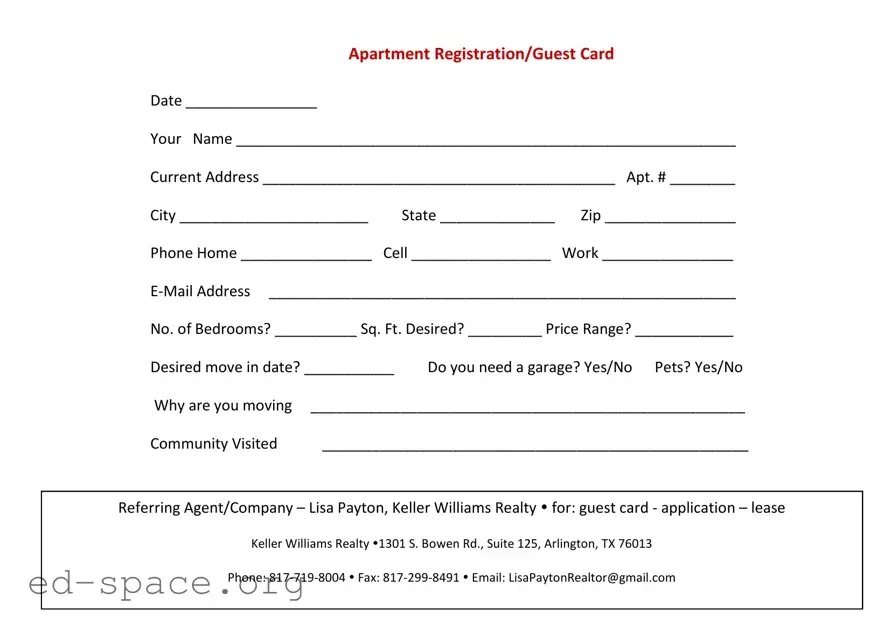
The Apartment Card form serves as an essential tool in the apartment rental process, capturing vital information from prospective tenants while facilitating communication between them and property managers. This form typically begins with the date and the applicant's name, followed by their current address, including apartment number, city, state, and zip code. Contact information is crucial; thus, spaces for home, cell, and work phone numbers, as well as an email address, are included. The form further inquires about the number of bedrooms desired, square footage preferences, and the price range the applicant is willing to consider. Additionally, it prompts potential tenants to specify their desired move-in date and whether they require a garage. Questions regarding pets and the reason for moving provide further context for landlords and leasing agents. The form also notes the community visited and identifies the referring agent or company, in this case, Lisa Payton from Keller Williams Realty, ensuring that all parties are well-informed and connected. This structured approach not only streamlines the application process but also enhances the overall experience for both renters and property managers.

Document Preview

Apartment Registration/Guest Card

Date ________________

Your Name _____________________________________________________________

Current Address ___________________________________________ Apt. # ________

City _______________________

State ______________

Zip ________________

Phone Home ________________

Cell _________________

Work ________________

E-Mail Address _________________________________________________________

No. of Bedrooms? __________ Sq. Ft. Desired? _________ Price Range? ____________

Desired move in date? ___________

Do you need a garage? Yes/No Pets? Yes/No

Why are you moving

_____________________________________________________

Community Visited

____________________________________________________

Referring Agent/Company – Lisa Payton, Keller Williams Realty for: guest card - application – lease

Keller Williams Realty 1301 S. Bowen Rd., Suite 125, Arlington, TX 76013

Phone: 817-719-8004 Fax: 817-299-8491 Email: [email protected]

Form Specifications

Fact Name Description
Purpose The Apartment Card form is used to collect essential information from potential tenants for apartment registration and guest inquiries.
Information Collected This form gathers personal details such as name, address, contact information, desired move-in date, and preferences regarding pets and garages.
State-Specific Law In Texas, the governing law for rental agreements and tenant rights is primarily found in the Texas Property Code.
Referring Agent The form includes a section for the referring agent, which helps streamline communication and maintain a record of who assisted the potential tenant.

Apartment Card: Usage Guidelines

Completing the Apartment Card form is a straightforward process that requires you to provide essential information about yourself and your housing preferences. Once you have filled out the form, you can submit it to the designated agent for further assistance in your apartment search.

  1. Begin by entering the date at the top of the form.
  2. In the "Your Name" section, write your full name clearly.
  3. Fill in your current address, including the apartment number, city, state, and zip code.
  4. Provide your phone numbers: home, cell, and work, ensuring each number is accurate.
  5. Enter your email address in the designated space.
  6. Indicate the number of bedrooms you desire in the corresponding box.
  7. Specify the square footage you are looking for.
  8. Fill in your preferred price range for the apartment.
  9. Write down your desired move-in date.
  10. Indicate whether you need a garage by marking "Yes" or "No."
  11. State if you have any pets by marking "Yes" or "No."
  12. Provide a brief explanation of why you are moving.
  13. List the community you have visited in the appropriate section.
  14. Note the referring agent's name and company, which is Lisa Payton from Keller Williams Realty, along with the contact details provided.

Your Questions, Answered

What is the purpose of the Apartment Card form?

The Apartment Card form serves as a registration or guest card for individuals interested in renting an apartment. It collects essential information about potential tenants, such as their contact details, desired living arrangements, and preferences. This information helps property managers understand the needs of prospective renters and facilitates the leasing process.

What information do I need to provide on the form?

You will need to fill out several key pieces of information on the Apartment Card form. This includes your name, current address, phone numbers, and email address. Additionally, you should indicate the number of bedrooms you need, the square footage desired, your price range, and your preferred move-in date. If applicable, you will also need to specify whether you require a garage and if you have any pets. Finally, there is a section to explain your reason for moving and to note the community you have visited.

How do I submit the Apartment Card form?

Who can I contact if I have questions about the Apartment Card form?

If you have any questions or need assistance with the Apartment Card form, you can reach out to Lisa Payton at Keller Williams Realty. She is available by phone at 817-719-8004 or via email at [email protected]. Her expertise can help clarify any concerns you may have regarding the form or the leasing process.

Common mistakes

  1. Incomplete Information: One common mistake is leaving sections of the form blank. Each field is important for processing your application, so ensure that all required areas are filled out completely.

  2. Incorrect Contact Details: Providing inaccurate phone numbers or email addresses can lead to missed communications. Double-check that your contact information is correct and up to date.

  3. Neglecting to Specify Preferences: Failing to indicate the number of bedrooms, desired square footage, or price range can hinder the search for suitable apartments. Be clear about your needs to receive the best options.

  4. Not Mentioning Pets: If you have pets, it is crucial to disclose this information. Some communities have specific pet policies, and not mentioning them could result in complications later.

  5. Forgetting to State Reasons for Moving: While it may seem optional, explaining why you are moving can help the leasing agent understand your situation better. This information can assist in finding a place that meets your needs.

  6. Overlooking the Move-In Date: Not specifying your desired move-in date can create scheduling issues. Make sure to include this detail to facilitate a smoother transition.

Documents used along the form

When applying for an apartment, several documents complement the Apartment Card form. Each serves a specific purpose in the rental process, ensuring that both landlords and prospective tenants have the necessary information to move forward smoothly. Below is a list of commonly used forms and documents.

  • Rental Application: This form collects detailed personal information from the applicant, including employment history, income, and references. It helps landlords assess the suitability of a potential tenant.
  • Credit Report Authorization: This document allows landlords to obtain a credit report on the applicant. It provides insight into the applicant's financial history and creditworthiness.
  • Background Check Consent: A consent form is necessary for conducting a background check. It typically includes criminal history and rental history, ensuring the applicant meets the community's standards.
  • Lease Agreement: Once approved, this legally binding document outlines the terms and conditions of the rental. It includes details such as rent amount, lease duration, and responsibilities of both parties.
  • Move-In Checklist: This form is used during the move-in process to document the condition of the apartment. It helps protect both the tenant and landlord by providing a reference for any damages.
  • Pet Agreement: If pets are allowed, this document outlines the rules and regulations regarding pet ownership within the property, including any associated fees or deposits.
  • Security Deposit Receipt: Upon payment of the security deposit, this receipt serves as proof of the transaction. It specifies the amount paid and the conditions under which the deposit may be withheld.
  • Utility Transfer Form: This document is used to transfer utilities into the tenant's name. It ensures that essential services like water, electricity, and gas are set up before moving in.

Having these documents ready can streamline the application process and help avoid potential delays. Each form plays a crucial role in ensuring that both the tenant and landlord have clear expectations and a solid foundation for their rental relationship.

Similar forms

The Apartment Card form is similar to several other documents used in the rental and real estate process. Here’s a look at eight of them:

  • Rental Application: Like the Apartment Card, a rental application collects personal information from prospective tenants. It typically includes details about income, employment, and rental history.
  • Lease Agreement: This document outlines the terms and conditions of renting a property. It shares similarities with the Apartment Card in that both require basic tenant information and preferences.
  • Tenant Screening Form: This form is used to assess potential tenants. Similar to the Apartment Card, it gathers personal details and preferences to help landlords make informed decisions.
  • Move-In Checklist: A move-in checklist documents the condition of the apartment before a tenant moves in. While the Apartment Card focuses on tenant preferences, both are essential for a smooth transition.
  • Pet Policy Agreement: If pets are allowed, this document outlines the rules regarding them. It relates to the Apartment Card, which asks about pet ownership and preferences.
  • Community Guidelines: These guidelines inform tenants about the rules of living in a particular community. Both documents provide essential information for prospective tenants.
  • Guest Policy Form: This form governs the rules for guests in a rental property. It is similar to the Apartment Card as it addresses who will be residing in the unit.
  • Deposit Agreement: This document details the security deposit terms. Like the Apartment Card, it is crucial for establishing the financial aspects of renting a property.

Dos and Don'ts

When filling out the Apartment Card form, attention to detail is crucial. Here are some important guidelines to follow:

  • Do provide accurate information. Ensure that all personal details, such as your name and contact information, are correct.
  • Do specify your needs clearly. Indicate the number of bedrooms and desired price range to help the management find suitable options for you.
  • Do include your preferred move-in date. This helps the property manager understand your urgency and availability.
  • Do mention any pets. If you have pets, be transparent about it, as this can affect your housing options.
  • Don't leave any fields blank. Incomplete forms can lead to delays or misunderstandings in the application process.
  • Don't provide false information. Misrepresentation can result in disqualification from the application process or future legal issues.

Taking these steps can streamline your application process and increase your chances of securing your desired apartment.

Misconceptions

Here are four common misconceptions about the Apartment Card form:

  • It’s only for new tenants. Many believe the Apartment Card form is only for individuals who are moving into a new apartment. In reality, it can also be used by current tenants looking to update their information or express interest in moving within the same community.
  • It’s a binding contract. Some people think that filling out the Apartment Card form means they are committing to a lease. This is not true. The form is simply a way to gather information and express interest; it does not create any legal obligations.
  • All information is mandatory. Many assume that every field on the form must be filled out. While providing complete information is helpful, not all sections are mandatory. You can leave certain fields blank if they do not apply to your situation.
  • It’s only for people with pets. There is a misconception that the Apartment Card form is only relevant for pet owners. In fact, it is designed for anyone looking for an apartment, regardless of whether they have pets or not.

Key takeaways

When filling out and using the Apartment Card form, consider the following key takeaways:

  • Complete All Sections: Ensure that every section of the form is filled out accurately. Missing information can delay the application process.
  • Provide Current Contact Information: Include your current phone numbers and email address. This allows for quick communication regarding your application.
  • Specify Your Needs: Clearly indicate the number of bedrooms, square footage desired, and price range. This helps in finding an apartment that fits your requirements.
  • State Your Move-In Date: Mention your desired move-in date. This information is crucial for both you and the property manager.
  • Garage and Pet Preferences: Indicate if you need a garage and whether you have pets. This can impact your options significantly.
  • Explain Your Reason for Moving: Providing a brief explanation of why you are moving can help property managers understand your situation better.
  • Community Information: Note the community you visited. This helps in tracking your application and preferences.
  • Contact the Referring Agent: If you were referred by Lisa Payton from Keller Williams Realty, ensure her contact information is noted for any follow-up.

By following these guidelines, you can streamline your apartment search process and enhance your chances of securing the right home for you.