The ANCC Certification Verification form plays a crucial role in the certification process for Advanced Practice Registered Nurses (APRNs). This form requires candidates to provide essential personal and educational information, which is then verified by their program director. Candidates must fill out their details, including their name, email address, and program specifics, before handing it over to the program director for completion. The program director is responsible for detailing the courses the candidate has completed, including course numbers and clinical hours. Submission options are flexible, allowing for hard copies to be mailed or electronic versions to be emailed directly to the American Nurses Credentialing Center (ANCC). It is essential that all required fields are completed accurately to avoid delays in processing. The form also includes a statement of understanding that must be signed by the program director, confirming the accuracy of the information provided. This verification is not just a formality; it ensures that candidates meet the educational standards necessary for certification and helps maintain the integrity of the nursing profession.

Validation of APRN
Education Form
CANDIDATE Please fill in the Candidate Information Section of this form and give it to the Program Director to complete the balance of the form and sign.
PROGRAM DIRECTOR When entering course numbers, please include the actual courses the Candidate completed. Please fill in all required fields and submit as follows:
•Hard copy, signed, and returned to the candidate to be forwarded to ANCC
•OR, signed electronically and
•OR, mailed to:
American Nurses Credentialing Center (ANCC)
Attn: Certification Registration
8515 Georgia Avenue, Suite 400
Silver Spring, MD 20910
Validation of APRN Education Form
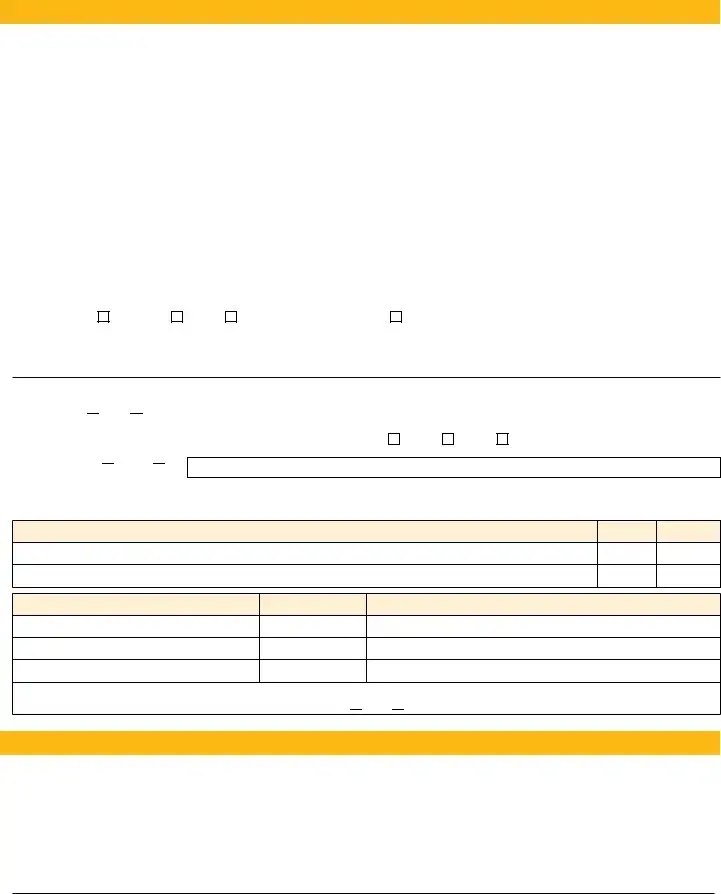
CANDIDATE INFORMATION
|
Applicant Last Name |
First Name |
MI |
|
|
|
|
|
Other Legal Names Used |
|
|
|
|
|
|
|
Address |
City |
State Zip/Postal |
|
|
|
|
|
PROGRAM INFORMATION |
|
|
|
|
|
|
|
Name of University |
City |
State |
|
|
|
|
|
Program Director Name |
Program Director Phone Number |
Program Director Email |
|
|
|
|
|
CANDIDATE EDUCATIONAL PREPARATION |
|
|
|
|
||
|
Population and Role of Program Completed (e.g., Family Nurse Practitioner, |
||
|
Degree Type: Master’s |
DNP |
|
*If a
Date of (Anticipated) Completion |
Number of |
Has the student completed all required APRN didactic courses/faculty supervised, direct patient care clinical hours, required for program
completion? Yes No
Accreditation of Program Completed (at time of clinician’s graduation): ACEN CCNE |
CNEA Exp Date: _________ |
Dual Program? Yes* No
*If yes, specify the role and populations of the programs in the box above and attach a detailed description of the content and clinical hours for each role and population. Use letterhead and sign the attachment.
Content in:
Health Promotion/Disease Prevention Content
Differential Diagnosis/Disease Management Content
Yes
No
Course Number |
Title |
Advanced Physical/Health Assessment
Advanced Pathophysiology
Advanced Pharmacology
For PMHNP clinicians ONLY
Content in at least 2 psychotherapeutic treatment modalities Yes No
STATEMENT OF UNDERSTANDING • FOR FACULTY USE ONLY
I, ___________________________________________, ____________________________________________ of the
insert nameinsert title
_____________________________________________________________, attest that I am duly authorized by the above school to
insert program name
confirm the information provided in this Validation of APRN Education Form (“Form”) to be true, accurate, and complete, and reflect only the coursework and clinical hours actually completed by the Candidate for Certification identified above (the “Candidate”).
(Forms received without a signature incur a delay in processing, which will cause a delay in the review of the Candidate’s application and ability to take a certification examination.)
Required Program Director Signature |
Print Name |
Date |
ANCC reserves the right to request a more detailed accounting of coursework/program completed. ANCC reserves the right to contact the faculty with questions upon review of transcript(s), etc.
| Fact Name | Fact Description |
|---|---|
| Purpose of the Form | The Ancc Certification Verification form validates the education and clinical hours of candidates applying for APRN certification. |
| Submission Methods | Candidates can submit the completed form as a hard copy, electronically signed via email, or by mail to the ANCC office. |
| Required Information | The form requires detailed candidate information, program details, and verification of completed clinical hours and coursework. |
| Program Accreditation | The form includes a section for confirming the accreditation status of the candidate’s educational program, such as ACEN or CCNE. |
| Governing Laws | State-specific forms may be governed by state nursing practice acts and regulations, which vary by state. |
Filling out the ANCC Certification Verification form is an important step in the certification process for Advanced Practice Registered Nurses (APRNs). Once the form is completed and signed by the Program Director, it will need to be submitted to the American Nurses Credentialing Center (ANCC) for review. Below are the steps to successfully fill out the form.
After completing these steps, ensure that the form is signed by the Program Director. You can then submit the hard copy to the candidate for forwarding to ANCC, or it can be sent electronically via email or mail. Following these instructions carefully will help streamline your certification process.
What is the purpose of the ANCC Certification Verification form?
The ANCC Certification Verification form is designed to validate the educational background of candidates applying for Advanced Practice Registered Nurse (APRN) certification. It ensures that the candidate has completed the necessary coursework and clinical hours required for certification.
Who is responsible for filling out the form?
The candidate must complete the Candidate Information Section of the form. After that, the Program Director is responsible for filling out the remaining sections, including verifying the candidate’s coursework and clinical hours.
How should the completed form be submitted?
The completed form can be submitted in several ways. It can be sent as a hard copy, signed, and returned to the candidate for forwarding to ANCC. Alternatively, it can be signed electronically and emailed to [email protected]. Lastly, it can be mailed directly to the American Nurses Credentialing Center at their Silver Spring, MD address.
What information is required from the candidate?
The candidate must provide their last name, first name, middle initial, any other legal names used, email address, city, state, and zip/postal code. Additionally, details about their educational program, including the name of the university, program director, degree type, and anticipated completion date, are required.
What if the candidate has completed a dual program?
If the candidate has completed a dual program, they must indicate this on the form. It is important to specify the roles and populations of both programs and attach a detailed description of the content and clinical hours for each role. This attachment should be on letterhead and signed.
What happens if the form is not signed by the Program Director?
If the form is submitted without the Program Director's signature, it may cause delays in processing. This delay can affect the candidate's application review and their ability to take the certification examination.
What types of courses need to be included in the form?
The form requires the inclusion of specific advanced courses, such as Advanced Physical/Health Assessment, Advanced Pathophysiology, and Advanced Pharmacology. For Psychiatric Mental Health Nurse Practitioner (PMHNP) candidates, it is also necessary to include content in at least two psychotherapeutic treatment modalities.
Can ANCC request additional information?
Yes, ANCC reserves the right to request a more detailed accounting of the coursework and clinical hours completed by the candidate. They may also contact faculty members if they have questions regarding the candidate’s transcripts or other documents.
What should candidates do if they have questions about the form?
If candidates have questions about the ANCC Certification Verification form or the submission process, they should reach out to their Program Director or contact ANCC directly for clarification.
Incomplete Candidate Information: Failing to fill out all sections of the Candidate Information, such as last name, first name, or email address, can lead to processing delays.
Missing Program Director Signature: The absence of a signature from the Program Director can result in the form being rejected, causing unnecessary delays.
Incorrect Course Numbers: Entering the wrong course numbers or omitting them entirely can create confusion and may require additional verification.
Failure to Attach Required Documentation: Not providing necessary attachments, such as a detailed description of dual programs, can lead to incomplete submissions.
Inaccurate Accreditation Information: Providing incorrect accreditation details or expiration dates can hinder the verification process.
Omitting Clinical Hours: Not specifying the number of faculty-supervised direct patient care clinical hours completed can raise questions about eligibility.
Neglecting to Confirm Completion of Courses: Failing to indicate whether all required APRN didactic courses have been completed can result in processing delays.
Using Incorrect Submission Method: Submitting the form through an unapproved method can lead to misplacement or loss of the application.
Not Following Up: After submission, neglecting to follow up with the ANCC can delay the certification process and leave candidates uninformed about their application status.
The process of obtaining certification through the American Nurses Credentialing Center (ANCC) involves several important forms and documents. Each of these documents plays a crucial role in validating a candidate's qualifications and educational background. Below is a list of commonly used forms that accompany the ANCC Certification Verification form, along with a brief description of each.
Understanding these documents and their purposes can help candidates navigate the certification process more effectively. Each form contributes to a comprehensive review of a candidate’s qualifications, ensuring that they meet the standards set by the ANCC. By preparing these documents carefully, candidates can enhance their chances of a smooth certification experience.
When filling out the ANCC Certification Verification form, attention to detail is crucial. Here are some important dos and don’ts to keep in mind:
Understanding the ANCC Certification Verification form is crucial for candidates seeking certification. However, several misconceptions can lead to confusion. Here’s a list of common misunderstandings about this important document:
In reality, the candidate must complete only the Candidate Information Section. The Program Director is responsible for filling out the rest of the form.
There are multiple submission options. Candidates can submit a hard copy, an electronically signed version via email, or a mailed copy to the ANCC.
This is not true. The signature of the Program Director is required. Without it, the processing of the form may be delayed.
The Program Director must include the actual courses completed by the candidate. Accurate course information is essential for validation.
If a candidate is in a dual program, they must specify the roles and populations involved and provide detailed descriptions of the coursework and clinical hours.
In some cases, schools must document and submit credit for prior courses or clinical hours accepted from previous programs, which may require a Gap Analysis.
The ANCC reserves the right to contact faculty or request additional information to ensure the accuracy of the coursework and clinical hours reported.
Submission of the form does not guarantee certification. Candidates must meet all eligibility requirements and pass the certification examination.
The anticipated completion date of the program is a required field. This information is crucial for the validation process.
Depending on individual circumstances, candidates may need to submit updated forms or additional documentation if their educational status changes.
By addressing these misconceptions, candidates can navigate the ANCC Certification Verification form with greater confidence and clarity.
Filling out and using the ANCC Certification Verification form is a crucial step for candidates seeking certification. Here are key takeaways to ensure proper completion and submission: